
Porto’s Champions League victory is remembered as a miracle, but the better explanation is colder: a compact, repeatable system that made richer opponents play the wrong game.
The underdog label hides the engineering
Porto’s 2004 Champions League run is usually filed as a miracle because the modern competition was already supposed to belong to richer leagues. That label is easy, but it misses the cold part of the story. Jose Mourinho’s side did not win Europe by hoping the bracket would stay kind. They built a match state in which opponents had the ball in places that suited Porto, then discovered that their own expensive players were being hurried into ordinary decisions.
The achievement becomes clearer when it is treated as a system rather than an upset. Porto had Deco as the rhythm changer, Costinha and Maniche as two-way enforcers, Ricardo Carvalho reading danger early, and a dressing room that had already won the UEFA Cup. The side carried habit, not novelty. By spring 2004, the blue shirts looked less like an outsider enjoying a cup run and more like a machine that knew exactly how much chaos it wanted to permit.
Compactness was the attacking plan
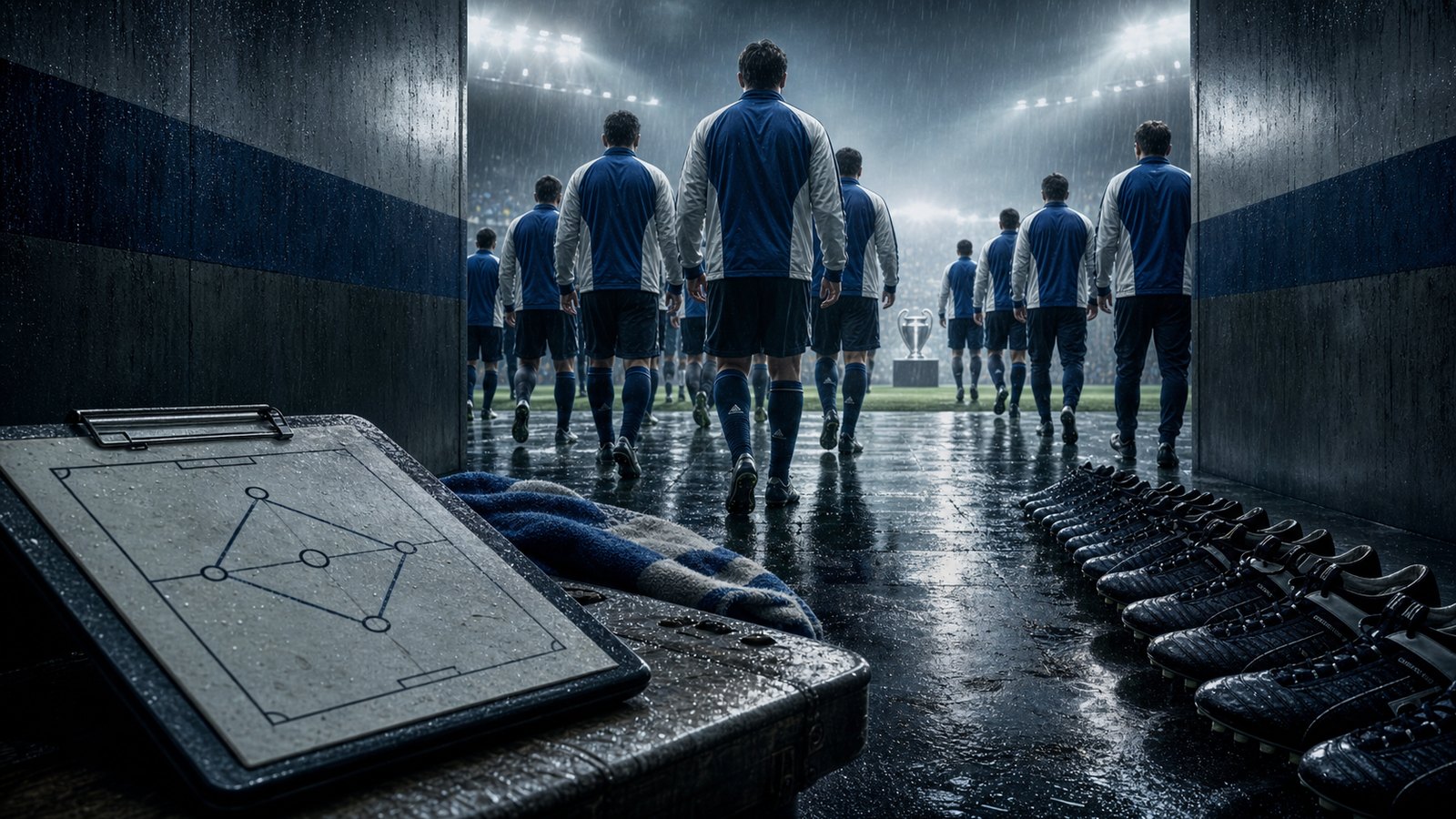
Mourinho’s Porto were compact without being passive. The distances between lines were short enough to protect central space, but the team was always waiting for the first careless pass. Once that pass arrived, Porto did not need ten touches to become dangerous. Deco could receive on the half-turn, Maniche could drive into the next lane, and the forwards could run while defenders were still facing the wrong way.
That detail is what many summaries flatten. Porto’s defensive shape was not a retreat from football. It was the condition that made their attacks sharp. The side wanted opponents to commit full-backs, midfielders, and pride before the trap closed. A loose square pass near halfway could suddenly become a sprint at an exposed back line. The European elite saw a smaller budget; Porto saw a set of repeatable triggers.
Old European habits met a new tournament economy
The Champions League had already become a money ladder, with television income, market size, and squad depth bending expectation toward the richest clubs. Porto did not break that economy forever, but they did expose a temporary gap in it. A well-coached team from outside the wealthiest tier could still travel with a coherent plan, protect its weak points, and punish sides that mistook possession for control.
The famous tie with Manchester United is remembered for the late Old Trafford goal and Mourinho’s touchline sprint, but the deeper lesson was less theatrical. Porto had survived pressure because their distances stayed believable. They were rarely stretched into the huge empty corridors that favorites expect to find against smaller clubs. Even when the match became emotional, the structure remained the quiet character in the scene.
The final looked simple because the work was not
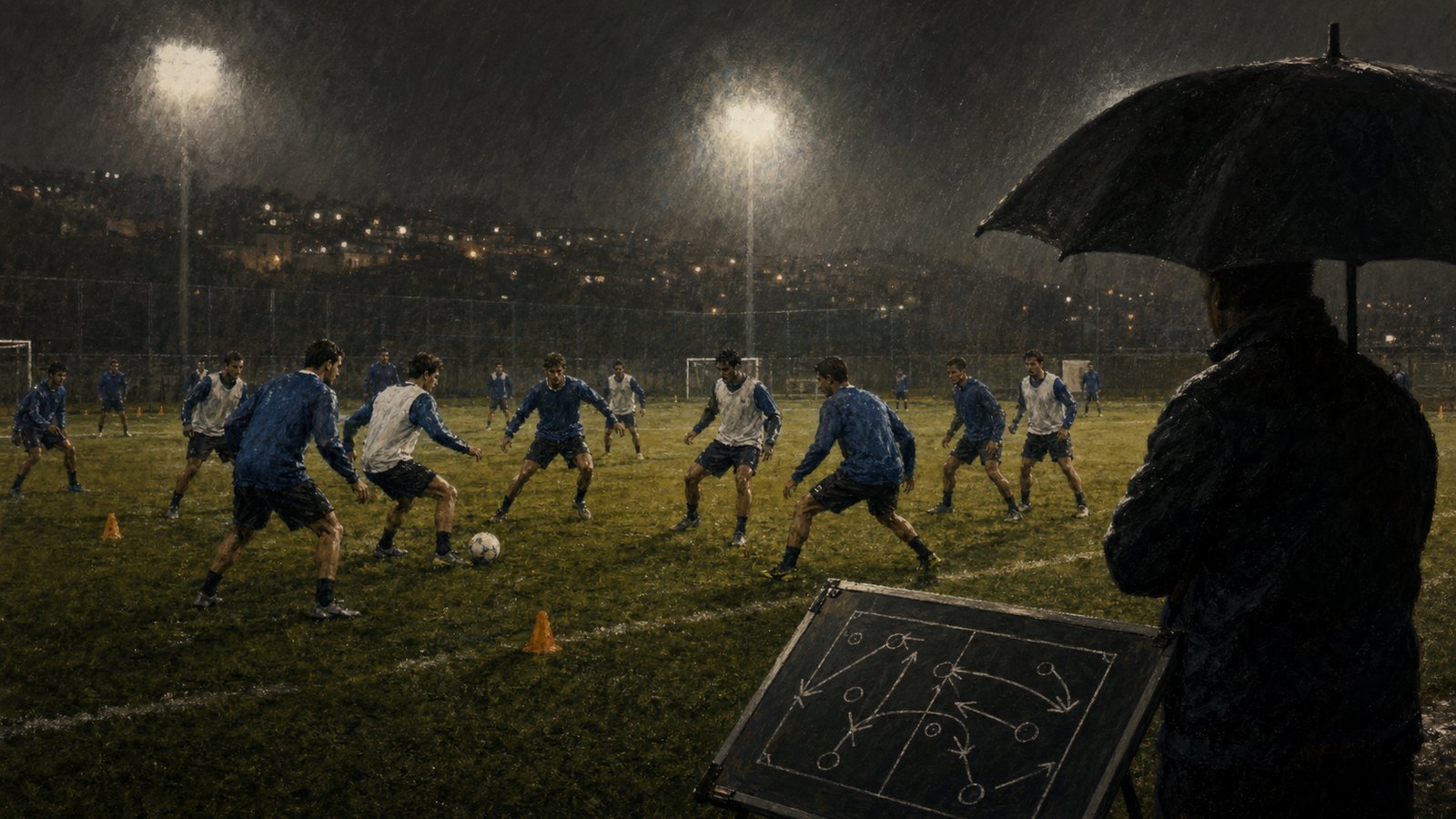
The 3-0 final against Monaco can make the whole campaign look easier than it was. Two outsiders reached Gelsenkirchen, and one of them looked far more adult. Porto managed the emotional temperature, accepted the phases when Monaco pushed, and then struck with the patience of a side that believed the opening would come. The scoreline became emphatic because Porto did not chase emphasis.
There was a physical detail to that superiority. The blue shirts often seemed to arrive in pairs: one player touching the ball, another already narrowing the next option, a third positioned for the loose clearance. It was not glamour in the Galactico sense. It was craft, repetition, and the pleasure of seeing a plan travel across different stadiums without losing its accent.
Why the victory aged into a managerial origin myth
Mourinho’s later career turned Porto 2004 into chapter one of a much larger story. That can distort the team itself. The players were not props in a manager’s audition tape. They were European champions because the recruitment, dressing-room hierarchy, tactical work, and competitive nerve all lined up for one perfect season. The manager mattered enormously, but the machine had gears.
The legacy also changed how clubs talked about underdogs. After Porto, every ambitious outsider wanted to claim tactical cleverness as a substitute for money. Most discovered that cleverness is not a slogan. It requires players who accept roles, midfielders who can suffer and still pass, defenders who read danger before it becomes a shot, and a manager who can make caution feel like aggression. Porto had all of that at once.
The real lesson
Porto did not prove that money was irrelevant. Within weeks, the market began pulling the team apart, and Mourinho himself moved into the richer ecosystem he had just embarrassed. What Porto proved was narrower and more interesting: a coherent football idea can compress the gap for long enough to win the largest prize if the players trust every inch of it.
The campaign still feels modern because it was not a fairy tale about romance defeating finance. It was a study in how structure turns anxiety into opportunity. The miracle was not that Porto were lucky. The miracle was that, for one European spring, their plan was stronger than everyone else’s assumptions.
The squad made the idea believable
The tactical idea worked because the squad had enough different kinds of authority. Vitor Baia gave the back line an experienced reference point. Paulo Ferreira and Nuno Valente could defend the outside channels without turning every possession into a clearance. Ricardo Carvalho did not defend like a stopper waiting for collisions; he defended like a reader who had already seen the next pass. In midfield, Costinha protected the central lock, Maniche gave the side a runner with timing, and Deco supplied the imagination without making the structure depend on improvisation alone.
Those names matter because compact football can become sterile if the players cannot turn a regain into quality. Porto could. The first pass after pressure was often calm enough to change the whole emotional weather of a match. A favorite would push, hear the crowd rise, and then suddenly find Deco carrying the ball into a pocket with runners ahead of him. That transition was not a lottery ticket. It was the reward for defending with distances that gave the next attack a shape before it began.
The system also carried an edge that opponents disliked. Porto were comfortable with fouls, stoppages, restarts, and the little pauses that break a favorite’s rhythm. They understood that European knockout football is not a neutral laboratory. It is noise, fatigue, irritation, refereeing tolerance, and game management. The team that best controls those small hinges often controls the door.
The important point is not that this episode supplies a neat morality play. It shows how football history usually moves through several layers at once: tactics, money, regulation, identity, and the stubborn habits of matchgoing people. When those layers line up, a result can look inevitable in hindsight. When they collide, even a famous club or famous season becomes fragile. The detail worth keeping is that these turning points are made by mechanisms, not slogans: deadlines, training patterns, league procedures, contracts, debts, and match states that ordinary highlights rarely explain. That is what makes the story useful now, long after the original headlines have faded.
Sources
- UEFA Champions League records
- UEFA technical reports
- Contemporary match reports from the 2003-04 Champions League
- Interviews and biographies covering Jose Mourinho’s Porto period