
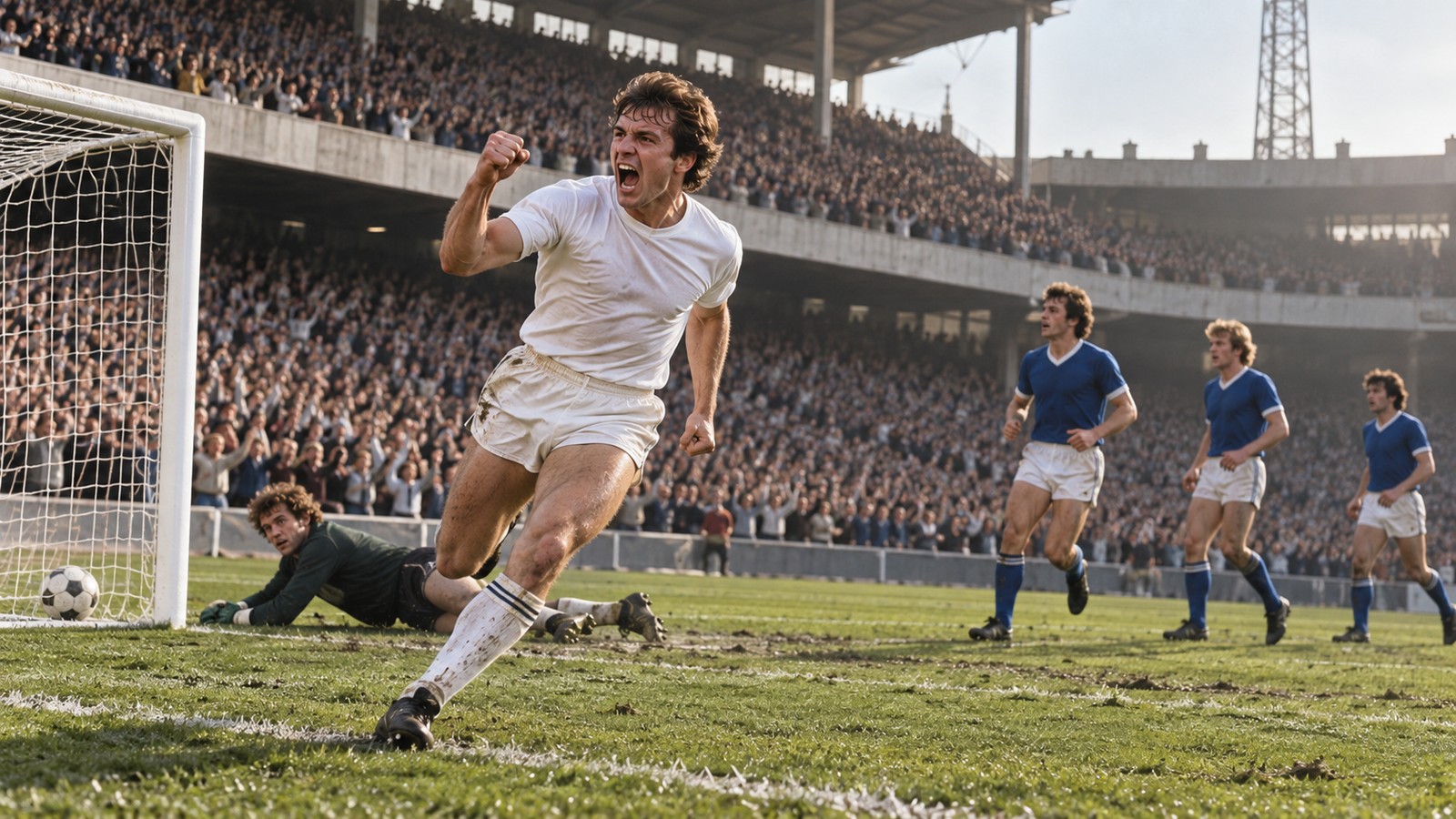
Steve Bull entered Wembley in May 1989 wearing an England shirt, but his weekly football was still being played in the Third Division. Twelve minutes after replacing John Fashanu against Scotland, he met a low pass inside the penalty area and scored on his senior international debut.
The goal looked like a sudden leap from the lower leagues to the national stage. In fact, it was the visible reward for two seasons in which Bull and Wolverhampton Wanderers had climbed together. Wolves had been in the Fourth Division when his scoring began to overwhelm opponents. By the time England called, the club had won consecutive promotions and Bull had produced consecutive 50-goal seasons across all competitions.
The Scotland goal was therefore more than an unusual cap. It showed how quickly a striker and a recovering club could force their way into view without waiting for the league table to grant them prestige.
West Brom Had Given Him Only Four League Chances
Bull was born in Tipton on 28 March 1965 and began senior football with Tipton Town. West Bromwich Albion signed him in 1985, but his league opportunity there remained narrow: four appearances and two goals. In November 1986, Wolves bought Bull and defender Andy Thompson together for £65,000.
The destination was not a shortcut to elite football. Wolves were in the Fourth Division after a collapse that had taken them from the First Division to the bottom tier in successive seasons. Molineux carried the scale and memory of a major club, but much of the ground was closed and the team had to earn its way out of football’s basement.
Bull’s first months gave the rebuilding side an immediate edge. He scored 19 goals in 37 appearances across all competitions during the remainder of 1986–87. Wolves reached the Fourth Division play-off final, only to lose to Aldershot over two legs. Promotion had escaped them, but the new centre-forward had already changed what the next attempt could become.
He chased passes into channels, crowded centre-backs and shot before openings closed. That urgency suited a club whose recovery could not depend on patience alone.
Fifty-Two Goals Carried Wolves Out of the Fourth Division
The following season turned Bull’s arrival into a record. He scored 52 goals in 58 appearances across all competitions in 1987–88. Thirty-four came in the league as Wolves won the Fourth Division title, while another came at Wembley in the Sherpa Van Trophy final against Burnley.
More than 80,000 spectators watched that final. Wolves won 2–0, and Bull’s second-half goal placed a lower-division scoring run inside the national stadium. The occasion anticipated his England debut there a year later, but its first meaning belonged to the club. A team that had nearly disappeared was leaving Wembley with a trophy and a promotion.
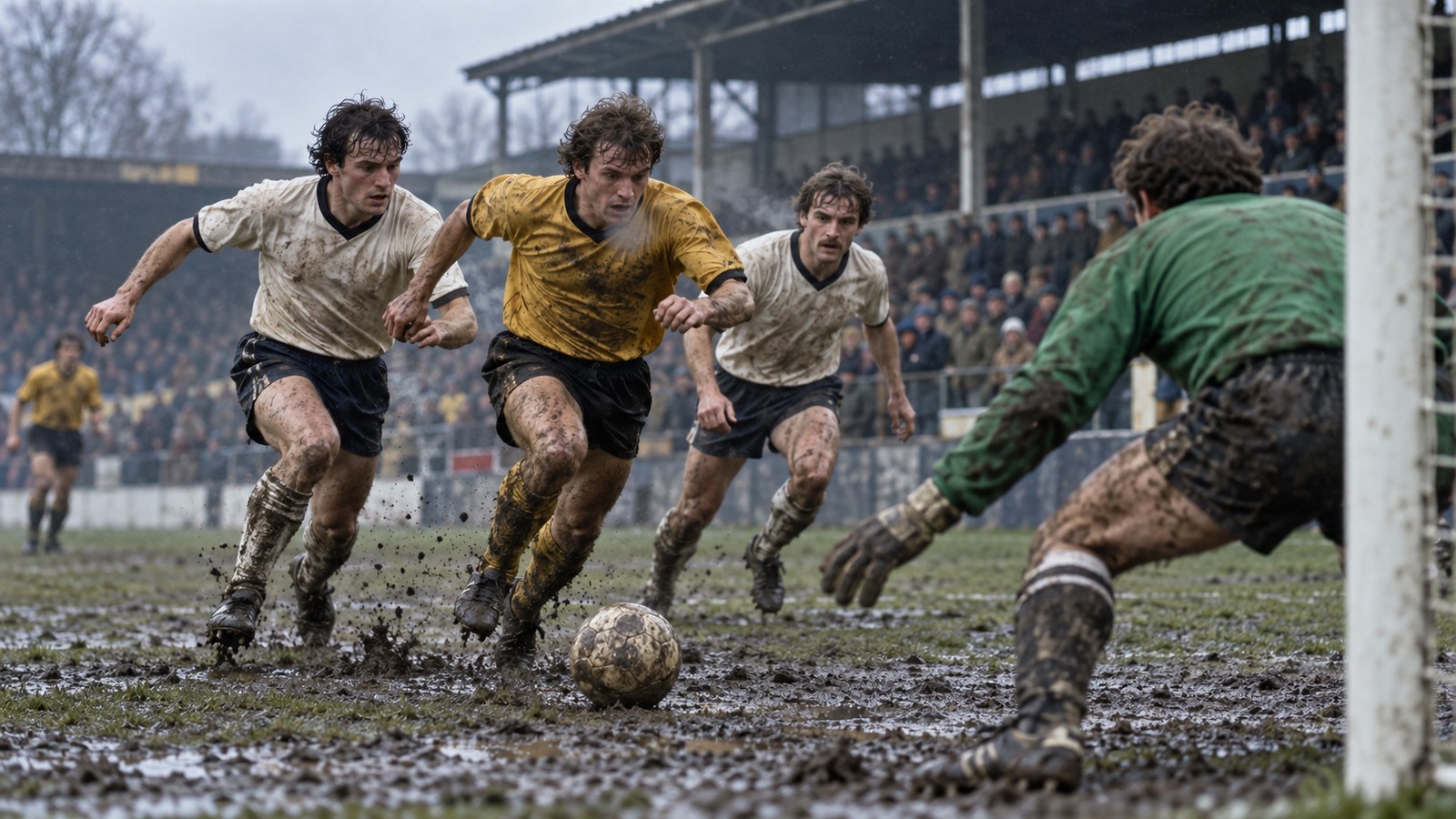
The volume of goals came from repetition rather than distance from the action. Bull kept starting sprints between defenders even after a move had failed. He attacked rebounds and loose touches, then struck before the defence could reorganise. His scoring gave Wolves a simple advantage during a long season: an ordinary attack could become dangerous because he treated the next ball as if it were already his.
Decades earlier, Notts County had paid a British-record fee for Tommy Lawton outside the top flight. Bull likewise made divisional status feel temporary.
A Second Fifty-Goal Season Put the Third Division on Notice
Promotion did not slow him. In 1988–89 Bull scored 50 goals in 55 appearances across all competitions. Wolves won the Third Division title, completing consecutive promotions, while he became the only player to score at least 50 club goals in successive seasons.
Defenders knew where Wolves’ greatest threat stood and still struggled to contain him. Bull’s first touch often pointed toward goal, and his lack of delay made him difficult to shepherd into a harmless position.
The first 50-goal campaign took Wolves out of the Fourth Division; the second carried them straight through the Third. Player and club made each other harder to dismiss.

England manager Bobby Robson could therefore judge more than a brief scoring streak. Bull had repeated his output after promotion and had done it while every opponent prepared specifically for him. The remaining question was whether those habits could survive a much faster international match.
Twelve Wembley Minutes Answered the Selection Question
England met Scotland in the Rous Cup at Wembley on 27 May 1989. Bull began among the substitutes. When he replaced John Fashanu, he became one of a select group of Third Division players to represent England in the modern era.
His first international goal arrived twelve minutes after he came on. Gary Stevens drove a low ball into the area, and Bull reached it ahead of the recovering defence to score. The sequence required no reinvention. He recognised the channel, committed early and finished from the kind of central position he had attacked hundreds of times for Wolves.
England won 2–0. For Bull, the debut compressed two years of lower-league work into one clear image: the substitute in white turning away after scoring at Wembley. His club address had changed the surprise around the moment, not the movement that produced it.
The cap also arrived before Wolves had returned even to the Second Division. Selection had not been offered as a reward after the recovery was complete. Robson chose a Third Division forward because current evidence outweighed the usual hierarchy.
Four England Goals Took Him to Italia 90
Bull’s international career remained brief but substantial. He scored four goals in 13 senior appearances, many of them made as a substitute. Wolves’ own Hall of Fame notes that his total England playing time amounted to roughly six and a half complete matches.
He scored against Czechoslovakia and Tunisia in the preparation for the 1990 World Cup and was selected for the tournament in Italy. He appeared four times at Italia 90 as England reached the semi-finals. The striker who had been playing Fourth Division football little more than two years earlier was now part of the country’s deepest World Cup run since 1966.

The international stage did not turn Bull into a different kind of footballer. His value remained concentrated in movement toward goal and the pressure created by directness. That clarity helped him enter matches from the bench: he did not need prolonged possession to establish his role.
His rise sits beside other careers in which a footballer’s work became too strong for the division around him. Fergus Suter’s journey from stonework to FA Cup success belonged to another century, but both stories begin with performance pushing past an inherited place in the game.
Wolves kept the record that England first noticed. Bull stayed at Wolves until injury ended his career in 1999. He finished with 306 goals and 18 hat-tricks, both club records, across 561 appearances. He received the MBE that same year. A stand at Molineux would carry his name, fixing the striker into the physical memory of the ground where his rise began.
The later totals make the England debut look less like an isolated novelty. Bull was not selected because one improbable month caught the manager’s attention. He had scored 102 club goals across two seasons while Wolves won two titles and a cup. Wembley simply supplied the setting in which a wider audience could see the same instinct.
There is also a useful distinction in the story. Bull did not escape Wolves in order to become an international. He became one while remaining central to their recovery. The call-up did not interrupt the relationship between player and club; it confirmed that work below the top flight could still be impossible to ignore.
When he scored against Scotland, Wolves had not yet returned to the division they had occupied before the collapse. The badge on his club shirt still represented unfinished work. That was the point of the moment: a Third Division striker reached England not after the ladder had been climbed, but while he was dragging his team up it.
Sources
Wolverhampton Wanderers Hall of Fame; The Guardian; Wolves Stats historical season archive; England and World Cup records.