
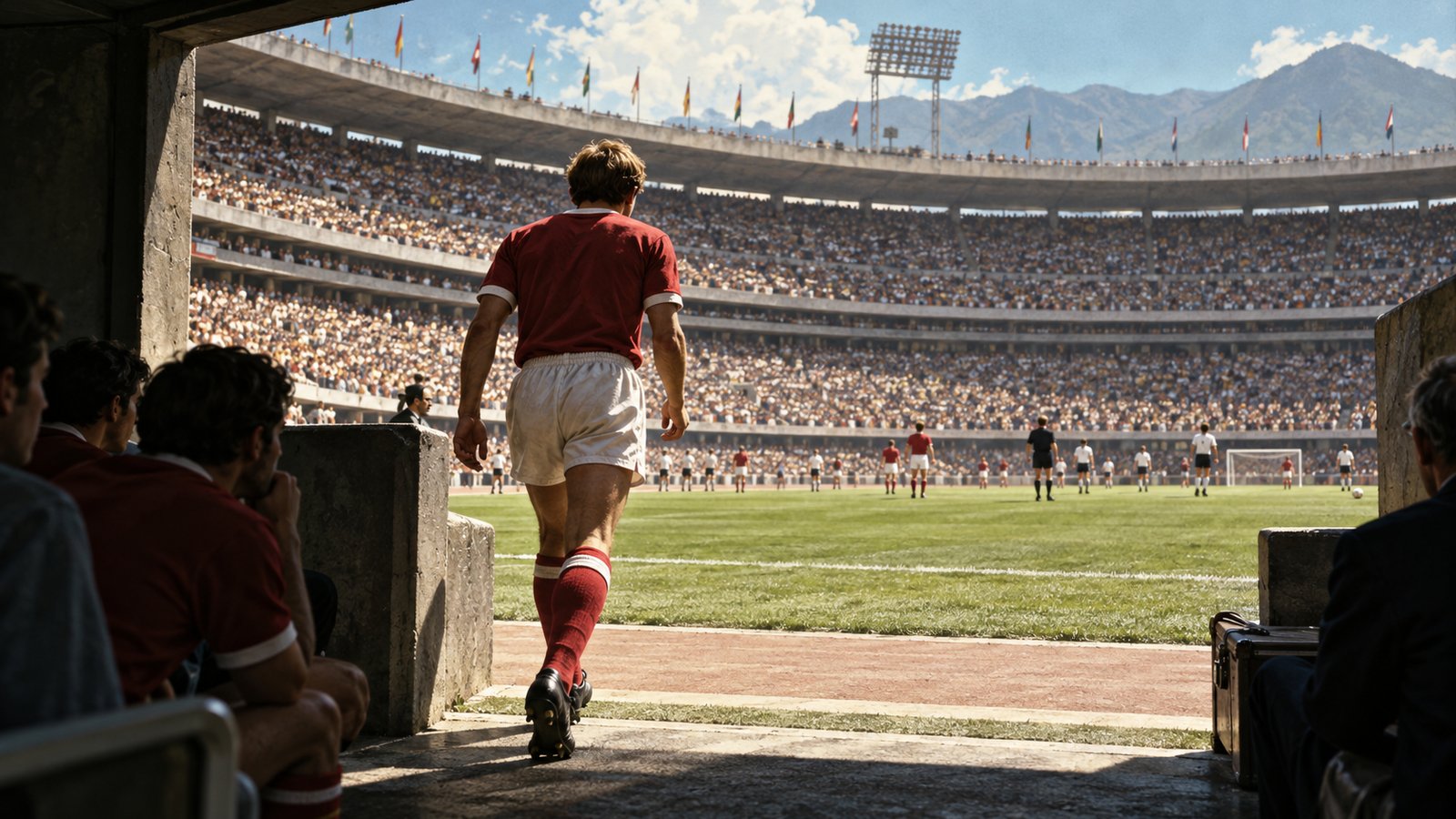
At noon on 31 May 1970, Mexico and the Soviet Union walked into the Estadio Azteca for the opening match of the World Cup. The crowd exceeded 107,000, the air was thin, and the tournament was about to alter a rule that had shaped every previous edition. For the first time at a World Cup, a coach could send a reserve player into a match.
The historic change arrived without a goal or a grand announcement. At half-time, Soviet midfielder Viktor Serebryanikov stayed in the dressing room. Anatoliy Puzach emerged in his place. Later, Mexico replaced Isidoro Díaz with Juan Ignacio Basaguren, while each team made another change. The match ended 0–0, but its team sheets showed that eleven starters no longer had to carry an entire afternoon alone.
Substitution changed more than injury management. It gave coaches a legal way to answer the game in front of them: protect a tired player, add pace, alter a formation or accept that the first selection had been wrong. Mexico 1970 is remembered for colour television, the Azteca and Brazil’s champions. It also introduced the moving touchline that modern football now treats as ordinary.
Before Mexico, an Injury Could Rewrite the Whole Match
Substitutions had existed in parts of football before 1970, and they were formally admitted to the Laws of the Game in 1958. Competition rules still controlled whether they could be used. The World Cup remained a place where an injured player often had to continue, move to the wing or leave his team short.
The 1966 tournament made the cost visible. Pelé was repeatedly fouled during Brazil’s 3–1 defeat by Portugal and finished the match badly hurt because no replacement was permitted. Four years earlier, Brazil’s Amarildo had entered the starting team when Pelé was injured between matches; that was a selection change before kick-off, not a substitution during play. Once a World Cup match started, the original eleven were effectively locked in.
That rule made physical damage inseparable from tactics. A coach could switch positions or issue instructions, but could not replace a player whose movement had gone. The bench was an observation point rather than an active part of match management. By 1970, domestic and international competitions had already begun moving away from that restriction. FIFA brought the option into its largest tournament with a limit of two replacements per team.
Puzach Crossed the Touchline After a Goalless Half
The first match supplied the first use. Mexico and the Soviet Union began Group 1 at the Azteca in front of an official attendance of 107,160. West German referee Kurt Tschenscher oversaw a slow, scoreless contest played in midday conditions. The opening ceremony had taken place before kick-off, adding another layer to a long afternoon.
Soviet coach Gavriil Kachalin changed his midfield at the interval. Serebryanikov, a Dynamo Kyiv player with an eye for goal, came off. Puzach, his club teammate, became the first substitute used in World Cup history. It was a quiet entrance: no fourth official’s electronic board, no rolling television graphic, and no established ritual for the crowd to recognise.
The Soviet Union used its second change in the 67th minute, when Vladimir Khmelnitsky replaced Givi Nodia. Mexico also made two. Juan Ignacio Basaguren replaced Isidoro Díaz at the same minute, while Marco Antonio Muñiz came on for Héctor Pulido. RSSSF’s match record places the four changes directly inside the line-ups, the clearest evidence of a bench becoming part of the match.
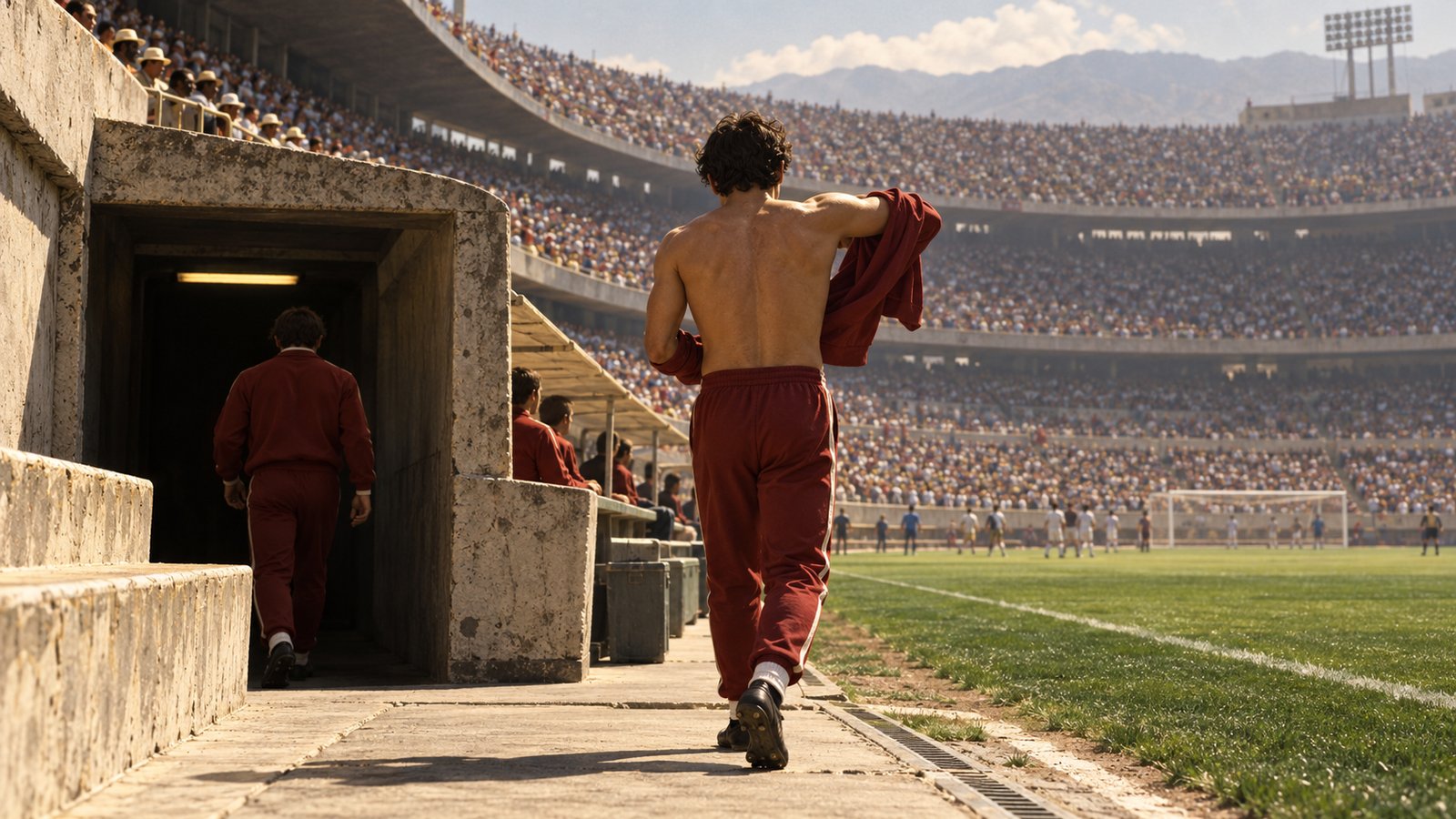
Two Replacements Created Four New Decisions
The allowance was small by modern standards. Two substitutes did not provide enough cover for every problem, so coaches had to budget the option. An early injury could consume half the supply. Using both changes for tactical reasons left no emergency response for the closing minutes. Waiting preserved insurance but reduced the time in which a replacement could affect the score.
That trade-off appeared throughout the group stage. In the Soviet Union’s 4–1 win over Belgium, Yevgeny Lovchev replaced Kakhi Asatiani after 35 minutes, and Vladimir Kiselev later replaced Murtaz Khurtsilava. Belgium used only one change. Against El Salvador, the Soviet side introduced two players after the 80th minute, while El Salvador made two of its own.
The new rule also widened a squad’s practical value. A reserve no longer travelled only as cover between fixtures. He could enter a specific match with fresh legs and a defined assignment. Selection therefore acquired a second phase. The starting eleven described a coach’s initial idea; the substitutes revealed his response to fatigue, score and opposition.
This was particularly important in Mexico’s heat and altitude. Several fixtures began at noon or in the afternoon to suit television schedules. A player entering after an hour faced opponents who had already worked through the draining opening period. Even when the football remained slow, the possibility of change made the final third of a match less fixed.
Basaguren Gave the New Role Its First World Cup Goal
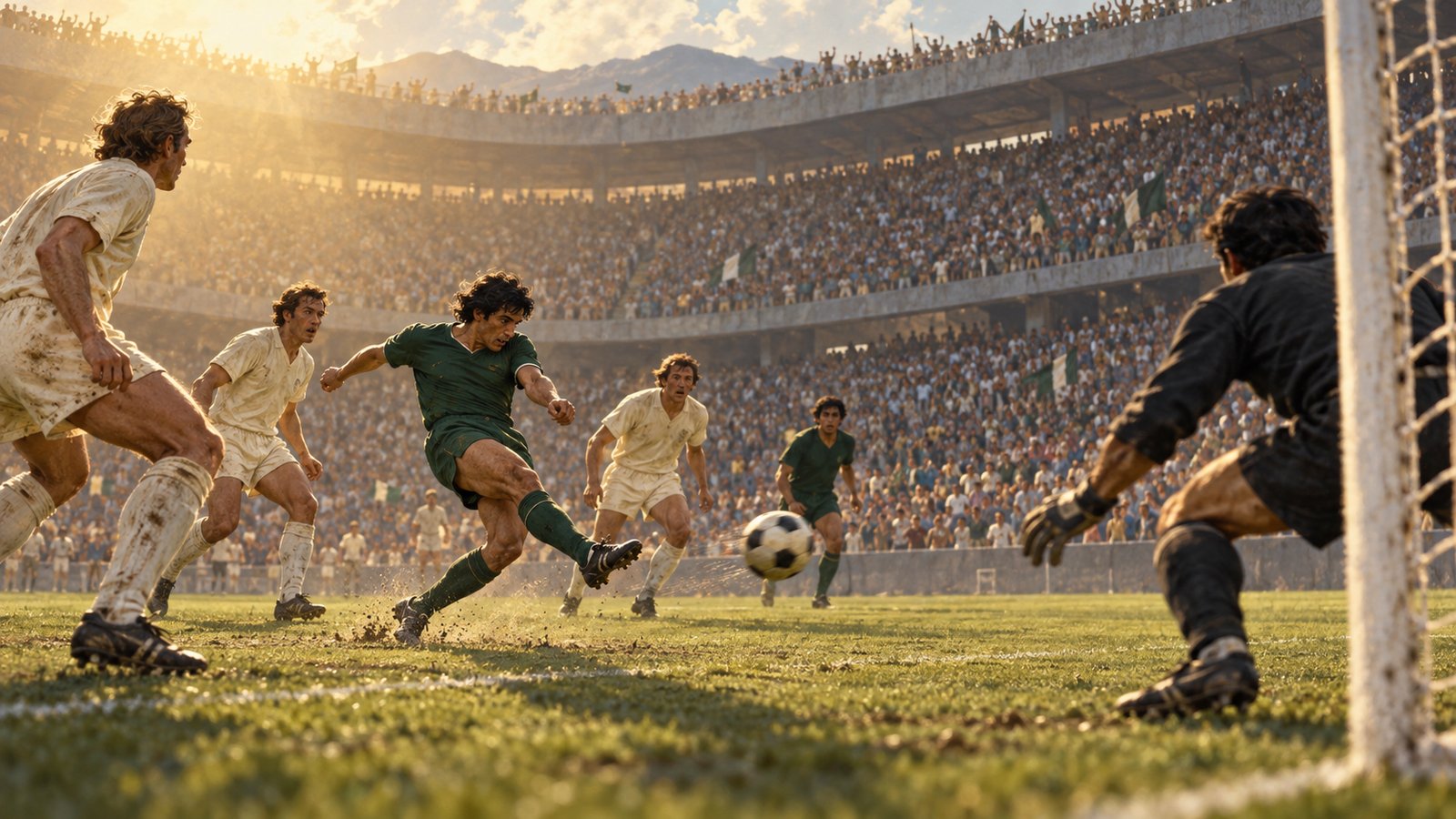
Seven days after Puzach’s entrance, Basaguren supplied the next landmark. Mexico faced El Salvador at the Azteca. Javier Valdivia scored either side of half-time and Javier Fragoso added a third in the 58th minute. Basaguren entered for Horacio López Salgado in the 76th minute.
In the 83rd minute, Basaguren scored Mexico’s fourth goal. He became the first substitute to score in a World Cup match. The distinction captured the rule’s attacking possibility. A replacement was not merely a way to remove an injured player; he could arrive late, attack a tiring defence and alter the record of the game.
Mexico won 4–0 and eventually finished level with the Soviet Union on points and goal difference. A drawing of lots placed the Soviet side first in the group, another reminder of how different the tournament’s regulations were. Yet the substitute goal pointed toward a recognisable future. Coaches would increasingly keep speed, height or invention in reserve for a moment when the match opened.
The Bench Joined Football’s Tactical Language
The rest of the tournament showed that substitutions did not remove drama created by fatigue. Italy and West Germany still played the exhausting extra-time semi-final later called the Game of the Century. Five goals arrived after the 90th minute, with both teams managing tired bodies as well as the score. England’s quarter-final against West Germany also became a study in momentum, remembered here through the comeback in León.
What changed was the coach’s range of legal responses. A forward could replace a midfielder when a goal was needed. A defender could enter to protect a lead. A tiring player no longer had to remain solely because the rules had sealed the team sheet at kick-off. The bench became a visible store of alternative plans.
The limit later expanded, first to three widely used substitutions and then to five in many competitions. Procedures became more elaborate: nominated benches grew, substitution windows appeared, concussion protocols developed and extra-time provisions changed. Those later additions can obscure how fundamental the first step was. Mexico 1970 did not perfect the system. It established that a football match could include controlled personnel changes without losing its identity.
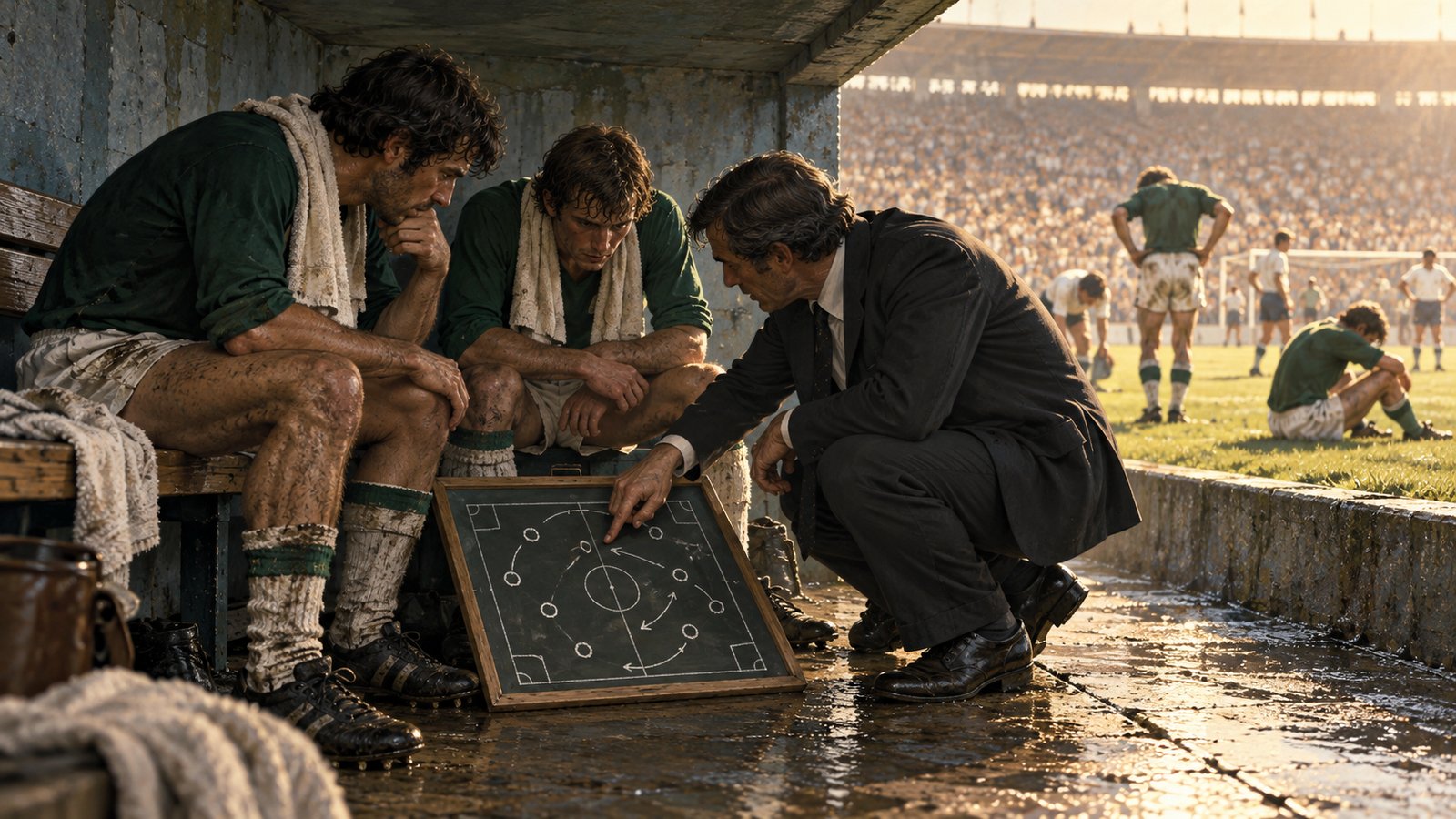
Puzach’s appearance lasted an entire half and produced no goal. That modest beginning fits the importance of the rule. Substitutions did not instantly transform the opening game; they transformed what could happen in every game that followed. The decisive action might now begin beside the pitch, with a reserve removing a tracksuit and a coach choosing when to spend one of two chances.
The 1970 World Cup is often framed through its final image, Brazil passing through Italy before Carlos Alberto’s finish. Its first match left a quieter inheritance. At half-time in a 0–0 draw, one player replaced another and the World Cup acquired a new tactical clock.
Sources
- Rec.Sport.Soccer Statistics Foundation, World Cup 1970 finals
- FIFA, Mexico vs Soviet Union, 1970 World Cup match centre
- 1970 FIFA World Cup
- Substitute (association football)