
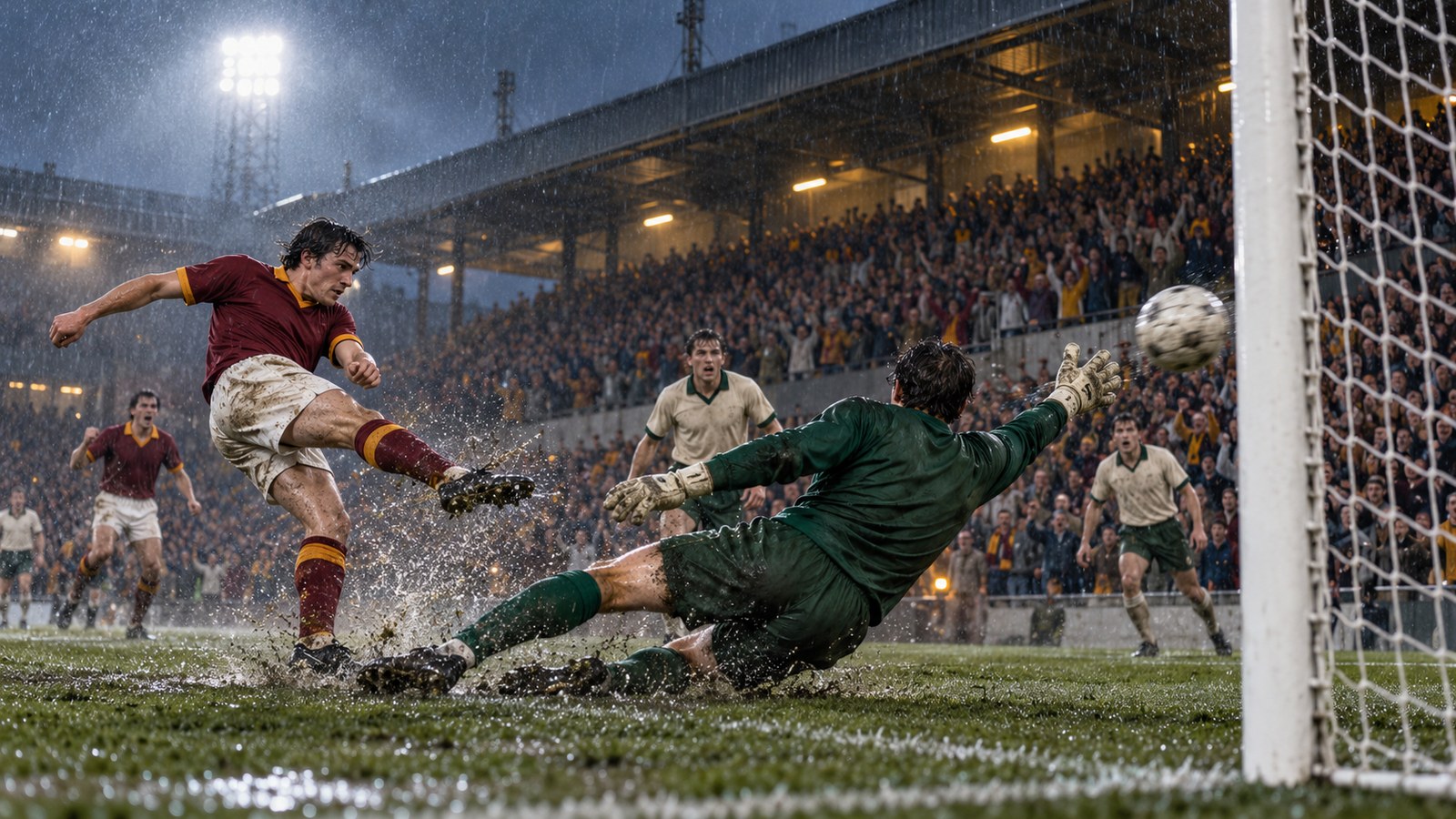
Ross Forbes had the ball on the penalty spot with Motherwell trailing Hibernian 6–5. It was the 87th minute at Fir Park on 5 May 2010, and a match that had already produced eleven goals appeared to be offering the home side one clean route to an equaliser. Graeme Smith dived correctly and saved it.
The miss should have closed the evening. Instead, Lukas Jutkiewicz chased one more long ball in stoppage time, held off the defender beside him and struck a left-footed volley from a severe angle into the top corner. Motherwell had come back from 6–2 down to draw 6–6, even after failing from the spot.
The score explains the spectacle but not the sequence. Hibernian built their lead twice: first through Colin Nish’s hat-trick before half-time, then through Anthony Stokes’s two goals after the interval. Motherwell’s reply was also split into phases. Three goals made the contest plausible again; a saved penalty seemed to end the pursuit; one improvised finish reopened it. The match became extraordinary because every apparent ending left time for another.
Four First-Half Goals Put Hibernian in Command
The fixture carried practical weight before it became chaotic. Motherwell and Hibernian were contesting fourth place and a Europa League qualifying position near the end of the Scottish Premier League season. Craig Brown’s Motherwell began the night one point ahead, so Hibernian could reverse the order with an away victory.
Hibs attacked that opportunity immediately. In the 11th minute, David Wotherspoon sent a low ball across from the right and Nish finished from six yards. Motherwell answered five minutes later. Jutkiewicz worked inside the area and cut the ball across for Giles Coke, who scored his first goal for the club from close range.
The equality lasted only four minutes. John Rankin supplied Nish, whose scuffed shot found a way beneath goalkeeper John Ruddy. In the 28th minute, a poor back-pass from Coke released Derek Riordan. He rounded Ruddy and finished from a tight angle for 3–1.
Nish completed his hat-trick in the 36th minute by sliding Riordan’s low cross into the bottom corner. Some home supporters began leaving. Yet Motherwell reached half-time with a thread still attached to the game: Jim O’Brien crossed from the right and John Sutton launched himself into a header in the 39th minute. The interval score was 4–2, already more eventful than most completed matches.
Two Anthony Stokes Finishes Stretched the Gap to Four
Motherwell’s half-time goal had reduced the scale of the repair, but Hibernian resumed as the sharper side. In the 56th minute, Liam Miller cut the ball back and Stokes scored at the far post. Nine minutes later, Riordan drove a cross toward the near post and Stokes diverted it past Ruddy.
At 6–2, Hibs had scored six times from eight shots on target recorded in the BBC match statistics. Nish had three, Stokes two and Riordan one. The visitors were also chasing the end of a six-match losing run. A four-goal lead with roughly 25 minutes remaining looked large enough to settle both the night and fourth place.
But the scoreboard concealed a change in the match’s direction. Motherwell held 57 percent of the possession and would finish with 12 attempts on target. They did not need one perfect attacking movement; they needed the ball to remain around Hibernian’s area often enough for rebounds, deliveries and set pieces to accumulate.
A Rebound, a Free Kick and a Header Changed the Noise
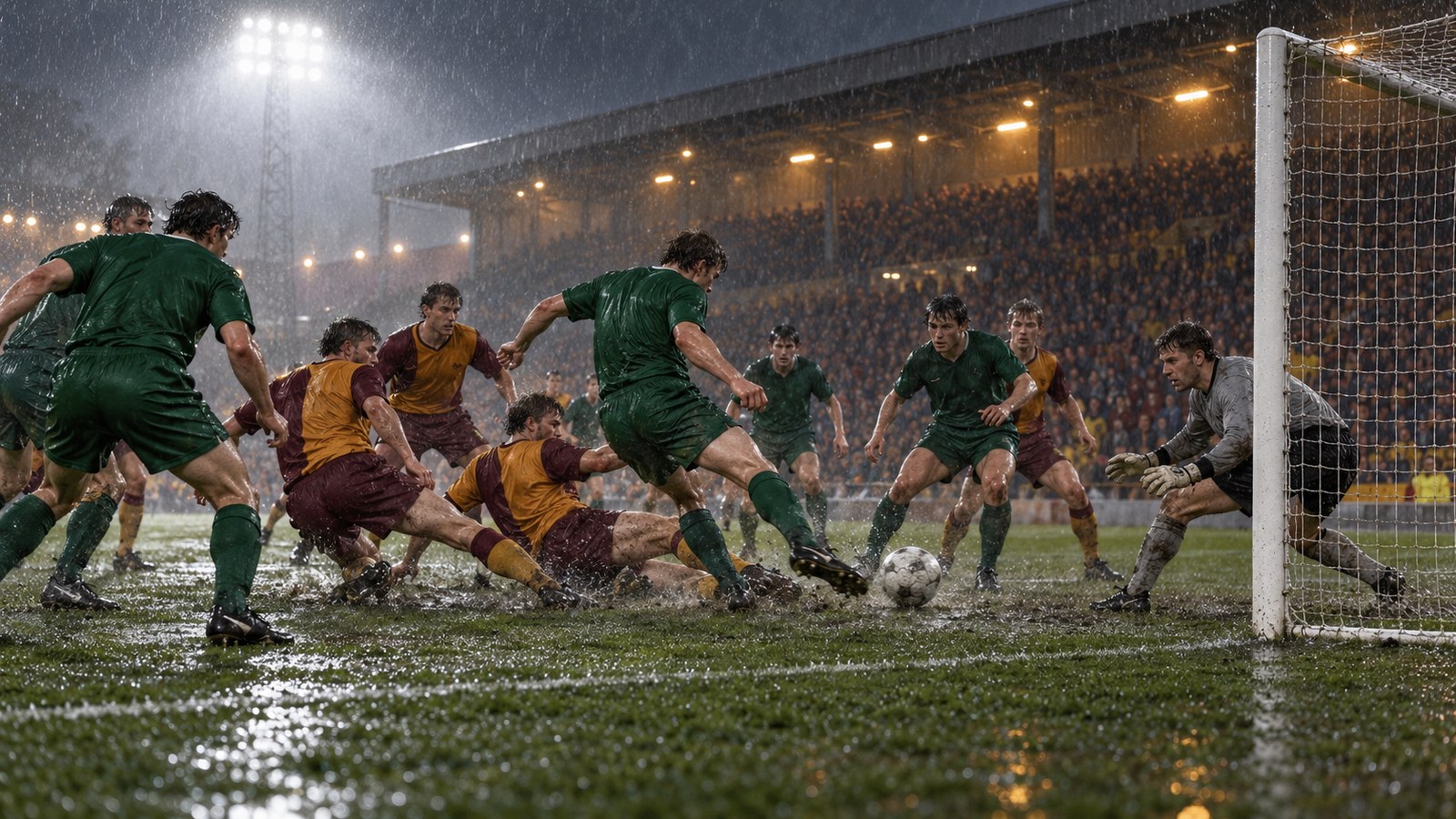
The recovery began in the 67th minute. O’Brien struck the post from 25 yards, and Coke reacted to the rebound for his second goal. Five minutes later, Tom Hateley sent a long free kick into the area. Smith failed to control it and helped the ball over his own line. The margin had fallen from four to two in five minutes.
Motherwell then made the score 6–5 in the 76th minute. O’Brien delivered another cross, and Sutton headed in his second goal. Hibernian’s advantage had not disappeared, but the evening’s physical shape had altered. The home side were feeding balls into the area; the goalkeeper and defenders were being asked to make the next action correctly while the crowd understood that one more chance could level the match.
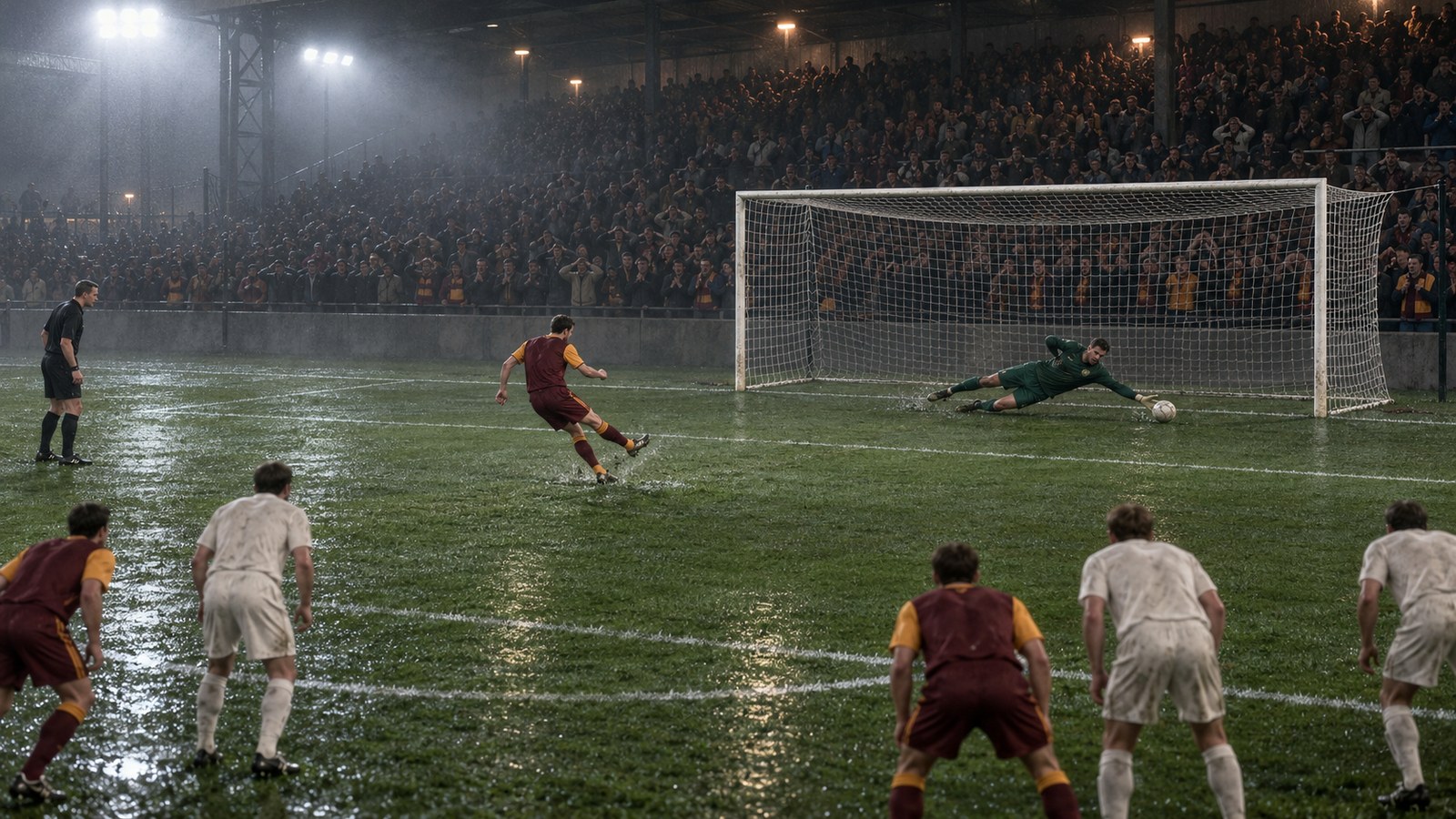
That chance appeared when Smith came off his line and brought down Jutkiewicz. Forbes had entered as a substitute only minutes earlier. He took the penalty, but Smith parried it. The save was not a minor interruption. It arrived after Motherwell had spent twenty minutes reducing the deficit and appeared to waste the clearest possible finish to the comeback.
Other famous recoveries have depended on the sense that the first goal changes what the losing side believes. Barcelona’s three late goals against Paris Saint-Germain in 2017 compressed that feeling into a final rush. At Fir Park, belief had to survive a penalty miss as well as a four-goal deficit.
Jutkiewicz Found the Finish the Penalty Had Not
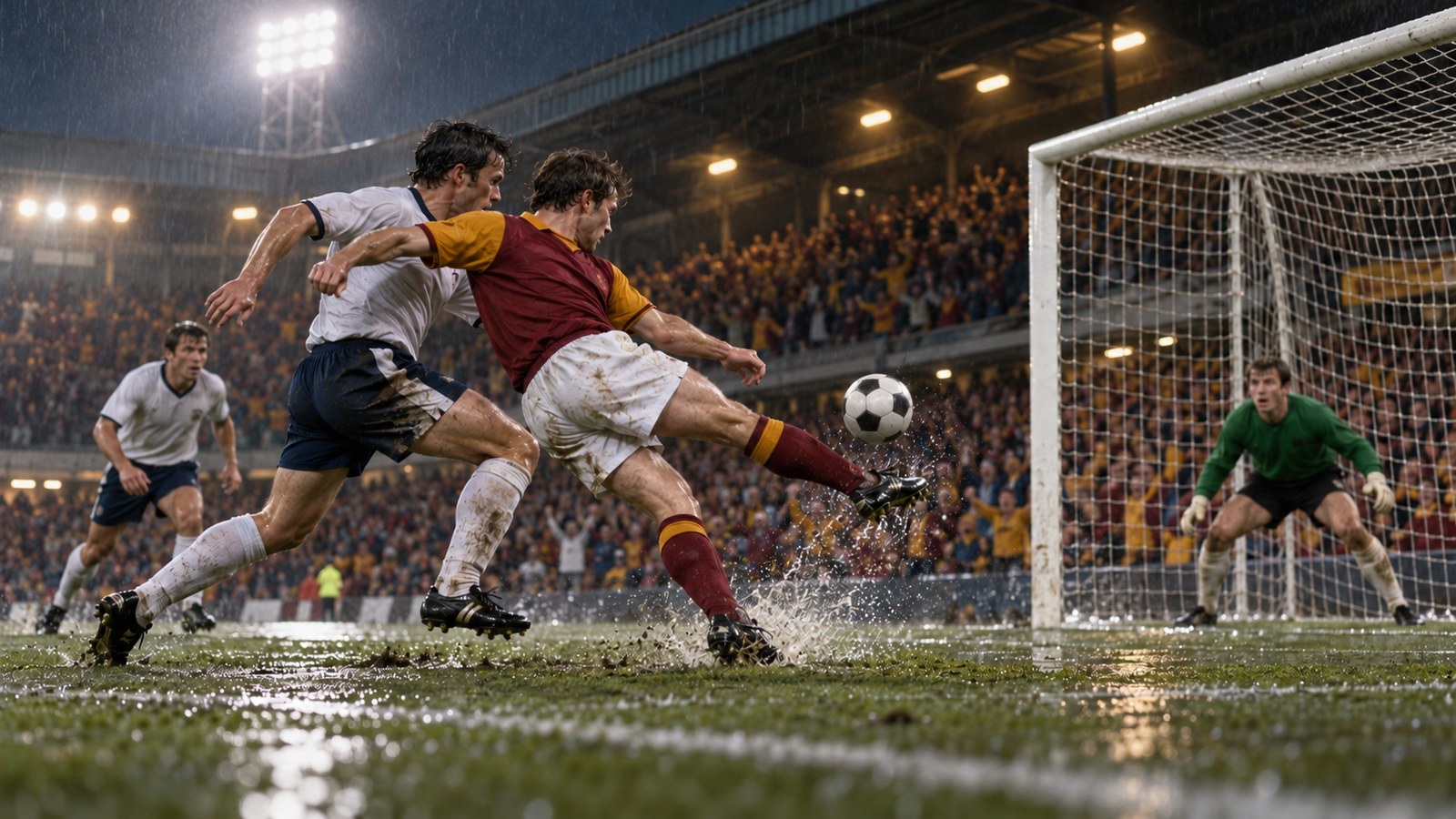
Two minutes into stoppage time, Michael McGlinchey’s long pass dropped toward the right side of Hibernian’s penalty area. Jutkiewicz moved across the defender, held his position and met the ball before it could settle. From near the edge of the six-yard area but at an acute angle, he drove a left-footed volley high across Smith and into the far top corner.
The technique mattered because the chance offered no time for a touch, a reset or a square pass. Jutkiewicz had to turn a difficult arrival into the clean strike Motherwell had just failed to produce from twelve yards. His team-mates chased him toward the corner as Fir Park moved from the silence of the penalty save to an equaliser few spectators could have expected at 6–2.
The final distribution of goals made the score look almost designed: Coke and Sutton scored twice each for Motherwell, with Hateley and Jutkiewicz adding one; Nish scored three for Hibs, Stokes two and Riordan one. Twelve goals came from seven scorers. The match finished with Motherwell registering 17 total attempts and Hibernian 12, while the official attendance was 6,241.
It was recorded as the highest-scoring match in Scottish Premier League history. The total was remarkable, but the route to it was harder to reproduce. Hibernian led 4–1 and 6–2. Motherwell scored four of the final five goals. Between the fifth and sixth came the sort of missed penalty that normally becomes the last image of a failed comeback.
The Draw Preserved Motherwell’s European Advantage
A 6–6 draw yielded the same single league point as any other draw, but its timing affected the table. Motherwell remained one point ahead of Hibernian entering the final round. The home side had prevented a direct rival from passing them on a night when defeat had seemed certain.
The league positions carried a complication. Motherwell finished fifth after drawing their final match, while Hibernian finished fourth. Motherwell nevertheless entered the following season’s Europa League because Dundee United, who occupied another qualifying place through their Scottish Cup victory, had also finished third in the league. The European chase surrounding the 6–6 match therefore did not vanish with the final table.
What survives most clearly is the order of the final half-hour. Coke scored from the rebound. Hateley’s free kick escaped Smith. Sutton headed in. Smith then saved the penalty. Jutkiewicz still volleyed the equaliser. The sequence repeatedly converted closure into continuation.
That separates Fir Park from a simple exchange of goals. The match shared the emotional acceleration of West Germany’s three-goal recovery against England in 1970, but added another test after the comeback had almost arrived. Motherwell did not merely erase four goals. They erased the apparent consequence of missing the chance that was supposed to complete the job.
Sources
- BBC Sport, Motherwell 6–6 Hibernian
- The Guardian, Motherwell Fight Back From 6–2 Down Against Hibernian to Snatch Draw
- 2009–10 Scottish Premier League