
Nottingham Forest’s rise is easy to turn into a personality story. Brian Clough walks into a provincial club, says impossible things with perfect timing, and somehow carries Forest from the Second Division to the European Cup. The version is entertaining because Clough really was extraordinary. It is also too small. Forest were not just a miracle powered by one man’s voice. They were a carefully assembled football machine, built from recruitment, trust, small-squad clarity, and a manager-coach partnership that understood exactly what kind of pressure they wanted opponents to feel.
The speed of the climb still looks absurd. Forest won promotion in 1977, won the First Division title in 1978, and then won the European Cup in 1979 and 1980. That sequence sounds like folklore because modern football trains us to expect growth to be gradual, expensive, and heavily branded. Forest’s ascent was different. It came from a club that found the right players, reduced the game to repeatable demands, and made European giants uncomfortable in matches that never felt as glamorous as the names on the program.
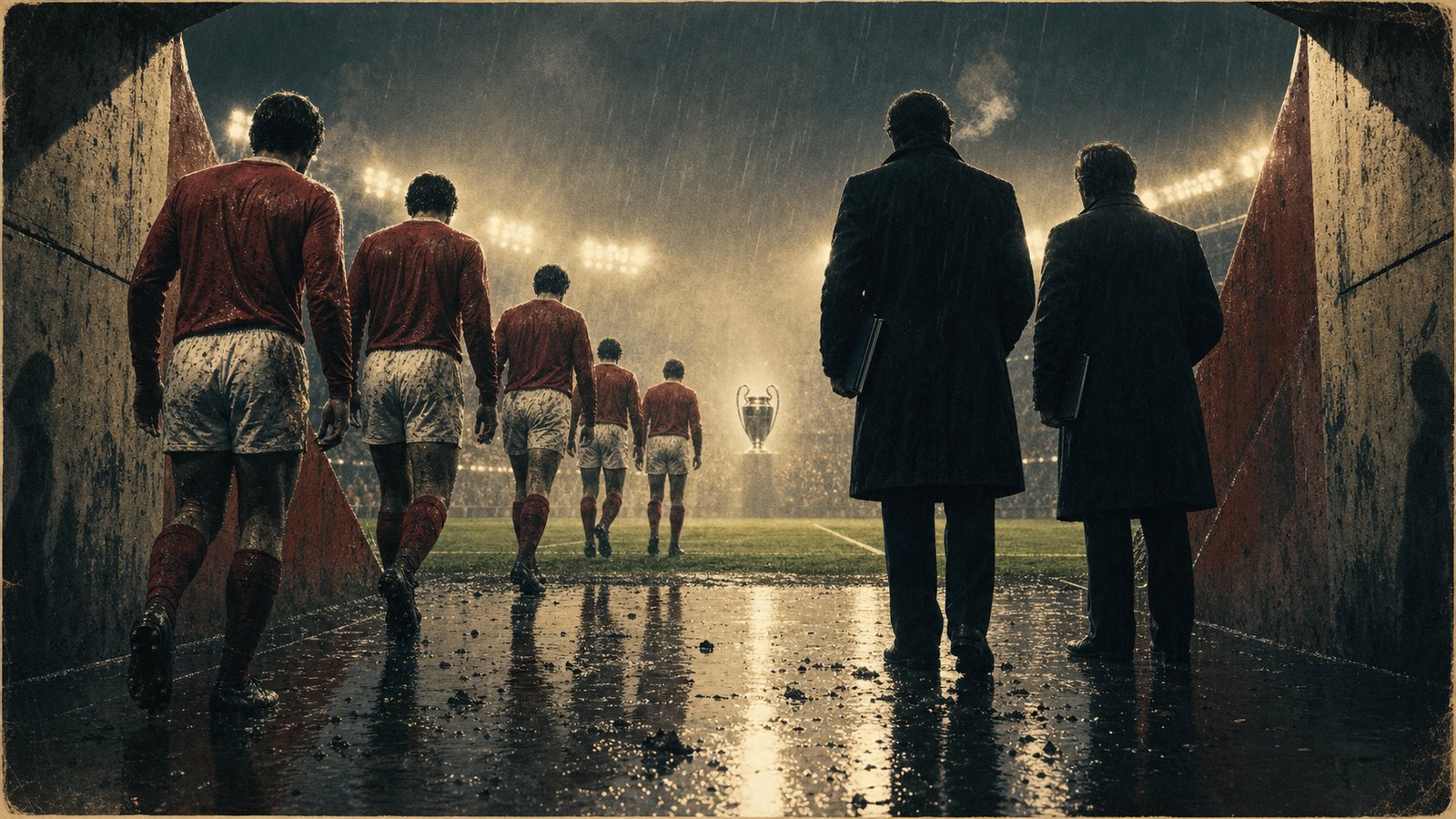
Promotion was only the first disruption
Forest’s 1977 promotion is often treated as the warm-up act, but it was already a warning. Clough and Peter Taylor did not build a side that needed to dominate the ball for long stretches or announce itself with elaborate theory. They built one that understood territory, tempo, and emotional control. Players knew when to be simple, when to release wide, when to compete for second balls, and when to make the match feel smaller than the opponent wanted.
That mattered in the First Division because newly promoted sides can be tempted to perform gratitude. Forest did the opposite. They behaved as if the level owed them nothing and intimidated them even less. The title in 1977-78 was not a long romance; it was a season of ruthless practicality. They defended with concentration, carried threat without waste, and made bigger clubs look strangely anxious once the first fifteen minutes failed to produce the expected hierarchy.
Clough’s voice worked because Taylor’s eye supplied the cast
The Clough legend can swallow Peter Taylor if the story is told carelessly. Taylor’s recruitment eye was central to the machine. Forest did not simply collect famous names. They found footballers who fit jobs, temperaments, and dressing-room needs. The right goalkeeper, the right center backs, the right midfield balance, the right wide options, the right forwards: each choice mattered because the squad was not large enough to hide bad fits behind endless rotation.
Clough’s public authority gave the project its voltage, but Taylor helped ensure that the authority was not wasted on the wrong players. The best managerial charisma still needs a believable team sheet. Forest’s climb was possible because the players were good enough to turn the instructions into performances and grounded enough to accept that the club’s advantage came from clarity rather than celebrity.
The European Cup suited Forest’s narrow strengths
Forest’s European wins can look even more shocking than the league title, but cup football rewarded several things they did well. They could live inside tight margins. They could keep matches from becoming open exhibitions. They could use John Robertson’s delivery and invention, the security of Peter Shilton, and a compact team structure to make knockout ties feel tense for opponents who expected to set the tone.
European football in that period was not the giant group-stage content machine of today. The European Cup was shorter, sharper, and less forgiving. That did not make it easy; it made emotional control more important. A side that could win ugly, protect a lead, and avoid panic had real power. Forest’s achievement was not that they accidentally stumbled into two trophies. It was that their style translated perfectly into the kind of risk that European knockout football created.
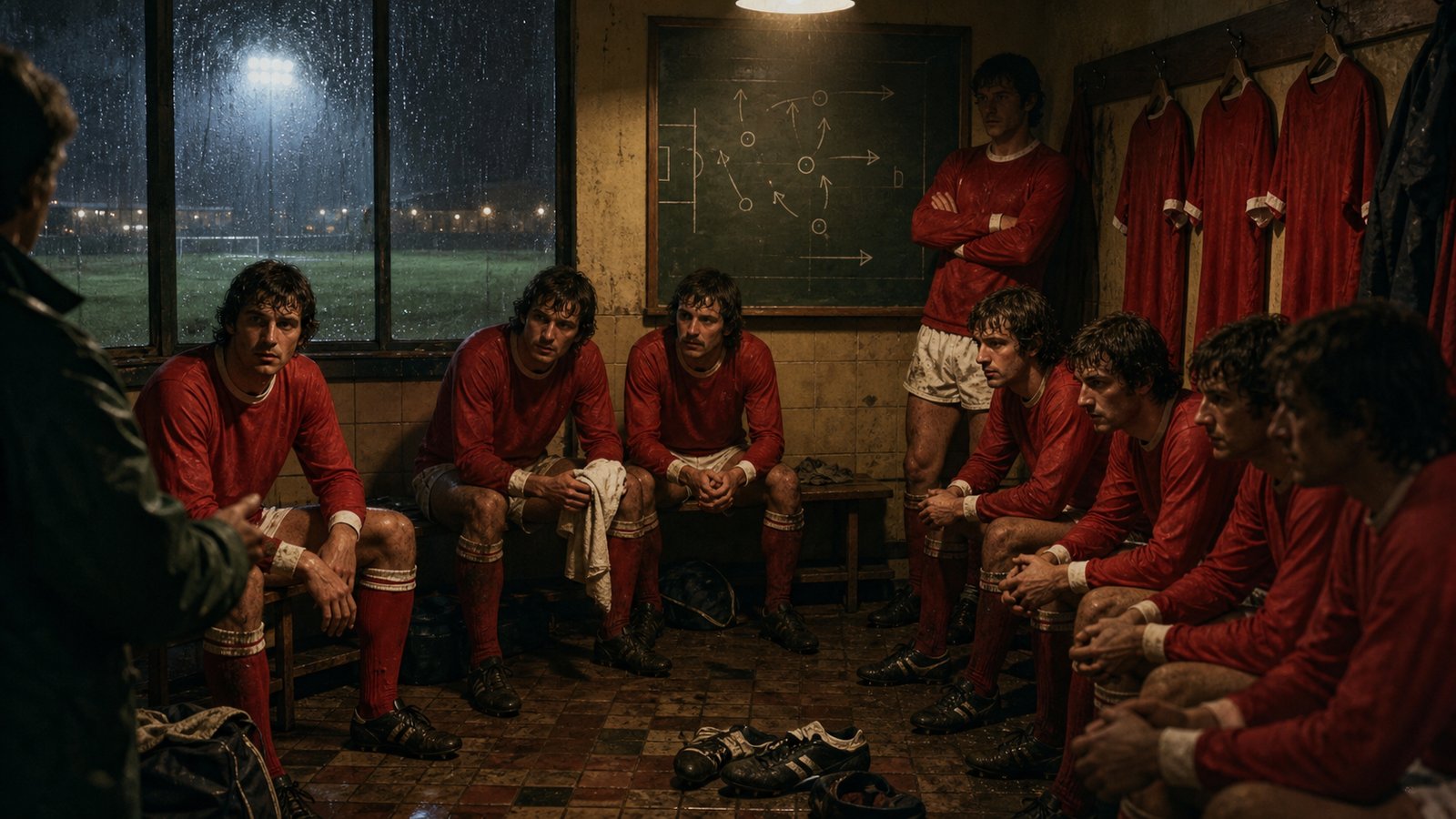
The team made modesty feel aggressive
Forest were not modest in ambition, but they were modest in method. They did not need to look like the most spectacular team in Europe to become the hardest team to remove. Their aggression was hidden in their refusal to overextend. Opponents could have the costume of grandeur: the larger ground, the deeper history, the bigger continental reputation. Forest kept the match in a zone where details mattered more than mythology.
That is why the story still feels modern. Many underdog projects talk about identity as if it must be expressive, high-possession, and easily photographed. Forest’s identity was colder than that. It was the capacity to make talented opponents play an awkward match, then punish them with one or two moments that looked simple only after they had happened.
The miracle label hides the work
Calling Forest a miracle is not entirely wrong. The scale of the achievement deserves a word that admits disbelief. But the label becomes lazy when it replaces explanation. Miracles do not scout. Miracles do not build goalkeeping security, rehearse patterns, manage egos, or repeat defensive habits in miserable weather. Forest’s rise was astonishing because the work was real and the timeframe was compressed.
Clough’s genius was not merely that he inspired belief. It was that he made belief practical. Players did not have to imagine themselves as abstract heroes. They had to win their duels, play the pass that the situation demanded, and trust that the team’s structure would keep the match close enough for quality to decide it. That is a different kind of confidence from romantic overachievement.
The fall later made the rise feel even stranger
Forest’s later place in English football can make the European years feel detached from reality, as if they belonged to another sport entirely. But that distance is part of the lesson. Clubs are not permanent expressions of destiny. They are temporary alignments of people, money, timing, recruitment, coaching, and institutional nerve. For a few years, Forest aligned those elements with almost impossible precision.
Their story should not be reduced to nostalgia for a smaller game. It should be remembered as proof that football history is not always written by the largest institutions. Sometimes it is written by a club that understands itself more clearly than richer opponents, by a squad that accepts unglamorous work, and by a manager-coach partnership that turns a narrow window into a continental dynasty. Nottingham Forest were a miracle, but not because the football made no sense. They were a miracle because, for a short and brilliant spell, the football made more sense than anyone else expected.
The Brian Clough version remains powerful because it gives the rise a human face, but the football underneath was broader than charisma. Forest’s best years depended on a squad that could absorb instruction without becoming timid, a goalkeeper who gave the back line authority, wide service that made transitions dangerous, and forwards who understood that one chance in a tight European match might be enough. Those details are less quotable than Clough’s interviews, but they explain why the story survived contact with Real opponents rather than only with English mythology.
There is a recruitment lesson here too. Forest did not merely ask whether a player was talented in the abstract. The question was whether he could live inside the club’s emotional weather: fierce standards, plain speaking, pressure disguised as humor, and matches where patience was as important as ambition. In that environment, a modest squad could feel larger than it was because the roles repeated cleanly. The club’s European nights were not random explosions. They were the result of a team that knew how to make a narrow advantage feel like a locked gate.
Sources
Nottingham Forest historical records; UEFA European Cup records; Daniel Taylor, I Believe in Miracles; Jonathan Wilson, Inverting the Pyramid; contemporary English league records from 1977-1980.