
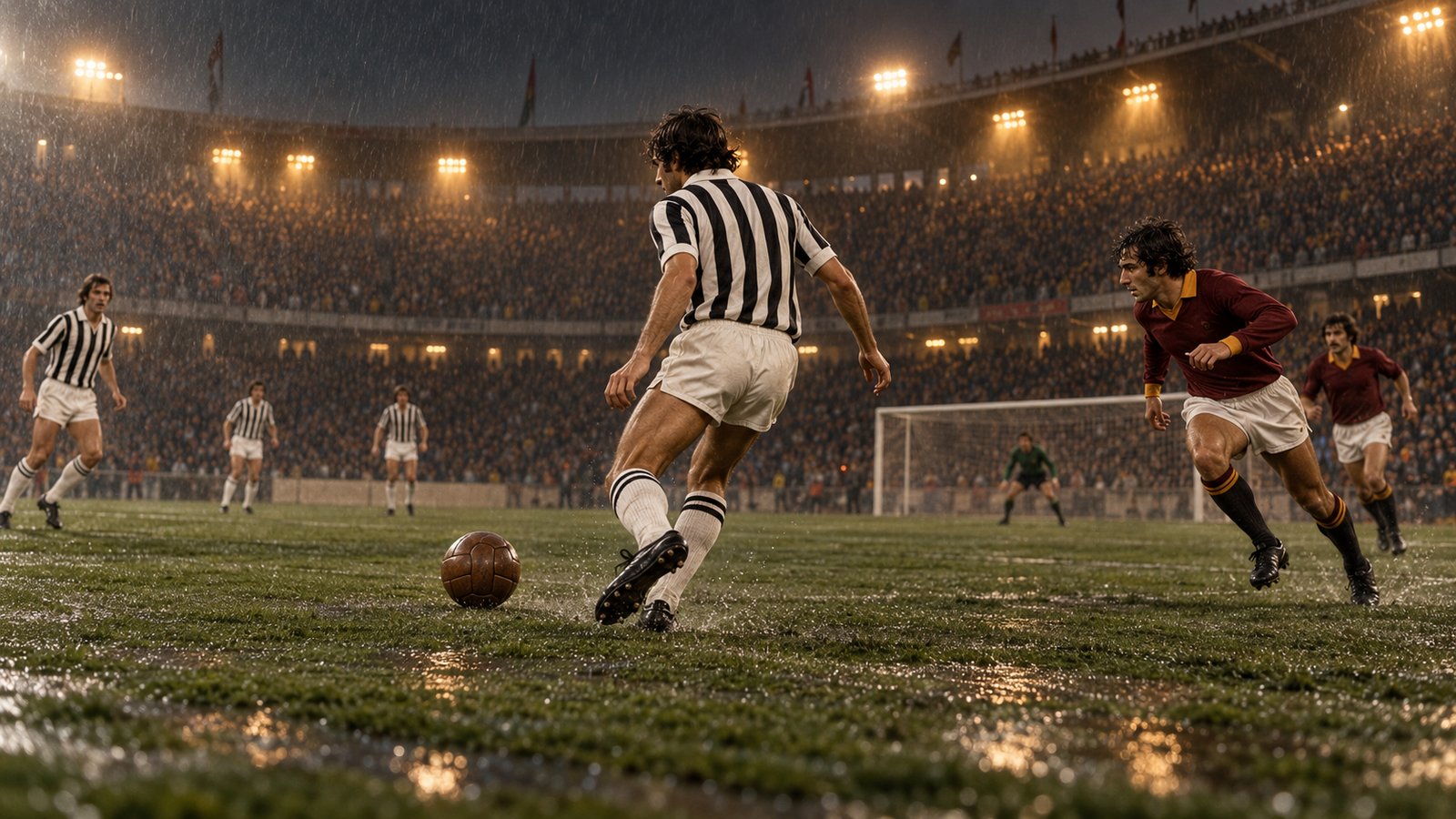
A defender stationed behind the line lives close to the emergency. One forward escapes, one pass bends through the wrong channel, and the choice can narrow to a foul or a clear run at goal. Gaetano Scirea spent his senior career in precisely that exposed territory. From his Serie A debut in 1972 to retirement in 1988, the card that never arrived was red.
The clean record sounds like a character note, and Scirea was remembered as a gentleman. Yet it also belongs on the tactics board. His calm was useful because it had a method: read the pass early, arrive before the collision, leave an angle for the next ball. As a libero for Juventus and Italy, he made the last defender less like an emergency brake and more like the first player in possession.
The Missing Red Card Points Backward
The Italian federation’s remembrance of Scirea uses two words together: elegant and clean. It also makes the striking claim plainly—he was never sent off. That record covered a senior league career listed at 58 appearances for Atalanta and 377 for Juventus, plus 78 appearances for Italy. It is not evidence that he avoided risk. The libero occupied the space where risk arrived first.
A dismissal usually records the end of a sequence, not its beginning. The defender is late because his starting position was wrong, because the pass was read too slowly, or because the attacker was allowed to turn before pressure arrived. Scirea’s distinction lay farther upstream. He reduced the number of moments that demanded a rescue. When he stepped forward, it was often to meet the ball rather than the body.
That difference matters when a defender works without the protection of another covering player. A sweeper who charges into every duel simply moves the crisis closer to his own goal. One who retreats forever gives the opponent room to advance. Scirea’s work sat between those impulses. He judged when to protect depth, when to intercept and when possession itself could remove the danger.
Atalanta Taught the Position Before Turin Enlarged It
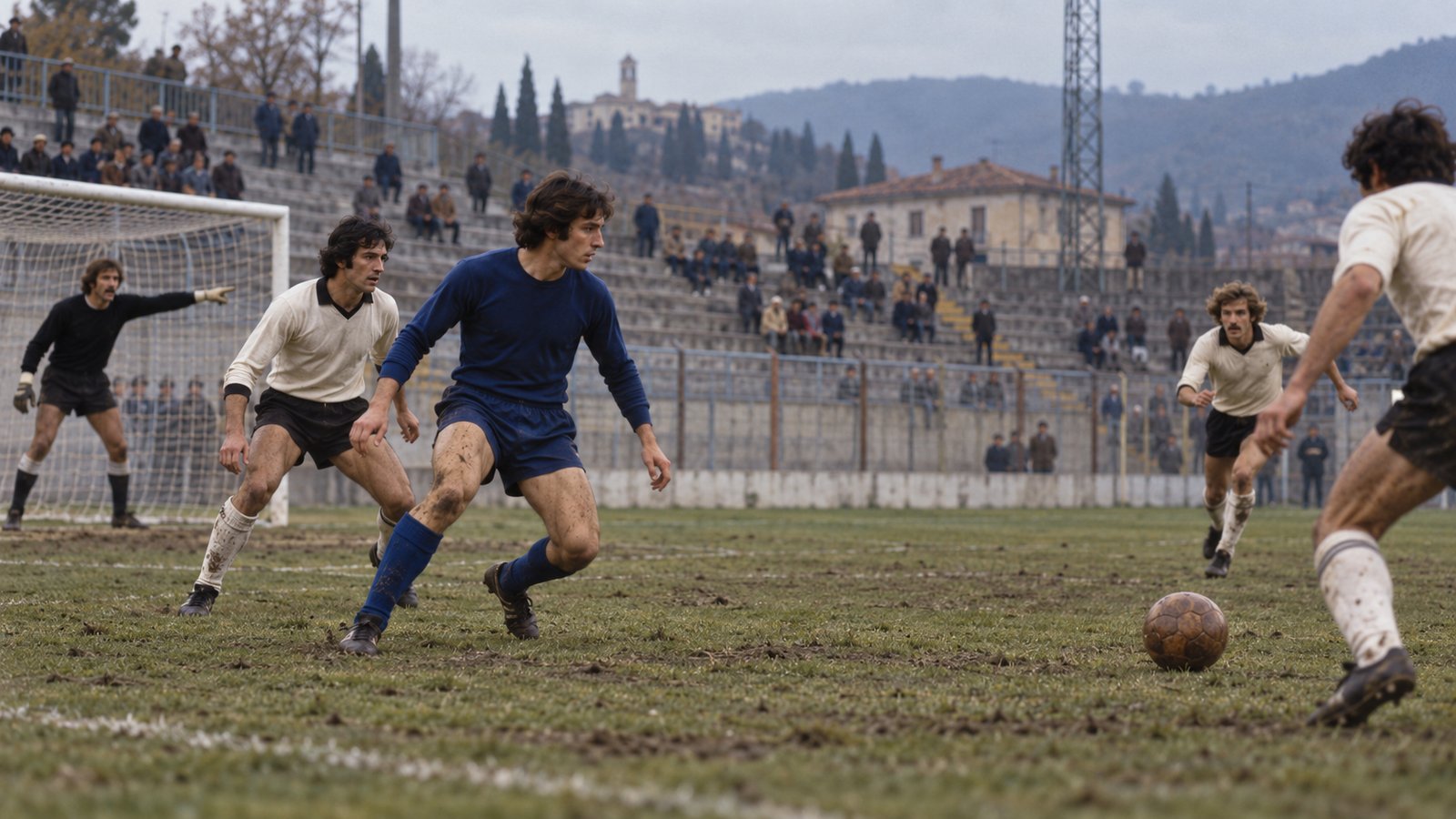
Scirea entered Serie A with Atalanta in 1972. Two years later Juventus recruited him, and the 21-year-old became a starter during his first season in Turin. The speed of that promotion is easy to flatten into destiny. In practice, it placed a young defender inside a side expected to control domestic matches, survive European ties and treat every concession as an event.
That setting changed the demands of the role. A team with long spells of possession cannot ask its deepest outfield player merely to clear the ball. He must remain connected while the attack expands ahead of him. If the move breaks down, he reads the counterattack; if it survives, he offers a safe pass and begins another phase. The same player therefore has to think like a guard and a midfielder within seconds.
Scirea’s technical security made that exchange possible. He could receive without turning the moment into a scramble, carry into the space an opponent had abandoned and release a measured pass rather than an indiscriminate clearance. The point was not decoration. Each controlled first touch gave teammates time to move from their defensive shapes into attacking ones.
Italian football already had a deep history of the spare defender, including the severe versions associated with Helenio Herrera’s Inter. Scirea did not erase that inheritance. He showed how the protected player at the back could supply more than insurance. The libero could alter where an attack began.
The First Pass Changed the Shape of the Job
Picture the moment after an interception. The obvious option is a hard clearance into the stand or toward an isolated forward. Scirea often had a third possibility: carry the ball beyond the first presser. That short advance forced an opponent to leave someone else, and a passing lane appeared where the pressure had been.
This is how composure becomes tactical rather than ornamental. A defender who can travel with the ball changes the opponent’s calculation. The nearest forward must decide whether to close him, screen midfield or preserve energy for the next attack. None of those choices is harmless. If the forward presses, Scirea can release a teammate. If the forward waits, the libero gains ground and Juventus plays with an extra man in the next line.
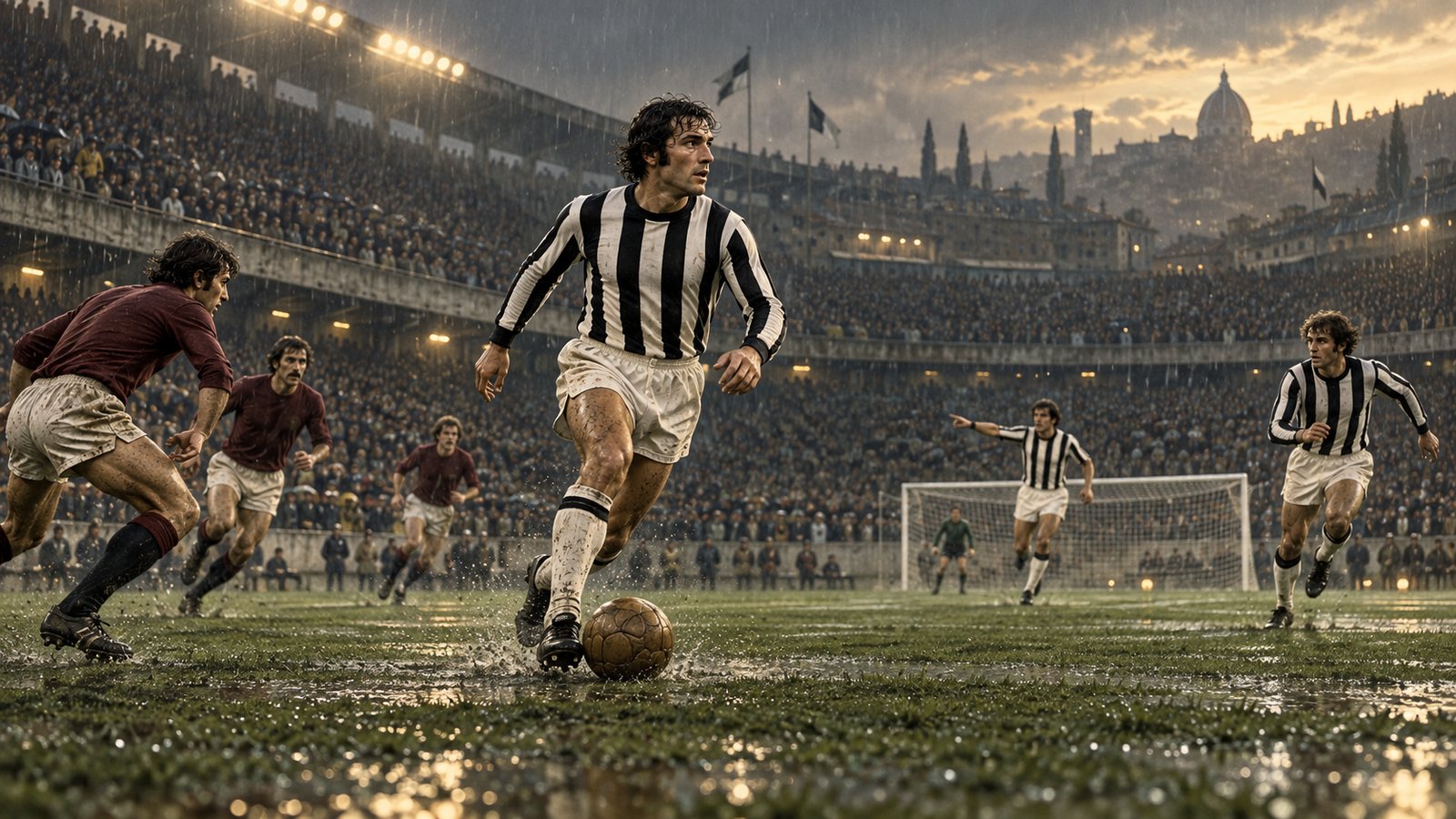
The role still depended on restraint. A forward run by the deepest defender creates its own vacancy. Scirea had to know when the move was secured by teammates and when advancing would merely exchange one danger for another. His reputation for serenity came partly from making those calculations look uneventful. The best choice often removed the drama before the crowd recognized it.
There is a useful comparison with Gyula Grosics leaving his penalty area for Hungary. Grosics expanded what a goalkeeper could protect by meeting danger outside the box. Scirea expanded what a last defender could create after he had protected it. Both stories concern space before they concern spectacle.
Italy Used Calm in a Brutal 1982 Sequence
Fulvio Bernardini gave Scirea his Italy debut in 1974 as the national team looked beyond Giacinto Facchetti. He remained an international for 12 years, appearing at three World Cups—1978, 1982 and 1986—and the 1980 European Championship. The long span placed him inside different teams, but Spain in 1982 supplied the hardest public test of his method.
Italy’s defensive group included Dino Zoff in goal, Claudio Gentile, Antonio Cabrini, Fulvio Collovati and the young Giuseppe Bergomi. Those names did not describe identical jobs. Gentile could follow and disrupt; Cabrini could advance from the side; Zoff governed the goalmouth. Scirea’s value was to read what those movements left behind and reconnect the team after possession changed.
The tournament’s decisive stretch offered little room for delayed thought. Italy came through a second-round match against Brazil, then beat West Germany 3–1 in the final. Against opponents capable of turning a loose touch into a chance, the libero’s decisions had to be both conservative and constructive. Protect the central route, but do not hand the ball straight back. Support an aggressive teammate, but do not follow him into the same duel.
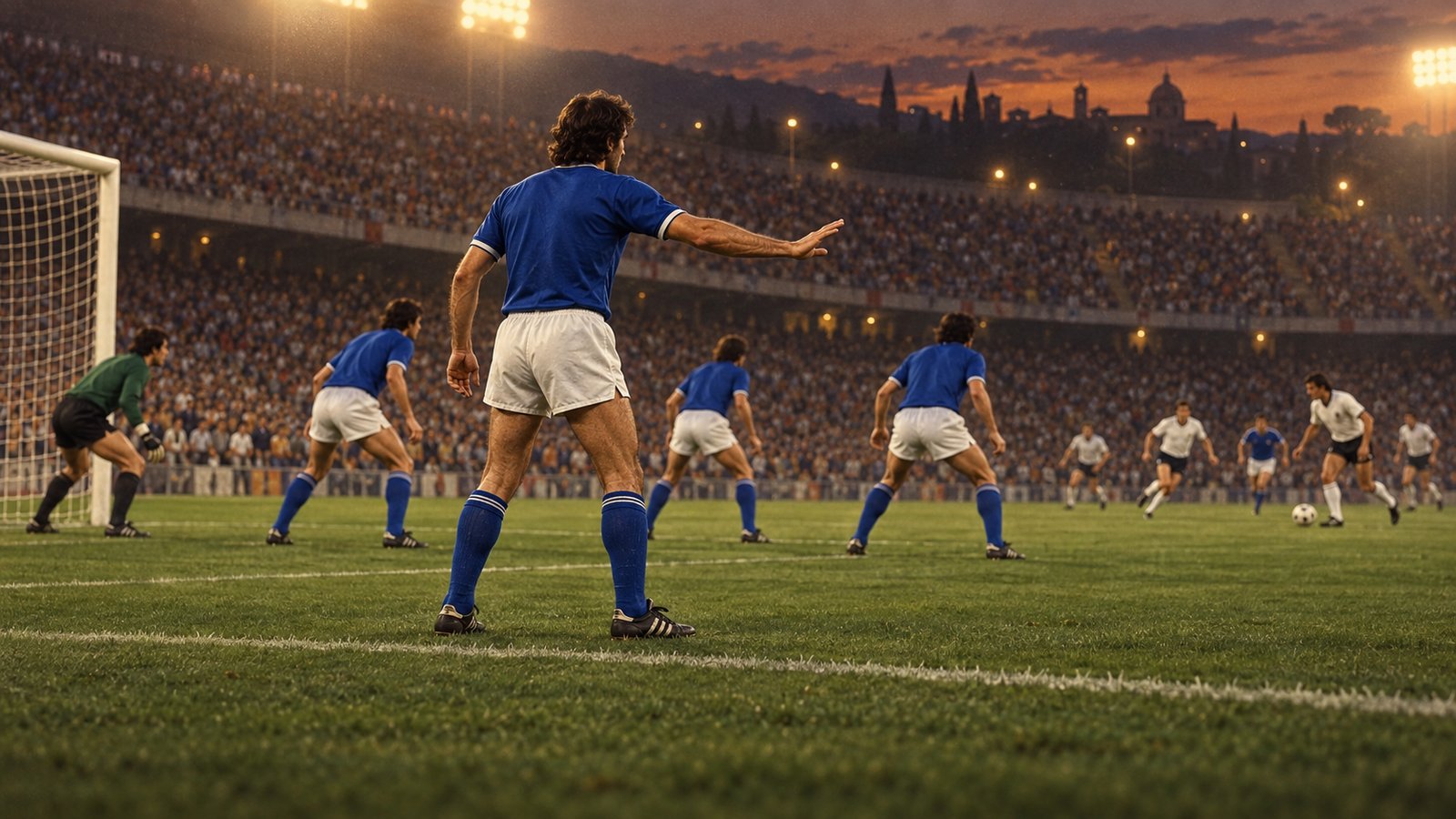
Scirea’s spotless discipline can mislead if it is treated as softness. Clean defending at that level required the nerve to wait half a second when panic invited a lunge. It also required accepting that not every forward movement needed to be stopped immediately. Delay could be a victory if it restored the line, narrowed the pass and brought another blue shirt into the play.
Fourteen Juventus Years Made Restraint Look Like Authority
Scirea stayed at Juventus for 14 years. He held the club’s appearance record until Alessandro Del Piero passed it in 2008. Longevity at that scale measures more than durability. Managers changed, opponents changed and the physical margin of a defender’s career narrowed, yet the central habits remained useful: scanning before the ball arrived, defending from a balanced stance and treating recovery of possession as the start of another task.
He retired in 1988. The following year, Juventus sent him to Poland to observe a future European opponent. He died there in a car accident on 3 September 1989, aged 36. Thirty years later, the Juventus Museum opened a temporary exhibition in his memory. The club’s act of remembrance and the federation’s tributes return repeatedly to the man as well as the player.
Enzo Bearzot, who coached Italy in 1982, said that if anyone deserved to have a shirt retired, it was Scirea: a great player and a great person. The praise is personal, but it need not obscure the football. Courtesy alone does not produce hundreds of elite appearances at the base of a defence. His discipline survived because technique, positioning and judgment supported it.
The absence of a red card is therefore not the whole argument. It is the clean edge of a larger pattern. Scirea defended without making desperation his identity, then used the recovered ball to give his team direction. The libero stood last, but his most revealing action was often the first pass.
Sources
Italian Football Federation, “30 Years Without Gaetano Scirea, the Gentleman With a Place in Our Hearts”; Juventus, “Thirty Years Without Scirea” and “Remembering Gaetano Scirea”; Gaetano Scirea career record.