
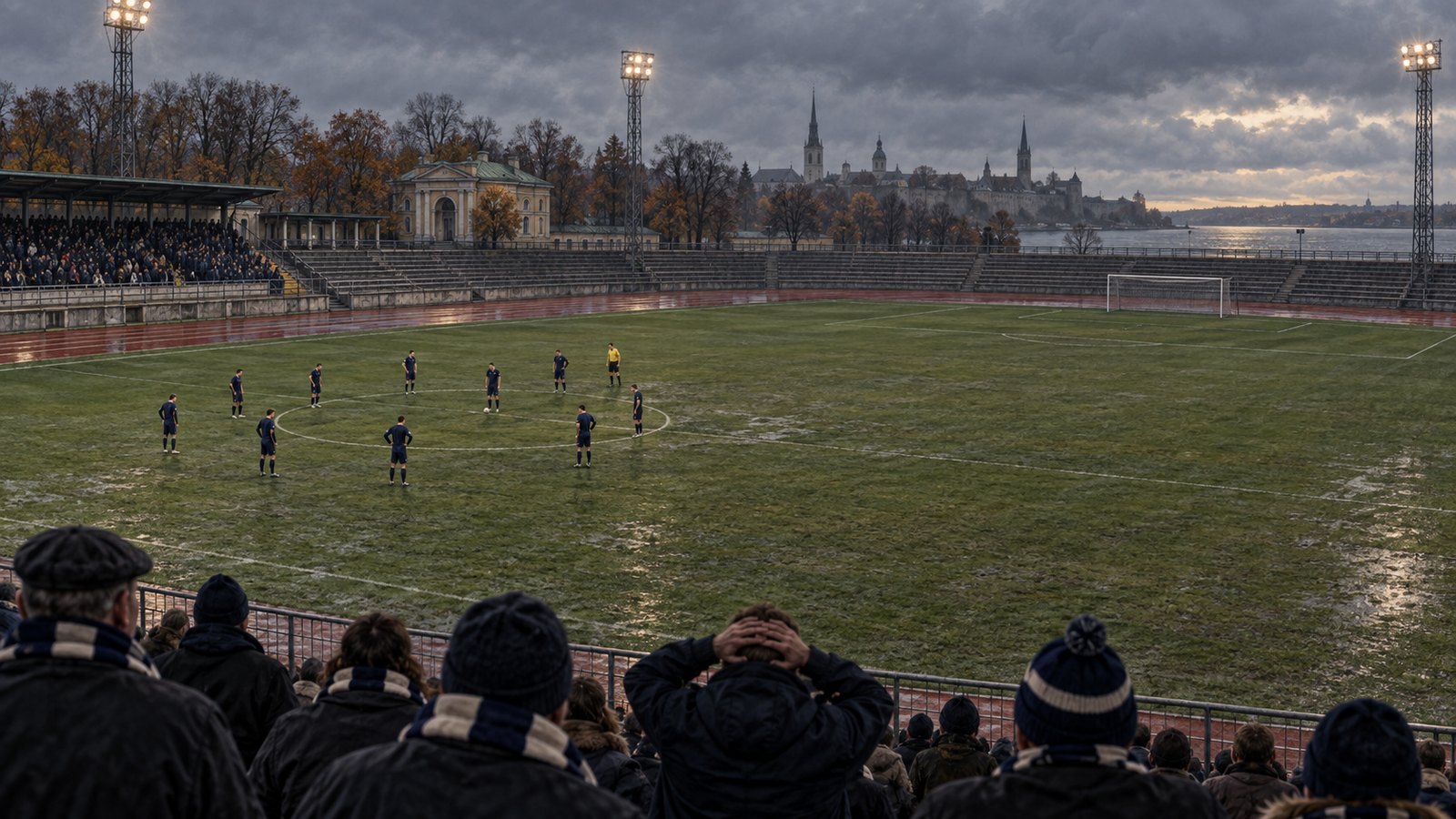
At three o’clock on 9 October 1996, Scotland walked into Tallinn’s Kadriorg Stadium and found no opposition. Referee Miroslav Radoman still observed the formalities. His assistants inspected the nets. The captains’ ritual became a one-man exercise. Billy Dodds nudged the ball to John Collins, captaining Scotland for the first time, and Radoman blew again almost immediately.
The match had lasted about three seconds. Traveling supporters had barely begun singing “There’s only one team in Tallinn” before the players turned back toward the tunnel. Scotland expected the empty Estonian half to be worth a 3–0 victory. Yet the result that entered the qualification table came four months later, 1,500 miles away, after a full goalless match in Monaco.
Between those two kick-offs sat the real contest: a dispute over weak temporary floodlights, an emergency decision made during the night, a national association that refused a same-day change, and a governing committee forced to judge the consequences of its own instruction. The empty field looked simple. The case surrounding it was anything but.
Temporary Lights Put the Original Time in Doubt
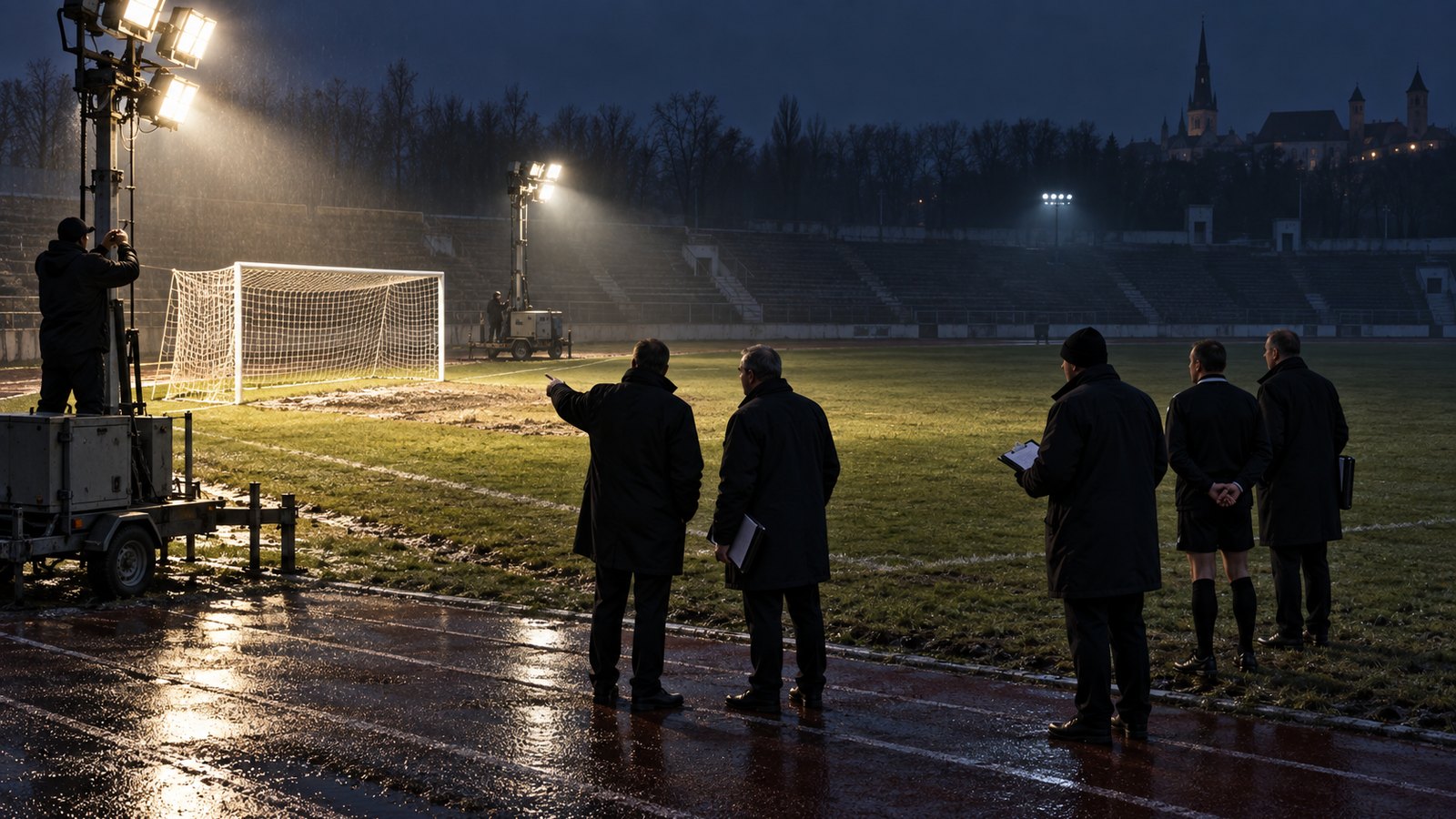
Estonia and Scotland were due to begin their World Cup qualifier at 6:45pm local time. Kadriorg Stadium did not have permanent lighting suited to the occasion, so temporary floodlights had been hired from Finland. FIFA delegate Jean-Marie Gantenbein examined them around the under-21 fixture played the previous evening and raised concerns about what they provided.
Scotland manager Craig Brown wanted the lights tested at full power. The low glare around one goal troubled him, and the Scottish argument was framed as a sporting problem: a goalkeeper could lose sight of a ball arriving from the left side. Brown said his team would play at the agreed time if ordered, but the Scottish FA sent a late-night fax to FIFA headquarters in Zurich. Copies were slipped under the doors of Gantenbein and Yugoslav referee Radoman.
FIFA’s emergency committee met at about 2:30 in the morning. Its answer was daylight. The start would move forward by three hours and 45 minutes, from 6:45 to 3pm. The decision removed the lighting problem but created an entirely different fixture on a working Wednesday.
For Scotland, the new order settled the immediate question: be at the ground in the afternoon. Estonia saw a command issued too late to carry out fairly. What appeared on paper as a revised time reached two teams living under very different assumptions.
Estonia Kept Its Team Sixty Miles Away
The Estonian squad was based at Kethna, roughly 60 to 65 miles from Tallinn. Some players were part-time, supporters were at work, and the event arrangements had been built around an evening start. Estonia said security, transport and preparation could not simply be brought forward after notice arrived that morning.
There was money in the argument too. The BBC had reportedly agreed to pay £50,000 to televise the match live in Scotland. An afternoon start conflicted with coverage of the Dunblane memorial service, making the original broadcast arrangement impossible and threatening much of Estonia’s fee. In a newly independent football nation operating with limited resources, that was not a trivial loss.
Aivar Pohlak, the Estonian FA president, announced that the team would leave its base at four o’clock, following the plan for 6:45. Estonia knew Scotland would have appeared and departed by then. The refusal was deliberate, but it was presented as resistance to a last-minute order rather than withdrawal from the fixture itself.
Former goalkeeper Mart Poom later described the feeling that a young, small country was being treated as if its arrangements could be changed without consequence. Brown, meanwhile, kept Scotland preparing normally because he suspected Estonia might still arrive at the final moment. The players warmed up while vehicles came and went beyond the ground. Nobody knew whether the day would produce a match, a bluff, or paperwork.
The Referee Completed Every Available Formality
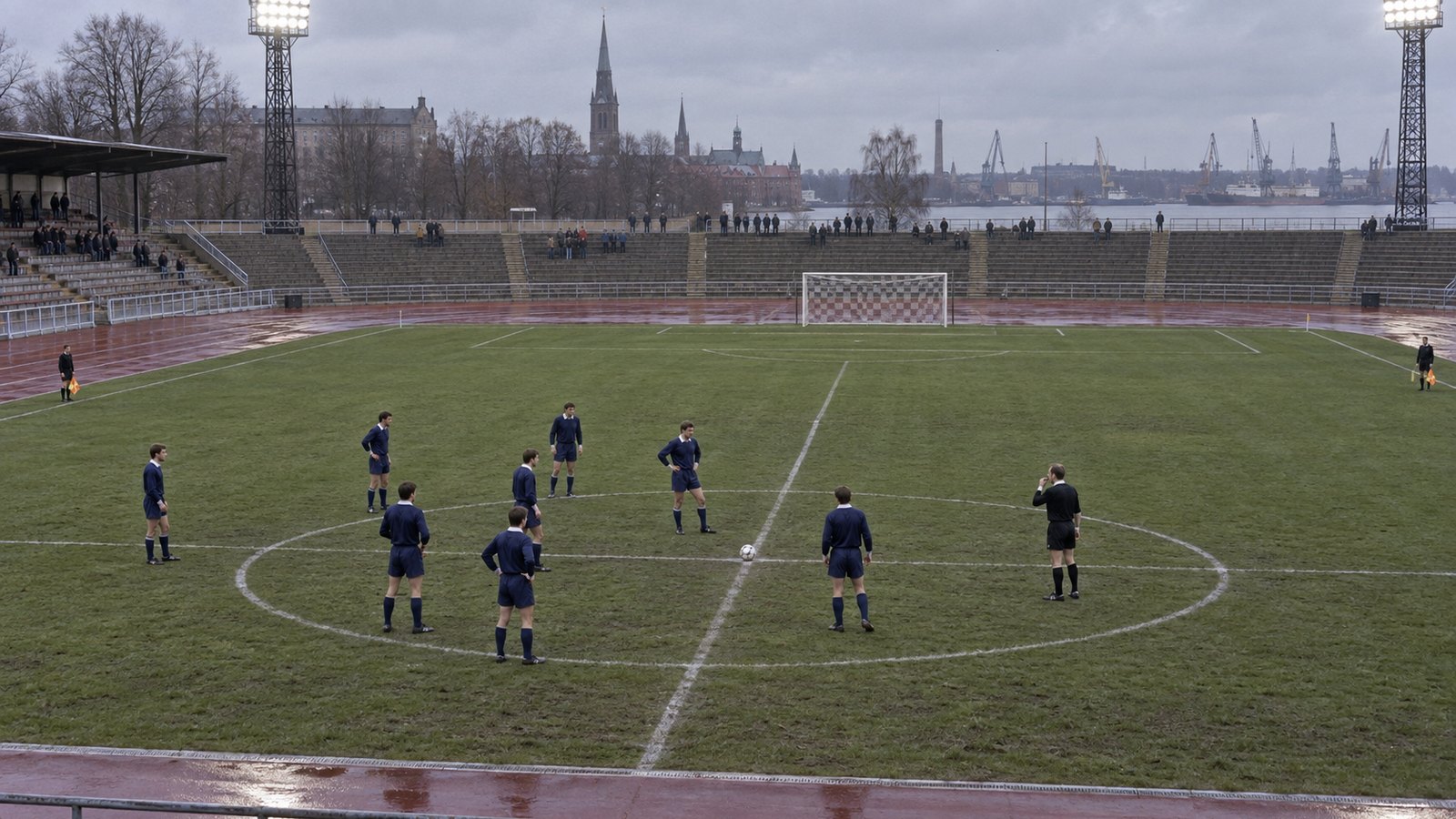
Scotland entered the stadium three minutes before the revised start. Radoman did not treat the empty half as permission to improvise. Handshakes were exchanged, the coin-toss ritual was performed, and an assistant walked to the vacant end to check the net. These small acts were crucial. Scotland had to demonstrate that it had obeyed FIFA’s order and was ready to play.
At the whistle, Dodds tapped the ball toward Collins. The second whistle followed within seconds. Contemporary reports counted around a thousand Scottish supporters; a later account put the number closer to 600. Whatever the exact crowd, its response supplied the line that survived the dispute. “One team in Tallinn” rolled down from the terrace as the only team walked off.
The afternoon then became stranger. A kilted supporter ran onto the grass with a ball and dribbled it into the goal, earning the day’s loudest cheer. The temporary floodlights flickered on after the abandonment. The electronic scoreboard continued to show 6:45, preserving the old schedule above an empty pitch. Estonian military personnel took their positions, and the Estonia team eventually reached the stadium later that afternoon.
Those details prevented the episode from being reduced to a team that forgot to appear. Both associations followed a different clock in the same ground. Scotland’s clock came from FIFA’s overnight instruction. Estonia’s remained fixed to the time printed and sold before the dispute began.
A Walkover Rule Met a Force-Majeure Exception
Scotland’s expectation was grounded in FIFA’s published response to absence. The governing body said its regulations allowed a 3–0 award and three points when a team failed to report, except where the organizing committee recognized force majeure. The phrase mattered because it transformed the hearing from a count of players into a judgment about cause.
Estonia had plainly ignored the revised start. It could also argue that the order itself produced the failure: part-time footballers, working spectators, a distant camp and contracted television coverage could not all be reset with a few hours’ notice. FIFA spokesman Keith Cooper said the claimed logistical problem could be considered if Estonia proved it.
Gantenbein initially appeared to favor awarding Scotland the game. Scotland wanted certainty before its next qualifier and had another practical reason to resist a replay. Captain Gary McAllister had been suspended for Tallinn; a new match would give him another opportunity to appear while requiring the rest of the squad to return.
Lennart Johansson, then UEFA president and a FIFA vice-president, publicly leaned in the other direction. A replay, he suggested, would be fairest to all parties. When the committee met almost a month later, it chose that path. Scotland had satisfied the referee on the day but did not receive the points. Estonia had missed the ordered start but was not expelled or handed an automatic defeat.
Monaco Supplied the Match Tallinn Could Not
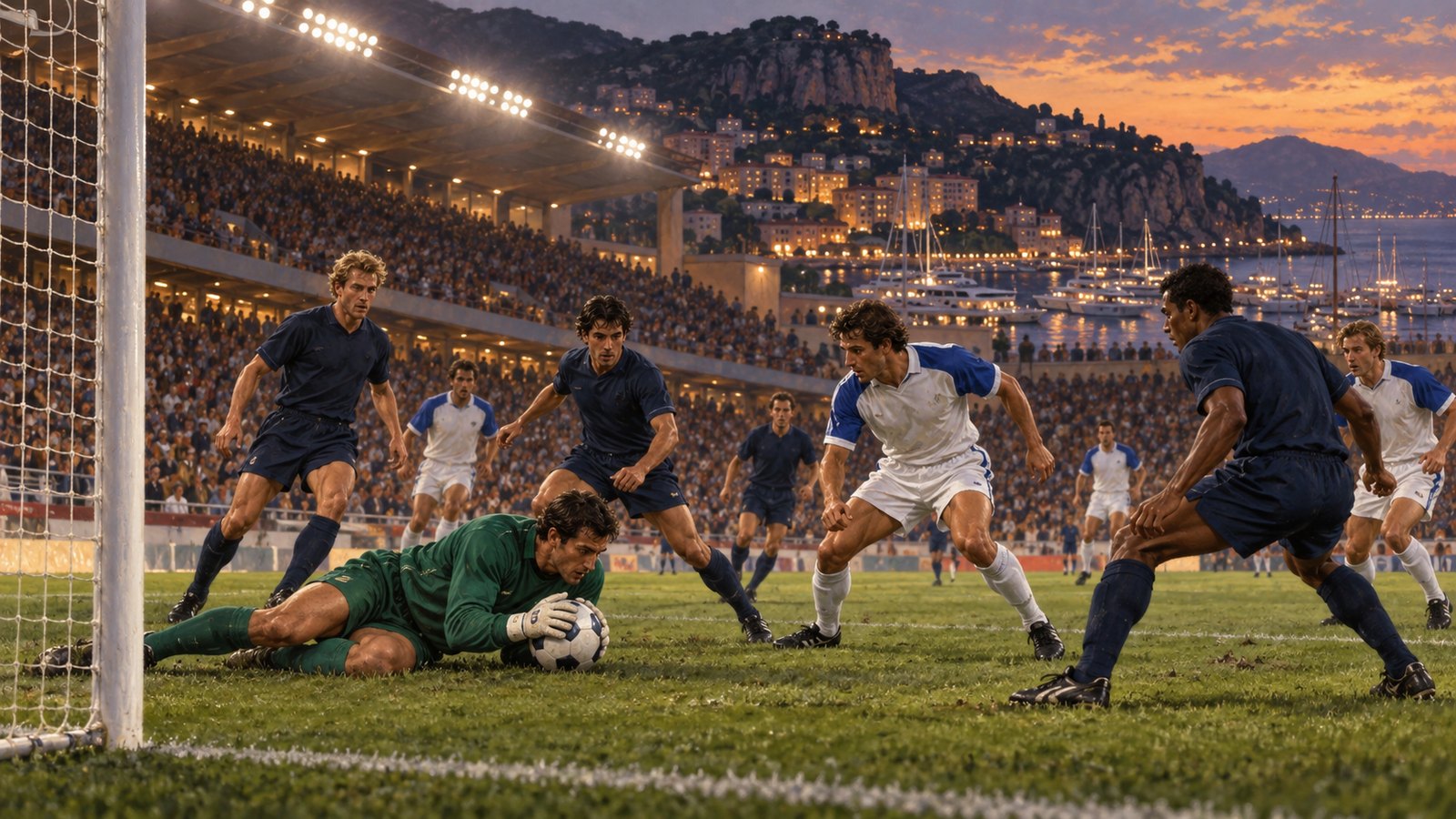
The solution required a neutral venue and a new date. In February 1997, roughly four months after the empty kick-off, the teams met in Monaco. This time both halves were occupied for ninety minutes. The score was 0–0, denying Scotland the two additional points a walkover would have supplied under the three-points-for-a-win table.
The replay also produced an unexpected personal consequence. Poom kept a clean sheet for Estonia. Scotland goalkeeping coach Alan Hodgkinson watched him on behalf of Derby County manager Jim Smith, who already knew the goalkeeper from Portsmouth. Poom joined Derby on transfer-deadline day the following month. A match created as an administrative remedy became an audition.
Scotland ultimately qualified for France 1998 without the walkover, finishing two points ahead of Sweden. Estonia collected four points from ten matches and ended joint-bottom of the group. The committee’s choice therefore changed the route without denying Scotland the destination.
The three-second spectacle remains funny because football’s usual visual grammar was intact—kits, officials, ball, whistle—except for one missing team. Its consequence was serious because obedience alone could not settle responsibility. Scotland followed the revised order. Estonia followed the original agreement and challenged the feasibility of the replacement. FIFA had authorized both the fixture and the sudden change that broke it.
Tallinn’s empty half was therefore only the opening evidence. The operative result emerged after officials examined notice, logistics, television arrangements and the exception inside the walkover rule. Monaco did not erase the refusal. It was the remedy FIFA selected when a simple punishment would also have concealed the part its own overnight decision played.
Sources
The Independent; FourFourTwo; The Guardian.