
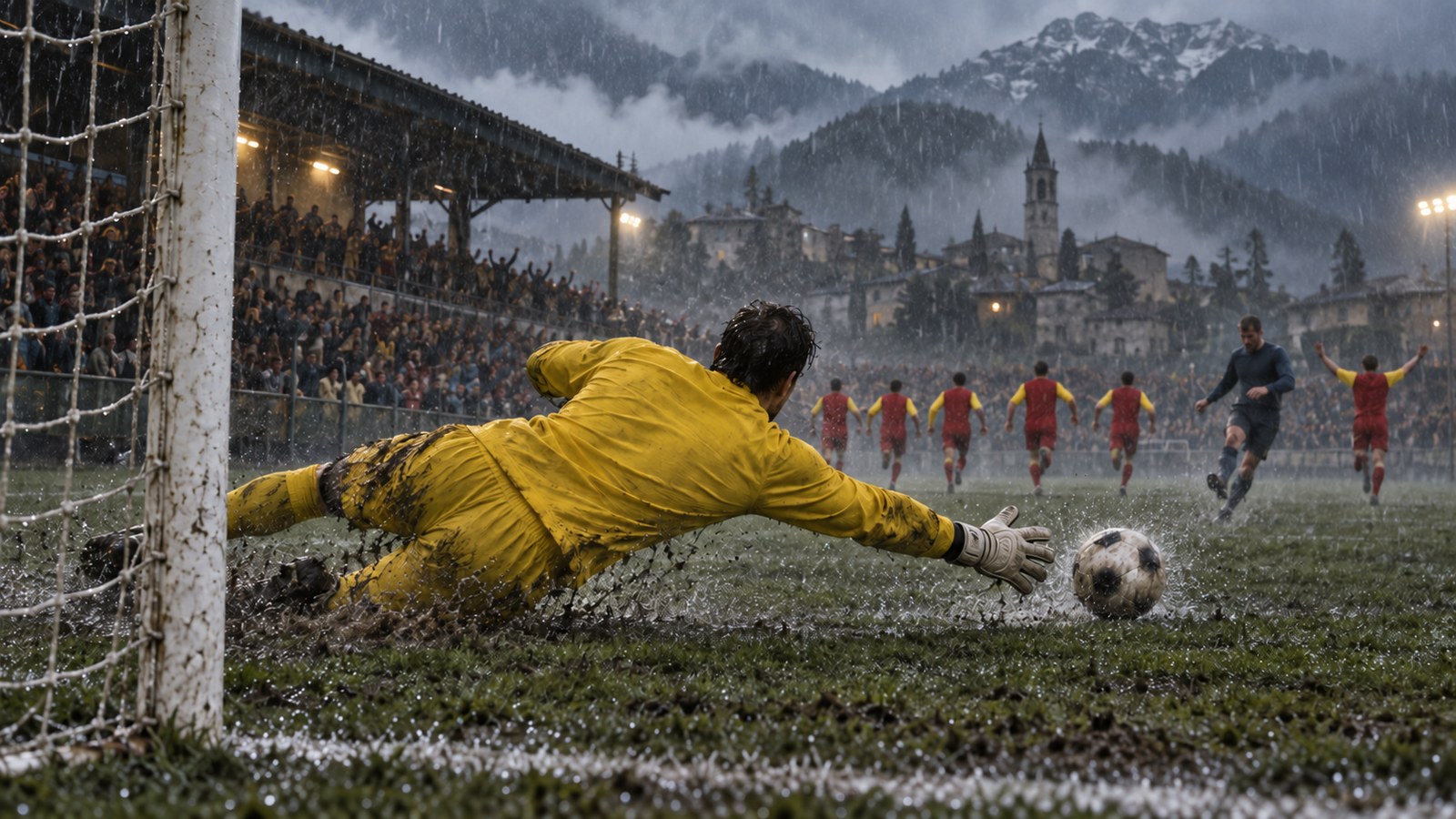
Castel di Sangro’s route to Serie B was decided by two substitutions that made almost no conventional sense. In the first promotion play-off, manager Osvaldo Jaconi sent on a defender with seconds remaining and watched him score almost immediately. In the final, Jaconi waited until the end of extra time, removed his goalkeeper and introduced Pietro Spinosa, a reserve who had not played a minute that season.
Spinosa entered only for the penalty shootout against Ascoli. Seven rounds passed without a miss. In the eighth, he made the save that carried a club from a town of roughly 5,500 people into Italy’s second division. The decision looks like a storybook gamble when isolated. It becomes more interesting when placed inside the club’s climb: Castel di Sangro had spent decades at the bottom, reached the professional game only in 1989 and then accelerated under a president willing to build beyond the town’s playing population.
The miracle was not simply that a small place defeated larger clubs. It was that a narrow organization learned to use each promotion as a new operating problem. Money, players, a manager and eventually a specialist substitute had to arrive at the precise level where local enthusiasm was no longer enough.
A Ball of Socks Came Before a Professional Budget
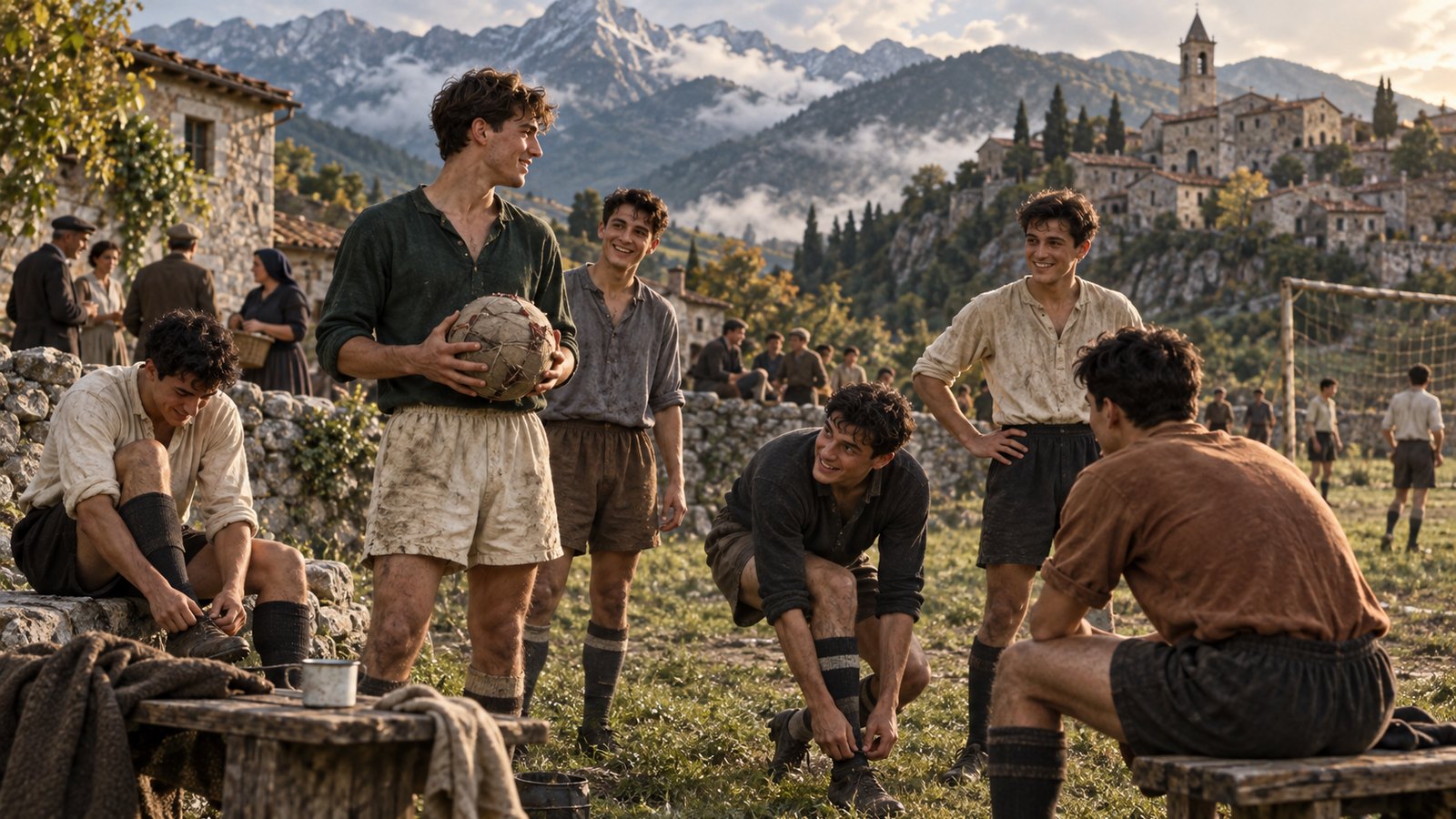
Football in Castel di Sangro grew from the physical damage left by the Second World War. The club’s remembered origin is a team organized by a priest, Don Arbete, as the community rebuilt. Proper equipment was scarce. The first players used socks tied together with twine as a ball, an image that later made the arrival in Serie B appear to compress an entire social history into one league table.
A formal club was established in 1953 and entered Terza Categoria, the lowest level in the Italian pyramid. Progress was not immediate. Castel di Sangro needed about thirty years to earn promotion to Seconda Categoria in 1983. Even that modest rise exposed the constraint that would shape everything afterward: a higher division required fees, wages and equipment that a local amateur group could not automatically provide.
Pietro Rezza supplied money, while Gabriele Gravina took control of the operation. Gravina’s response to the next competitive ceiling was practical rather than romantic. A team composed only of local players could not keep climbing, so footballers from elsewhere were brought into the town and found local jobs while they played. The arrangement expanded the available squad before the club had the resources of a conventional professional employer.
By 1989, Castel di Sangro had reached Serie C2 and entered the professional ranks. The distance from the sock-ball beginnings was enormous, but C2 also created a new test. The club was no longer competing only against nearby amateur sides. It had to survive against organizations with deeper recruitment networks, established grounds and years of professional habit.
Osvaldo Jaconi Arrived With Relegation Close
Castel di Sangro remained in C2 for several seasons, but the 1993–94 campaign threatened to end the professional experiment. Roughly a third of the season had passed when Gravina appointed Osvaldo Jaconi. His immediate task was not promotion. It was to stabilize a side drifting toward relegation.
Jaconi took the team to seventh place. One year later, Castel di Sangro rose to Serie C1. The sequence mattered because it changed expectations without changing the scale of the town. C1 contained clubs with substantial professional histories, including opponents that had played in Serie A. Remaining at that level would already have represented a durable success.
Instead, Castel di Sangro finished second in its C1 group in 1995–96 and entered the play-offs for a place in Serie B. The achievement was built across a full campaign, but the final distance was reduced to two elimination rounds. Jaconi’s substitutions then became the visible expression of a season’s work.
The first opponent was Gualdo. Castel di Sangro lost the away leg 1–0. At home, the return remained scoreless as the last seconds approached, a result that would have eliminated Jaconi’s side on aggregate. He introduced a defender who had appeared only seven times during the season. According to the contemporary account later assembled by Joe McGinniss, the substitute scored within seconds. A 1–0 win allowed Castel di Sangro to advance because of its higher league position.
The Eighth Penalty Rewarded a Planned Gamble
Ascoli provided a different obstacle in the final. Castel di Sangro had lost both league meetings against them. The play-off was a single match, and ninety minutes ended without a goal. Thirty minutes of extra time changed nothing. With penalties approaching, Jaconi made his second exceptional substitution.
Pietro Spinosa had not played during the season. Jaconi nevertheless removed the goalkeeper who had delivered the clean sheet and sent the reserve into the final minute of extra time. The choice was brutally specific. Spinosa was not asked to organize a defence, claim crosses or survive open play against Ascoli. He was selected for a sequence of kicks from twelve yards.
The first seven rounds produced no separation. Every taker scored. In the eighth, Spinosa stopped Ascoli’s attempt and ended the contest. Castel di Sangro had reached Serie B, a division whose crowds, budgets and stadium standards belonged to another scale of Italian football.
Calling the substitution lucky misses the structure of the choice. Jaconi reserved a place on the bench for a goalkeeper he believed could influence a shootout, accepted the risk of changing keepers after 119 minutes and acted before the match could end. The save remained unpredictable. The opportunity to make it had been prepared.

Promotion Made the Stadium Part of the Story
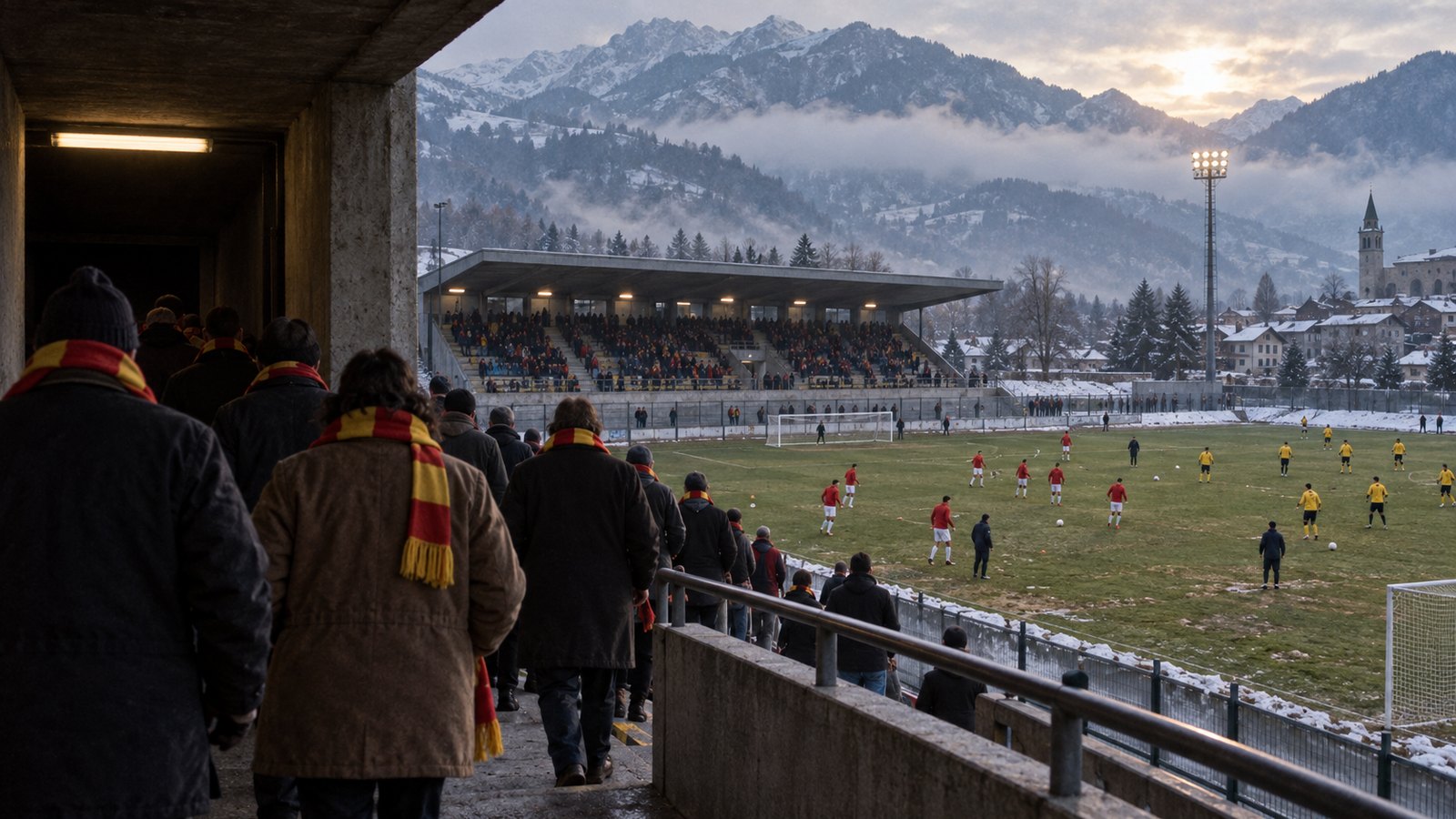
Serie B imposed demands that a winning penalty could not settle. The Stadio Teofilo Patini required upgrades, and construction was not complete when the 1996–97 season began. Castel di Sangro staged early home matches in Chieti rather than in the town whose name the team carried.
The contrast was numerical as well as emotional. The town had around 5,500 residents, while the upgraded stadium’s listed capacity exceeded 7,000. A home ground large enough for more people than the local population captured the unusual scale of the promotion. It also showed why the achievement could not be sustained through sentiment alone. Facilities, travel and professional wages continued whether the story felt miraculous or not.
When the Patini finally reopened in December, winter weather and the condition of the pitch caused another postponement. The delayed homecoming was a reminder that entry into Serie B did not instantly produce Serie B infrastructure. The club was building the environment while trying to compete inside it.
The season also brought tragedy. Players Danilo Di Vincenzo and Pippo Biondi died in a car crash in December. Results unfolded inside grief and disruption rather than a clean underdog celebration. Goalkeeper Massimo Lotti, Claudio Bonomi and on-loan forward Gionatha Spinesi became central to the survival effort.
Survival Proved the Climb Was More Than One Shootout
Castel di Sangro spent much of its first Serie B season near the bottom. Avoiding relegation became the measure that mattered. In the penultimate match, a 2–1 victory over Pescara secured survival. The club therefore did something more difficult than arriving through one extraordinary play-off: it remained in the second division for another year.
That distinction protects the story from becoming only a collection of charming images. The tied socks, tiny population and reserve goalkeeper explain why people remember the rise. Survival explains why the rise deserves tactical and organizational attention. A novelty can win one afternoon. Castel di Sangro assembled enough professional competence to withstand a full Serie B campaign.
Each stage of the climb required a different answer. Rezza supplied resources when fees and equipment became unaffordable. Gravina widened recruitment beyond local players. Jaconi stabilized the team, then treated the play-offs as a sequence of decisions rather than a reward for the league season. Spinosa supplied one save after spending a year outside the starting side.
The miracle label is understandable, but it can make the ascent sound accidental. Castel di Sangro reached Serie B because an improbable moment sat on top of decades of adaptation. The eighth penalty was the release. The climb had been constructed long before the reserve goalkeeper walked onto the pitch.
Sources
Joe McGinniss, The Miracle of Castel di Sangro; The New York Times; archived Castel di Sangro club history.