
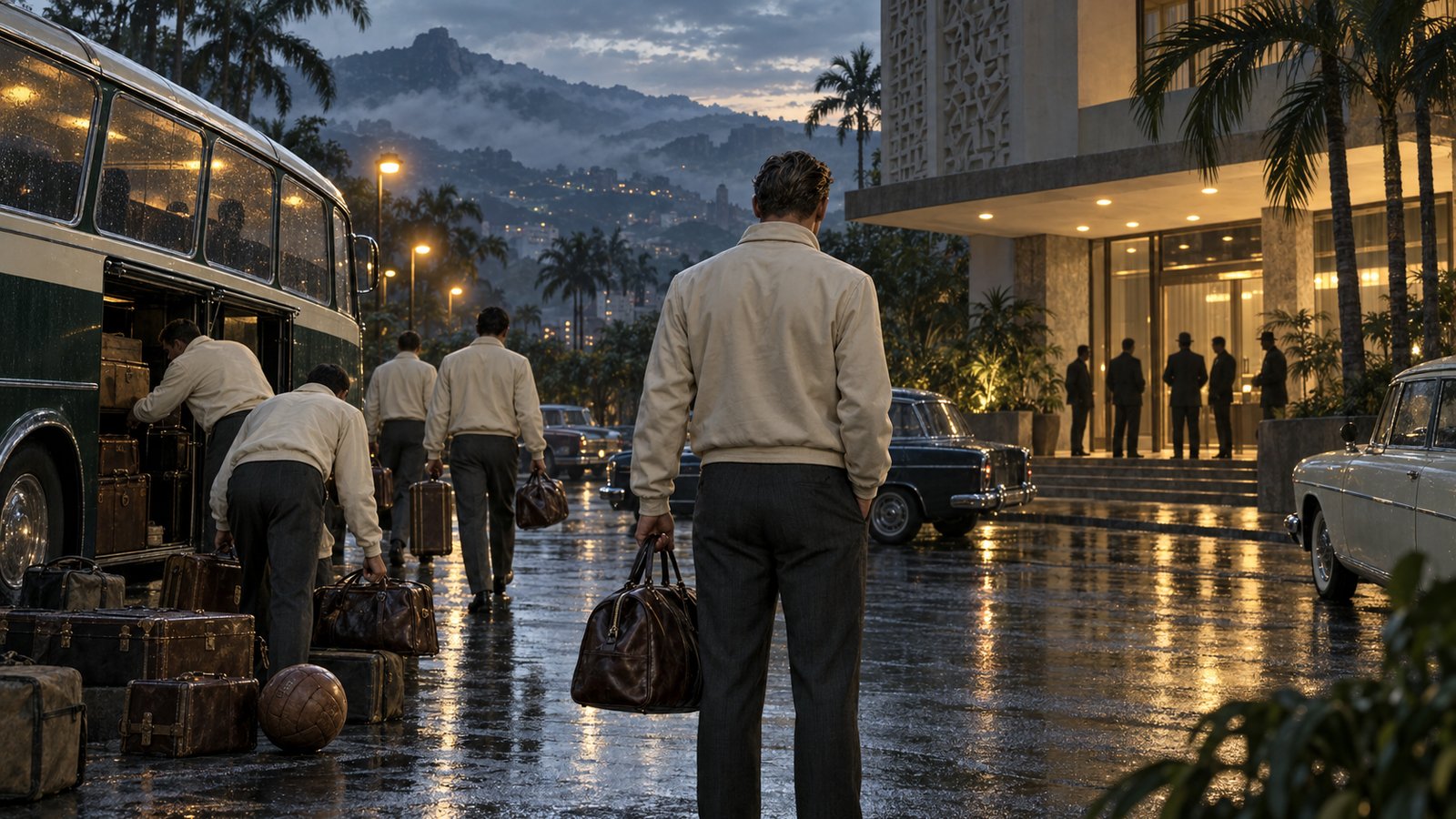
The place where Alfredo Di Stéfano re-entered ordinary life was not a football stadium. It was Avenida Libertador in Caracas, where a car stopped on 26 August 1963 and left him by the road with sticking plasters over his eyes. He removed them, found a taxi and asked to be taken to the Spanish embassy.
Fifty-six hours earlier, four armed men had entered the Potomac Hotel and taken Real Madrid’s most famous player from the team’s Venezuelan tour. The Armed Forces of National Liberation, known as FALN, wanted the attention attached to his name rather than a ransom. A tournament built to display elite football had supplied them with a global audience.
Di Stéfano’s response after his release made the episode stranger still. He met the press, returned to his teammates and started against São Paulo the following evening. The route from hotel room to locked bedroom, radio broadcast, roadside and pitch lasted little more than three days. Following that route reveals how a footballer’s working schedule continued inside an event designed to interrupt it.
A summer tournament brought a famous number nine to Caracas
Real Madrid had come to Venezuela for the 1963 Pequeña Copa del Mundo. São Paulo and Porto completed the three-team field. Di Stéfano played in the opening match on 20 August, an appearance that placed one of Europe’s most recognisable footballers inside a tour with fixed hotel routines and public fixtures.
His fame had been accumulated over a decade in Madrid. By then he had won five consecutive European Cups and scored in every one of those finals. He had twice been named European Footballer of the Year. Real Madrid’s record credits him with 308 goals in 396 official matches and eight Spanish league titles across his years at the club.
His name carried the recent history of the European Cup. Even the argument surrounding his disputed move to Madrid in 1953 had become part of football’s international memory. FALN recognised that taking him could make a local political campaign visible far beyond Venezuela.
That calculation depended on timing. The tour put Di Stéfano in one named hotel while newspapers already had reason to follow his movements. The second match, against Porto, gave the next day a ready-made deadline. The kidnappers did not have to create an audience from nothing; the tournament had assembled one for them.
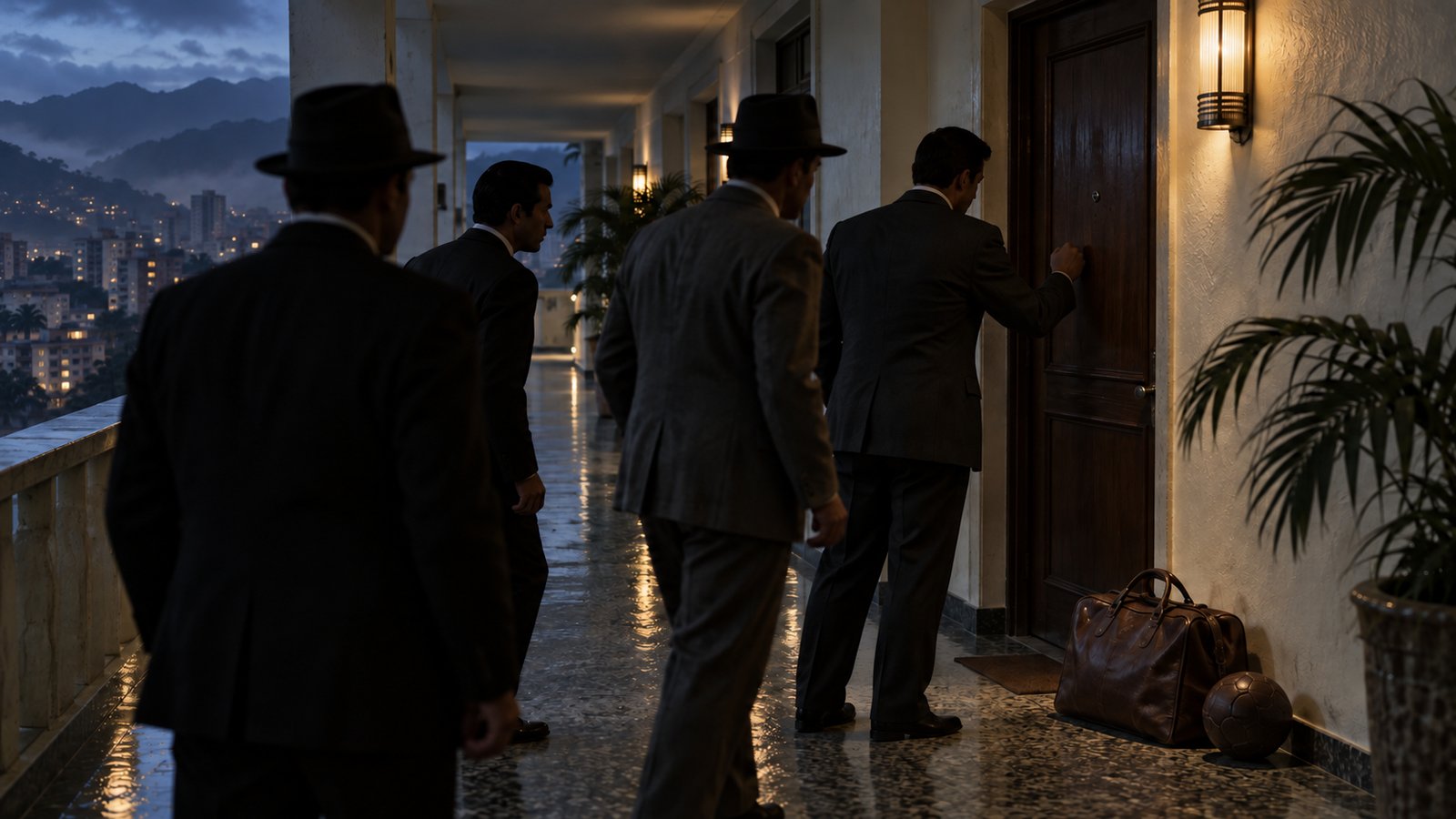
Four men arrived before the Porto fixture
On 24 August, four armed men entered the Potomac Hotel and led Di Stéfano away. He later said he had been blindfolded and kept in a bedroom. The operation carried the name “Julian Grimau,” after the Spanish communist executed earlier that year.
FALN’s purpose was publicity. The group opposed the government of Venezuelan president Rómulo Betancourt and used spectacular acts to push its campaign into public view. Its leading figure in the kidnapping was known as Máximo Canales. Decades later, under the name Paul del Río, he explained that Di Stéfano had been selected because his prestige at Real Madrid could deliver the attention the group wanted.
The difference between a political target and the person being held was severe. Di Stéfano said his first thought was that he might be killed. His wife, Sara, spoke publicly while he was missing. She argued that the kidnappers had already obtained their publicity and pleaded for her husband’s release.
About 8,000 police searched for the group. Detectives also went to Real Madrid’s match because they considered the possibility that he might be released at the stadium. The pitch thus remained part of the investigation even though Di Stéfano was nowhere near it. A fixture had become both sporting event and possible handover point.
A radio kept the tournament inside the locked room
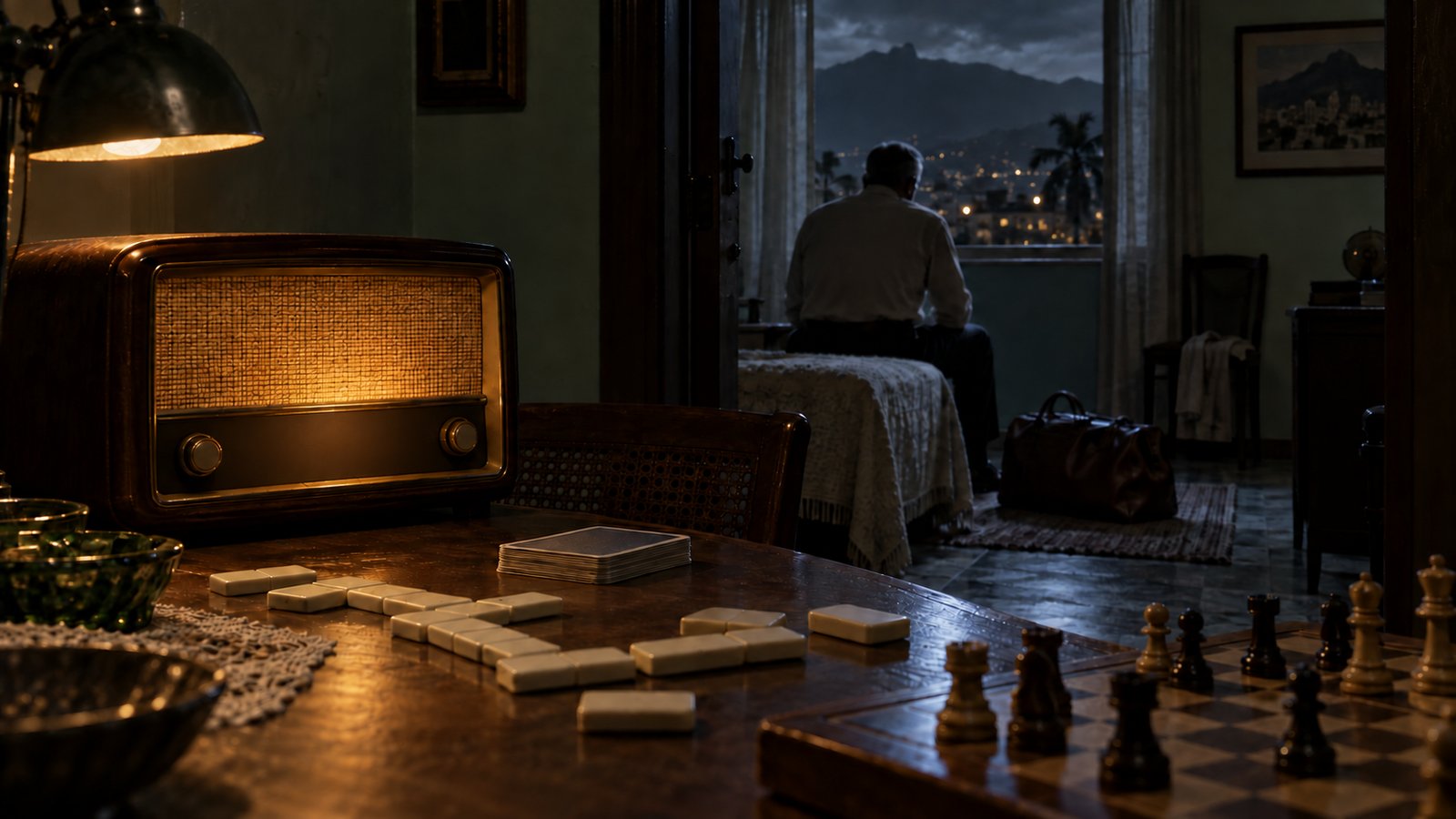
Real Madrid played Porto without Di Stéfano. He heard the match rather than saw it. His captors allowed him to listen on a radio as his teammates won, compressing the distance between the hidden bedroom and the public stadium into a broadcast signal.
Outside, players followed the tournament calendar and thousands watched. Inside, the missing player could hear the event continuing without him. He knew the result, but not when he would be free to rejoin the team.
Di Stéfano later remembered playing dominoes, cards and chess with the men holding him. The objects are mundane, which makes them useful evidence of the waiting. No football training was possible, no timetable could be trusted and no public statement could shorten the confinement. A board, pieces and a radio divided hours that the wider world counted through police searches and headlines.
He subsequently said his captors did not mistreat him. That judgment did not make the abduction harmless. At his first press conference, he described worrying about the anguish caused to Sara and their eight-year-old son. The ordeal operated in two places at once: one room held the player, while uncertainty entered his family’s home and the team’s tour.
Avenida Libertador ended the 56-hour disappearance
On 26 August, after 56 hours, the kidnappers released Di Stéfano unharmed. He recalled being put out of a car on Avenida Libertador with sticking plasters covering his eyes. Once he could see, he hailed a taxi and travelled to the Spanish embassy.
There was no ceremonial rescue: only a road, a taxi and a destination the driver could understand. A celebrated centre-forward returned from a politically staged disappearance through the ordinary transport of the city where it happened.
He then faced the press. Contemporary accounts described him as nervous and worn by the experience. Di Stéfano avoided pretending to possess a political analysis of his own abduction. He said he was not a politician, confirmed that he had not been mistreated and named Canales as the commander who remained with him.
São Paulo received an opponent the next evening
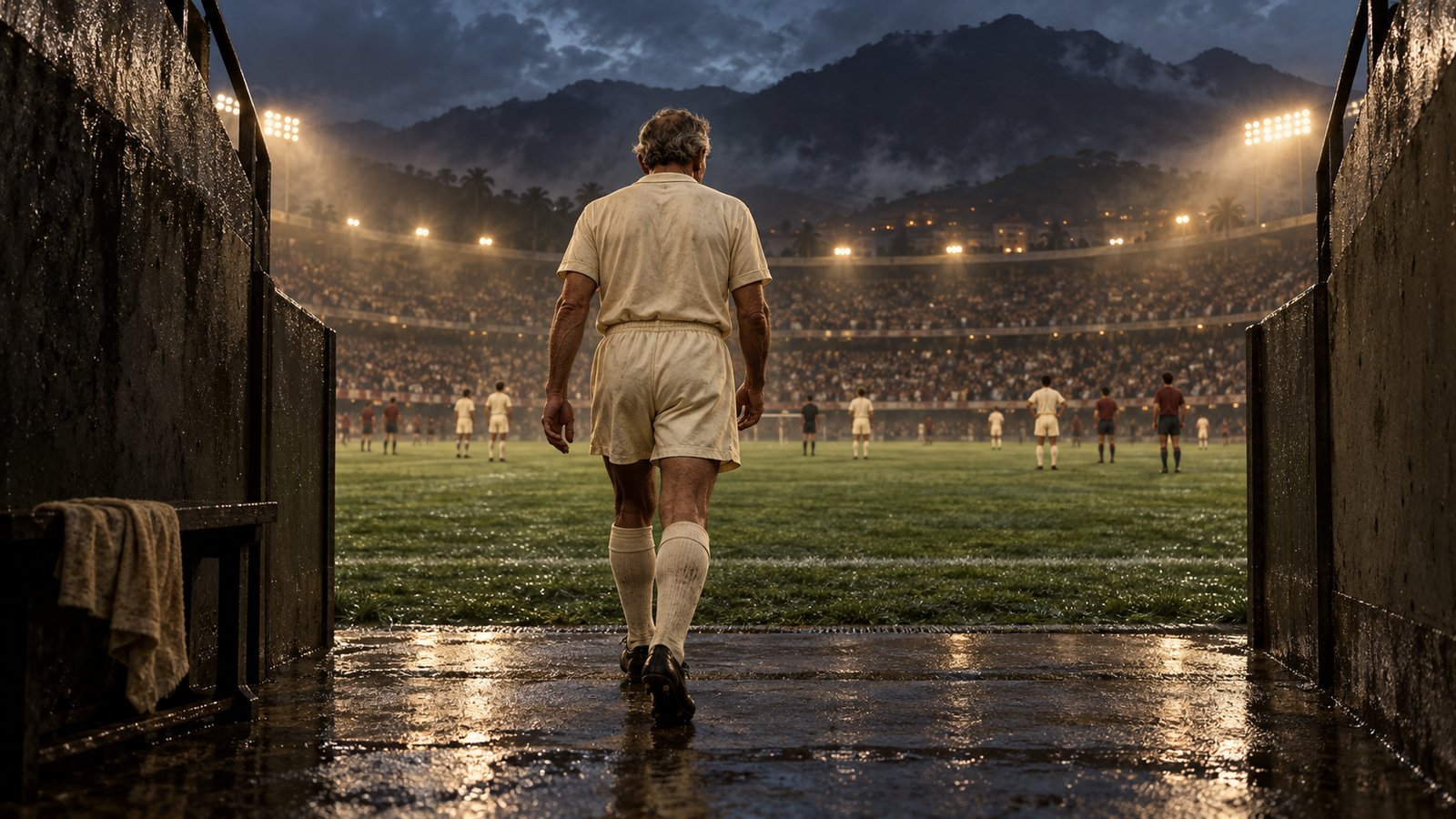
One day after his release, Di Stéfano started Real Madrid’s next tournament match against São Paulo. Returning so quickly did not erase the previous 56 hours, and it should not be reduced to a simple claim about toughness. The choice restored the one role he had been denied during the kidnapping: footballer.
The competition had barely paused. Madrid had already faced Porto, and São Paulo remained on the schedule. Di Stéfano moved from embassy and press conference back into a dressing room whose demands had continued while he was absent.
Real Madrid failed to overcome São Paulo and did not take the tournament trophy. The result is important precisely because it resists a polished ending. Di Stéfano’s return supplied no scripted winner and no sporting reward proportionate to the attention around him. He simply played, less than thirty hours after being released.
The publicity outlasted the tournament
The kidnapping succeeded in one limited sense. It carried FALN’s name into international newspapers through a player whose reputation crossed borders more easily than a Venezuelan political statement. The codename, the hotel, the police search and the missing match became attached to Di Stéfano’s football biography.
Yet the later history complicated the intended image. More than 40 years afterward, Di Stéfano met his former captor again. Canales was then known as the artist Paul del Río, and the reunion took place at the 2005 premiere of Real, La Película, which depicted the events. A confrontation designed for immediate publicity had become material for recollection and film.
The most revealing measure remains the 56-hour gap in 1963. At one end, four armed men removed Di Stéfano from the Potomac Hotel because the world knew his name. At the other, a veteran forward walked back onto a football pitch because playing was still his job. Between them sat a radio, a game of dominoes, an anxious family and a taxi on Avenida Libertador.
Fame caused the interruption; routine supplied the return. No trophy completed the story, and the match against São Paulo could not turn captivity into triumph. It marked something more exact: the first evening on which Di Stéfano could choose where to stand again.
Sources
ESPN historical archive; Encyclopaedia Britannica; Real Madrid historical profile; Alfredo Di Stéfano biographical and tournament records.