
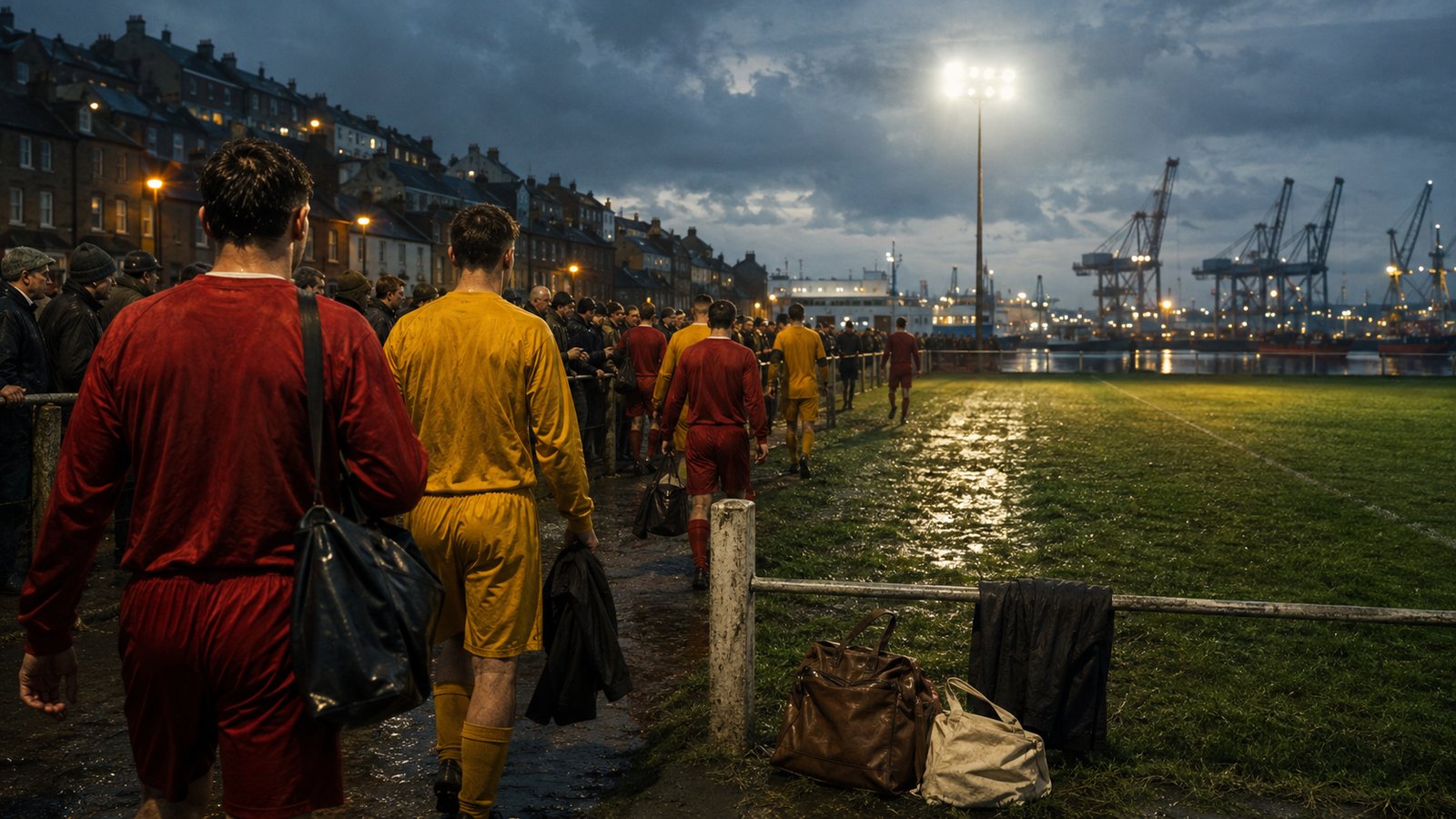
On 7 May 2000, a gardener, a social worker, a shopkeeper and a PE teacher walked into the Stade de France with the Coupe de France within reach. They played for Calais Racing Union, an amateur club from the fourth tier. Across from them stood Nantes, the holders and seven-time French champions. The mismatch was obvious before the ball moved. For 56 minutes, the scoreboard refused to acknowledge it.
Jérôme Dutitre scored from a tight angle in the 34th minute. Calais carried a 1–0 lead into half-time, close enough to the trophy for every clearance to feel enormous. Nantes eventually recovered through two Antoine Sibierski goals, the second a disputed penalty in the 90th minute. Yet the final was only the last scene of a journey that had already altered the relationship between a town and its football club.
The cup began far from the television lights
Calais entered the 1999–2000 competition against Campagne-lès-Hesdin. Eleven matches separated that opening tie from the final, a distance that made Paris an abstraction rather than a plan. The team belonged to the amateur fourth tier. Its players trained around ordinary work, and most received no wage from the club.
Their occupations supplied the first shorthand for the story. Stéphane Canu worked as a gardener. Christophe Hogard was a social worker. Jocelyn Merlen was a shopkeeper, while Emmanuel Vasseur taught physical education. Defender Réginald Becque captained the side. Coach Ladislas Lozano prepared players who arrived with fatigue that a professional club could schedule away.
The surrounding town gave those details weight. Calais was a port under economic pressure; unemployment stood near 17 percent around the turn of the century. The club had also lost money in the previous year. Every extra round asked the squad to fit another high-stakes match into lives shaped by shifts, classrooms and bills.
Calais first removed four fellow amateur teams and semi-professional Dunkerque. Nothing in that sequence required the rest of France to pay attention. Then the draw supplied Lille, a second-tier professional side, and the scale of the task changed.
Lille made belief survive a shootout
The first meeting with Lille ended 1–1 at Stade Julien-Denis. Calais then won the penalty shootout 7–6. It was the sort of result that could still be contained as a single upset: a small ground, one disciplined evening, a professional opponent missing its chance. The next rounds removed that explanation piece by piece.
Calais beat fifth-tier Langon-Castets 3–0 and faced another second-tier club, Cannes. Again the tie reached penalties. Again Calais held its nerve. The players reportedly received £2,000 each for that victory, a striking sum for men who normally played unpaid. The cup was now producing material consequences as well as memories.
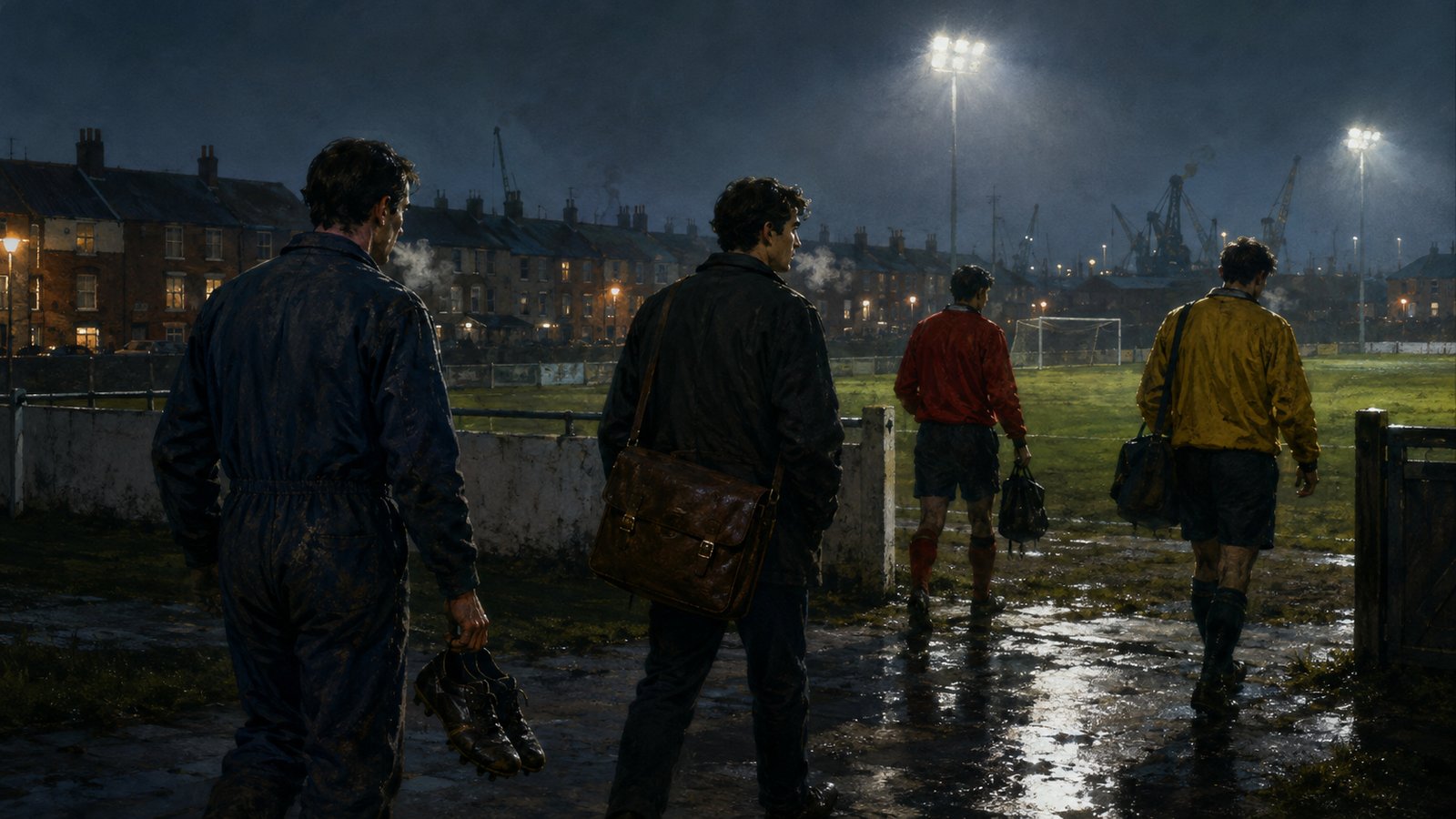
The competition’s structure also mattered. French Cup rules favoured a much lower-ranked side with a home tie, keeping an underdog closer to its own community. But Calais soon outgrew its little stadium. Its usual crowd was counted in hundreds, while the number of people wanting to follow the run was beginning to demand another setting.
Strasbourg, from the top division, forced the move to Lens. About 250 buses carried Calais supporters roughly 65 miles to the match. That procession changed the visual scale of the story. A team accustomed to a compact amateur ground emerged before a mass of yellow and red, with its own town arriving behind it.
Two workers supplied the goals against Strasbourg
Hogard and Merlen scored in the 2–1 victory over Strasbourg. Their occupations made the result irresistible to headline writers, but the goals also demonstrated what Calais had built. They were not relying solely on penalties. Two workers scored against top-flight opposition in a match moved because the audience had expanded so quickly.
Recognition followed them away from the ground. Lozano received a standing ovation while dining at Fouquet’s on the Champs-Élysées. It was an extraordinary reversal of scale: the coach of an amateur port-town side being applauded in one of Paris’s famous addresses. Still, the semi-final offered an opponent that appeared ready to close the story decisively.
Bordeaux were the reigning French champions. Their squad included internationals such as Christophe Dugarry, Johan Micoud, Lilian Laslandes and Sylvain Legwinski. The semi-final again took place in Lens, where 38,374 spectators filled the stands. This was Calais’s tenth match in a competition without replays, and the physical backlog should have favoured the professionals.
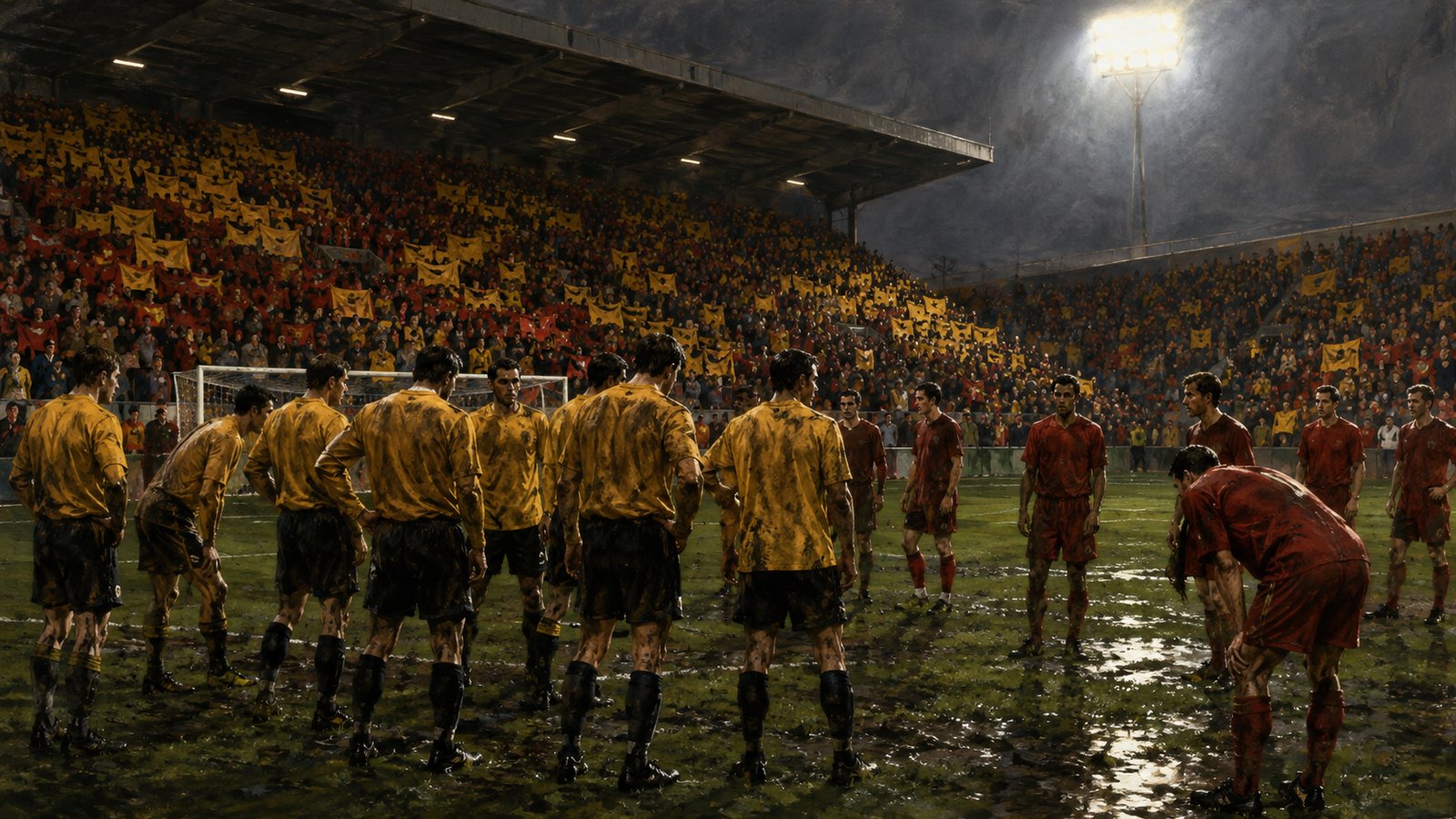
Instead, Calais stayed level long enough to force extra time and then scored twice. The 3–1 victory was no brief act of resistance protected by a lucky bounce. The amateurs had played beyond 90 minutes against the champions and widened the margin. Outside the stadium, supporters who could not enter followed the match nearby. Back in Calais, the result turned an improbable sporting sequence into a civic event.
The semi-final victory carried a physical cost
After Bordeaux, Lozano suffered a minor heart attack and spent three days in hospital. President Jacques Chirac telephoned with his good wishes. The detail strips away the easy gloss from the run. Calais had reached the national final, but the strain had not been imaginary. The coach’s body registered what the schedule, attention and responsibility had demanded.
Demand for final tickets made the imbalance visible in another way. The club received 50,000 applications and was allocated 19,300 seats in an 80,000-capacity national stadium. Many supporters travelled to Paris without tickets simply to be near the occasion. Television, newspapers, cafés and bars were filled with discussion of the Blood and Golds.
Calais had become a national story because its players remained recognisably connected to daily life. Professional football often asks supporters to admire distance: rare skill, protected training time, controlled preparation. This team represented proximity. The people in the stands could imagine meeting these players at work the next morning. That connection did not make Calais tactically naïve or magically tireless. It made each competent performance more legible.
The same principle appears in other supporter-built football stories. Years later, AFC Wimbledon would assemble a first squad from open trials, another case in which ordinary participation became the foundation rather than a decorative detail. Calais’s version was compressed into one cup season, with every round increasing the pressure before there was time to become accustomed to it.
A disputed penalty ended the scoreline, not the scene
The final opened with Nantes expected to restore the hierarchy. Dutitre interrupted it after 34 minutes, slipping the ball home from a narrow angle. Calais led through half-time and into the 50th minute. For those minutes, the greatest shock in French Cup history was not theoretical. It was displayed above the pitch.
Sibierski equalised, but Calais remained level as the match approached stoppage time. Then Fabrice Baron was judged to have fouled Alain Caveglia in the area. Contemporary reports described the decision as contentious and suggested Caveglia had begun to fall before contact. Sibierski drove the penalty past Cédric Schille, scoring his second goal and giving Nantes a 2–1 victory.
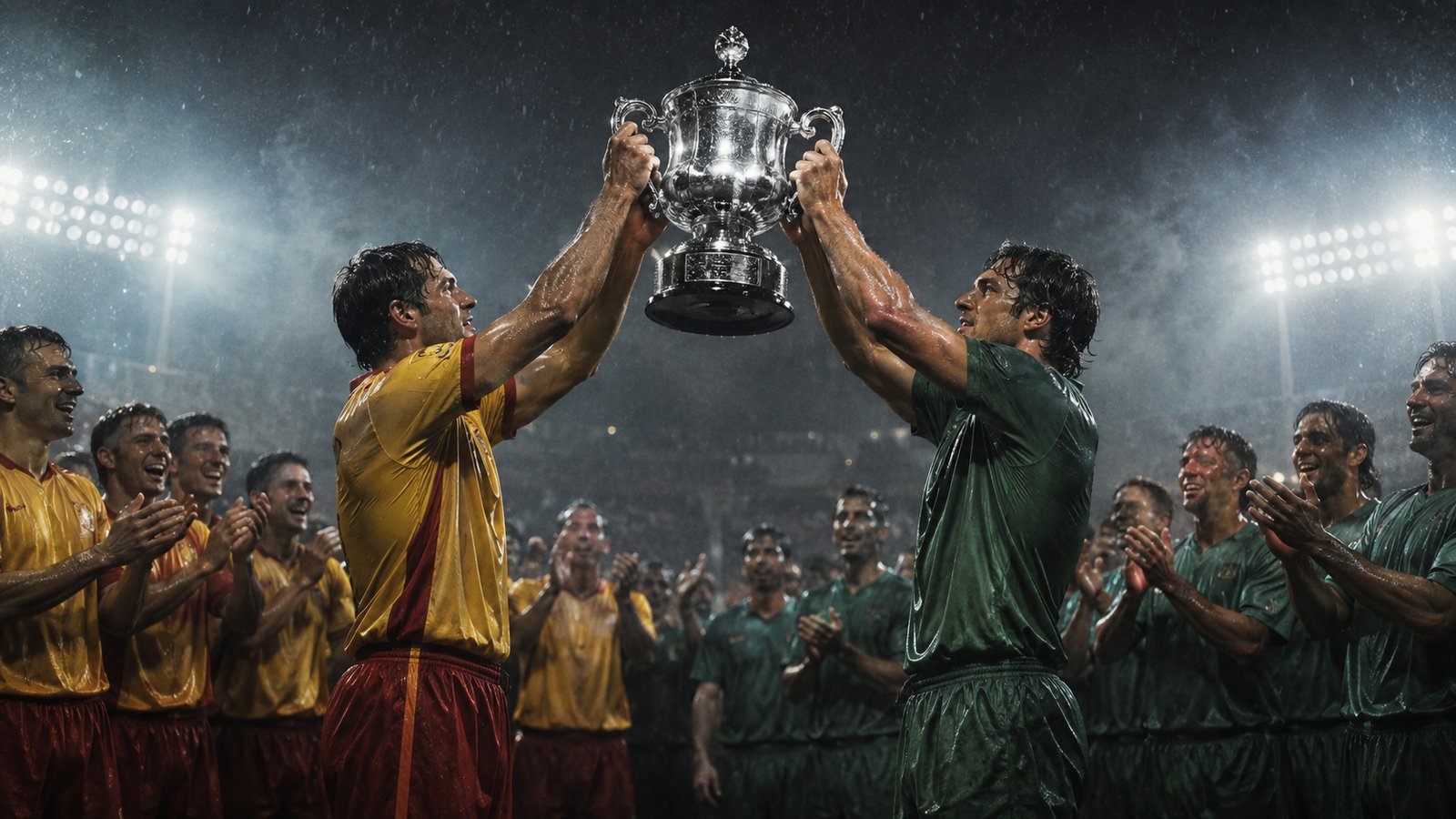
The official result left no ambiguity. Nantes retained the trophy. What happened during the presentation complicated the usual choreography of a final. Nantes captain Mickaël Landreau invited Becque, his Calais counterpart, to lift the Coupe de France alongside him. Winner and runner-up put their hands on the same silverware, recognising that one club owned the result while the other had shaped the competition.
Calais never converted the run into permanent security. The club reached another quarter-final in 2006, later endured prolonged financial trouble and was liquidated in 2017. That ending prevents a sentimental reading in which one magical season solves the underlying economics of an amateur club or a struggling town.
Over eleven matches, workers from a fourth-tier squad eliminated Lille, Cannes, Strasbourg and the reigning champions Bordeaux, then led Nantes in the national stadium. The shared trophy lift did not pretend they had won. It gave the competition a second image beside the scoreboard.
Sources
- BBC Sport, “Calais Racing Union: The amateur team that went to Coupe de France final”
- The Guardian, “Explain… the Calais cup run”
- The Guardian, “Calais finally run out of miracles”
- RSSSF, “France Cup 1999/2000”