
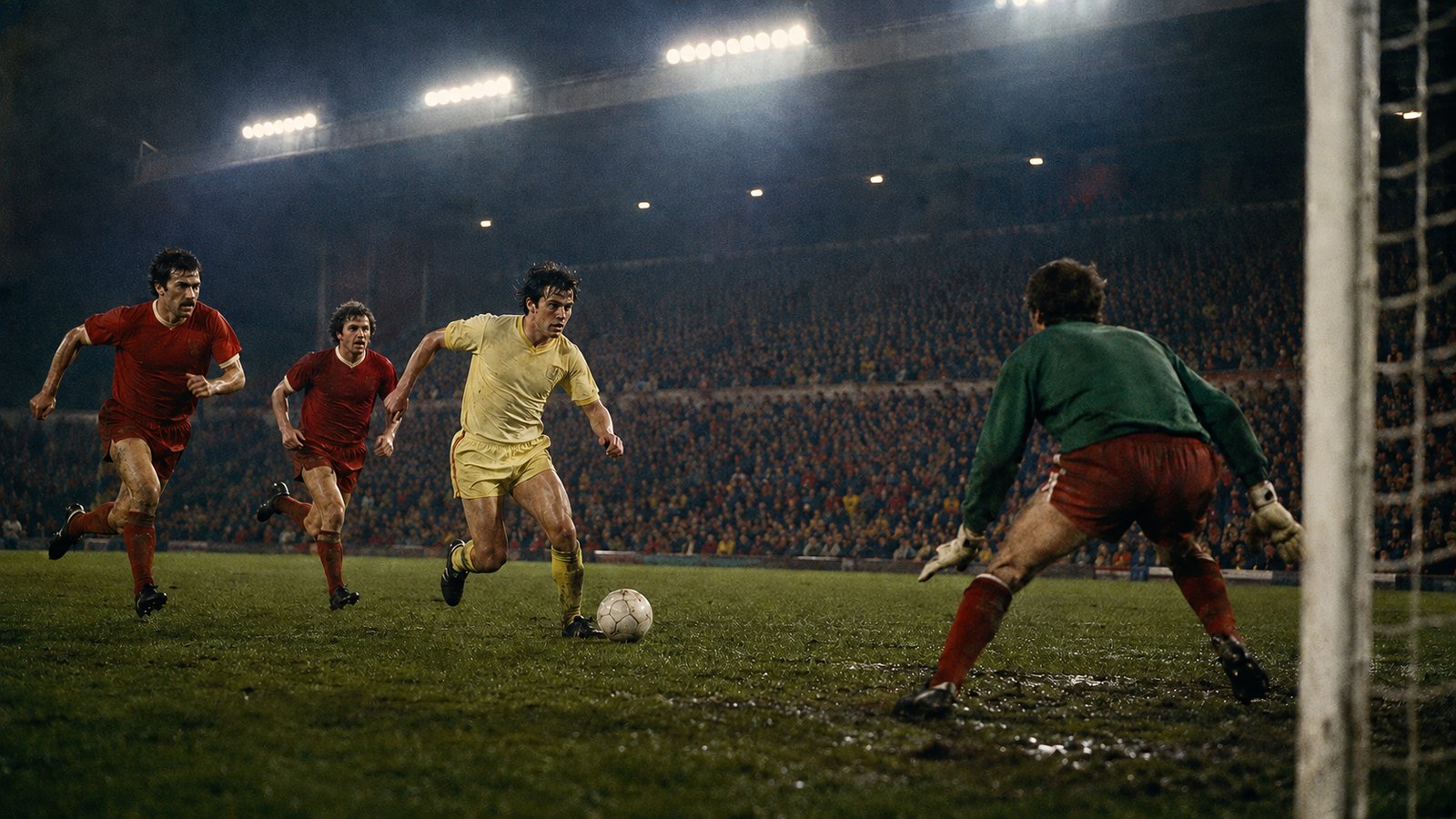
The requirement was brutally clean: Arsenal had to win by two goals at Anfield. One goal would leave Liverpool as champions. A draw was useless. Even an ordinary away victory was insufficient. The final league match of 1988–89 began with a title race compressed into a specific margin.
After 90 minutes, Arsenal led 1–0. They had completed the difficult part and still stood on the wrong side of the table. Liverpool were seconds from adding the league to the FA Cup. Then the ball travelled forward one last time, Alan Smith nudged it into Michael Thomas’s path, and Thomas ran at a retreating defence with the season balanced on his next touch.
The famous finish matters because almost everything before it had been about resisting haste. Arsenal could not score the second goal unless they kept the match alive long enough to earn the chance.
A postponed fixture became the whole title race
Liverpool versus Arsenal was meant to be played earlier. The Hillsborough disaster forced its postponement, moving the fixture to 26 May and making it the last act of the First Division season. Liverpool had since won the FA Cup. The Double was available at home.
Arsenal had created a strong position during the campaign and then surrendered much of its comfort. A defeat by Derby County and a draw with Wimbledon meant the trip to Anfield came with an unusual equation. The sides could finish level on points and goal difference, leaving goals scored to determine the champion. Arsenal therefore needed the two-goal away win.
The demand sounded even harsher in its historical setting. Liverpool had not lost by two at Anfield in the league that season. They possessed experience, home control and the option to let the clock work for them. Arsenal were chasing a first league championship in 18 years, but chasing from the opening whistle could expose the space Liverpool needed to end the argument.
George Graham delayed the gamble
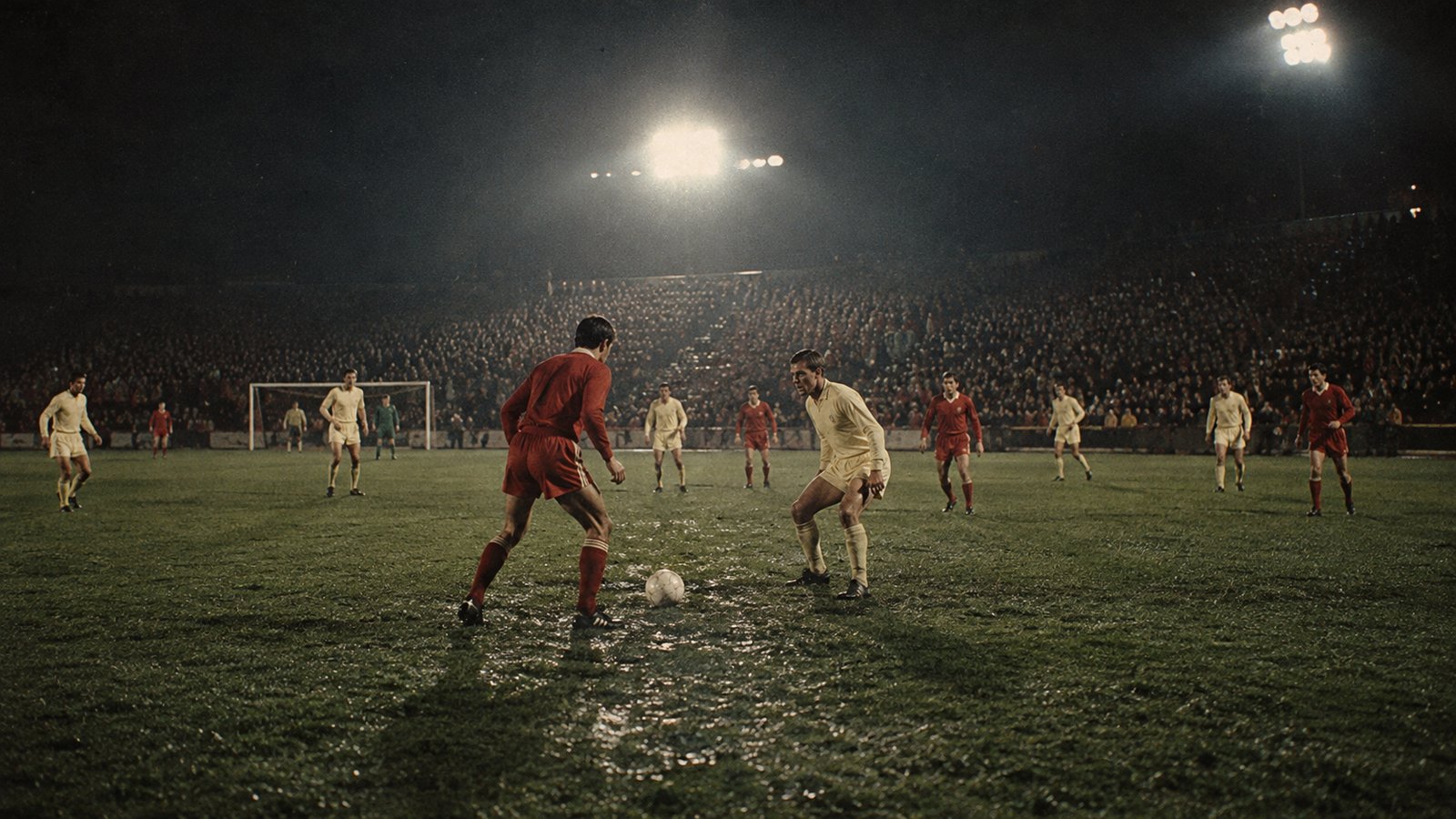
Manager George Graham’s solution was not a frantic assault. Arsenal began with defensive security, using a shape that could crowd central areas and prevent Liverpool from breaking the match open. The first objective was to remain close. The necessary ambition would be worthless if Liverpool scored first.
The opening half ended 0–0. For Liverpool, that was progress toward the title. For Arsenal, it was both reassuring and alarming. Their plan had denied the champions-elect, but half the available time had vanished without reducing the two-goal requirement.
This created the match’s central tension. Arsenal’s discipline looked sensible at every individual moment, while the aggregate situation kept demanding more risk. They had to judge when possession should be protected and when another runner should leave his position. The longer the score stayed level, the narrower that judgment became.
It resembled a cup tie in which the away side knew the aggregate score but could not display desperation. Graham’s players needed emotional urgency and positional patience at the same time. The contradiction held through the interval.
Alan Smith made the first goal count twice
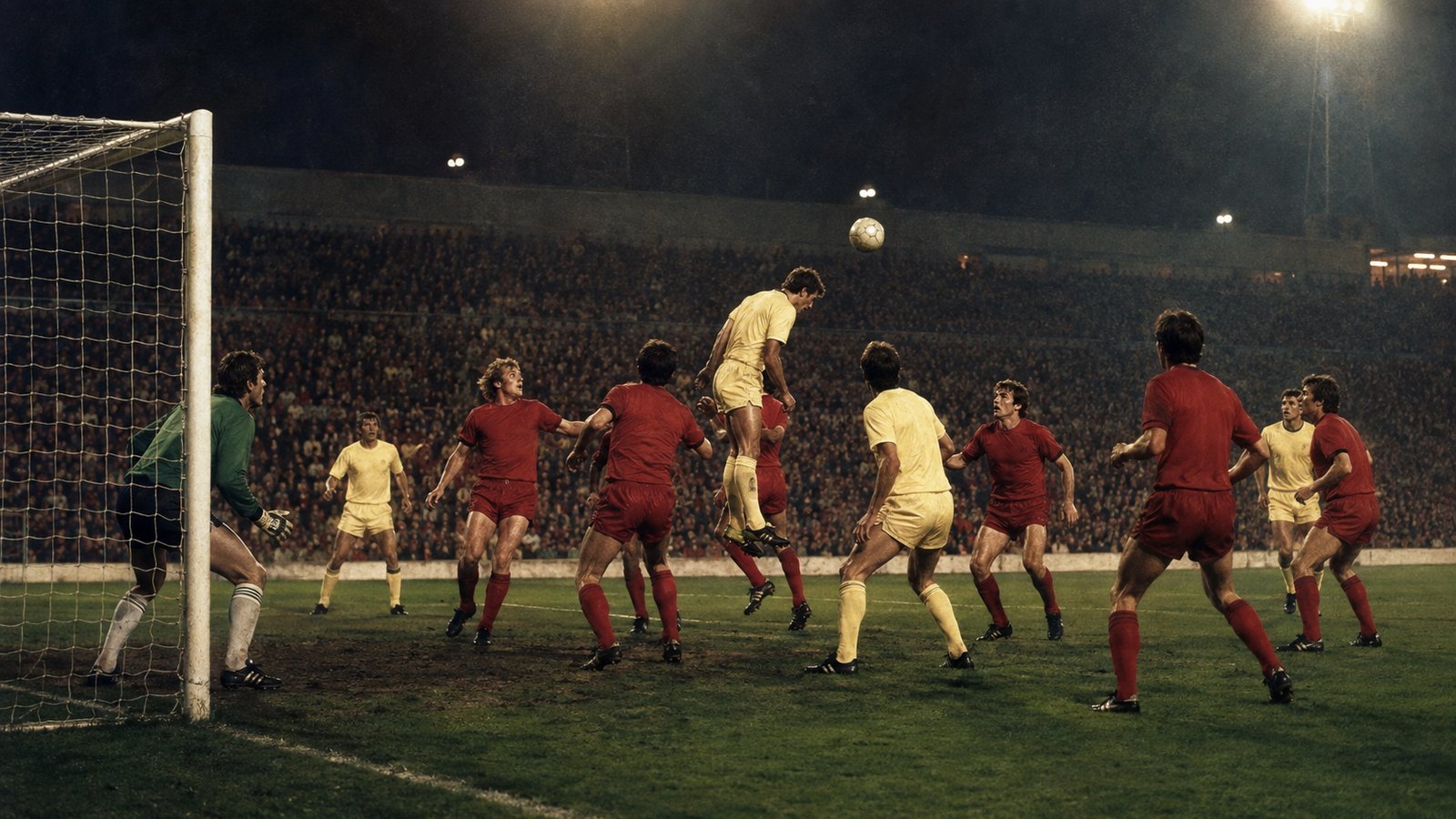
Early in the second half, Nigel Winterburn delivered a free kick and Smith met it in the crowded area. His header carried beyond Bruce Grobbelaar. Liverpool disputed whether Smith had made the decisive touch, but the goal stood.
The scoreboard now said 0–1, yet the title still belonged to Liverpool. That gave Smith’s goal two functions. It proved Arsenal could breach Anfield, and it changed every remaining possession. A second Arsenal goal would reverse the championship. A Liverpool equalizer would end the practical contest.
Arsenal advanced without abandoning the compactness that had produced the platform. Liverpool became caught between protecting the one-goal defeat that was enough and seeking the equalizer that would remove all doubt. Neither side could treat the score as a normal 0–1.
The match tightened rather than opening freely. Crosses were cleared, runners tracked, and the clock moved toward the point at which Liverpool could stop imagining the danger. Arsenal introduced fresh attacking legs, but the decisive space did not appear on command.
The last move found Thomas facing forward
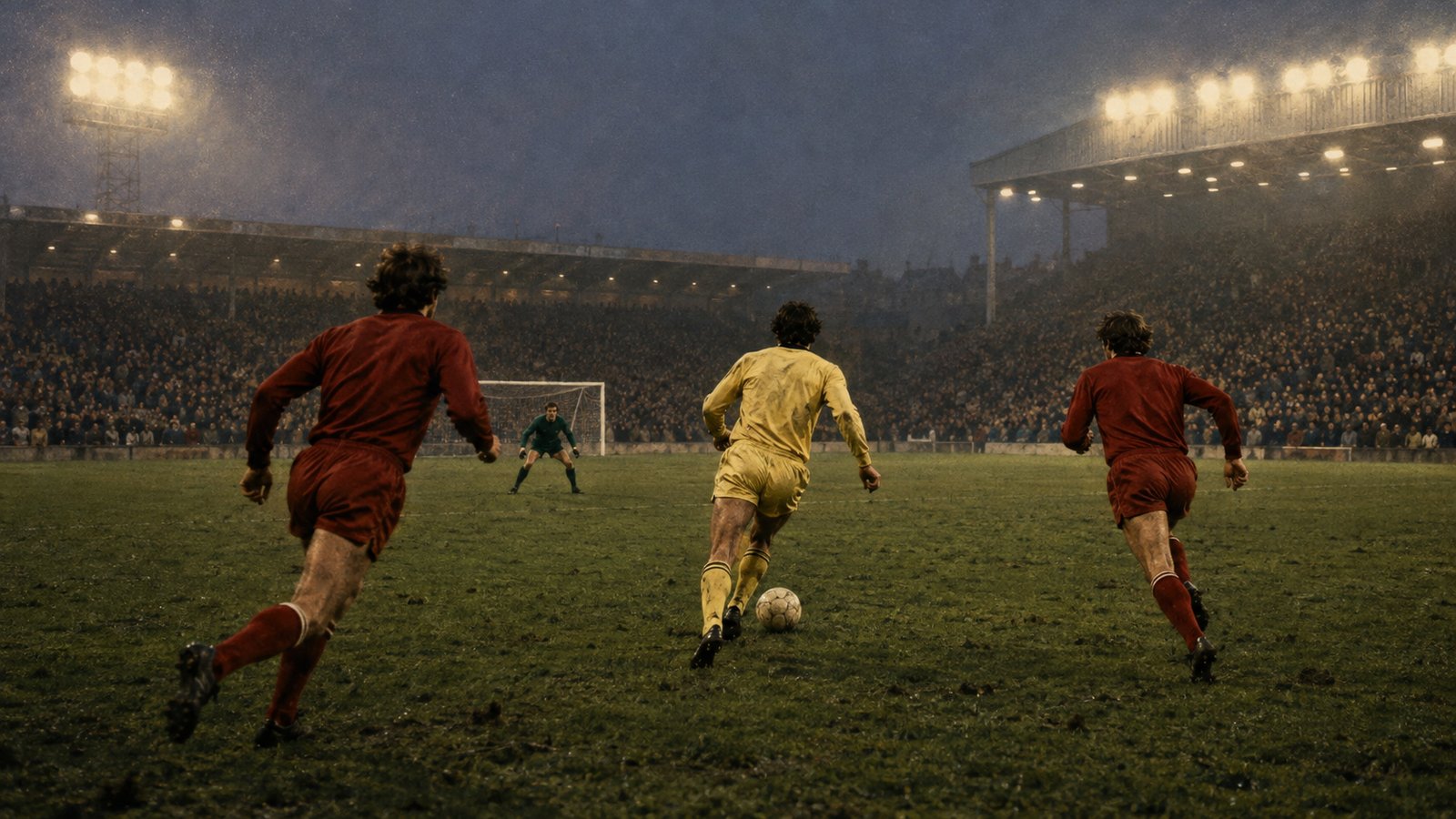
When the match entered stoppage time, the patterns built over 90 minutes seemed ready to harden into the result. Arsenal launched the ball forward. Smith supplied the connecting touch. Thomas, a midfielder arriving from deeper ground, took possession while moving toward goal rather than receiving with his back to it.
That body position changed the final duel. Liverpool’s defenders had to turn and chase. Grobbelaar came out to reduce the angle. Thomas took the ball into the box and lifted his finish beyond the goalkeeper.
ITV commentator Brian Moore’s call — “It’s up for grabs now” — matched the action because it did not pretend the title had already been won. In the instant before the finish, the championship really was available to whichever player controlled the next contact. Thomas did.
The goal’s lateness often makes it sound accidental, a loose ball delivered by chaos. The sequence was more coherent than that. Arsenal remained close enough for the second goal to matter. Smith, scorer of the first, was still positioned to connect the last attack. Thomas made the run from midfield that a fixed forward could not disguise. The finish was dramatic because preparation survived long enough to meet opportunity.
There was scarcely time for Liverpool to construct an answer. The match ended 0–2. Arsenal and Liverpool were level on points and goal difference; goals scored placed Arsenal first.
The final table made the precision visible. Both teams held 76 points and a goal difference of plus 37. Arsenal had scored 73 league goals to Liverpool’s 65. The title therefore moved on the third comparison, reached only because the last match ended with the exact two-goal margin Arsenal had carried into Anfield on 26 May 1989.
A finale that preserved the entire season
Last-minute goals often detach themselves from the matches around them. Thomas’s finish resists that separation because the arithmetic carries the full campaign into the frame. Arsenal’s earlier dropped points created the two-goal demand. Liverpool’s consistency and FA Cup success created the opponent. The postponed date placed everything at the end of May.
The story also complicates the idea that courage always looks like immediate attack. Graham’s cautious opening was not a refusal to pursue the title. It was an attempt to keep the title available after the first hour. Arsenal delayed the maximum risk, scored from a set play, and reached stoppage time one action short.
Smith’s role joins the two halves of the night. His header changed a scoreless match into a live title opportunity. His later touch released Thomas when Liverpool’s line could no longer afford a routine mistake. The same forward therefore influenced both goals in different ways: first by winning contact in a crowded set-piece area, then by making a short connection while a midfielder carried the decisive speed.
Liverpool’s position was equally unusual. At 0–1, defending the score was enough to become champion, even though the home side was losing. That inverted the normal pressure around Anfield. Every clearance could be celebrated as progress, but every retreat invited Arsenal to place one more player near the final action. The hosts did not require an equalizer; they required the match to stop before Arsenal’s next clean run.
A useful comparison is France’s six-minute escape against Portugal in 1984, another match in which late attacking clarity emerged only after a long tactical strain. The difference at Anfield was that one goal was not enough; the final attack had to satisfy a season-long tiebreak.
Thomas’s run supplied a clean visual ending, but it did not simplify what came before. Arsenal won because they managed two clocks: the visible match clock and the slower clock of their own risk. They refused to let the first force them into abandoning the second too early.
At 0–0, the plan still looked insufficient. At 0–1, it looked agonizingly close. At 0–2, with almost nothing left to play, every restrained minute became part of the title. The second goal did not rescue a failed strategy. It completed one at the last possible moment.
Sources
Arsenal; The Guardian; FourFourTwo.