
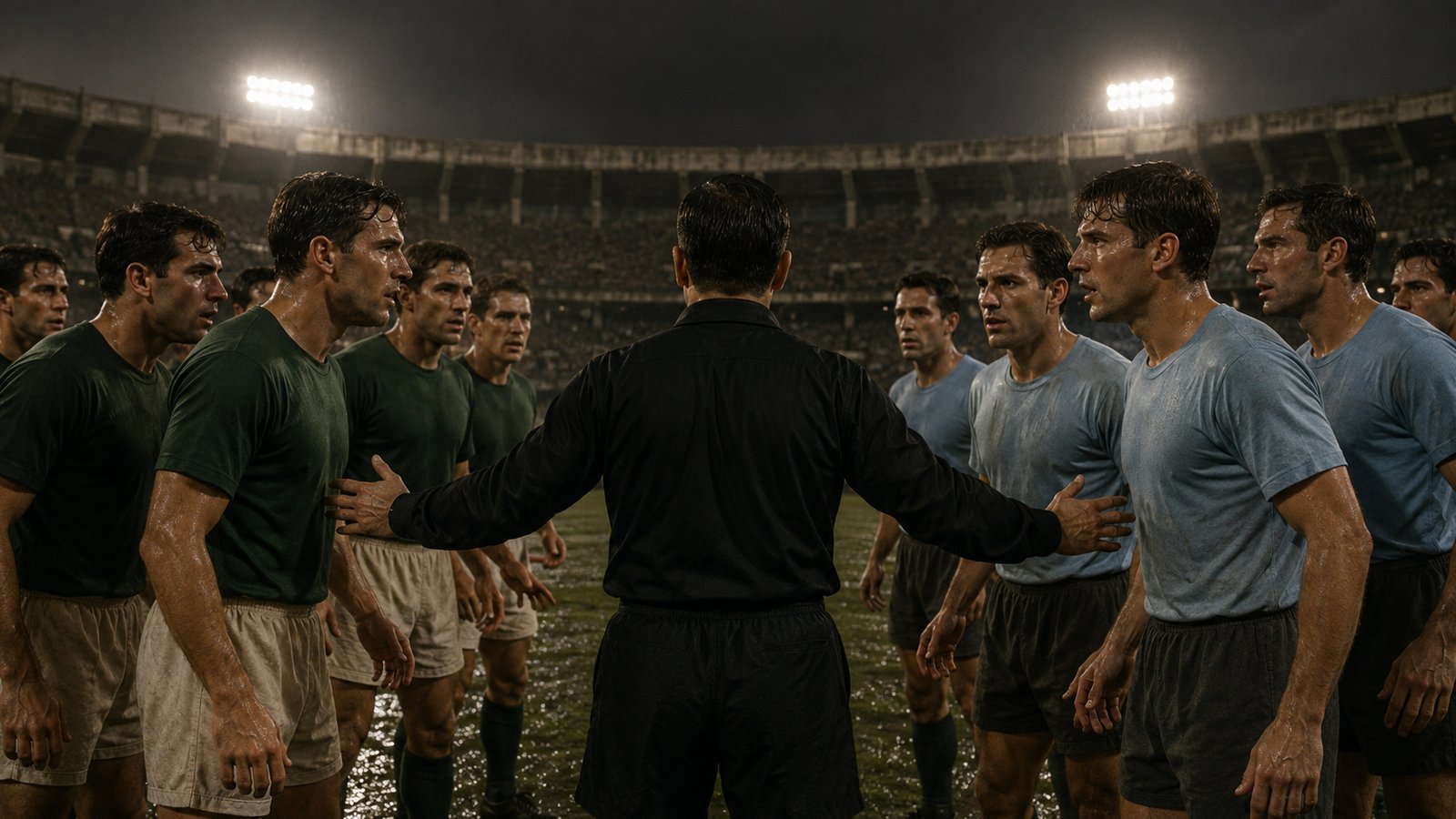
Bertie Auld had been told to leave the field, but he did not go. The Celtic midfielder stayed inside the chaos at Montevideo’s Estadio Centenario while Paraguayan referee Rodolfo Pérez Osorio tried to restore an authority that had almost disappeared. Other players had walked. Police had entered. Around them, a contest meant to identify the world’s best club was losing the shape of a football match.
This was 4 November 1967, the third meeting between Celtic and Racing Club in eighteen calendar days. Five dismissals would actually remove players from the decider; Auld’s unfulfilled order is why some accounts describe a sixth. Yet reducing the night to cards and collisions misses its strangest contrast. A series overloaded with grievance was settled by one clear piece of play: Juan Carlos Cárdenas struck the only goal and made Racing the first Argentine club to win the Intercontinental Cup.
One Trophy Required a Third City
The Intercontinental Cup brought together the champions of Europe and South America. Celtic arrived as the side that had beaten Inter in Lisbon in May, an achievement built by a locally rooted team whose attacking courage had already carried it beyond Scotland. Racing had survived an even longer continental route. Juan José Pizzuti’s side won the Copa Libertadores only after a three-match final against Nacional, so another extended test was hardly foreign territory.
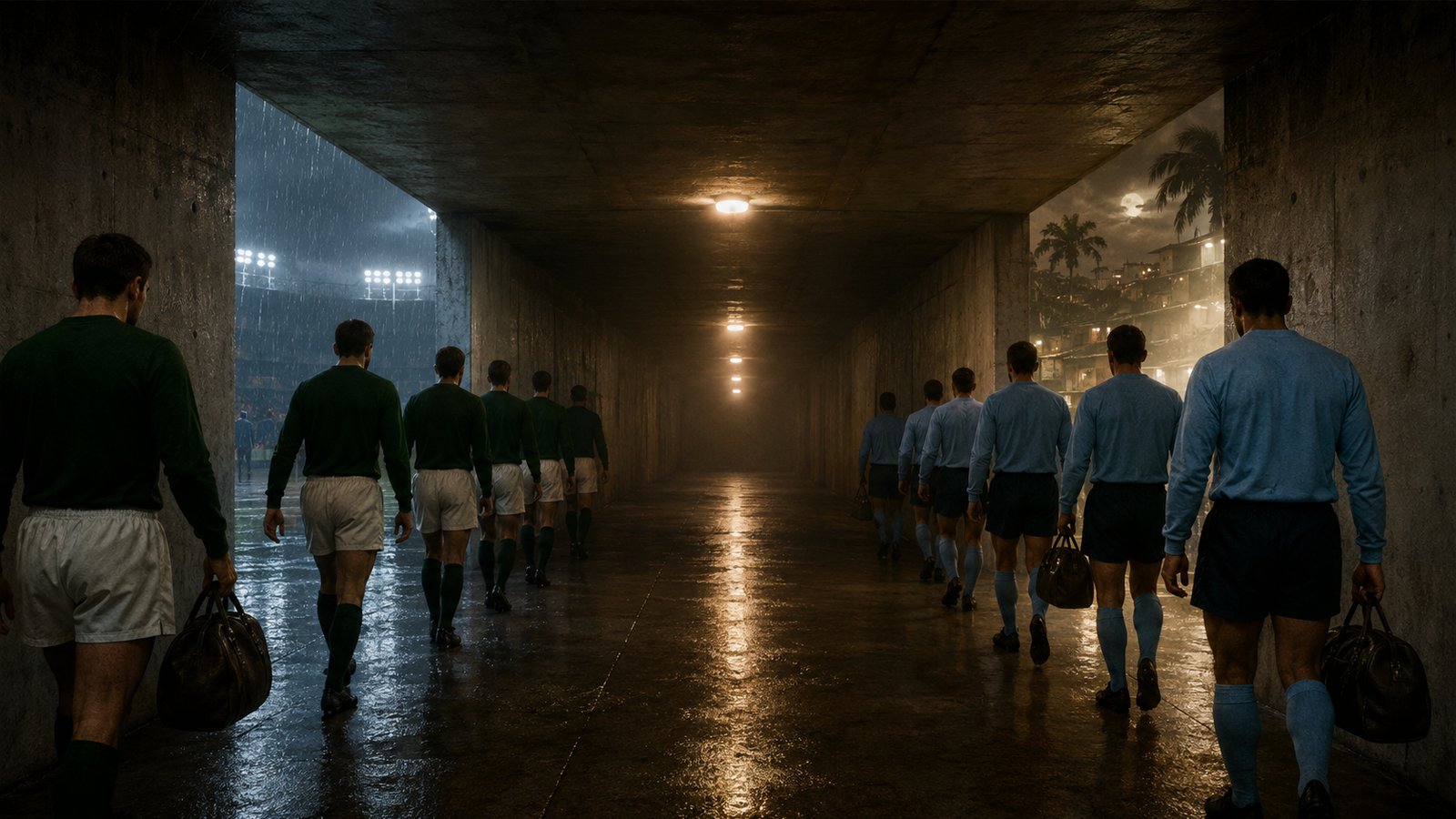
The format helped create the third meeting. The clubs played home and away, with points awarded for each result rather than a simple aggregate score deciding everything. Celtic took the first leg 1-0 at Hampden Park on 18 October through Billy McNeill. Racing answered with a 2-1 victory in Avellaneda on 1 November. Each club therefore held one win and two points. A neutral decider in Montevideo was required three days later.
That rule changed the emotional geometry of the tie. Neither side could protect an aggregate advantage in Uruguay, and nothing from Glasgow or Avellaneda counted as a cushion. The first two matches had supplied memories, injuries and accusations, but no numerical head start. At the Centenario, the next goal would matter more than all three already scored.
Celtic’s European triumph provides an important point of comparison. The Lisbon Lions had attacked Inter with width, movement and conviction. Six months later, many of the same footballers entered a decider in which maintaining the conditions for football became the harder task. The contrast was not a change of identity so much as a test of whether that identity could survive an escalating series.
Hampden Established the Argument
The first leg ended with the cleanest scoreline of the three, but it did not feel clean to the participants. Jimmy Johnstone’s dribbling repeatedly drew contact. The Guardian’s retrospective records Jock Stein coming onto the pitch to complain about the treatment of his winger. Celtic kept attacking and McNeill’s header produced the 1–0 win, yet the result did not close the discussion about how the tie was being played.
For Racing, a narrow away defeat kept the cup within reach. For Celtic, victory came with the conviction that their most elusive attacker had been subjected to a deliberate physical test. Those readings travelled to Argentina with the teams. Every later challenge involving Johnstone could be interpreted through what had happened at Hampden, whether or not the next incident was identical.
Avellaneda Removed the Safety Valve
The second leg supplied a shock before kick-off. Celtic goalkeeper Ronnie Simpson was struck by an object thrown from the crowd, suffered a cut and was replaced by John Fallon. Once play started, Celtic still took the lead through a Tommy Gemmell penalty after Johnstone was brought down.
That goal could have drained the contest. Instead, Racing found a route back. Norberto Raffo levelled and Cárdenas added the goal that won the match 2–1. The comeback meant the cup could not be awarded in Avellaneda. It also ensured that both clubs reached Uruguay with evidence for their own confidence: Celtic had won at home and scored first away; Racing had overturned that lead under pressure.
Stein said his side did not want a third game but knew it had to play one. The short interval left little room for tempers to cool or bodies to recover. There were only three days between Avellaneda and Montevideo. The neutral venue reset the points, not the players.
The Centenario crowd added another layer. Clarín’s history estimates that about 25,000 Argentines crossed to Uruguay, with flags from several Argentine clubs visible around the ground. Racing’s challenge had expanded beyond Avellaneda. For many travelling supporters, the club was representing Argentine football against Europe’s champion.
Five Players Left and One Refused
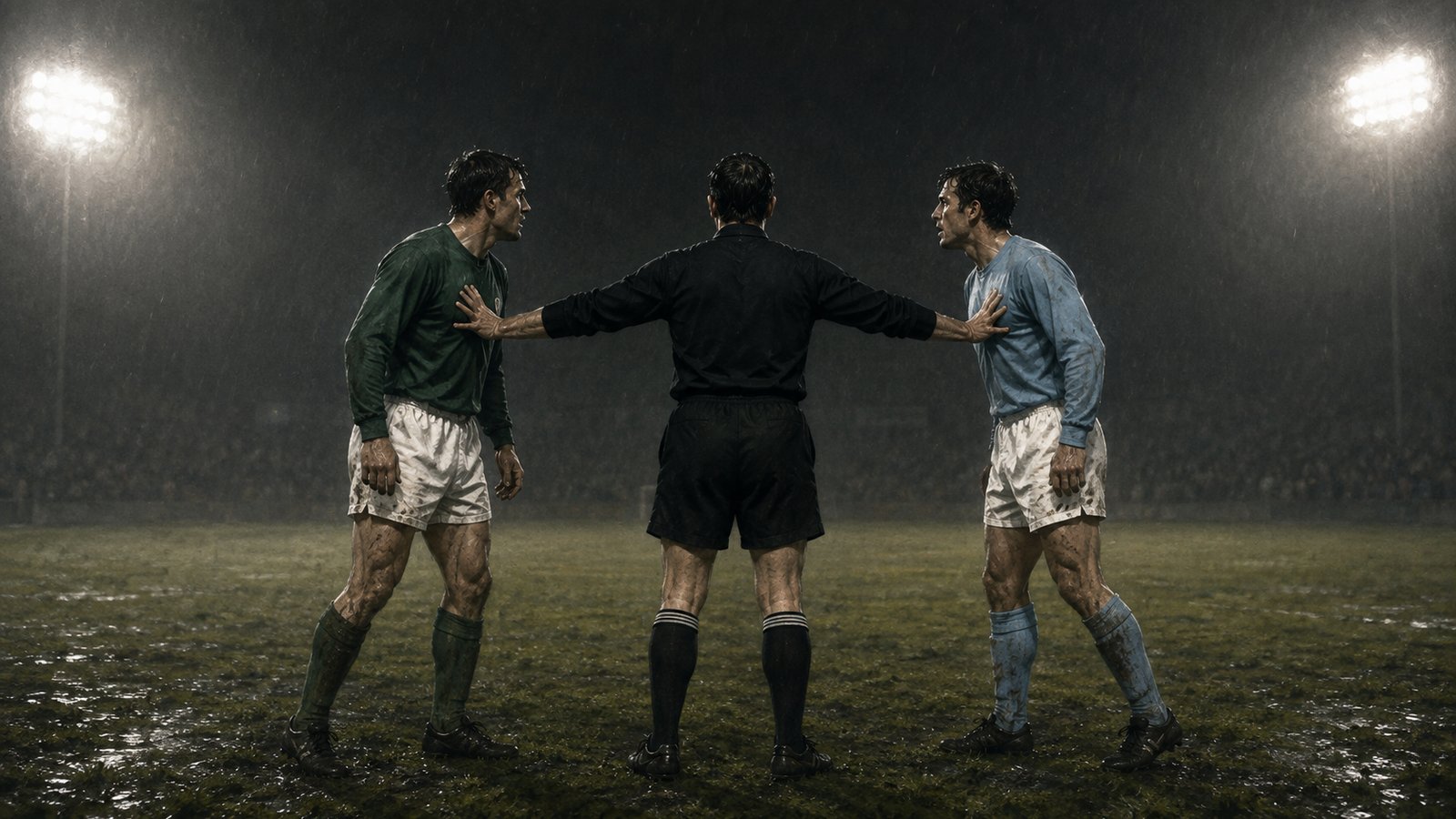
The decider’s disciplinary record needs careful wording because the famous totals do not all count the same thing. Clarín lists five players dismissed from the match: Racing’s Alfio Basile and Juan Carlos Rulli, plus Celtic’s Bobby Lennox, Jimmy Johnstone and John Hughes. The Guardian also records Auld being ordered off, but he refused to leave and remained in play. There were therefore six dismissal decisions in the broadest retelling, but five enforced departures.
The sequence began to consume the game. A clash involving Johnstone led to a melee and the removals of Basile and Lennox. More cards followed in the second half. Each decision reduced the space between football and reprisal: a teammate departed, an opponent appeared to escape, then the next confrontation arrived carrying the weight of the previous one.
Auld’s refusal exposed the limit of the referee’s control more clearly than another red card could have done. A match depends on participants accepting that an official’s signal changes reality. Once a player could be dismissed yet stay, the normal chain between whistle, sanction and restart had broken. Police intervention made the same point from outside the laws of the game.
None of this excuses the conduct. It does, however, explain why a list of cards is not enough. The contest had become a feedback loop in which accumulated suspicion shaped the response to every collision. Celtic lost composure. Racing contributed to the confrontation. The referee’s decisions failed to establish a boundary both sides would observe.
Cárdenas Supplied the Result the Disorder Could Not
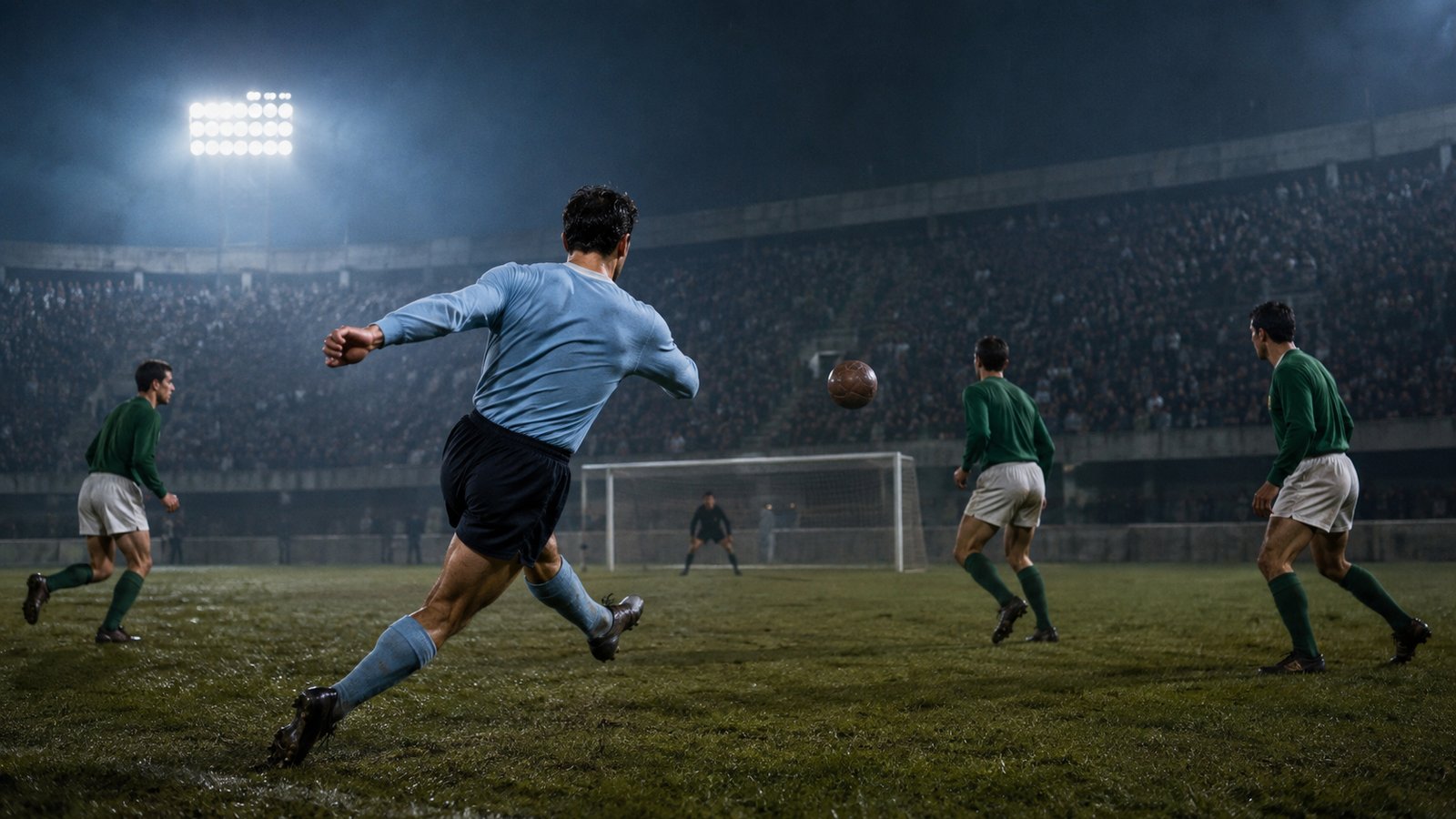
For all the match’s fragmentation, the cup was won by a footballer. Cárdenas scored the only goal, driving Racing into a 1-0 lead that survived to the end. The same player had scored in Avellaneda three days earlier. Across the two Racing victories, his contribution gave the series a sporting spine that the later mythology of violence can obscure.
When the final whistle came, Racing had achieved something larger than a bruising win. No Argentine side had previously held the Intercontinental Cup. Pizzuti’s team had defeated South America’s champion field, Europe’s champion and the pressure of a third match away from home.
The consequences also revealed two incompatible readings of the trip. The Guardian reports that Celtic fined each of its dismissed players £250. Racing’s players received new cars. One dressing room returned to discipline and sanction; the other to celebration and reward. Both reactions followed the same ninety minutes.
Celebration did not erase the damage around the event. Clarín records 52 people injured in disorder after the match, 26 of them taken to Hospital Manuel Quintela. Those figures keep the story from becoming a colourful tale of old football being rougher. Loss of control had consequences beyond reputations and suspensions.
Montevideo endures because the decider contained two truths that resist blending. It was a breakdown severe enough that an ordered-off player remained on the pitch, and it was Racing’s greatest sporting night, decided by Cárdenas rather than by the melee. Remembering only the violence strips the winners of their football. Remembering only the trophy removes the conditions in which it was won.
The Intercontinental Cup asked three matches to settle which champion stood higher. It produced an answer, but not the orderly comparison the format promised. Racing took the trophy home. The image left behind was of a game discovering, in public, that rules have force only while players, officials and institutions can still make them hold.
Sources
The Guardian, “The Joy of Six: Footballing brawls”; Clarín, “Mitos, leyendas y curiosidades del partido en el Centenario”; RSSSF, “Copa Libertadores de América 1967”; Wikipedia, “1967 Intercontinental Cup.”