
The back-pass rule is usually remembered as football’s punishment for boredom. A goalkeeper picked up the ball, rolled it out, received it again, and used his hands to drain the clock. By the early 1990s the pattern felt like an insult to everyone not wearing gloves. So the law changed. That version is true, but it is too small. The 1992 back-pass rule did not merely attack time-wasting. It changed the job description of a goalkeeper.
The old habit was not a tiny detail. It shaped how defenders escaped pressure, how underdogs protected a result, and how a match could be slowed at the exact moment it should have become most desperate. After Italia 90, when low scoring and negative game management became a public embarrassment for the sport’s authorities, the law’s patience ran out. From the 1992-93 season, a goalkeeper could no longer handle a ball deliberately kicked to him by a team-mate. Suddenly, a safe retreat became a football action.
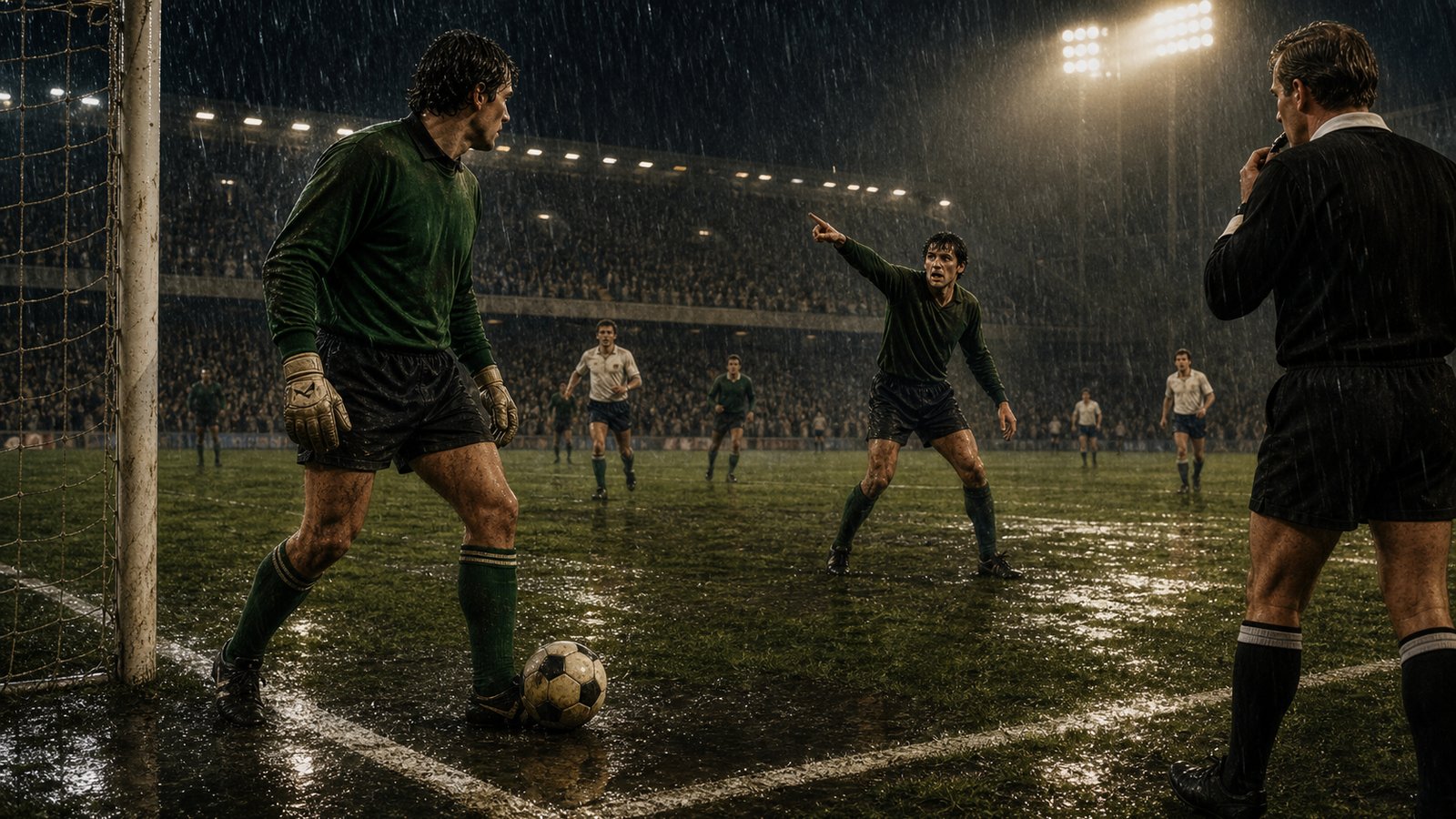
The old safety valve was hidden in plain sight
Before the change, defenders had a simple emergency exit. If pressure arrived, they could send the ball back to the goalkeeper and reset the match with hands. The pass did not have to be brave, accurate, or progressive. It only had to reach a protected player inside the penalty area. That made pressing less rewarding than it looked. A forward could chase, a midfielder could jump, and a crowd could rise, only for the move to end in a catch and a slow walk.
That mattered because football is not only made by what the laws forbid. It is made by what they make comfortable. The back-pass to hands made conservative defending comfortable. It gave a leading side a legal pause button. It also helped weaker technical teams survive pressure without solving it. If the ball came near danger, the goalkeeper’s hands could turn panic into rest.
Italia 90 gave the argument a stage
The 1990 World Cup did not invent caution, but it made caution visible. The tournament produced a low goals-per-game figure by World Cup standards, and the image of teams managing risk became part of the wider argument about spectacle. Administrators did not need every match to be reckless. They needed football to feel less easily stalled.
That is why the back-pass law had a symbolic force beyond its technical wording. It said that possession under pressure should have a cost. A defender could still play backward, but the goalkeeper now had to deal with the ball as a footballer. If his first touch was poor, the penalty area became a trap. If his pass was weak, the opposition suddenly had the chance the old law often denied them.
The goalkeeper became part of the build-up
The immediate effect was awkward. Some goalkeepers had been trained for years to handle first and play second. Their footwork was useful, but it was not central to selection. After 1992, a keeper’s technique could no longer be treated as a luxury. He needed to receive under pressure, clear with either foot, judge when to play short, and understand the angles around his centre-backs.
That did not instantly create the modern sweeper-keeper. Football rarely changes that neatly. But it started moving the position in that direction. A goalkeeper who could pass became more than a shot-stopper with a clearance. He could keep possession alive. He could invite pressure and release it. He could make the pitch bigger for his own team and smaller for the opponent chasing him.
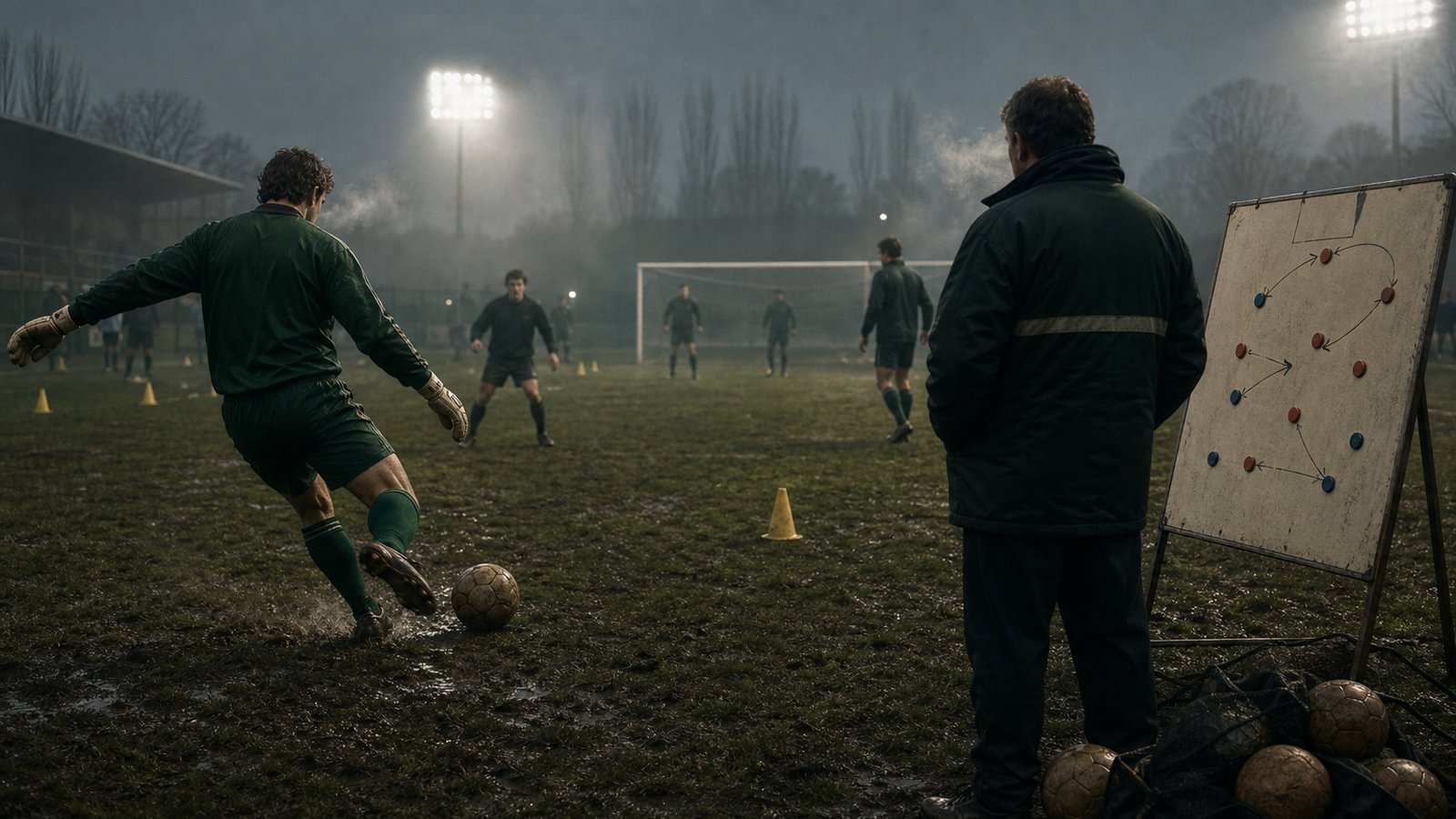
Pressing became more honest
The rule also changed the value of pressing. Under the old rhythm, a pressing forward could be made to look foolish by one backward pass and one catch. After the change, pressure could travel all the way to the goalkeeper. That made the first pass out from the back more important, but it also made the pressing team’s shape more important. One runner was not enough. The opponents had to block easy passes, force the keeper toward a bad foot, and be ready for the hurried clearance.
In other words, the law did not just make goalkeepers pass. It made teams think about the whole chain. Centre-backs had to offer better angles. Full-backs had to decide whether to drop or stretch. Midfielders had to show without hiding behind markers. A change that looked like a small anti-boredom rule became a pressure test for eleven players.
The modern game still lives with the consequence
Today, a goalkeeper clipping a pass into midfield can look normal. That normality is the point. The back-pass law helped make a technical goalkeeper part of elite football’s common sense. It did not produce every later tactical trend by itself, and it did not make risk disappear. It forced the safest player on the pitch to become a participant in risk.
The next time a team plays short from its six-yard box and the crowd gasps, the echo of 1992 is still there. Football did not simply ban a dull trick. It removed a refuge, raised the price of fear, and turned the goalkeeper’s feet into one more place where a match could be won or lost.
The small law exposed the whole team
The best measure of the rule’s importance is how many players it touched. A centre-back could no longer use the goalkeeper as a handball escape without thinking about the next pass. A full-back who dropped too late could trap his own keeper. A midfielder who refused to show for the ball could make a simple situation look dangerous. The law was aimed at one action, but it punished any team whose spacing was lazy.
It also made supporters read the game differently. A back-pass stopped being a sign that nothing was happening. It became a moment of suspense. Could the keeper open his body? Could he find the spare player? Would the forward curve the press and force the clearance? The rule made an ordinary pass feel alive again.
Goalkeepers lost a comfort zone
Before the back-pass rule changed, a pressured defender could turn trouble into safety with one simple action: return the ball to the goalkeeper’s hands. That habit slowed matches, protected nervous teams, and gave leading sides a useful escape hatch. The 1992 change did not just remove a delay tactic. It removed an entire comfort zone from defensive football. Suddenly, a goalkeeper receiving from a teammate had to solve the next moment with feet, positioning, and nerve.
The effect spread beyond the goalkeeper. Centre-backs had to think about the quality of the pass they played home. Midfielders had to offer angles earlier. Pressing teams gained a new reward because forcing a backwards pass could keep the ball alive instead of ending the phase. A rule written to improve spectacle helped accelerate the long transformation of the goalkeeper into an outfield participant.
The rule rewarded teams that rehearsed pressure
The most interesting consequence was tactical rather than decorative. A loose back-pass now invited panic. A clever press could aim not only to win the first ball, but to make the second touch awkward. Football became a little less forgiving for teams that used the goalkeeper as a pause button. Over time, that pressure helped normalize keepers who could receive, pass, and bait opponents. What began as an anti-time-wasting measure became part of the sport’s technical evolution.
Sources
- IFAB Laws of the Game archive
- FIFA World Cup technical reports
- UEFA competition records
- Contemporary newspaper and agency reports
- Club and league historical records