
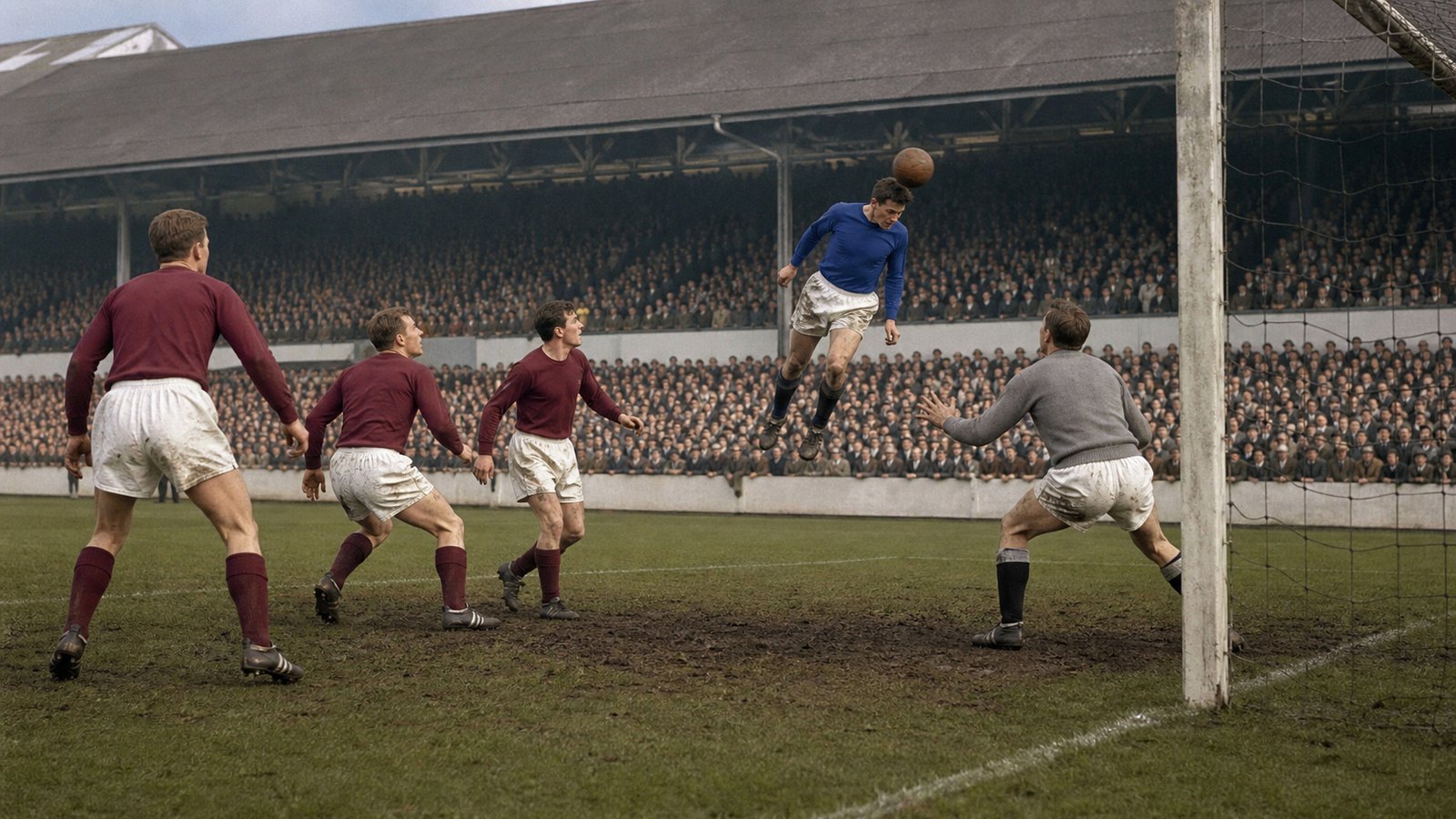
The scoreboard at Tynecastle could show Kilmarnock ahead and Hearts still champions. That was the strange pressure inside Scotland’s final league match of 1964–65. Hearts began the afternoon two points clear. A draw would secure the title. Even a one-goal defeat would leave their goal average fractionally superior. Kilmarnock therefore needed a result with an exact shape: win by at least two goals and concede none.
More than 36,000 spectators came to watch an equation become a football match on 24 April 1965. For Kilmarnock, the arithmetic carried years of frustration. Four second-place league finishes, three lost domestic cup finals and manager Willie Waddell’s planned departure had compressed the club’s chance into one afternoon away from home. Then Davie Sneddon and Brian McIlroy scored within roughly two minutes of each other. Kilmarnock reached 2–0 before half an hour had passed. The remaining hour asked a different question: could a team protect not merely a lead, but the decimal point on which a championship depended?
The title arrived as an equation before kick-off
League tables in 1965 were governed by two rules that make the finish look unfamiliar now. A victory was worth two points, and teams level on points were separated by goal average rather than goal difference. Goal average divided goals scored by goals conceded. It rewarded attacking output, but it also made every goal allowed alter the calculation in a way that was less immediately intuitive than subtraction.
Hearts entered the match with 50 points and Kilmarnock with 48. A home draw was enough. If Kilmarnock won, both would finish on 50, so the ratio became decisive. A 1–0 away victory would not do it. Kilmarnock had to score twice without reply. If Hearts scored once, Waddell’s side would need another goal to restore the necessary margin.
That condition changed the meaning of being ahead. The first Kilmarnock goal would create hope without changing the champion. The second would move the title across the pitch. A Hearts reply would move it back. Supporters did not need a modern live table on a phone to understand the stakes. They could read them directly from the scoreline.
Four runner-up finishes made the margin heavier
Kilmarnock had spent the previous five seasons becoming expert in almost winning. From 1959–60 through 1963–64, the club finished second in the league four times. It also reached two League Cup finals and the 1960 Scottish Cup final, losing all three. This was sustained quality without the trophy that would define it.
The 1964–65 campaign did not proceed like an inevitable correction. Kilmarnock produced a famous European comeback against Eintracht Frankfurt, overturning a 3–0 first-leg defeat with a 5–1 win at Rugby Park. Domestic winter form then buckled. Defeats by Partick Thistle, Airdrie and Dunfermline were joined by a 4–1 home loss to Dundee. A 2–0 defeat at Celtic completed four straight away losses across January and February. By the end of February, Kilmarnock were fourth.
They recovered through a six-match unbeaten sequence. Clyde and Falkirk were beaten narrowly, then Morton were defeated 3–0 in the penultimate league game. The revival placed Kilmarnock three points behind Hearts in April and eventually carried the chase to Tynecastle. Waddell had already decided to leave for journalism after the season. The players knew the manager who had built this side would not receive another campaign with them.
Two attacks found the required score in minutes
Hearts began aggressively, but the first decisive delivery came from 17-year-old Tommy McLean. He crossed toward the far post in the 26th or 27th minute, where Davie Sneddon attacked the ball with his head. Sneddon later admitted that heading was not his usual strength and that he thought he might miss. Goalkeeper Jim Cruickshank travelled across his line and dived beyond the post as the ball entered.
Kilmarnock were leading, but the title had not moved. They still needed the second goal. It arrived roughly two minutes later after Hearts lost possession in midfield. Sneddon moved the ball toward Bertie Black. Black turned and fed Brian McIlroy at the edge of the area. Hearts appealed for offside, but play continued. McIlroy struck left-footed into the far corner.
The scoreboard now displayed the only simple number in a complicated afternoon: 2–0. Waddell’s plan had produced the necessary margin before the match was 30 minutes old. Yet the timing made the achievement feel less secure, not more. There was too much football left for passive survival, and a single Hearts goal would be enough to take the championship back.
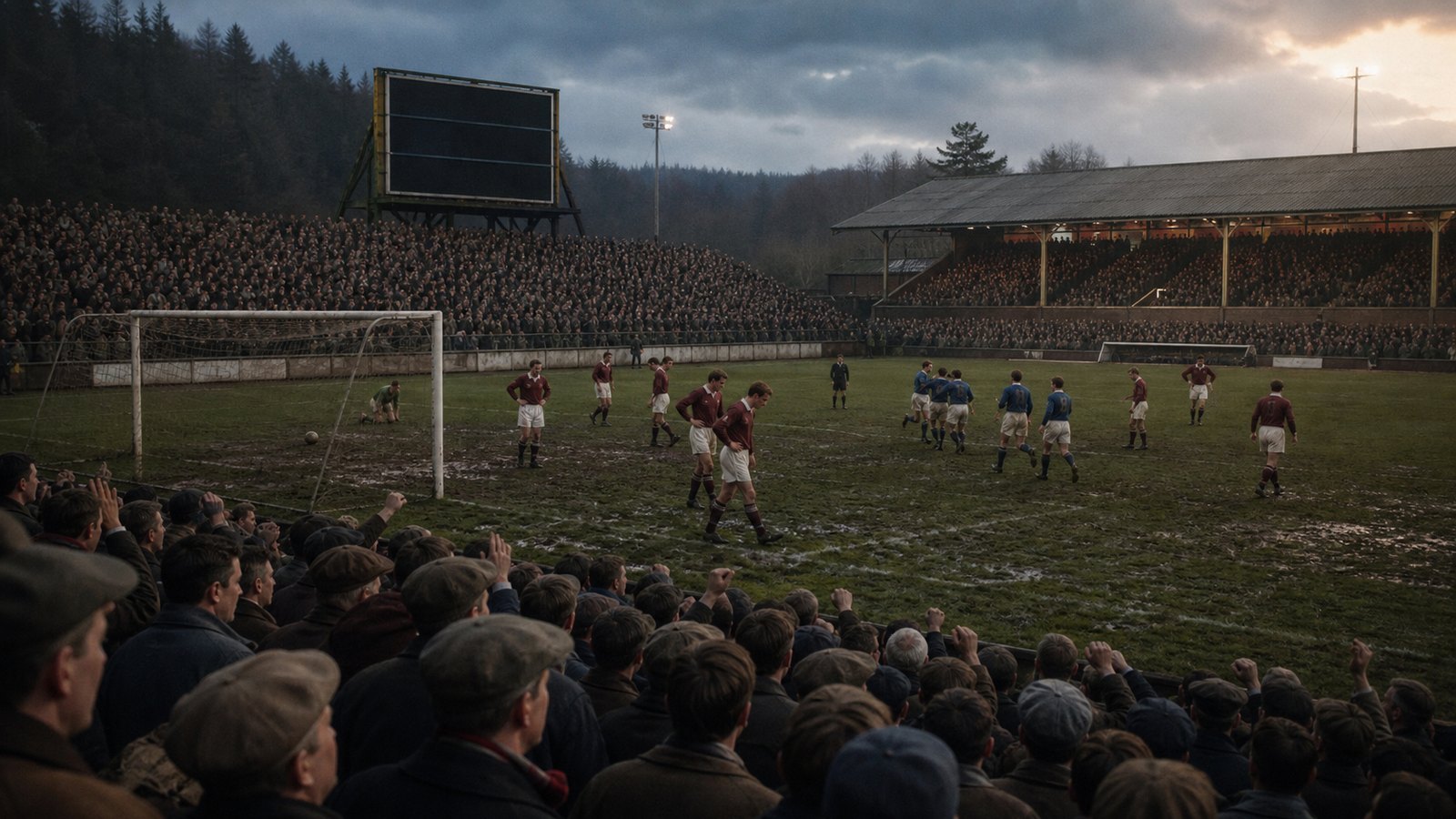
Kilmarnock defended the ratio by continuing to play
Hearts pressed hard before half-time, surrounding Bobby Ferguson’s goal with the kind of attacks that make every clearance feel temporary. Kilmarnock reached the interval with the two-goal lead intact. Their choice after the break was not to retreat into a permanent line around the penalty area. The match archive records attacks at both ends and one especially clear Kilmarnock chance: McIlroy broke forward, McLean arrived in front of goal, and Cruickshank rushed out before the teenager could finish.
That moment reveals the practical intelligence beneath the drama. A third goal would have created breathing room. Possession and forward movement also forced Hearts to defend territory they wanted to use for attack. Protecting the score did not mean abandoning the opponent’s half.
The tension remained asymmetric. Kilmarnock could survive individual Hearts advances, but they could never make the next one harmless. One goal would change the champion. Frank Beattie and Hearts defender Roy Barry both fell heavily after challenging for a header. Barry needed help to stand, then returned to head another attack over the bar. The match kept demanding another duel.
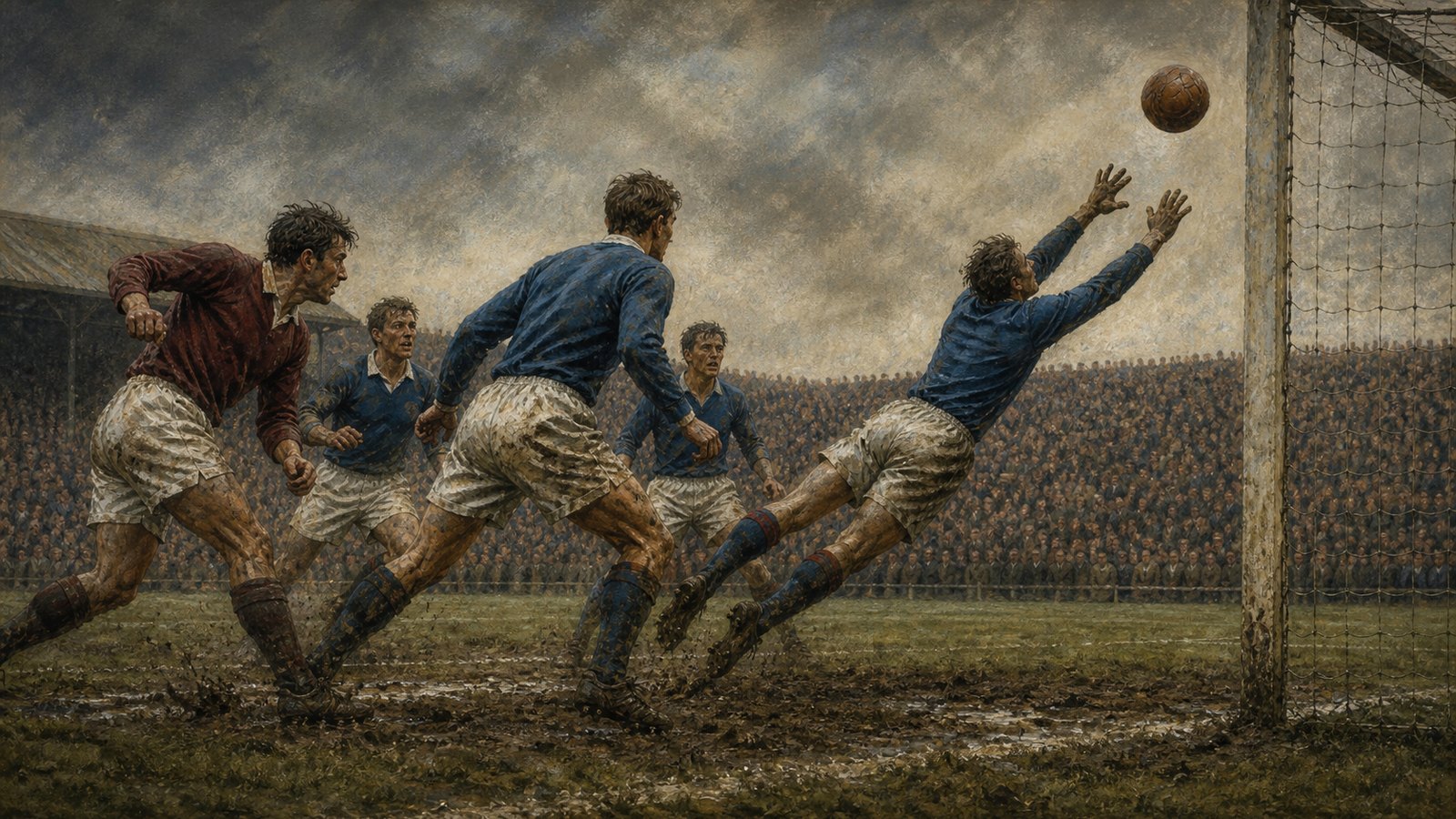
Bobby Ferguson protected the decimal at the far post
Hearts’ clearest late opportunity fell to Alan Gordon. Sneddon’s later account is valuable because it resists the easy memory of a terrible miss. Gordon controlled the ball and drove it into the ground so that it rose toward the net. Ferguson reacted and reached it. In another account, the save came near his far post deep in the closing stages. Either way, the important action belonged to the goalkeeper, not to a forward simply failing under pressure.
When the whistle finally arrived, Waddell ran onto the field. Sneddon remembered it as the only time he saw the normally reserved manager visibly excited. Players returned from the tunnel for a lap because the Kilmarnock support had not stopped making noise. Waddell described a team without one individual star: in his formulation, all of them were stars.
The line suited the afternoon. Sneddon’s header and McIlroy’s shot supplied the goals, but the title also depended on McLean’s cross, Black’s pass, Ferguson’s save and an hour of coordinated resistance. The arithmetic could identify the winner. It could not reduce the work to one hero.
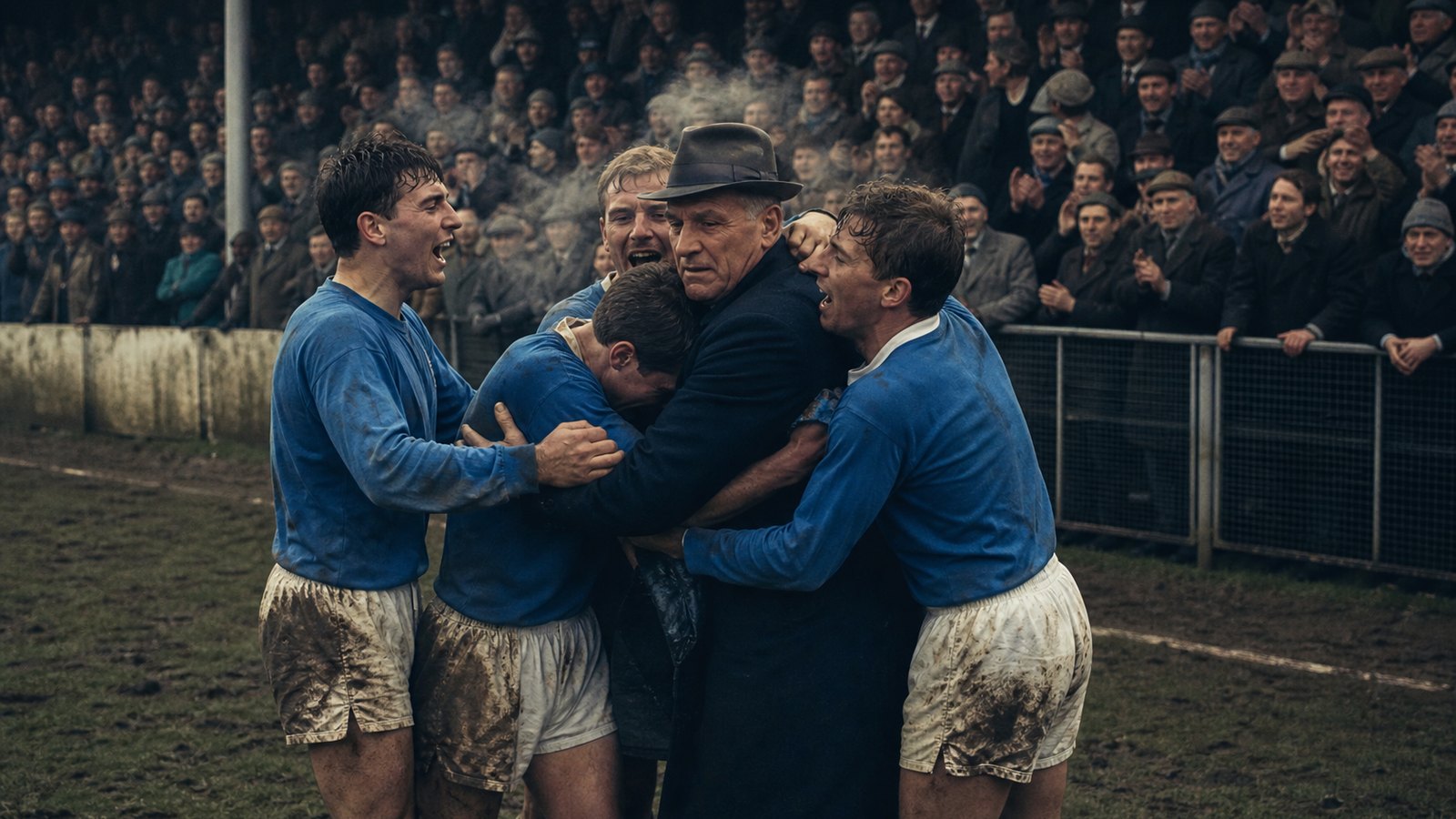
A margin of 0.042 preserved the whole season
Both Kilmarnock and Hearts finished with 22 wins, six draws and six defeats. Both had 50 points. Kilmarnock’s record of 62 goals scored and 33 conceded produced a goal average of 1.879, only 0.042 better than Hearts. Dunfermline finished one point behind both. Hibernian were fourth, completing the only Scottish top-flight season in which neither Old Firm club occupied a place in the top four.
Those numbers explain why 2–0 was enough. They do not make the outcome accidental. Kilmarnock had recovered from fourth place, arrived at the leaders’ ground knowing the exact result required, scored twice in quick succession and then kept the score within the narrow boundary that delivered the championship. The decimal was the measurement, not the performance.
Kilmarnock have never won another Scottish league title. Their triumph also remains the last by a club based outside one of Scotland’s cities. That distinction places the afternoon beside other stories of clubs whose place in the table concealed a more fragile future, including Third Lanark’s fall from 100 league goals to liquidation. Kilmarnock’s 1965 story travels in the opposite direction. Years of being close did not end with a broad declaration of superiority. They ended with two goals, one clean sheet and the smallest ratio the players could defend.
Sources
Kilmarnock FC historical archive; Kilmarnock FC classic match archive; Football Scotland; The Herald.