
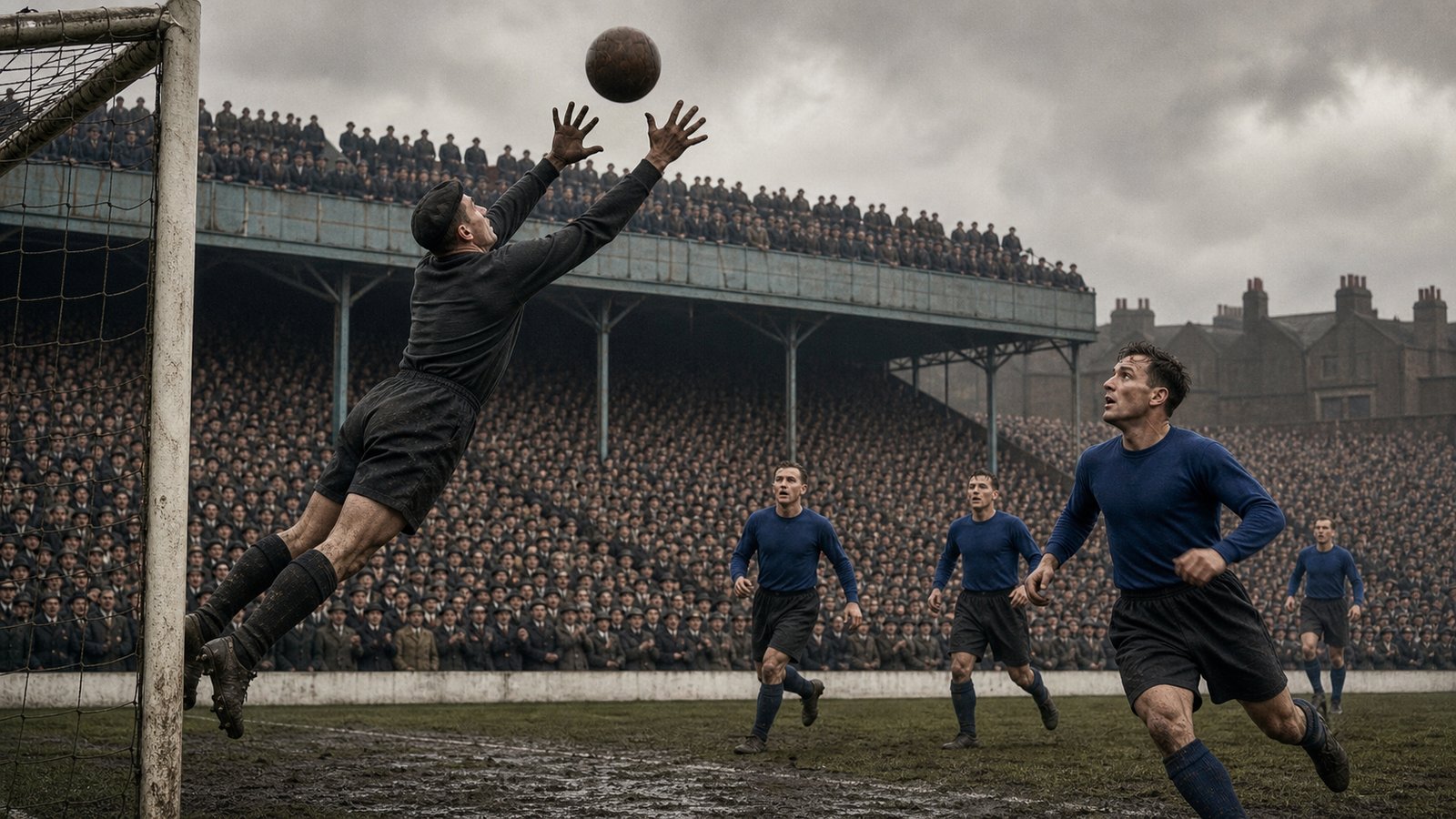
By early afternoon on 13 November 1945, the streets around Stamford Bridge had become part of the event. Front gardens were being used as bicycle parks. Sellers offered toffee apples, oranges and programmes. Uniformed servicemen moved with shift workers and children toward a ground that could not safely contain everyone who wanted to enter. Some spectators followed railway lines in search of a way through. Others climbed the backs of stands and settled on roofs roughly 100 feet above the pitch.
The official attendance was about 75,000. Estimates of the real crowd rose beyond 100,000. A 10-shilling ticket could reportedly fetch £4 outside. Only thirteen weeks had passed since Japan’s surrender ended the Second World War. This was the first chance many people had received since 1939 to watch a British club face foreign opposition, and no Russian side had visited Britain before.
At 2:25pm, Dynamo’s players emerged. Britain still spoke about itself as football’s teacher. The Soviet champions brought a style few in the crowd had seen and rituals the home players did not recognise. The match finished 3–3, but the revealing story is how an audience expecting a curiosity spent ninety minutes discovering an argument about football’s future.
London Could Not Agree How to Receive the Visitors
The invitation carried the warmth and suspicion of the postwar moment. Soviet sacrifice had created public sympathy, yet negotiations over Europe were producing distrust. British officials preferred the Football Association to appear as host rather than make the visit a government undertaking.
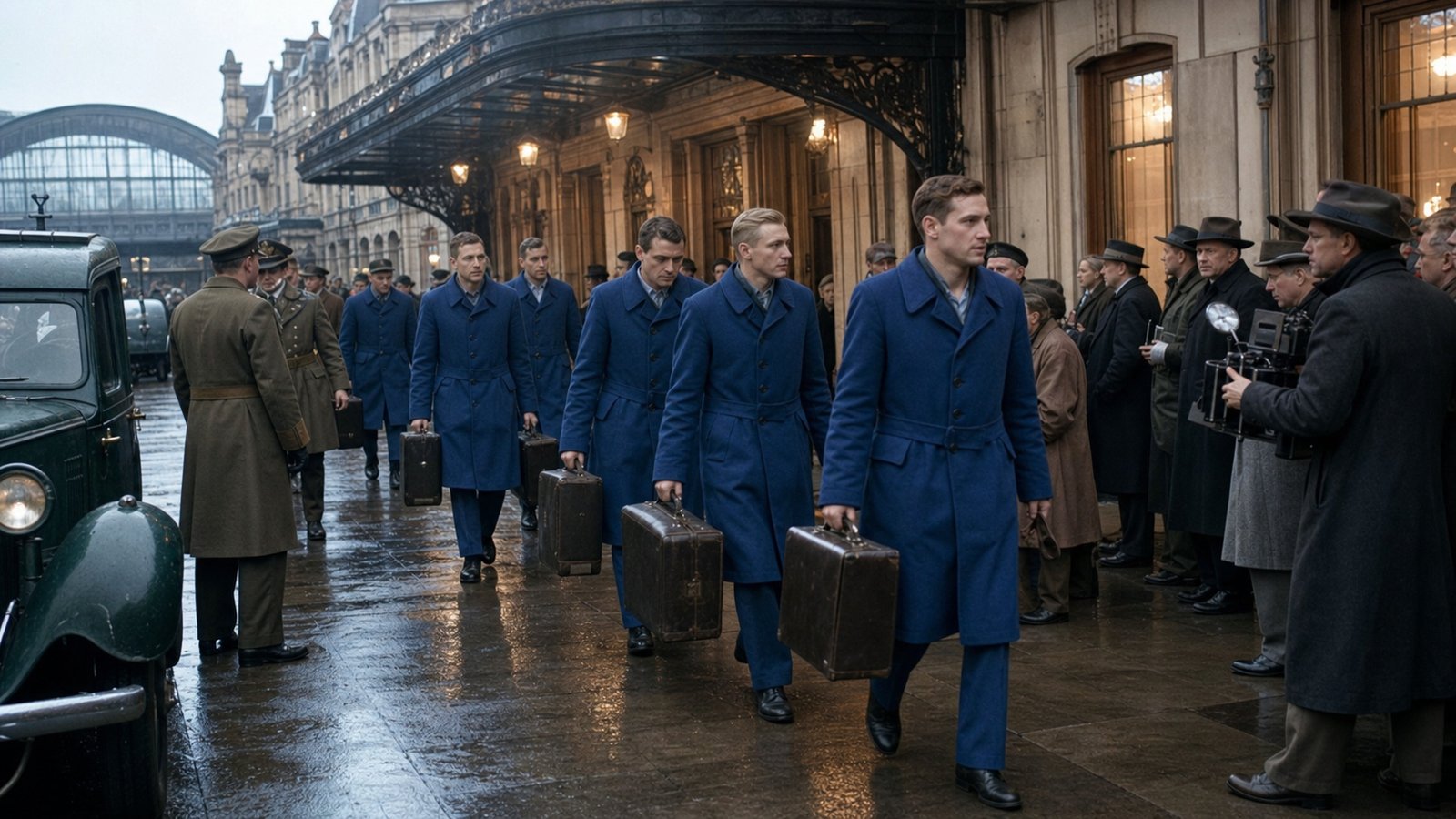
Even the sleeping arrangements became a test. At Wellington Barracks, beds had been provided without sheets or pillows. The delegation refused to continue until accommodation and food were settled. Better rooms were found at the Imperial Hotel. Londoners reportedly offered spare rooms of their own. What looked to officials like protocol looked to parts of the public like poor treatment of invited allies.
Dynamo had brought a fourteen-point list. They wanted professional opponents, Arsenal, the option of a Soviet referee, a substitute and permission to omit shirt numbers. British administrators heard demands. The visitors saw safeguards for a tour on which defeat would be interpreted far beyond the dressing room. Konstantin Beskov later recalled that returning beaten would have brought public shame. English football was the game’s proclaimed authority.
Bouquets and Footballs Looked Like Warning Signs to Nobody
Chelsea’s crowd received its first tactical clue fifteen minutes before kick-off. Dynamo came onto the pitch and warmed up with several balls, repeating short movements while the home side remained inside. Structured preparation was unusual enough in English football to look wasteful. Why spend energy before the match had begun? The Russians then presented bouquets to Chelsea’s players, a familiar courtesy in Soviet football that produced embarrassment and laughter in London. One spectator called it Chelsea’s funeral.
A habit could appear comic when the audience lacked the context to read it. The same problem soon applied to Dynamo’s football. Their players exchanged positions, offered short passing angles and moved before the recipient had controlled the ball. British reports had introduced them as amateurs and beginners. In the opening twenty minutes, those “beginners” forced four saves and struck the post twice.
Chelsea nevertheless scored twice, producing a scoreboard more reassuring than the play. Dynamo then won a penalty before the interval. Leonid Solovyov, who was said to have missed only once before, struck the post. They returned after half-time still moving the ball at the speed that had unsettled Chelsea.
The Crowd Learned Dynamo’s Grammar One Goal at a Time
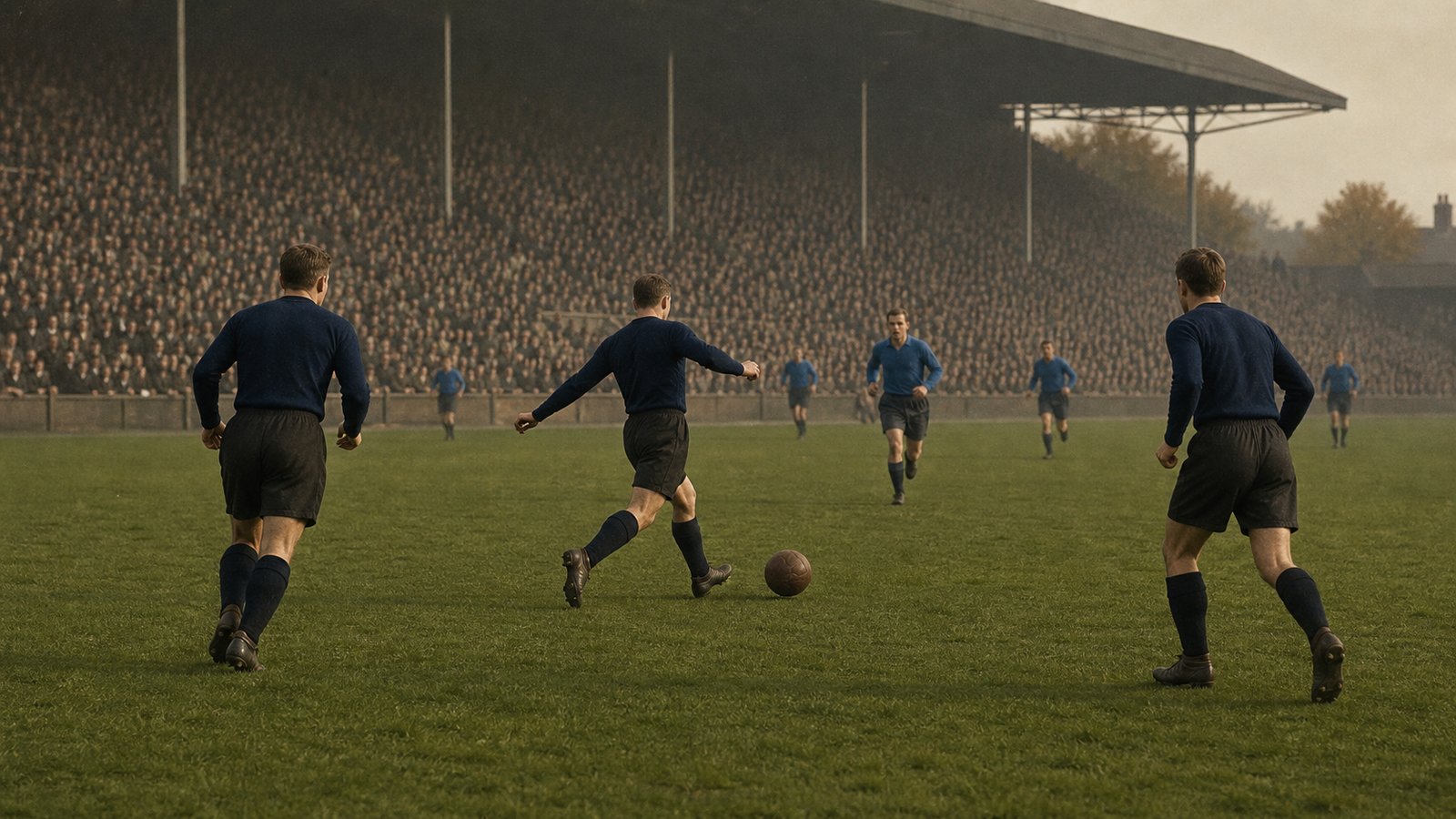
Vasiliy Kartsev began the recovery in the 65th minute. Yevgeniy Archangelski found him, Kartsev beat two defenders and drove his shot in from the edge of the area. With about fifteen minutes remaining, Archangelski’s cross-shot took a deflection and made it 2–2. The comeback did not feel like a single surge. It was the visible reward for all the earlier rotations, quick releases and supporting runs that had initially seemed unfamiliar.
Chelsea had their own answer. Tommy Lawton, then a British-record £14,000 signing, rose to head the home side back in front in the 81st minute. Dynamo goalkeeper Alexei Khomich had already made himself one of the afternoon’s central figures. He was not unusually tall, but his reach and explosive saves gave the British press an irresistible name: “Tiger” Khomich. Chelsea captain John Harris remembered him springing for shots that seemed impossible to catch.
The final equaliser compressed the tactical surprise into one move. Vsevolod Radikorsky recovered the ball and supplied Archangelski. His cross struck a Chelsea player and reached Vsevolod Bobrov, whose position would otherwise have been offside. Bobrov finished, the goal stood and Stamford Bridge responded with approval rather than resentment. At the whistle, spectators poured onto the pitch. Some lifted Dynamo players and carried them toward the tunnel.
That reception is the match’s most important result. The crowd watched a team fall two goals behind, miss a penalty, concede again after drawing level and continue trusting its movement. Lawton described Dynamo’s passing as the ball flashing from man to man in bewildering fashion. The terraces had spent the afternoon learning how to follow it.
Cardiff, Fog and Glasgow Kept Rewriting the Tour
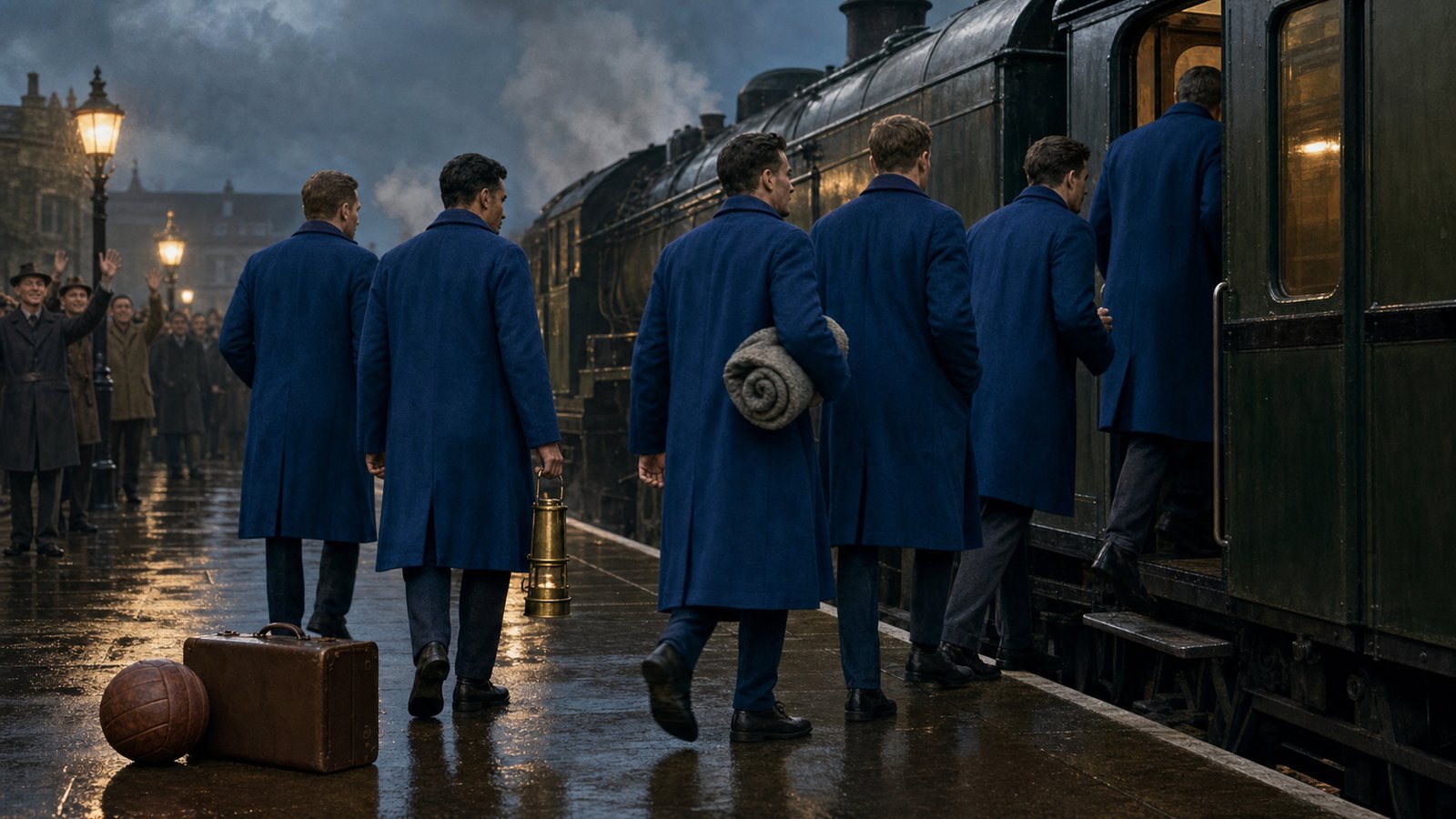
The Chelsea draw turned the remaining fixtures into national tests. Cardiff greeted Dynamo with bunting left from a royal visit, then raised the hammer and sickle above City Hall. A band played hymns before roughly 40,000 people at Ninian Park. Each visitor received a miner’s lamp. Once the match began, the welcome became a rout. Dynamo led 3–0 inside twenty-five minutes and won 10–1.
Arsenal assembled guest players because several of their own remained on military duty. Stanley Matthews came from Stoke City and Stan Mortensen from Blackpool. Dynamo had also borrowed players from other Soviet clubs, making the White Hart Lane fixture a meeting of reinforced sides.
Fog made the test almost unreadable. Queues formed from midnight, and about 40,000 people were inside by noon. Visibility fell below thirty yards. Both assistant referees used the same touchline so they would not lose each other. Arsenal goalkeeper Wyn Griffiths took blows to the head and did not know the half-time score; spectator and QPR player Harry Brown replaced him. Dynamo won 4–3, although much of the audience needed the next morning’s newspaper to learn the score.
At Ibrox, Rangers gave Britain one final chance to defeat the tourists. Tickets with a face value of 21 shillings reportedly sold for £10. Dynamo scored after two minutes and later produced a passing move that the Daily Telegraph called as perfect a goal as had been scored at the ground. Rangers recovered to draw 2–2. The visitors finished unbeaten: victories over Cardiff and Arsenal, draws with Chelsea and Rangers, nineteen goals scored and nine conceded.
This four-city spectacle differs from the later television ritual explored in the first Match of the Day broadcast. In 1945, spectators had to be physically present, and sometimes dangerously placed, to encounter football from elsewhere. Each crowd carried the previous result into the next city.
An Unbeaten Team Left Behind an Argument
A fifth match proposed for Villa Park never happened. Dynamo were recalled to Moscow, leaving Aston Villa with 70,000 unusable tickets. On 7 December, BBC radio announced that “the Russians have gone,” assuming listeners would know who it meant. The team returned as national heroes, and the aggregate score became the title of a celebratory Soviet book: 19–9.
George Orwell’s essay The Sporting Spirit rejected the idea that international sport naturally created friendship. He called serious competition “war minus the shooting” and argued that the visit had probably worsened Anglo-Soviet relations. The Football Association declined a reciprocal Soviet invitation in 1946. Public curiosity and official caution had occupied the same grounds.
Britain did not immediately absorb the warning. Eight years later, Hungary’s 6–3 victory at Wembley would still be treated as a profound shock. The 1945 visitors instead gave huge crowds direct evidence that football’s birthplace did not possess the game’s only advanced language.
The flowers, warm-up and interchangeable movement began as objects of amusement. Ninety minutes later, Chelsea supporters carried visiting players from the field. Miners’ lamps, fog and black-market tickets kept mixing hospitality with rivalry. The tour endured because spectators revised their expectations while the ball was still moving.
Sources
BBC Sport; The Orwell Foundation; These Football Times.