
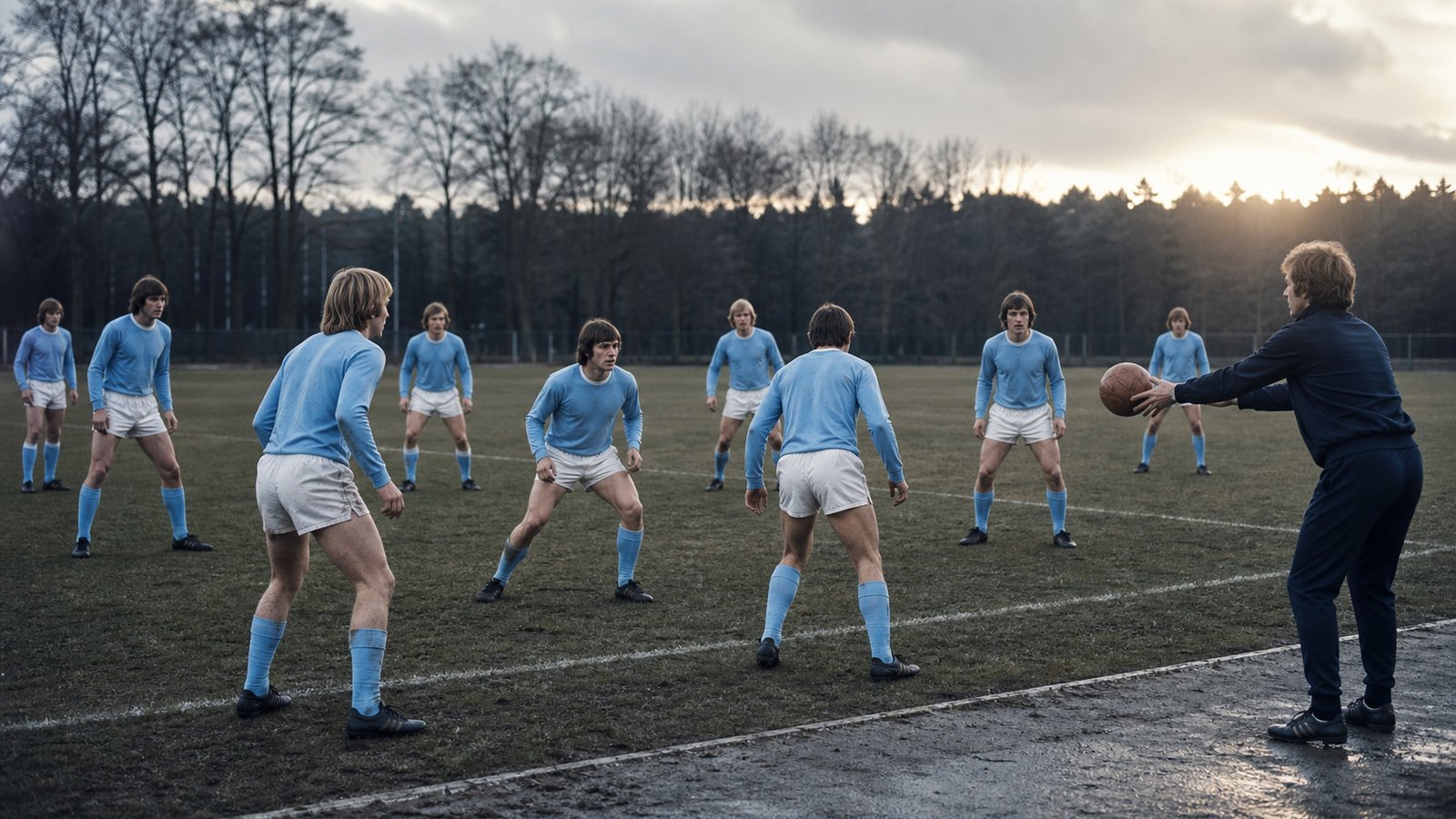
On a wet training pitch in Malmö, Bob Houghton kept giving the ball back.
His players had defended the exercise, won possession and expected to attack. Houghton stopped them, returned the ball to the opposition and reset the shape. Again. The back four moved together, the midfield closed the next pass, and the forwards took their position in the first line. When one link arrived late, the whole sequence began once more.
It could be dull. Jan-Olov Kindvall remembered that clearly. It was also the work that carried a Swedish club staffed partly by teachers, an engineer and a sales manager through Monaco, Dynamo Kyiv, Wisła Kraków and Austria Wien. By 30 May 1979, Malmö FF were standing in Munich’s Olympic Stadium opposite Nottingham Forest in the European Cup final.
Their run was not a fairy tale produced by one inspired night. It was a chain of rehearsed solutions, each narrow enough to survive the next opponent.
A 26-Year-Old Coach Removed the Spare Man
Houghton did not arrive in Sweden with the profile of a European finalist. He had been attached to Fulham and Brighton without making a first-team appearance, then became player-manager at Hastings United at 22. He coached at Maidstone, where Roy Hodgson assisted him, and later worked under Bobby Robson at Ipswich Town. Malmö hired him in 1974 when he was 26, younger than several members of his squad.
The tactical change was immediate and awkward. Swedish teams commonly defended with a libero behind man-markers. Houghton preferred a flat back four, zonal responsibility and direct movement after recovery. His ideas came partly from the FA course run by technical director Allen Wade, where match situations were divided into repeatable units for training.
There was no full-time superclub waiting to obey him. Claes Malmberg sold Toshiba products even during the European Cup campaign. Roy Andersson worked as an engineer. Other players taught physical education or worked in banks. The structure had to be clear enough to survive the morning after a normal working day.
Houghton first won the confidence of senior figures, especially Bo Larsson. Then results gave the new shape authority. Malmö took the Swedish title in 1974 and 1975, before reclaiming it in October 1977. That last championship opened the door to the 1978–79 European Cup.
Monaco Offered No Room for Waste
The first round established the scale of Malmö’s margin. They drew 0–0 with Monaco in Sweden and went south needing either a score draw or a victory. Kindvall scored the only goal across 180 minutes.
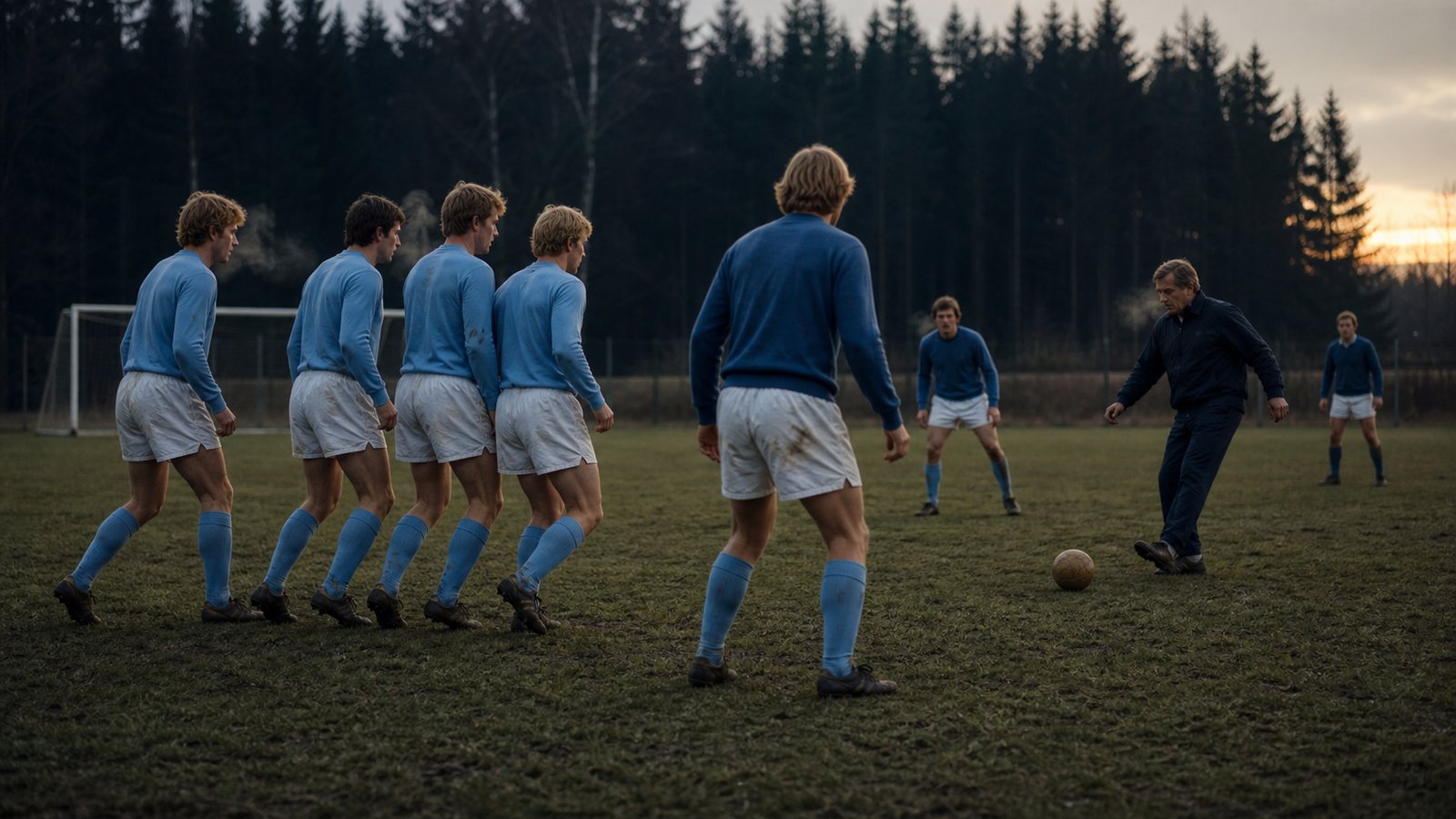
One goal was enough because Malmö treated defending as collective choreography. Kindvall described how every player had to support the others: if one person failed to move, the link broke. Houghton’s training did not separate defenders from everyone ahead of them. The entire side learned the same distances and triggers.
That made the direct game more than hopeful long passing. Malmö could send the ball forward quickly because their positions behind it had already been arranged. If an attack ended, the team knew where the next defensive action began. Monaco found no second chance to repair the tie.
The reward was Dynamo Kyiv, one of the competition’s most imposing opponents. The first leg was staged in Kharkiv. Kindvall recalled a crowd of roughly 70,000 to 80,000 and rows of military and police near the pitch. Malmö did not chase a dramatic away goal. They held the game at 0–0 and took the contest back to Sweden.
Kyiv Made Repetition Visible
Malmö won the home leg 2–0. Kindvall helped create Tore Cervin’s opener and scored the second himself. The score suggested comfort; the method had been built through all those resets on the training field.
Dynamo demanded patience without passivity. Malmö’s lines had to move, stop and move again without opening the centre. Winning the ball was only half the job. The first outlet had to relieve pressure while leaving enough protection for the next wave. This was the kind of match Houghton’s repetitive sessions had anticipated.
The quarter-final against Wisła Kraków presented a different problem. Malmö lost the away leg 2–1, so containment alone could no longer carry them. At home they needed goals without surrendering the order that had brought them there.
For more than an hour, the tie remained tight. Then Malmö scored four times in the final 25 minutes and won the second leg 4–1. The burst did not contradict their cautious reputation. It showed what the structure was for: conserving a contest until the moment when pressure, fitness and coordinated forward movement could change it.
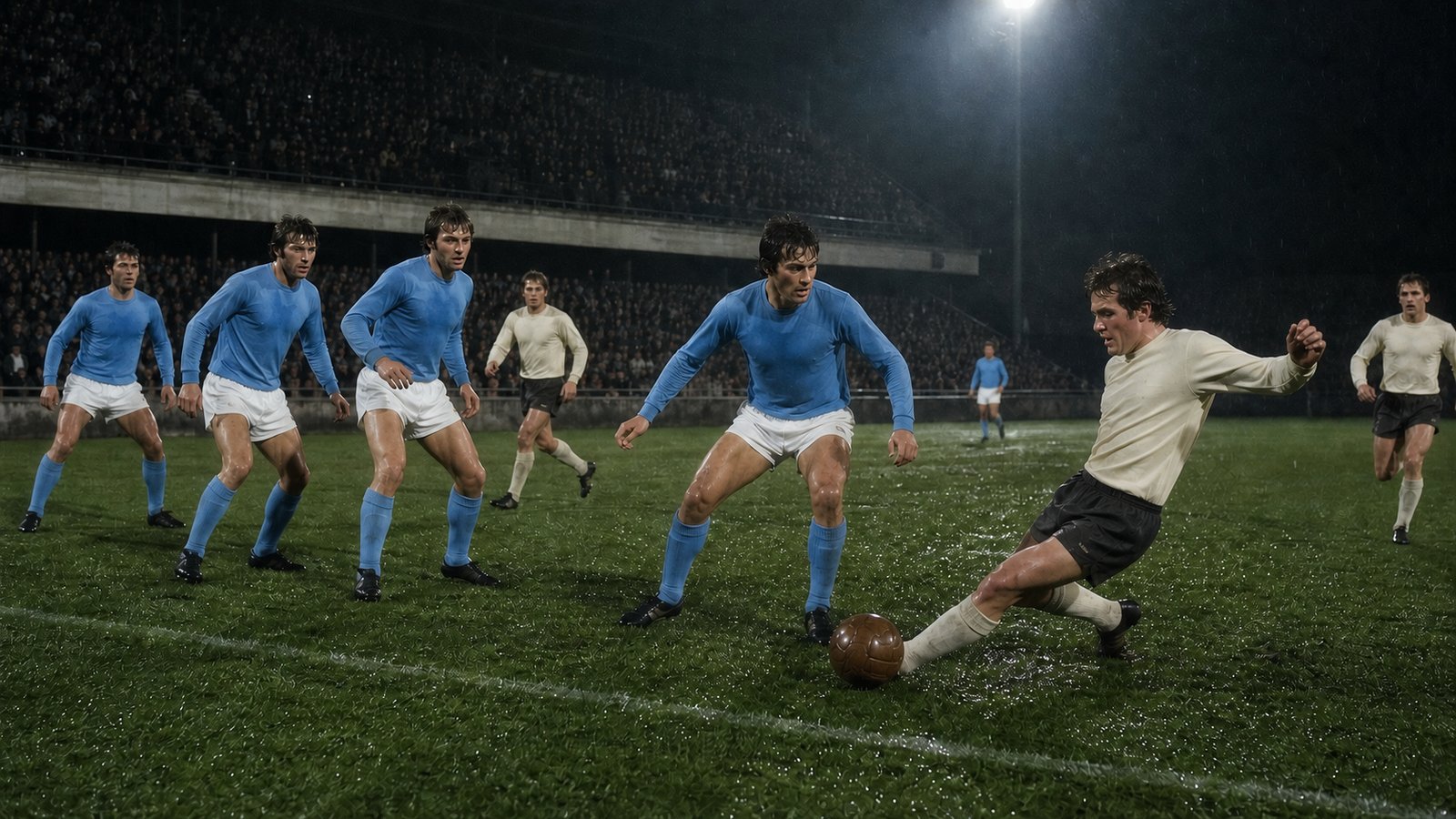
Austria Wien came next. Malmö drew the first leg 0–0 away and won the return 1–0. Their four ties had now produced an extraordinary sequence: 1–0, 2–0, 5–3 and 1–0 on aggregate. Only Wisła had scored against them.
Munich Took Away Three of Malmö’s Margins
The final drew Malmö into an odd mirror. Forest also valued organisation without the ball. English football had been shown on Swedish television since 1969, so the names were familiar: Peter Shilton, Viv Anderson, Trevor Francis and Brian Clough. Malmö understood the opponent. That did not make Forest easier to move.
Injuries reduced Houghton’s choices before kick-off. Bo Larsson and Roy Andersson were unavailable. Captain Staffan Tapper broke a toe with the final kick of the last training session. He started after receiving an anaesthetic, but left after roughly half an hour when it stopped holding the pain.
Malmö still created the first clear opening. Kenny Burns mishandled a backward header, and Kindvall reached the loose ball with Shilton caught between positions. The 18-year-old tried to lift it over the goalkeeper. The touch lacked height and Shilton recovered to catch it.
That chance mattered because a lead would have allowed Malmö to inhabit their strongest game. Instead Forest scored at the end of the first half. John Robertson delivered from the left and Francis arrived at the far post to head the ball in. The final’s score had found its permanent shape.
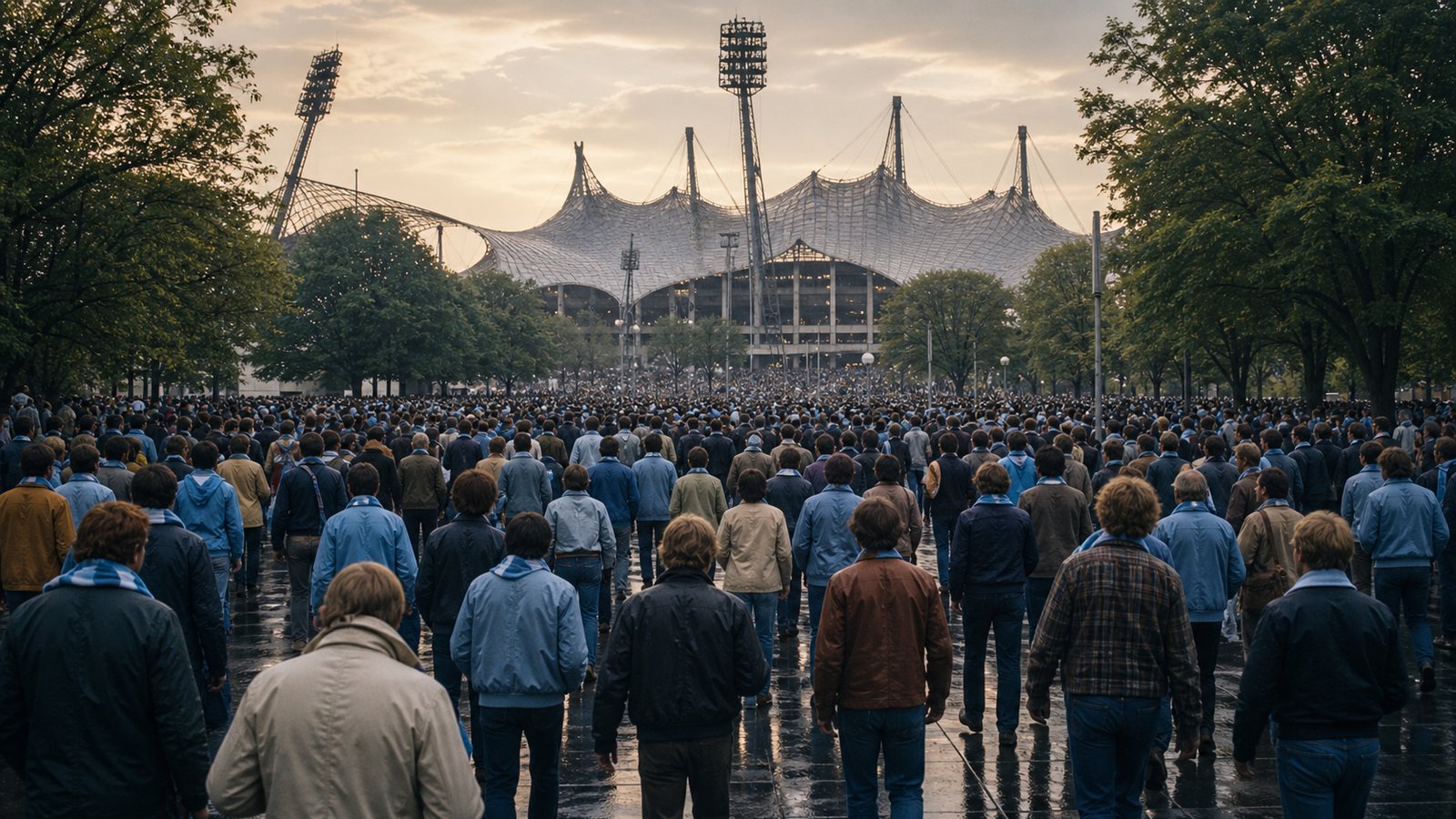
Forest won 1–0. The competition record gives an official attendance of 57,000; Malmö’s later club commemoration recalled almost 70,000 people, including 8,000 travelling Malmö supporters and more than 20,000 following Forest. The same account said the match went to viewers in 42 countries. Exact crowd estimates differ, but the scale of the stage does not.
The Final Was Proof of Work, Not an Exception
It is tempting to preserve Malmö as charming outsiders who reached one unlikely evening. That description loses the mechanism. They conceded in only one of four two-legged ties. They changed the state of the Wisła contest when a goal was necessary. They crossed Monaco, the Soviet Union, Poland and Austria by solving a different pressure in each place.
The people who did it remained recognisably connected to ordinary city life. Malmberg could return from a European fixture and continue working in sales. Andersson had an engineering career. Houghton’s achievement was to make elite coordination possible in limited training time, not to imitate the resources of a richer league.
Malmö later received Svenska Dagbladet’s gold medal for the series of performances that carried them to the final, the first football team to receive that distinction. Their run remains the only appearance by a Swedish club in the final of Europe’s leading club competition.
The route also explains why the medal recognised a series rather than merely the occasion in Munich. Monaco required a single clean away goal. Kyiv required Malmö to absorb the scale of Kharkiv and then change tempo at home. Wisła forced them to recover from a first-leg defeat, while Austria Wien tested whether they could protect another narrow edge. The final was the fifth problem, not the whole achievement. Each previous answer had been visible in the score before the next journey began.
The deeper inheritance lies on the training pitch. A defender stepped forward. A midfielder shifted five yards. A forward closed the return pass. Possession changed hands, and Houghton stopped the exercise. He handed the ball back because the recovery was not the finish. Malmö had to prove they could repeat the entire sequence.
By Munich, they had repeated it across a continent.
Sources
The Guardian; Malmö FF; RSSSF European competition archive.