
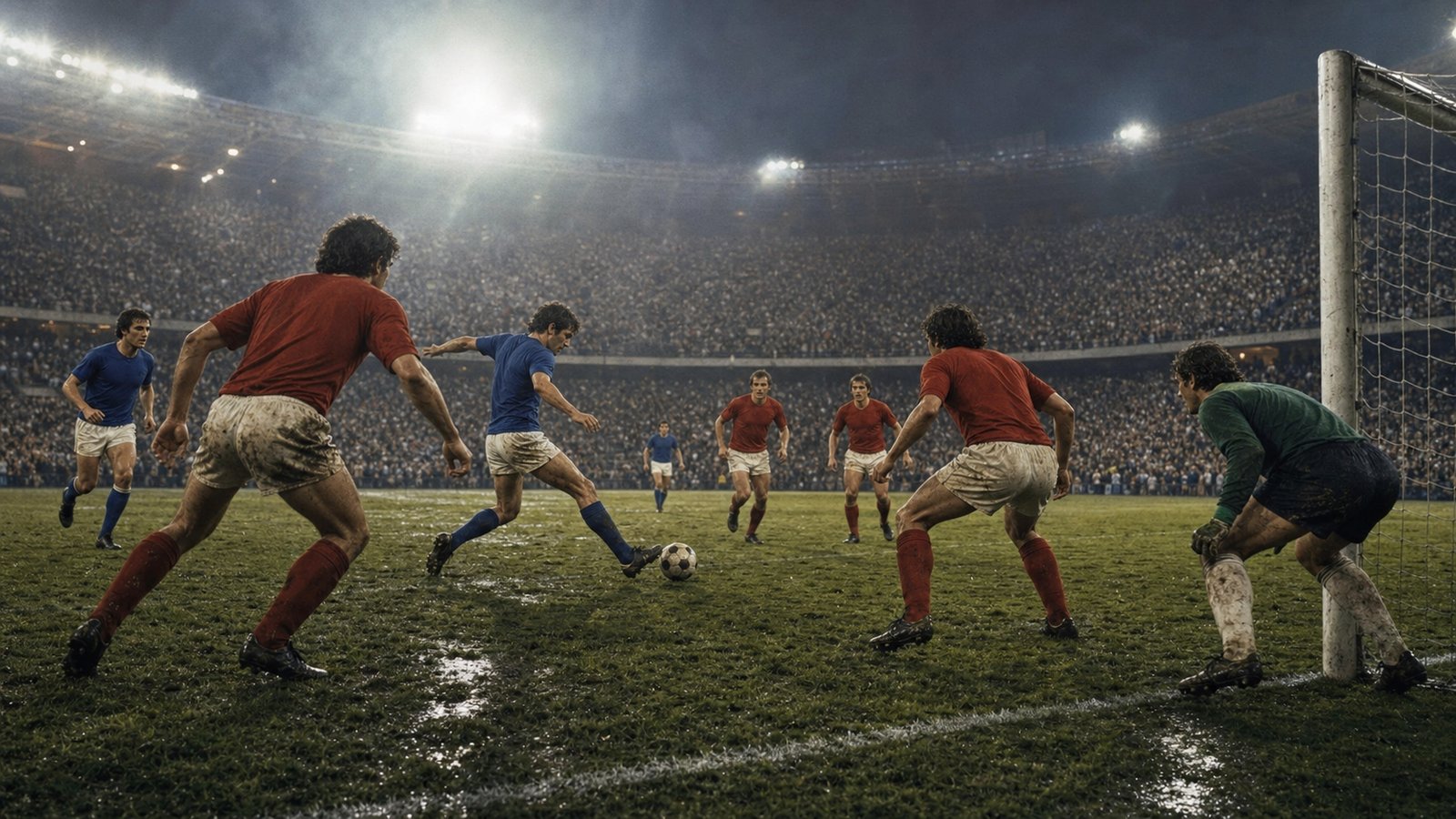
At 113 minutes in Marseille, France were one goal behind Portugal and one bad touch from losing the match that a host nation expected them to win. The French had spent long stretches attacking Manuel Bento’s goal. They had struck first, forced save after save and carried the tournament’s most celebrated midfield. None of it changed the scoreboard now: Portugal led 2–1, and the European Championship semi-final was running out of road.
What followed occupied only six minutes. A left-back scored his second goal of the night. A midfielder lost the ball, recovered it and sprinted to the byline on his 29th birthday. Michel Platini, already the tournament’s dominant player, stopped a low cross inside a crowded penalty area and supplied the final touch at 119 minutes. The Stade Vélodrome did not watch a patient tactical solution emerge. It watched pressure collapse time.
The finish is remembered as a French release, but Portugal shaped it. Rui Jordão scored twice from Chalana deliveries. Bento kept turning French chances away. Fernando Cabrita’s side reached the brink of a penalty shootout after surviving near its own goal. France escaped because its defenders joined the attack, Jean Tigana found one last run and Platini remained calm at the instant when the stadium had lost all calm.
Marseille Had Been Waiting for This Team
France arrived at EURO 1984 as hosts and favourites. Michel Hidalgo arranged Platini, Tigana, Alain Giresse and Luis Fernandez in the midfield later called the Carré Magique. Ligue 1’s historical account records a 1–0 opening win over Denmark, followed by Platini hat-tricks against Belgium and Yugoslavia. By the semi-final, he had scored seven goals in three matches and France had won all three.
The expectation was physical inside the Vélodrome. DFB match data lists 54,848 spectators for the 23 June semi-final. France had never won a major international trophy, yet the route now ran through a home stadium filled with people who had watched Platini make the tournament feel inevitable. Fernandez later recalled that the whole country expected victory.
Portugal brought a different kind of pressure. They had reached the last four of a major tournament for the first time since the 1966 World Cup and selected a second striker to support Jordão. Their task was not to imitate France’s midfield. It was to remain close enough for Chalana’s left foot, Jordão’s movement and Bento’s goalkeeping to matter.
A Free Kick Gave Domergue the First Opening
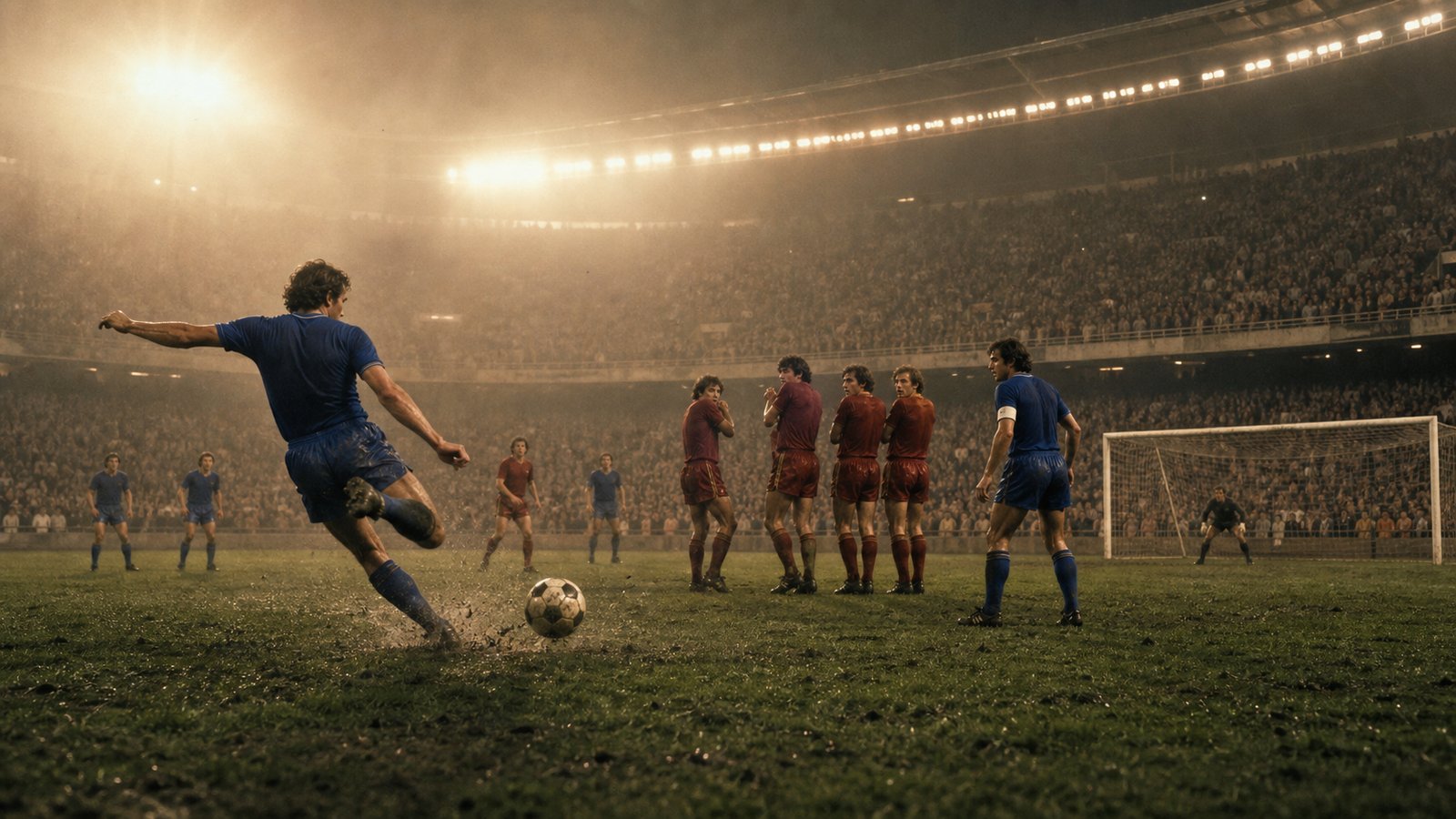
The first 20 minutes were interrupted by small fouls rather than flowing attacks. One of them decided the initial direction. António Frasco fouled Platini near the Portugal penalty area. The French captain shaped as if he would take the free kick, but Jean-François Domergue approached from the other side and struck left-footed. UEFA’s account says the shot went in off João Pinto’s head in the 24th minute.
Domergue was France’s left-back, not one of the four famous midfielders. His arrival mattered because it widened the problem Portugal had to solve. If Platini drew attention over the ball and Domergue could attack the same space from another angle, France could produce danger without asking a forward to beat an entire defensive line.
The second half then became a trial for Bento. He saved at the feet of Fernandez and Platini, while Giresse tested him twice and drove another effort wide. France were creating the match they wanted, except for the only measure that could protect them. A one-goal lead left Portugal one accurate delivery from changing everything.
Chalana and Jordão Rewrote the Score
That delivery arrived after 74 minutes. Chalana appeared on the left and lifted a shallow cross into the area. Jordão, who had worked without a tournament goal, headed it past Joël Bats. France’s control of territory had produced no insurance; Portugal’s narrower supply line had produced an equaliser.
Bento immediately made the score more valuable. He stopped Platini at close range, then touched Didier Six’s rebound onto the bar. UEFA noted that the goalkeeper was two days short of his 36th birthday. His double save carried Portugal into extra time and forced France to begin again with tired legs and a crowd that could now imagine elimination.
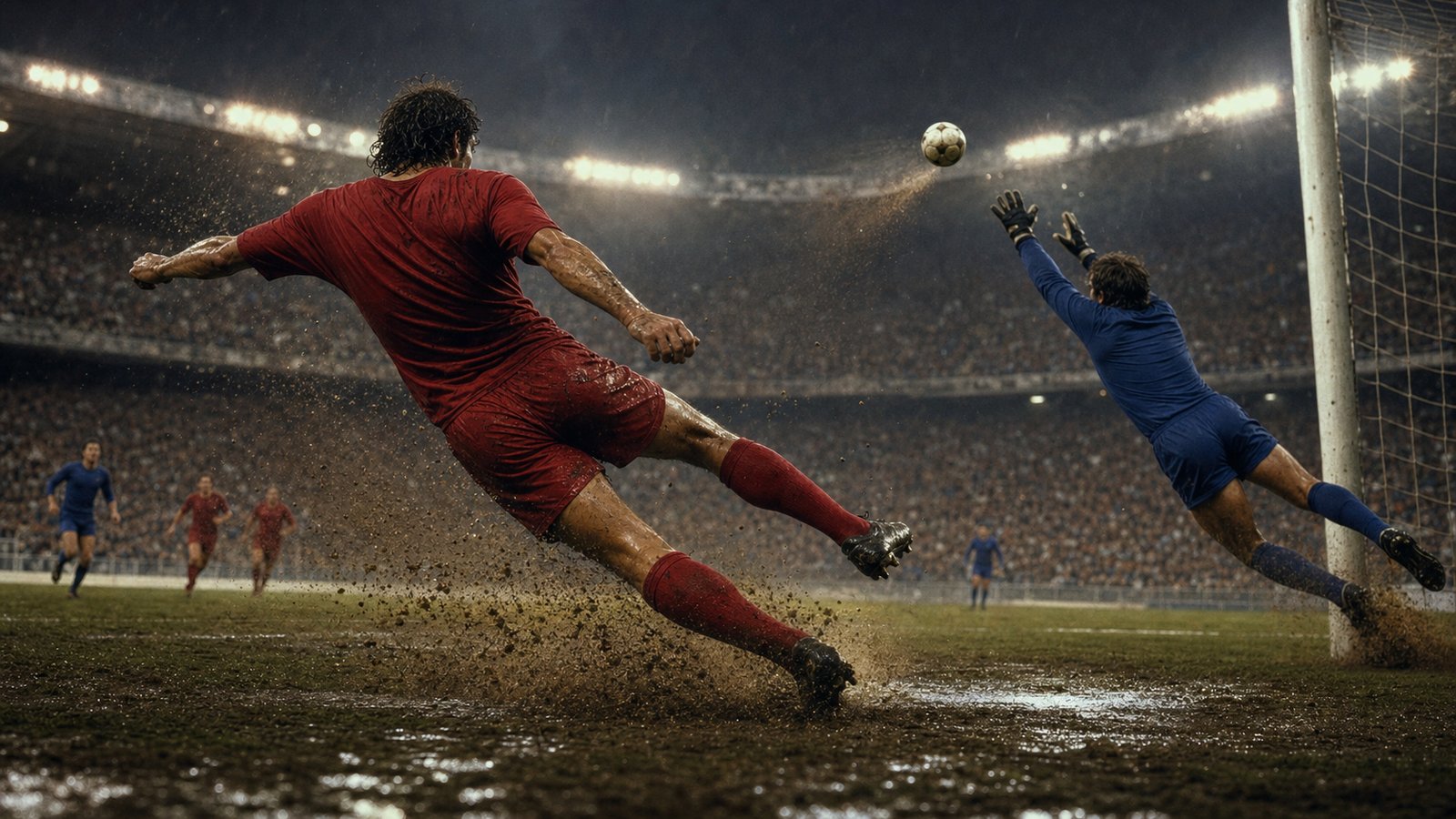
Extra time sharpened the reversal. Chalana crossed once more, and Jordão met the ball on the volley. It bounced into the ground and rose toward the far top corner. The DFB timeline places the goal at 98 minutes. Portugal had gone from enduring France’s attacks to leading 2–1, with less than one period of extra time left.
The sequence was not a statistical accident detached from Portugal’s plan. Chalana supplied both goals from the left. Jordão attacked two different deliveries, first with his head and then with a grounded volley. Bento supplied the saves that gave those moments their weight. France had more of the ball near goal; Portugal had built a lead from its most reliable route.
Two Defenders Found the Equaliser
With six minutes left, France attacked with positions dissolving. Domergue found central defender Yvon Le Roux. Le Roux played a short pass to Platini, who released the ball left while being tackled. Domergue had continued forward and finished for 2–2 in the 114th minute.
The move explains why the equaliser felt different from a rehearsed set piece. France’s left-back began the exchange, a centre-back became the next connector, and Platini worked as the hinge under contact. Domergue then arrived where a striker might normally wait. The defenders were no longer merely supporting pressure from behind; they were carrying it into the penalty area.
France still had a danger to manage. An equaliser did not settle the tie. It moved the match toward penalties, the one ending Platini later said his team wanted to avoid. He recalled that Tigana had told the players he had never won a shootout. Whether delivered as anxiety or dark humour, the remark gave the final minutes a simple demand: find another goal before the referee removed open play from the decision.
Tigana Spent His Birthday on One Last Run
Portugal were now protecting the shootout. France made one more attempt. Tigana’s pass was blocked, but the interruption did not end the move. He recovered the ball, beat a defender to the byline and drove a low cross beyond Bento. Platini controlled it in the crowded area and clipped the finish into the net.
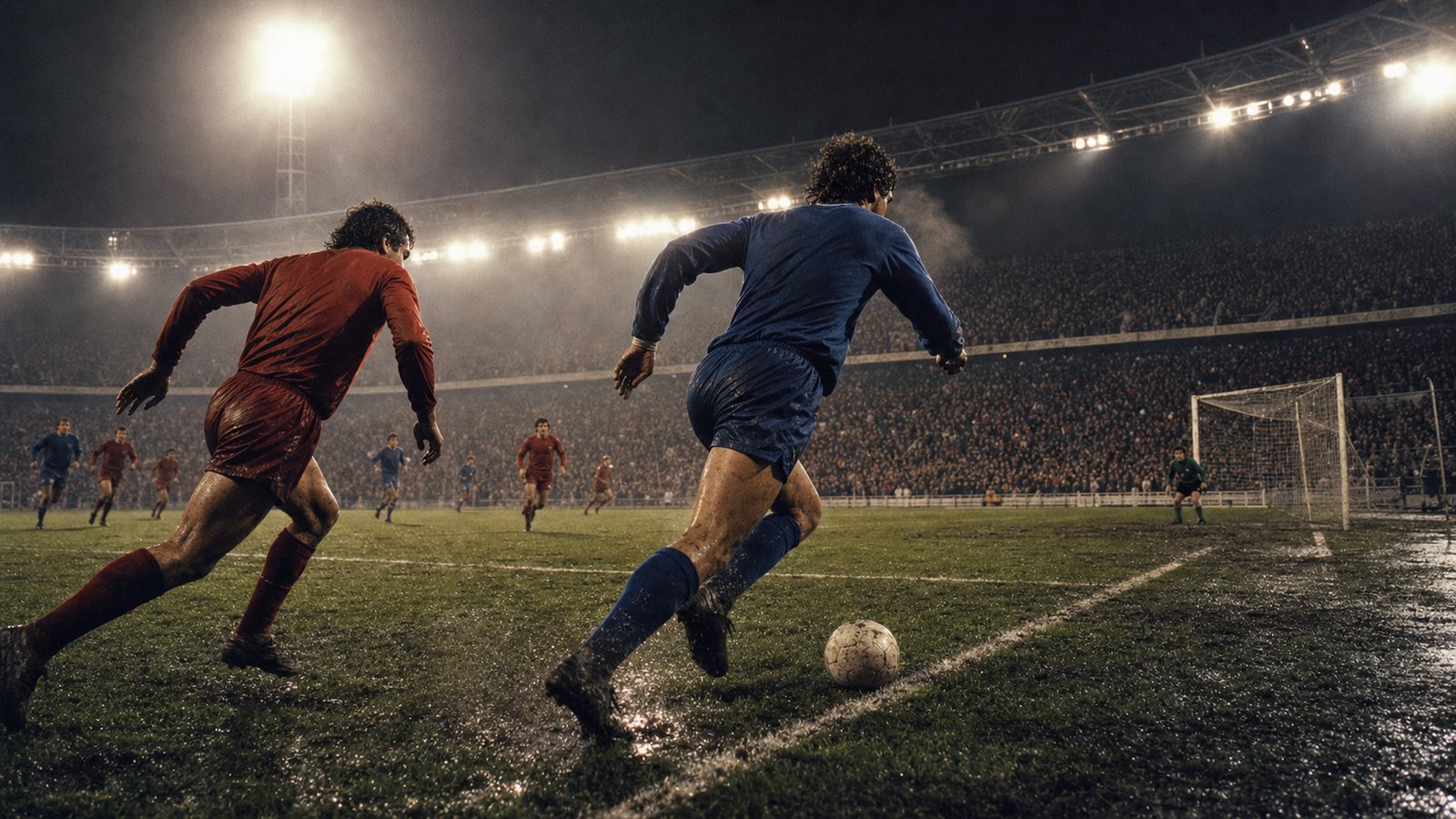
The clock read 119 minutes. Tigana was celebrating his 29th birthday. Platini ran along the touchline with his arms spread while French flags moved behind him. Those details endure because they compress a complicated match into one image, but the winning move was built from recovery rather than inevitability. Tigana lost the first route, reclaimed possession and created another.
Platini’s finish was his eighth goal of the tournament; he would score a ninth in the final against Spain. France won that match 2–0 and lifted its first major trophy. Yet the semi-final remained the night when the host’s elegant midfield had to become urgent, direct and improvised. The trophy route survived because France could change emotional speed without losing technical control.
The Six Minutes Portugal Forced France to Earn
Calling the ending a French miracle would make Portugal disappear from its own achievement. Cabrita’s side drew level after France had dominated, took the lead in extra time and came within moments of penalties. Jordão’s two finishes, Chalana’s two crosses and Bento’s succession of saves created the conditions for every French act of desperation.
France’s answer came from the breadth of its team. Domergue scored from a free kick and then from open play. Le Roux stepped into the equalising exchange. Tigana turned a blocked pass into a fresh run, and Platini finished without rushing the touch that mattered most. The celebrated midfield supplied the last goal, but defenders had reopened the match first.
Six minutes separated a 2–1 deficit from a 3–2 victory. That interval did not reveal a hidden plan waiting all evening. It showed a host side refusing the order in which events had placed it. Portugal had made France confront defeat, penalties and the weight of a home crowd at once. France answered before the clock could choose for them.
Sources
UEFA match archive; UEFA, Platini Steers France to EURO 1984 Final After Portugal Semi Thriller; UEFA, France Put Paid to Plucky Portugal; DFB Data Center; Ligue 1, On This Day: France Win Historic Euro 1984.