
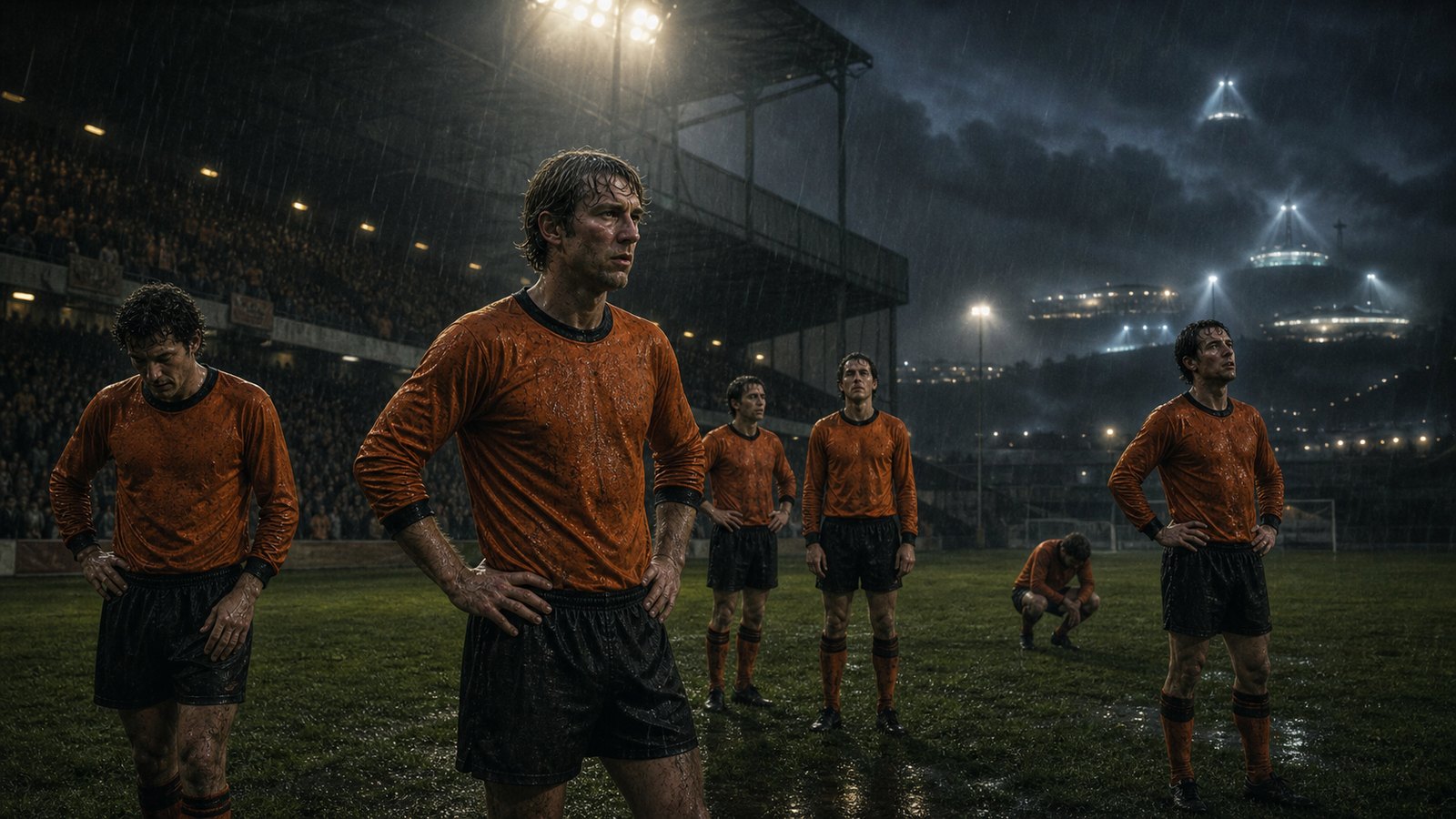
Five days separated Dundee United’s two chances to finish the most demanding season in their history with a major trophy. On 16 May 1987, Jim McLean’s side lost the Scottish Cup final to St Mirren after extra time. On 20 May they returned to Tannadice needing to overturn a 1–0 deficit against IFK Göteborg in the UEFA Cup final. A team that had crossed Europe, beaten Barcelona twice and ended Borussia Mönchengladbach’s 17-year unbeaten home record in continental competition had reached the only week it could not extend.
The temptation is to tell the campaign as a Scottish outsider’s tour of famous grounds. The sharper story is about accumulated strain. United played 70 matches, pursued four competitions and repeatedly fitted domestic fixtures between European legs. Their best nights came when the schedule offered no room for intimidation. Their two finals arrived when there was no room left for recovery.
A European run began with an escape in Lens
United’s first UEFA Cup assignment gave little warning of Barcelona or a final. Lens beat them 1–0 in France and, as defender Maurice Malpas later remembered, gave them “an absolute chasing.” The damage was limited to one goal. Back at Tannadice, United won 2–0 and moved on.
The pattern continued through autumn. Universitatea Craiova were beaten 3–0 in Dundee, although a depleted United side lost the return 1–0 in Romania. Hajduk Split then failed to score across two legs as United advanced 2–0 on aggregate. The journeys acquired their own routine: train hard at Tannadice, fly, train again at the away stadium, then pass the spare hours with cards and Trivial Pursuit. Europe had become work rather than theatre.
That familiarity had been earned over several seasons. The Barcelona quarter-final was United’s fourth appearance in the last eight of a European competition in six years. Two seasons earlier they had reached a European Cup semi-final. McLean expected his players to perform their assigned jobs.
One minute and 48 seconds changed the Barcelona tie
Barcelona arrived at Tannadice with Terry Venables as manager and Gary Lineker and Mark Hughes in attack. They had been a penalty shootout away from winning the previous season’s European Cup. The first leg had been under way for only one minute and 48 seconds when John Holt’s throw reached Paul Sturrock and Kevin Gallacher’s first-time shot flew over goalkeeper Andoni Zubizarreta.
United did more than protect an early accident. Jim McInally and Ian Redford controlled long stretches of midfield, Sturrock unsettled the visiting defence, and Barcelona’s two British forwards were largely isolated. Lineker’s clearest opportunity came from eight yards late in the first half, but he shot against Billy Thomson. A single goal was all United carried to Catalonia, yet the clean sheet gave the second leg a precise shape.
Domestic football filled the space between the two games. United drew at home with Clydebank, drew the Dundee derby, and needed a stoppage-time penalty in a Scottish Cup quarter-final against Forfar. There was no protected European week. The squad went from the intensity of Tannadice to ordinary league and cup problems, then into the long corridor beneath the Camp Nou.
Conceding in Barcelona did not change the instruction
McLean prepared his players for the likeliest crisis: Barcelona would score. When Ramón Calderé put the hosts ahead before half-time, the aggregate score was level rather than lost. United resisted the urge to turn the second half into a desperate chase. The stadium was not full, home whistles sharpened the tension, and the clock moved toward a result Barcelona expected to control.
In the final four minutes, the tie broke in the other direction. John Clark scored first, forcing Barcelona to find two goals to survive. Ian Ferguson added another four minutes later. United had won 2–1 at the Camp Nou and 3–1 on aggregate. They had now beaten Barcelona in all four competitive meetings between the clubs, including their Fairs Cup tie two decades earlier.
The result was not produced by a flood of possession. United absorbed the moment when Barcelona levelled, kept their distances and waited until the home side’s urgency created a route forward. It was a mature away performance from a team often described only through the romance of its size. McLean’s players understood the aggregate problem more clearly than opponents with greater resources.
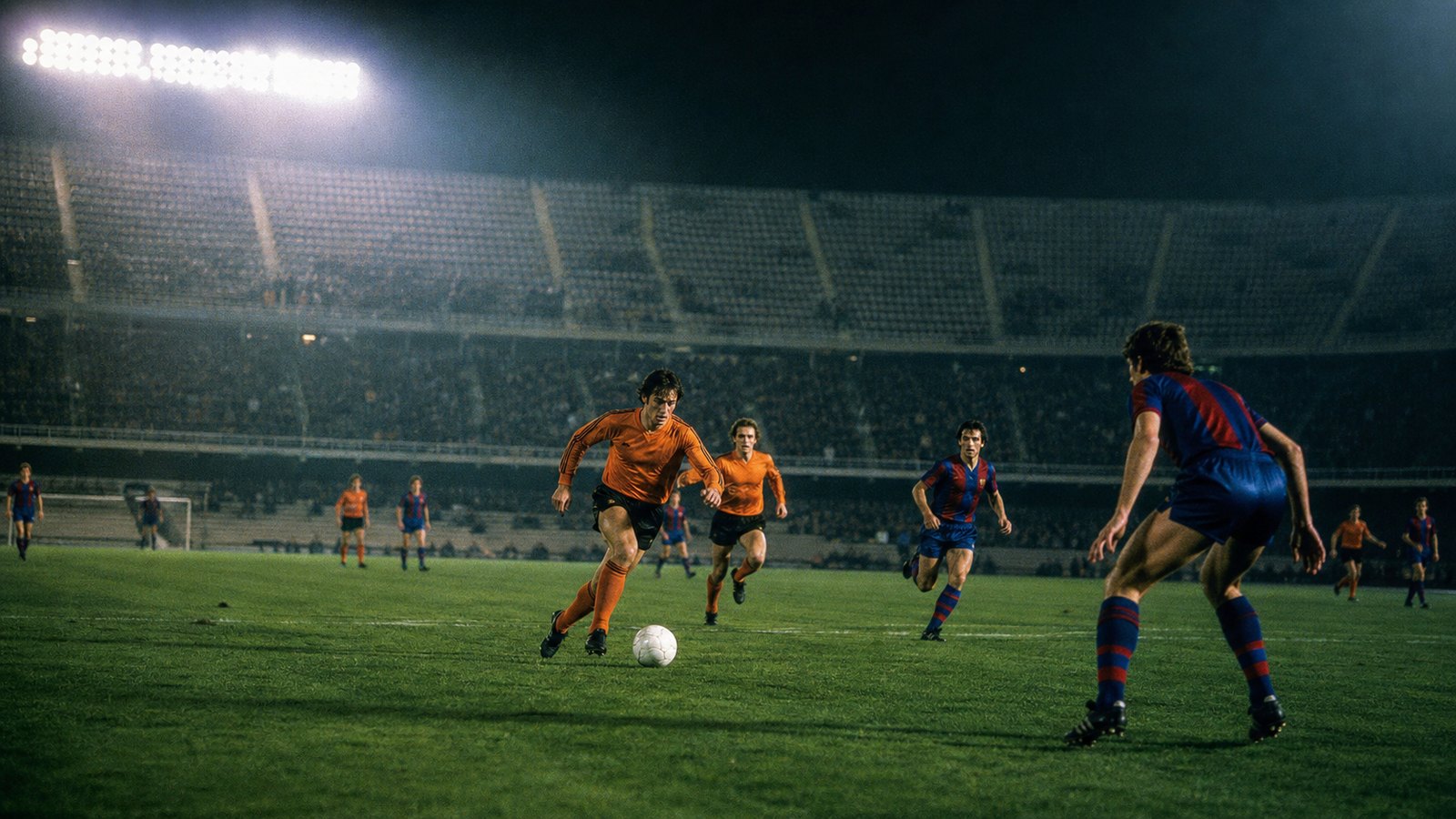
A 54-match record fell in Mönchengladbach
The reward was another opponent with formidable European evidence. Borussia Mönchengladbach had lost on away goals to Real Madrid the previous season after beating them 5–1 in Germany. United’s 0–0 draw in the first leg at Tannadice appeared to favour the German side, whose players celebrated on the pitch as if the hardest part had been completed.
McLean’s team travelled into a record that stretched across 54 European home matches and 17 years without defeat. They defended with the same concentration shown in Barcelona, but this time the goals arrived earlier. Ferguson scored, Redford added a second, and United won 2–0. The final whistle gave the club its first European final and ended one of the continent’s longest home sequences.
Malpas later offered a blunt description of the group: as individuals they were ordinary; together they were very good. The sentence catches McLean’s achievement without making the players smaller than they were. Willie Miller or a glamorous imported star was not arriving to rescue a difficult night. The advantage came from familiarity—Clark, Malpas, Sturrock, Redford, Thomson and their teammates knew where the next action belonged.
The final became two matches wrapped around Hampden
IFK Göteborg had recent European authority of their own. The Swedish club had won the UEFA Cup in 1982 and reached the following season’s European Cup semi-finals. At Ullevi, the playing surface was uneven and United goalkeeper Thomson suffered an ear injury after five minutes that required stitches; he continued while experiencing double vision. Shortly before half-time, Stefan Pettersson’s downward header bounced awkwardly from a corner and crossed the line. Göteborg won the first leg 1–0.
That score left United with a credible task at Tannadice. Before the return, however, came the Scottish Cup final against St Mirren. United were trying to win the trophy for the first time at their fourth attempt. Ferguson had an extra-time effort disallowed for offside, then Ian Ferguson of St Mirren scored the winner. The defeat consumed both another 120 minutes and the emotional promise of the season’s easier final.
Four days later, 21,000 people filled Tannadice for the European return. United intended to score first, but Lennart Nilsson drove Göteborg ahead midway through the opening half. The away goal meant the home side now required three. Ferguson hit the bar and Clark equalised on the night around the hour, but a second never came. A 1–1 draw gave Göteborg a 2–1 aggregate victory.
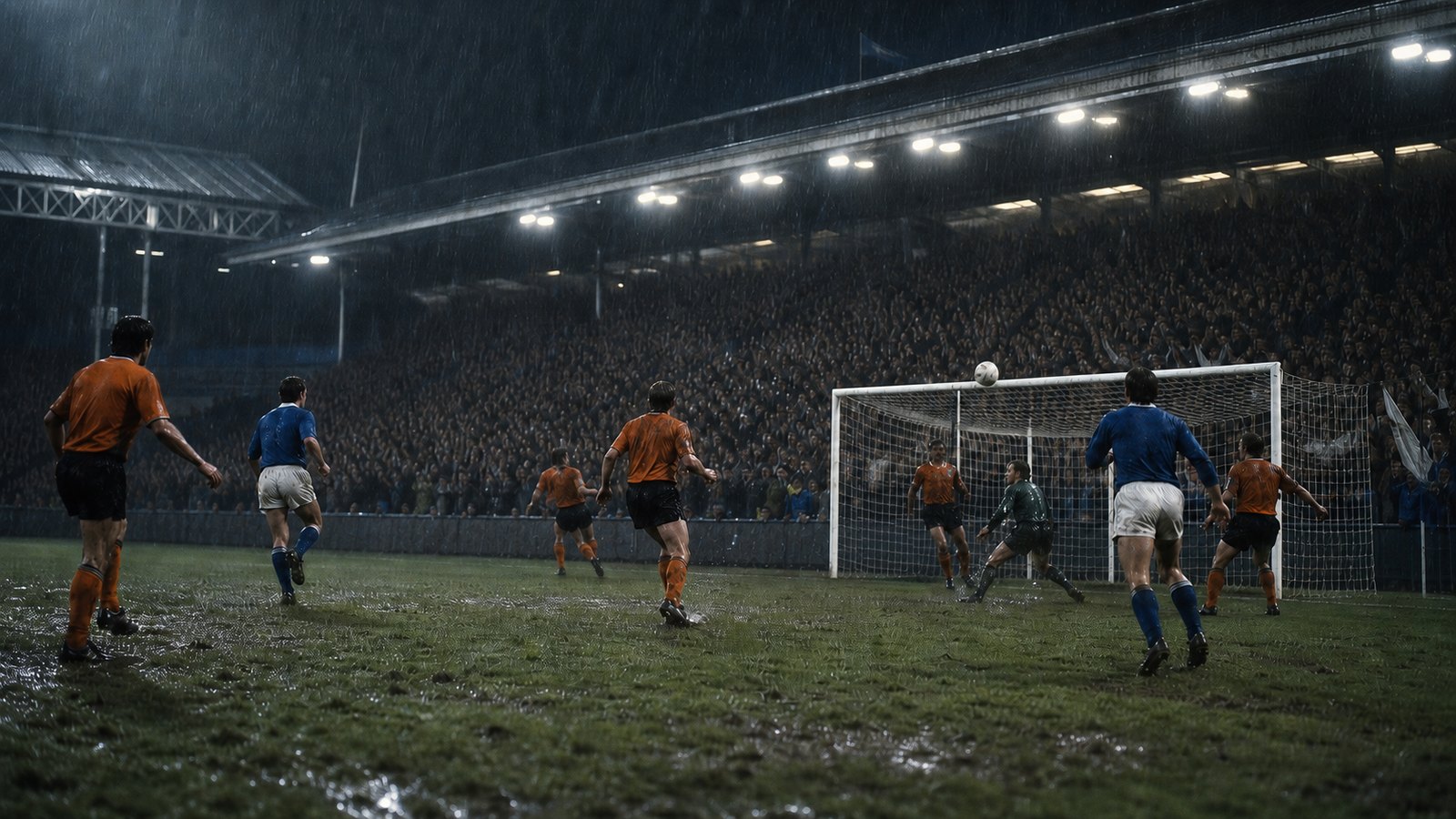
The empty cabinet does not describe the season
United finished third in the league, reached the League Cup semi-finals and lost two finals. The Forfarshire Cup was the only trophy left from 70 matches. On a list of honours, the season can therefore appear unfinished. Inside its sequence, it looks different.
The campaign joined narrow survival in Lens to control at Tannadice, composure at the Camp Nou and a record-breaking win in Mönchengladbach. It also exposed the cost of remaining alive in every competition. United were still taking league points and negotiating Scottish Cup replays while preparing for opponents with larger squads and deeper budgets. By May, achievement had created the congestion that threatened the last two achievements.
The supporters’ response after the UEFA Cup final supplied the clearest verdict. Göteborg had collected the trophy, yet United fans stayed inside Tannadice and applauded the winners. Some were still singing when Malpas emerged from a drug test hours later. They had watched their club beat Barcelona home and away, win where Borussia had not lost in Europe for 17 years, and carry two finals into one exhausted week. No cup came home, but the season had already exceeded what silverware alone could record.
Sources
BBC Sport, On This Day: Dundee United Reach UEFA Cup Final in 1987
Dundee United Football Club, archive report of the 1–0 victory over Barcelona
UEFA match archive, Dundee United v Barcelona and Barcelona v Dundee United