
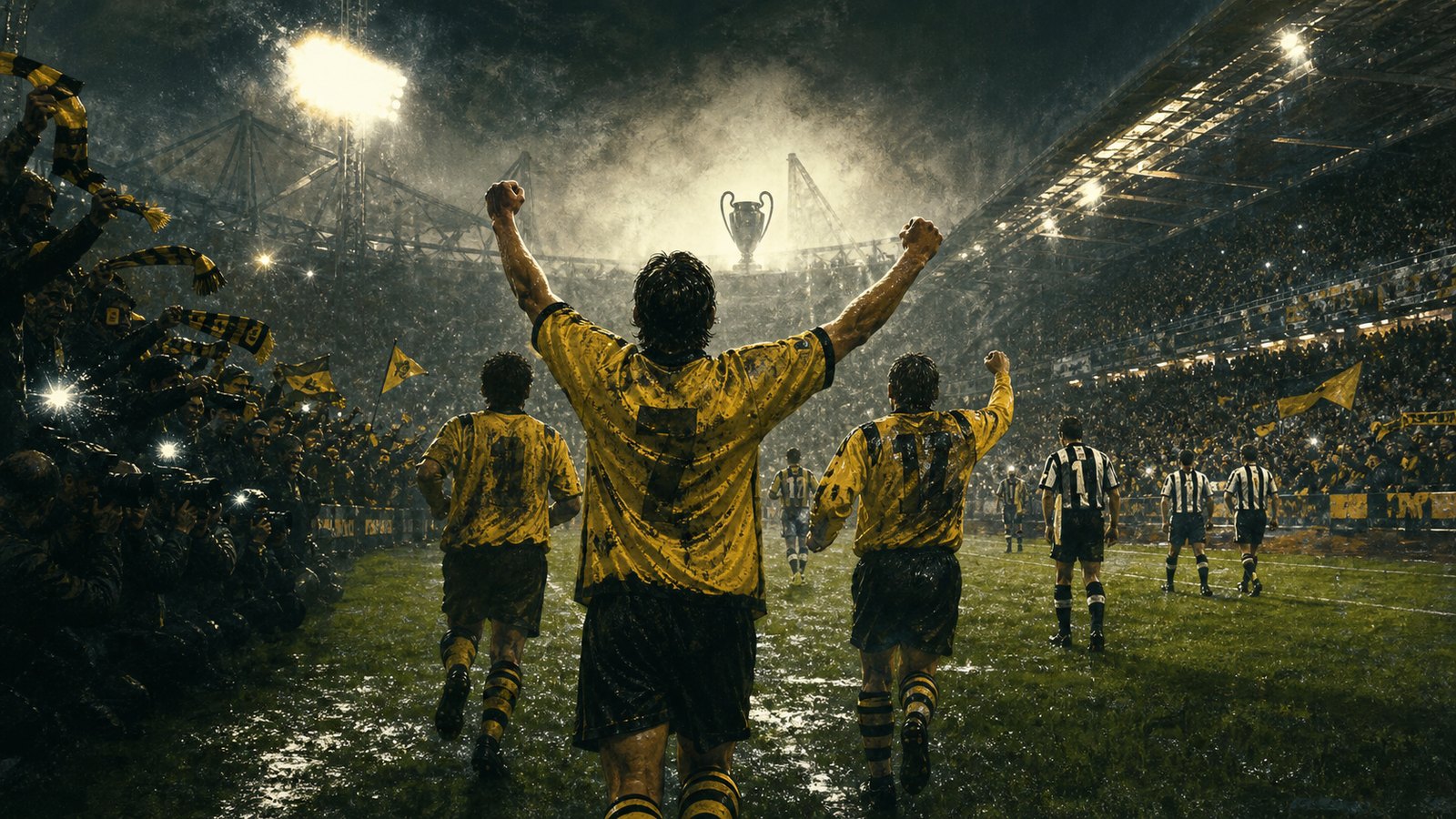
Borussia Dortmund’s 1997 Champions League final is usually remembered through the shock of the scoreboard. Juventus were the reigning European champions, a side with a hard tournament face and players who looked built for the biggest nights. Dortmund were not unknowns, and Germany did not lack football authority, but the emotional balance still felt clear: Juventus arrived in Munich as the more obvious empire. Dortmund left with the trophy because they turned the final into a match about details Juventus did not fully control.
The easy version makes it a miracle. The better version is a working football story. Ottmar Hitzfeld’s team had enough individual quality to hurt a giant, but its real strength was the way the pieces protected one another. Dortmund were compact without being passive, direct without becoming desperate, and mentally prepared to treat long Juventus possession as a condition rather than a crisis. The final was not won by refusing the favorite’s power. It was won by surviving it in the right zones and striking with cold timing.
Juventus Looked Like the European Default
Juventus entered the final with the authority of a club that had already solved this competition. Marcello Lippi’s side had won the Champions League in 1996 and still carried the rhythm of a ruthless tournament team. Alessandro Del Piero, Zinedine Zidane, Christian Vieri, Didier Deschamps, and a deep defensive culture gave Juventus several ways to win. They could press, manage, foul, slow the tempo, or let superior technical players tilt the field.
That mattered because Dortmund were not facing only eleven players. They were facing a habit of European control. Juventus were used to finals being stages where opponents eventually made the emotional mistake. Many teams against them either sank too deep, became obsessed with Zidane’s touches, or chased the game in the wrong moments. Dortmund’s first task was not to be brave in the abstract. It was to keep their bravery organized.
Munich gave the night a strange neutrality. It was in Germany, but not Dortmund. The Olympiastadion had space, track, and a cold final-night distance that prevented the match from becoming pure home atmosphere. That setting helped make the tactical contest sharper. Dortmund had support, but they still had to win the game as a European final rather than as a home emotional storm.
Hitzfeld’s Team Was Built to Absorb Without Shrinking
Hitzfeld’s Dortmund could defend in compact bands, then make the next pass count. Matthias Sammer was central to that personality. He was not simply a defender or a libero in the nostalgic sense; he gave the side a reader of danger who could step, cover, and organize the emotional temperature behind the ball. Around him, Dortmund had players comfortable with disciplined work rather than constant spectacle.
Paul Lambert’s role became one of the final’s defining details. His job on Zidane is often reduced to man-marking, but the more important point is that Dortmund narrowed Zidane’s useful time. A great playmaker can still touch the ball under pressure. The question is whether he receives it in positions that make the next action easy. Lambert and Dortmund’s midfield made Juventus work through denser traffic, which turned some of their possession into circulation rather than incision.
That defensive restraint gave Dortmund’s forwards and runners a different kind of value. Karl-Heinz Riedle was not asked to dominate the whole match. He was asked to attack the decisive moments. In finals, that distinction matters. The striker who looks quiet for ten minutes can become the most important player on the pitch if his team has kept the match close enough for a single movement to change the weather.
Two Riedle Goals Changed the Favorite’s Problem
Riedle’s first-half goals did more than build a lead. They forced Juventus to play the rest of the final with their favorite status turned into pressure. The first came from the kind of penalty-area timing that punishes a defense for one loose phase. The second, a header, made the night feel less like a Dortmund hope and more like a Juventus emergency. A two-goal lead in a final is not always safe, but it changes what every pass means.
Juventus now had to chase without becoming reckless. That was exactly where Dortmund wanted the match to live. The German side did not need to win every minute. It needed to keep Juventus from converting technical superiority into repeated clean chances. Every tackle, clearance, and blocked passing lane bought time. The favorite’s urgency became another material in Dortmund’s structure.
Del Piero’s back-heel goal after halftime made the match dangerous again. It was an extraordinary piece of instinct, the kind of finish that can make an underdog’s earlier work vanish. Dortmund had to endure the moment when the old script tried to reassert itself: Juventus score, the favorite smells collapse, and the underdog starts defending the story instead of the pitch. Dortmund did not completely avoid anxiety. They did something better. They kept enough shape to let the next moment arrive.
Ricken’s Chip Was a System’s Payoff
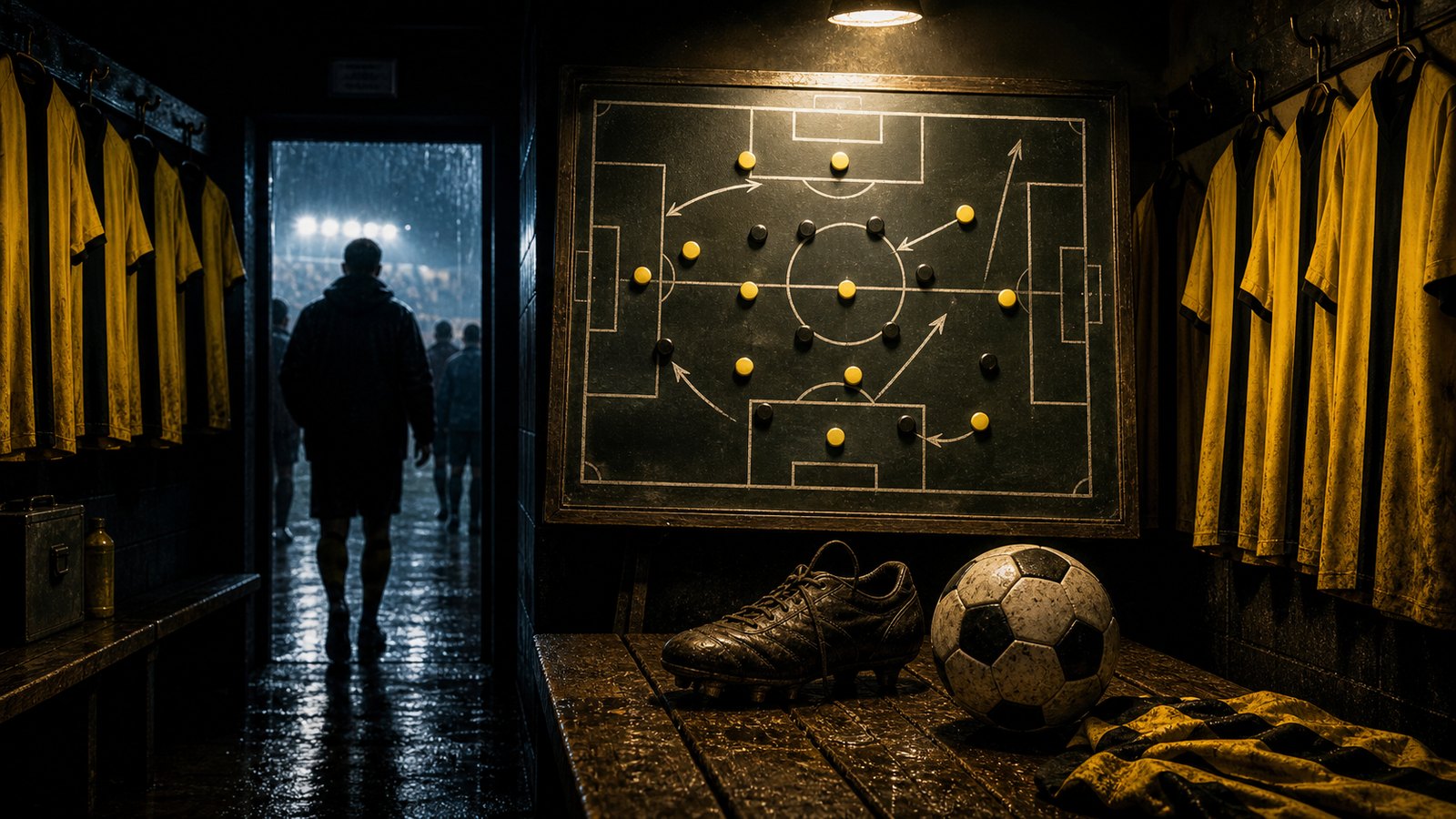
Lars Ricken’s goal is the image that makes the final immortal. He had been on the pitch for only seconds when he lifted the ball over Angelo Peruzzi from distance. It looked like fantasy because of the audacity, but it was also a perfect example of the night’s mechanism. Juventus were stretched by the chase. Dortmund had a fresh runner entering a match where the favorite’s balance had frayed. The chip was brilliant, but the situation that made it possible had been built for more than an hour.
That is why the goal should not be treated as a random thunderbolt. Hitzfeld’s substitutions, Dortmund’s refusal to panic after Del Piero’s goal, and Juventus’s need to push created the space. Ricken still had to see it and execute it. But great finals often turn on one player noticing that the match has briefly become vulnerable. Dortmund had kept the game intact long enough for that vulnerability to open.
The 3-1 scoreline can make the final sound cleaner than it felt. It was not clean. It was tense, physical, and full of moments where Juventus seemed capable of turning reputation into control. Dortmund’s achievement was to keep refusing the emotional hierarchy. They did not play as if they were lucky to be there. They played as if the favorite had a set of weaknesses that could be mapped and punished.
The Legacy Was More Than a Trophy Photo
Dortmund’s win also belongs to a wider 1990s European story. German clubs were learning how to combine domestic intensity with continental pragmatism. The Champions League era was still young enough that financial hierarchies had not fully hardened into the patterns of the 2000s and 2010s. A club with smart recruitment, strong coaching, and a clear match plan could still step into the final and upset a more glamorous power.
The victory did not make Dortmund permanently immune to football’s economic pressures. The club would later experience financial danger and rebuilding, which makes the 1997 side feel even more specific. It was a team of its moment: experienced, tactically coherent, and ruthless enough to recognize that a final is not won by reputation. It is won by making the other side solve problems under stress.
The lasting lesson is not that underdogs need miracles. It is that underdogs need mechanisms that survive contact with elite talent. Dortmund had Sammer’s reading, Lambert’s pressure, Riedle’s penalty-area timing, Ricken’s cold imagination, and Hitzfeld’s control of the whole emotional script. Juventus had more of the aura. Dortmund had the night’s better machine.
Sources
UEFA Champions League historical records; David Goldblatt, The Ball Is Round; Jonathan Wilson, Inverting the Pyramid; contemporary accounts of the 1997 final; Borussia Dortmund club records.