
Aberdeen 1983 Was Not Just Ferguson Before United
A European Night That Refuses to Behave Like a Footnote
Aberdeen’s 1983 European Cup Winners’ Cup triumph is often treated as a charming outlier: a Scottish club, an ambitious young manager, and a rain-lashed final against Real Madrid. That version is not wrong, but it is too small. The victory in Gothenburg was not only a shock result. It was evidence that a club outside the richest centers of European football could build a hard, modern, repeatable edge through intensity, scouting, discipline, and belief before those words became boardroom wallpaper.
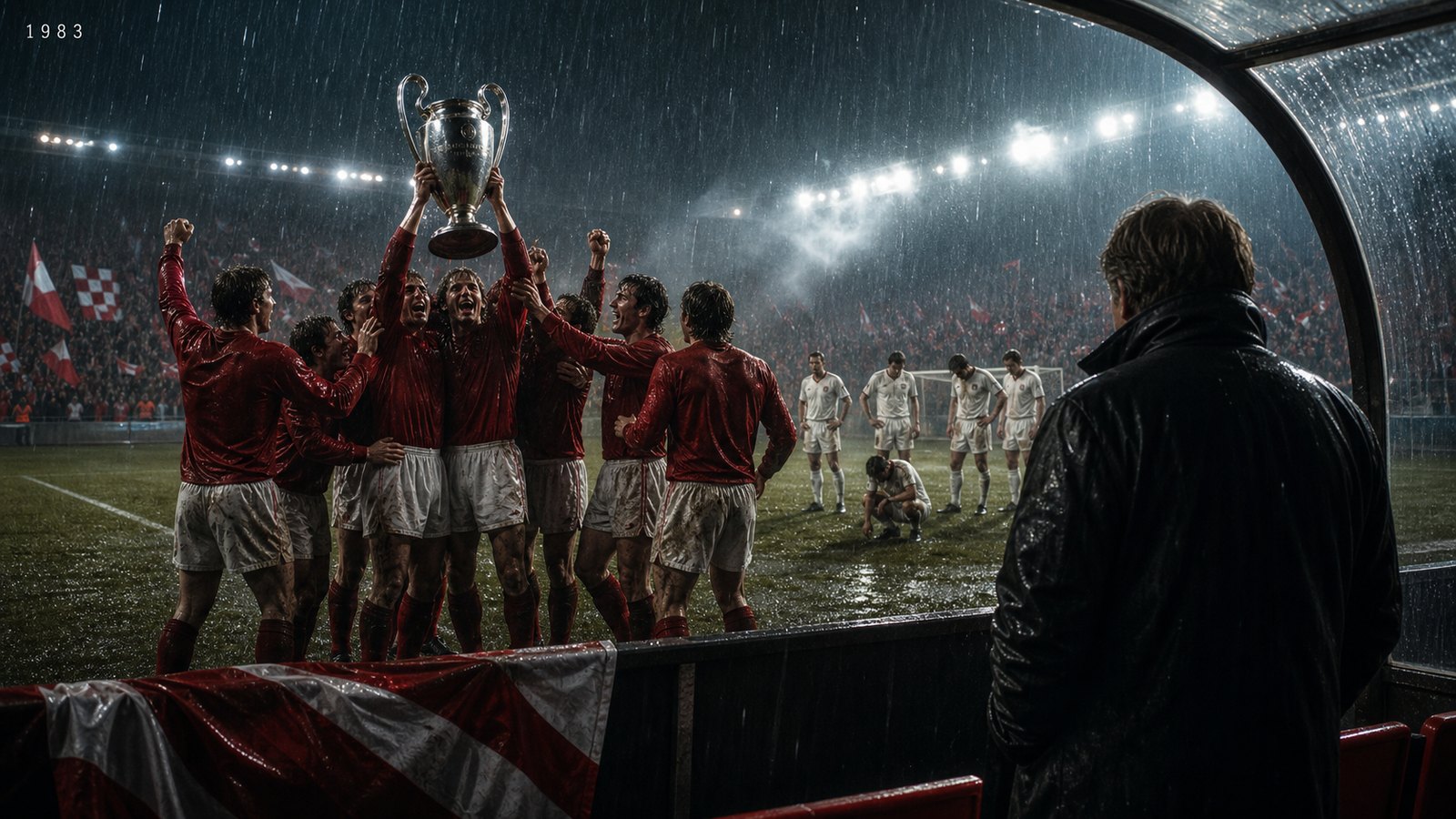
The final finished 2-1 after extra time, with Aberdeen beating a Real Madrid side whose name alone could bend a match preview. Eric Black scored early, Juanito equalized from the penalty spot, and John Hewitt eventually delivered the winner. Those facts are famous enough. The more interesting question is how Aberdeen reached a night where they could make those facts possible. They were not tourists in a cup final. They were a team hardened by Alex Ferguson’s demands and by a domestic environment where every inch had to be contested.
Ferguson Built More Than a Motivational Speech
The easy cinematic version of early Ferguson is a dressing-room thunderstorm. The harder football version is more useful. Aberdeen under Ferguson were aggressive, organized, physically prepared, and emotionally difficult to move. They attacked with purpose, defended with stubbornness, and carried a collective arrogance that did not depend on being the bigger name. By 1983, this was not a one-night personality trick. It was a culture that had already made Aberdeen a serious force in Scotland.
European competition punished weak habits. Travel, unfamiliar opponents, and knockout pressure exposed teams that relied only on local rhythm. Aberdeen survived because their identity traveled. They could compete in bad weather, ugly phases, and moments when the match became less about aesthetic control than about who still trusted the plan after an hour of discomfort. That is why Gothenburg matters. It showed a smaller club playing like a fully formed institution.
Real Madrid Made the Story Larger, Not Simpler
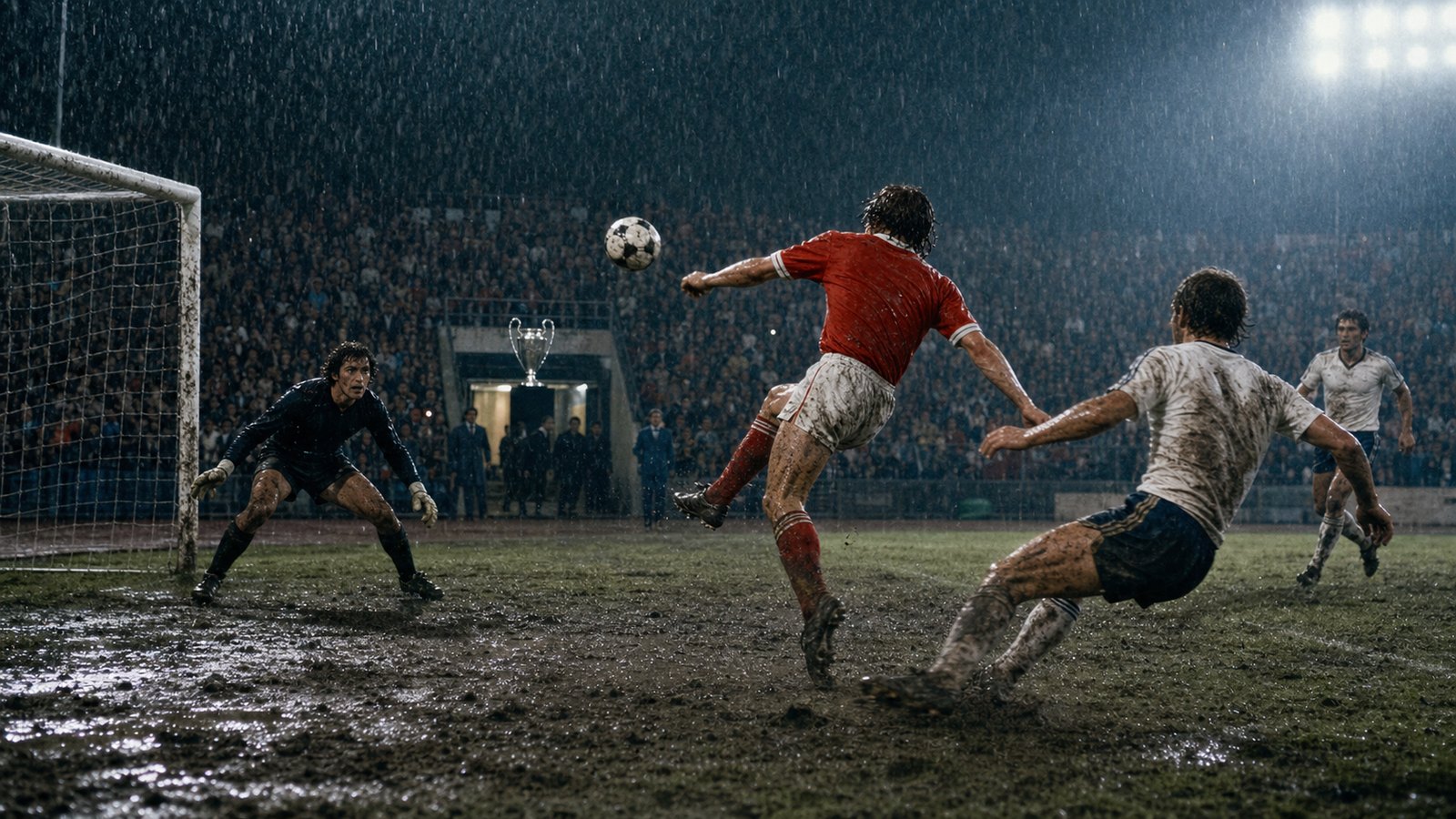
Beating Real Madrid always tempts a story toward romance. The white shirts make the upset feel pre-written. But romance can flatten the football. Aberdeen did not win because Madrid failed to take them seriously or because the weather turned the final into pure chaos. They won because their pressure, directness, and stamina kept creating moments where Madrid had to defend like any other team.
The rain helped create the atmosphere, but it did not score the winner. Aberdeen still needed the run, the cross, the finish, and the nerve to keep playing after extra time opened a match into fear. Hewitt’s decisive goal belongs in highlight reels, yet it also belongs in the story of preparation. Teams that reach those spaces late in a final usually do so because their structure has survived long enough for chance to become available.
The Trophy Changed the Scale of the Club
For Aberdeen, the Cup Winners’ Cup was not a decorative line on a club honors page. It was a change in scale. The club had beaten Bayern Munich on the way, then Real Madrid in the final, then Hamburg in the Super Cup later that year. Those results gave Aberdeen a European vocabulary that did not sound borrowed. Pittodrie could talk about continental nights because the team had earned them.
This matters because football memory often compresses clubs into their present economics. Modern viewers see the financial distance between Scottish football and the wealthiest European leagues and assume the gap has always operated with the same force. Aberdeen’s early-1980s peak is a reminder that European power was once more porous. Money mattered, but it had not yet locked every gate. A brilliant provincial club could still hit the right tactical, cultural, and generational moment and make the giants uncomfortable.
Why the Win Belongs to More Than Ferguson’s Resume
Ferguson’s later Manchester United career can swallow everything before it. Aberdeen becomes a prologue, Gothenburg a clue. That is unfair to the players and to the club. Willie Miller, Alex McLeish, Gordon Strachan, Peter Weir, Eric Black, John Hewitt, Jim Leighton, and the rest were not extras in a managerial origin story. They were the team that made the origin story credible.
The final also shows a different kind of managerial greatness. Ferguson did not inherit a machine that only needed polish. He raised standards inside a club that could not solve every problem with spending. He made ambition feel compulsory. When Aberdeen faced Madrid, the players were not merely inspired by a speech; they were carrying years of habits into one wet night.
The Lesson Hidden Inside the Rain
The danger with underdog stories is that they can make victory look like magic. Aberdeen’s 1983 win is better than magic because it is more demanding. It says a smaller club can win big only when many unglamorous things line up: recruitment, fitness, defensive trust, attacking clarity, a manager with authority, and players willing to believe the badge is not a ceiling.
That lesson still resonates. Modern football has made the route narrower, but supporters still recognize the emotional pattern. A club outside the center builds something coherent, stops apologizing for its size, and forces Europe to learn its name. Aberdeen did that in Gothenburg. The trophy was silver, the rain was relentless, and the achievement was not a fairy tale. It was a system with mud on its boots.
The Route Made the Final Believable
Gothenburg did not appear from nowhere. Aberdeen had already beaten Bayern Munich in a quarter-final that gave the campaign its proof of seriousness. Pittodrie’s atmosphere, the winter surface, and the team’s refusal to be impressed by famous opponents formed a kind of home advantage that traveled with them. By the time Real Madrid arrived as the final obstacle, Aberdeen had already learned that status could be attacked rather than admired.
The squad’s spine mattered as much as the romance. Miller and McLeish gave the defense authority. Strachan’s energy and intelligence connected phases of play. Leighton gave the team a goalkeeper who could survive long periods of pressure. Weir, Black, and Hewitt offered different routes to goal. The names are important because they keep the achievement from becoming a one-man parable. Ferguson set the temperature, but the players had to perform the weather.
Why It Still Embarrasses Modern Certainty
The 1983 run is uncomfortable for modern assumptions because it shows how much possibility existed before the richest clubs turned depth into a permanent moat. Aberdeen did not have to win a ten-year financial argument before they could win a football match. They needed a concentrated cycle of talent, coaching, and competitive nerve. That does not make the past pure or equal, but it does make the present look less inevitable.
For supporters outside the biggest leagues, this is why the story still carries emotional force. It is not nostalgia for mud and rain alone. It is evidence that a club can briefly become larger than its market when the football operation is coherent enough. Aberdeen’s night in Gothenburg is remembered because it made that coherence visible under floodlights.
Sources
- UEFA historical records for the 1982-83 European Cup Winners’ Cup
- Aberdeen FC historical accounts of the Gothenburg final
- Alex Ferguson, Managing My Life
- Contemporary match reports from the 1983 final