

Rain had slicked the corner quadrant at Camp Nou, and Luís Figo could not reach the ball without walking through a storm of objects. It was 23 November 2002, his second league visit in Real Madrid white. Bottles, lighters, coins and golf balls had already landed around him. When another Madrid corner sent him across the pitch, the delay stretched toward two minutes. A pig’s head lay among the debris near the flag.
The scene is remembered as football theatre, but it also preserved the cost of a transaction. Two years earlier, Real Madrid had paid a world-record fee to take Barcelona’s leader across the deepest fault line in Spanish club football. The money made the move legal. It could not make it ordinary. Every slow step Figo took toward that corner carried the argument back into view: what does a record transfer buy when the player’s old public still believes part of him belongs to them?
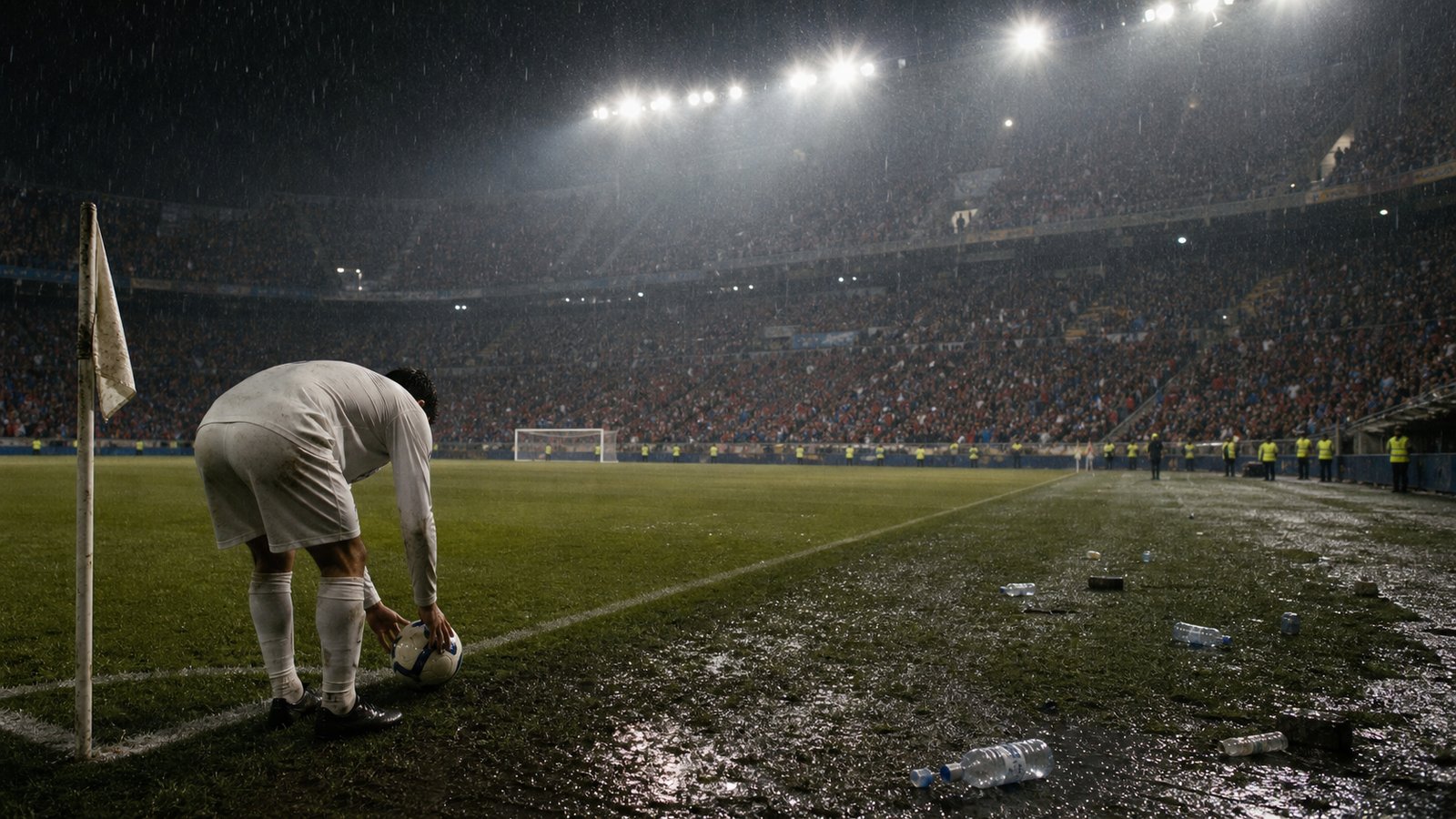
A Corner Took Two Minutes and Stopped the Match
The BBC’s oral history of the night reconstructs the escalation almost minute by minute. Heavy rain had soaked the stadium before kick-off. Figo was already playing inside a wall of whistles, banners and abuse, but the most dangerous moments came when set pieces brought him close to the stands. Real Madrid’s usual corner taker had chosen to approach the very edge of the hostility rather than hide from it.
On one attempt he cleared objects away, offered an ironic thumbs-up and tried to begin his run. More missiles came. Another corner followed from the opposite side, and the same ritual began again. Barcelona captain Carles Puyol gestured for calm while referee Luis Medina Cantalejo eventually suspended play. The interruption lasted 16 minutes before the match resumed.
The pig’s head became the photograph that survived, yet it was only one object in a larger scene. That matters because the night was not created by one grotesque prop. It was the cumulative expression of a crowd that had spent two years turning a transfer into a betrayal narrative. Figo’s presence at the corner made the transaction visible at human scale: one player, a few yards of grass and thousands of people insisting that a signed contract had not closed the emotional account.
The World-Record Fee Moved a Captain Across the Divide
In July 2000, Real Madrid met the release mechanism in Figo’s Barcelona contract and paid the equivalent of £37 million. BBC Sport lists it as a world transfer record; contemporary euro conversions commonly place the figure around €62 million. The scale was essential to the shock. This was not a fading player allowed to drift toward a rival. It was an elite winger leaving at the height of his authority, with Barcelona losing a leader to the one club its supporters least wanted to strengthen.
Figo’s game helped explain the price. He could receive wide, draw a defender toward him, and decide whether the next action required a dribble, a pause or an early cross. Real Madrid’s own historical profile credits him with 163 official matches and 38 goals during five seasons. It describes a midfielder valued for taking on opponents and supplying forwards, a role that connected possession to decisive movement rather than reducing him to a touchline sprinter.
The record fee also announced a method. Real Madrid would break the world mark again a year later for Zinedine Zidane. Figo therefore became more than the first expensive name in a list. He demonstrated how a transfer could operate simultaneously as sporting recruitment, presidential statement and global spectacle. The club did not merely add a winger; it showed that even a rival’s central figure could be extracted if the contractual route and money aligned.
That made the move different from earlier record deals. When Alf Common became football’s first £1,000 transfer, the argument centred on the price attached to a player. Figo’s deal added another layer: the fee was inseparable from the identity of the selling club and the political force of the destination. The number travelled around the world because the rivalry gave it voltage.

The First Return Revealed the Wound Before the Pig’s Head Did
The 2002 match was Figo’s second league appearance back at Camp Nou, not the first. In October 2000, only months after the move, he entered the stadium to an atmosphere already built around words such as “traitor” and “Judas.” Barcelona won 2–0. Figo avoided taking corners close to the crowd, and Real Madrid president Florentino Pérez later acknowledged that the atmosphere had affected his side.
That first return established the pattern. The crowd would treat every touch as an opportunity to renew the accusation, while Figo’s former status made indifference impossible. Barcelona supporters were reacting to the collapse of familiarity. They had watched him carry the ball, create chances and lead their side; now those same movements served Real Madrid. The body was recognizable, but the shirt altered the meaning of every action.
By November 2002, the story had acquired two more seasons of repetition. Figo had won the 2000 Ballon d’Or and the 2001 FIFA World Player of the Year award. Real Madrid had taken the 2000–01 league title and the 2002 European Cup. Each honour sharpened the original loss because it offered evidence that the transfer had delivered exactly what Madrid wanted.
The second return also differed because Figo took the corners. That choice brought him into the narrow strip where supporter rage could become physical. It can be read as defiance, professional routine or both, but it changed the night’s visual grammar. A player in open play could keep moving. A corner taker had to stand still, arrange the ball and wait. The pause let the whole dispute converge on one fixed point.
Five Madrid Seasons Gave the Transfer a Sporting Afterlife
Figo remained at Real Madrid from 2000 to 2005. The club’s record credits him with seven trophies during that span, including two Spanish league titles and the European Cup won in Glasgow in 2002. Those outcomes prevent the move from being remembered as spectacle alone. The signing supplied sustained football value after the election drama, record fee and hostile returns had stopped being news.
His contribution also helped define the early Galáctico period. The label can make the team sound like a collection of famous faces, but Figo’s function was practical. His dribbling attracted pressure; his delivery fed forwards; his control on the flank gave central stars room. A glamour strategy still required players whose decisions made the formation work, and he was one of them.
Barcelona’s anger did not disappear when the trophies accumulated. If anything, Madrid’s success fixed the grievance more securely in the rivalry. A failed transfer can become an embarrassing curiosity. A successful transfer across a dividing line becomes an origin story retold by both sides for opposite reasons. Madrid could point to performance and silverware. Barcelona could point to the manner and destination of the exit.
The 2002 corner scene joined those interpretations without resolving them. Figo was neither erased by the abuse nor separated from it. He stayed on the pitch, the match resumed, and the transfer continued to produce football. Yet the 16-minute suspension showed that the crowd could still interrupt the normal order of the game. Two years after the fee had been paid, the deal was complete in every administrative sense and unfinished everywhere else.
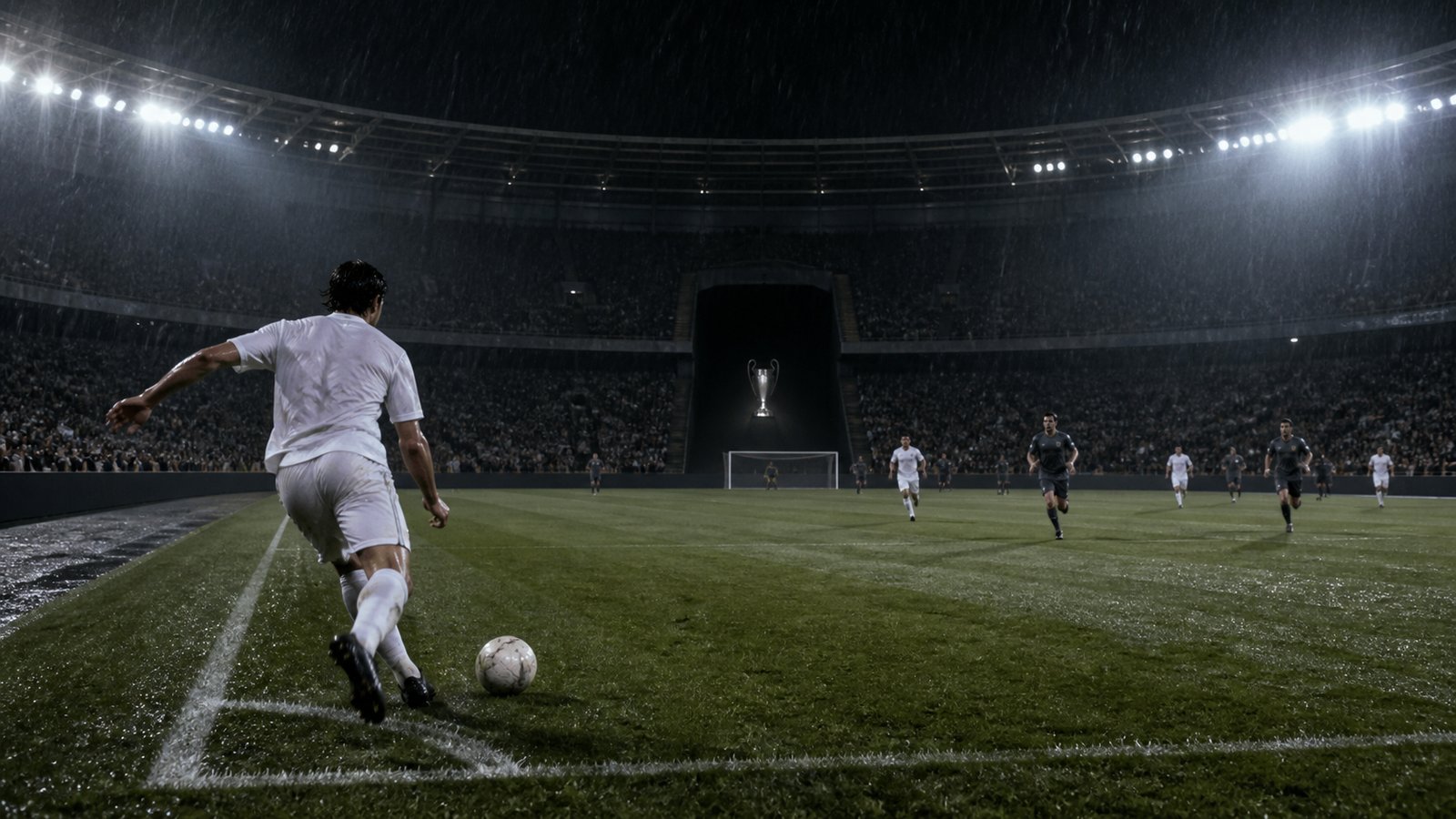
That is the real reason the pig’s head endures. It condensed a complicated sequence—release clause, world record, rivalry, first return, individual awards and team success—into one unforgettable object beside a corner flag. But the object should not be allowed to swallow the sequence. The deeper story is how a transfer crossed the line from business into collective memory, then stayed there because Figo’s football justified the risk.
Real Madrid bought the right to field him. Barcelona’s crowd retained the right to remember him in its own way, though never the right to endanger him. Between those two facts sits one of football’s clearest demonstrations that a transfer fee settles ownership of a registration, not ownership of a past.
Sources
BBC Sport, “History of the world transfer record”; BBC Sport, “Barcelona v Real Madrid: The curious incident of the pig’s head at the Nou Camp”; Real Madrid CF, Luís Figo historical profile; Goal, “The Figo Affair.”