
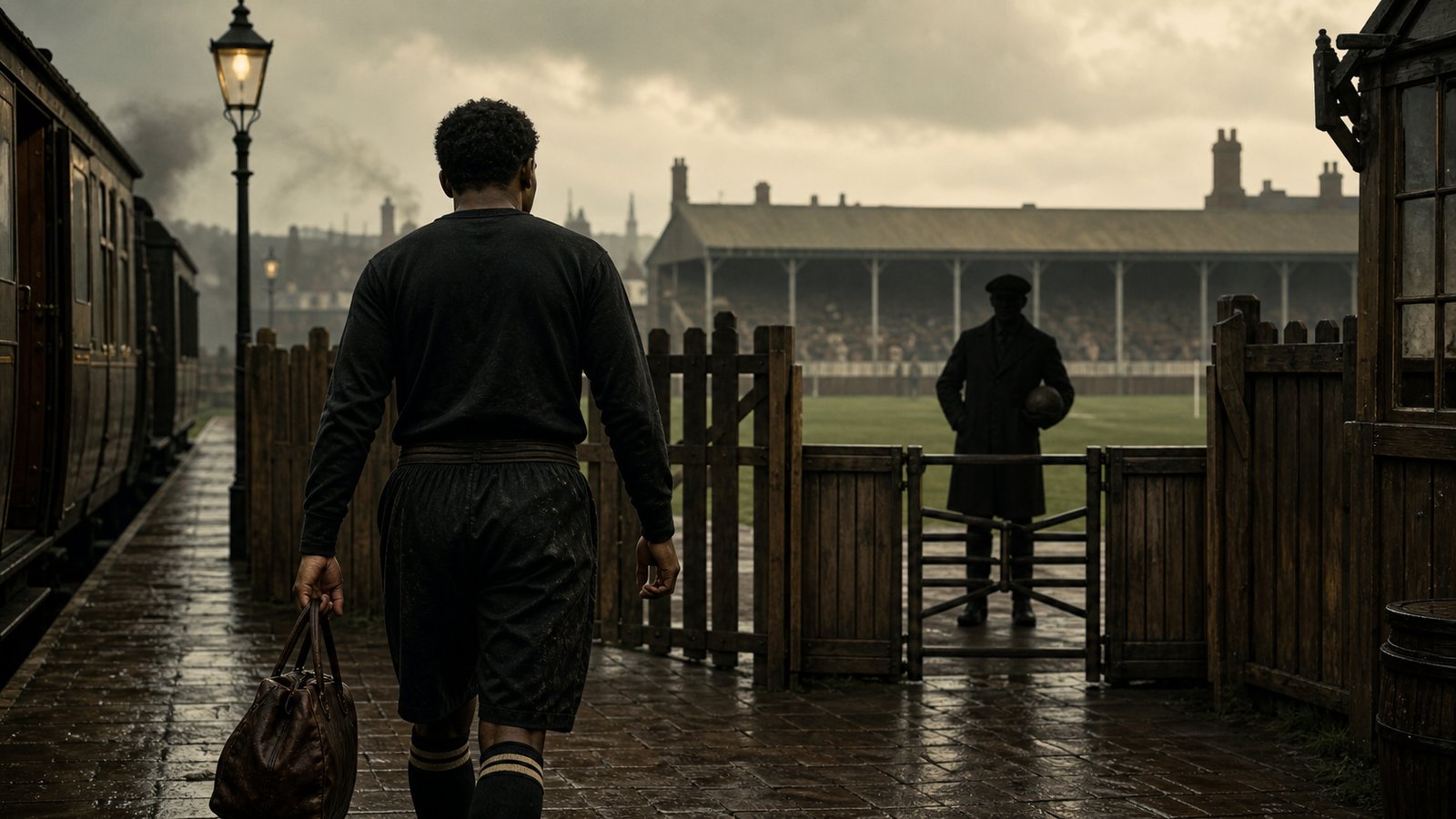
On 1 September 1909, Tottenham Hotspur began life in England’s top division with a 3–1 defeat at Sunderland. Walter Tull, 21 years old and only one season removed from amateur football, started in the forward line. The result was ordinary. His presence was not. Tottenham’s own history identifies him as the first Black professional outfield player in the Football League, while the National Archives describes him more narrowly as the second player of African-Caribbean mixed heritage to appear in the top division.
Those descriptions are not interchangeable, and Tull’s story does not need them flattened into one slogan. The football record is concrete enough: ten senior appearances for Tottenham, a transfer engineered by Herbert Chapman, and 110 games for Northampton Town before war stopped the career. The revealing part is the route between those numbers. Tull repeatedly found institutions willing to select him, yet his place was never secure for long.
An orphanage player reached Tottenham’s new division
Both parents died before Walter was nine, and he entered an orphanage in Bethnal Green with his brother Edward. Edward was later adopted by a family in Glasgow. Walter remained in London, where football supplied a different route.
After playing for the orphanage team, he joined Clapton as an amateur. Tottenham then took him into a club preparing for its first season in England’s top division. This was no ceremonial attachment to a famous name: he travelled, trained and competed for a place in a newly promoted professional side.
Tull also travelled with Tottenham on a tour of South America before the 1909–10 league season. Spurs had just won promotion in their first Football League campaign, so the club and player entered the First Division together. Tull’s opportunity came inside a team testing itself at a new level rather than one offering a settled, protected position.
Tottenham’s new division offered a narrow opening
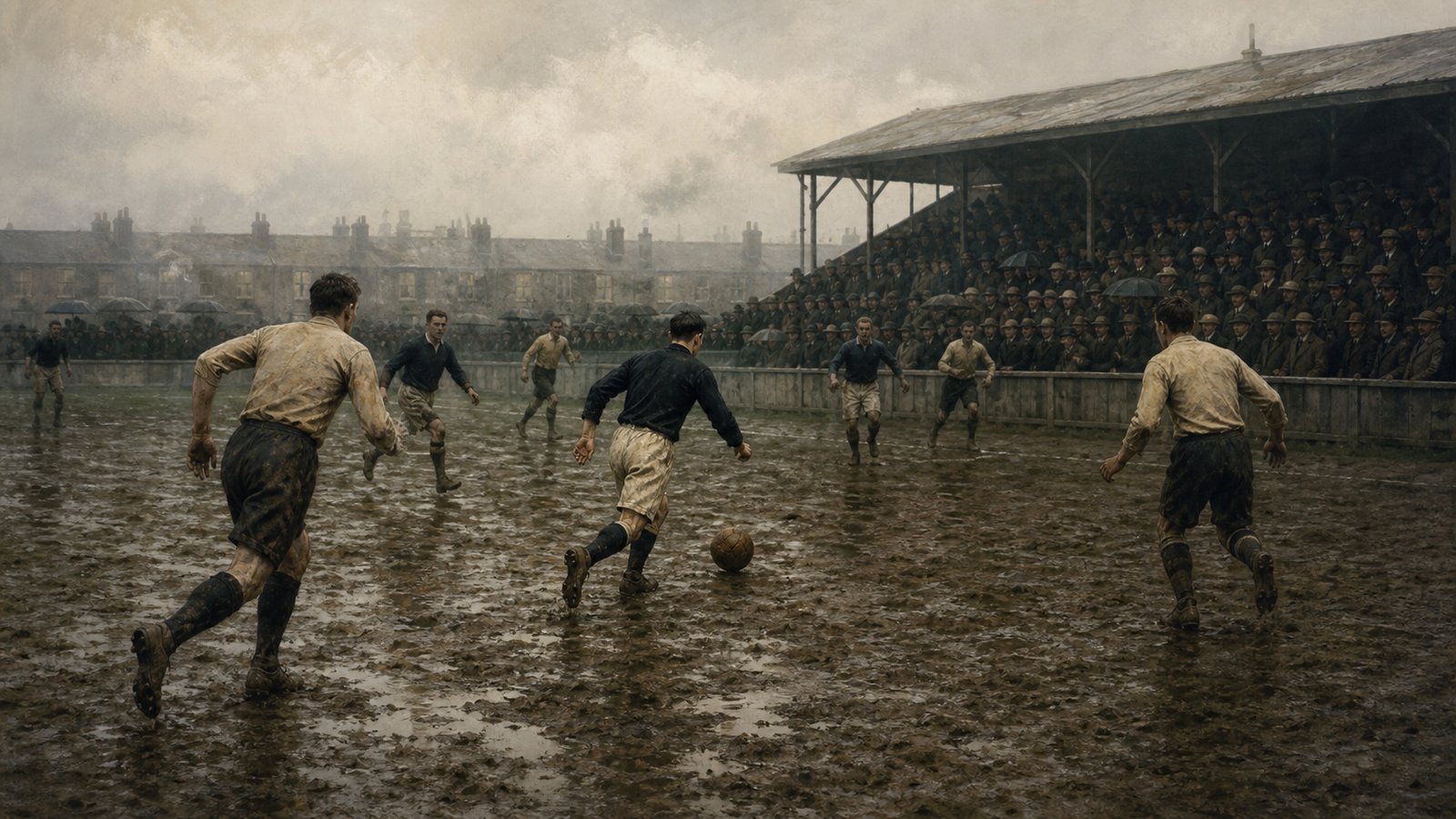
The Sunderland debut was followed a week later by Tottenham’s first home fixture in the First Division. Manchester United visited, Tull was brought down for a penalty, and the match finished 2–2. On 18 September he scored his first senior goal, although Bradford City won 5–1. The early sequence placed him directly inside Tottenham’s difficult adjustment: three famous opponents, only one league point, and a promoted side learning what the division demanded.
Tottenham record ten senior appearances and two goals for Tull. They also record a £10 signing-on fee—the maximum then permitted—and wages of £4 a week. These details matter because they place him within professional football’s formal economy. He was not merely present for a symbolic appearance. He was paid, selected and judged within the same competitive structure as the teammates around him.
His senior run did not last. Tull played 16 times for the reserves after losing his first-team place. In 1910–11, Percy Humphreys established himself ahead of him and scored 18 goals in 24 matches. Tull continued scoring for the reserves but did not regain a lasting position. The selection record therefore supports more than one truth at once: racial hostility formed part of his environment, and Tottenham also had a productive rival occupying his role.
Bristol exposed the barrier beyond selection
The National Football Museum highlights an October fixture against Bristol City in which spectators directed racial abuse at Tull. A contemporary report said the language descended below “Billingsgate” while praising his composure and football. The abuse is essential evidence, but it should not be turned into an invented explanation for every subsequent team sheet. The record proves that it happened; it does not leave a complete private account of each selection decision.
Tull’s position in football history is also easier to understand beside Arthur Wharton’s earlier professional career. Wharton had crossed the professional line before Tull and played as a goalkeeper. Tull’s Tottenham appearances put a Black outfield player into the Football League’s top division. Their careers were separate achievements under different conditions, not interchangeable “firsts.”
What happened next prevents Tottenham’s reserve list from becoming the end of the football story. Tull did not disappear from the game after ten appearances. A manager with an eye for players made him part of a negotiated exchange, and the move produced the longest sustained run of his career.
Herbert Chapman made Tull part of the price
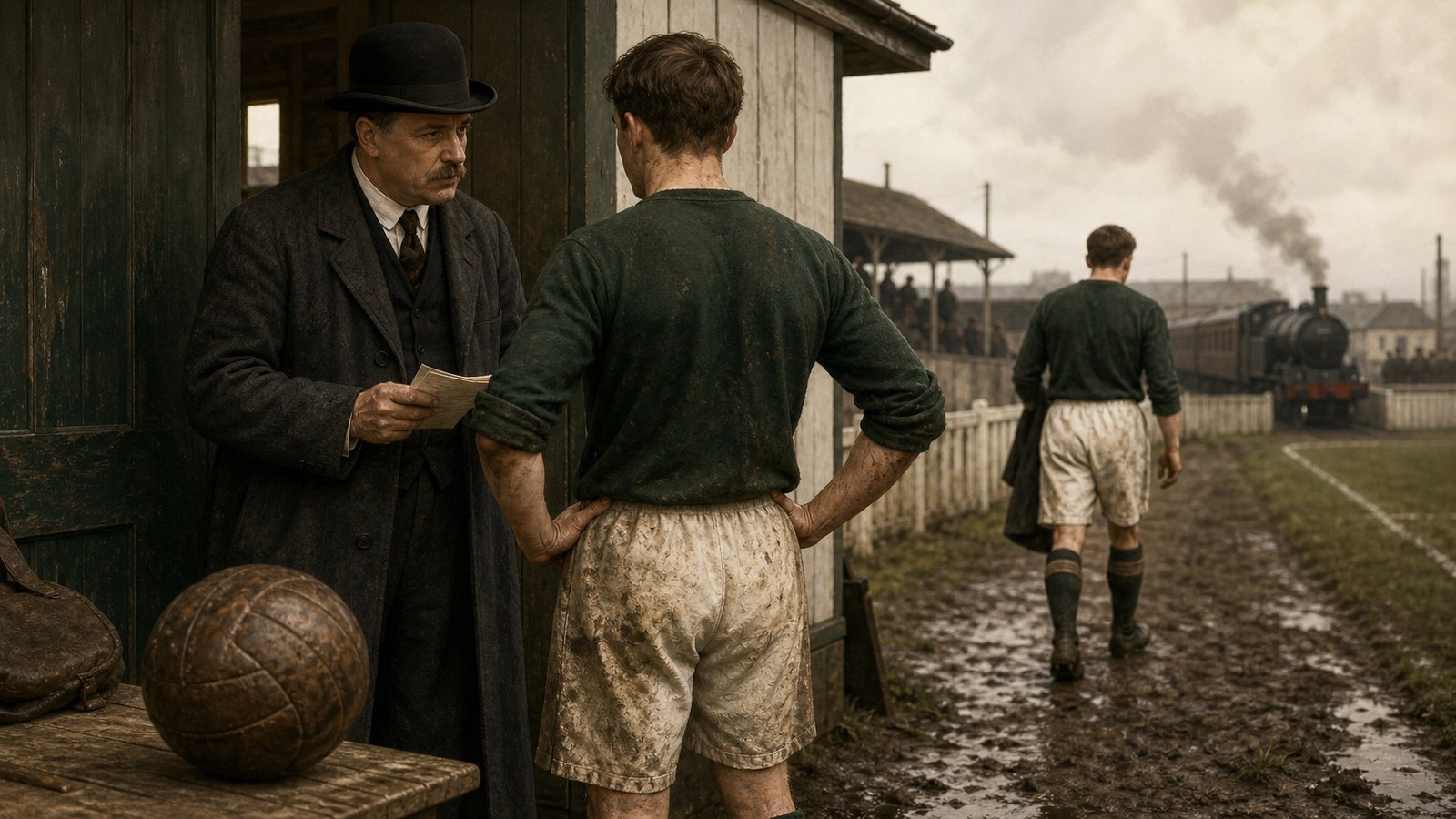
Northampton Town manager Herbert Chapman wanted to keep highly rated right-back Charlie Brittan. When Tottenham moved for Brittan, Chapman demanded Tull as part of the deal. Tull joined Northampton in October 1911 for what the National Football Museum calls a substantial fee, with Brittan going in the other direction.
The exchange is the mechanism that changed the scale of Tull’s career. Tottenham’s ten senior games became 110 appearances for Northampton in the Southern League across three seasons. He played at half-back as well as in attacking roles, and the sustained selection shows that Chapman was not collecting a novelty. He had used leverage over another player to obtain someone he intended to field.
By the summer of 1914, Tull was 26 and approaching what should have been his mature football years. Tottenham’s account says Glasgow Rangers were reportedly interested in signing him. That move never became the next chapter because the First World War began. The interruption was not a graceful conclusion arranged by the sport. It cut across a career that had recovered from its narrow Tottenham phase and established a durable place at Northampton.
This gives the Chapman transaction its full weight. Without it, Tull’s surviving senior record might look like a short opening followed by disappearance. With it, the record shows a professional who adapted positions, crossed from the Football League to the Southern League, and accumulated more than a hundred appearances after his first club had moved on.
The football battalion interrupted a player’s prime
On 21 December 1914, Tull became the first Northampton player to enlist in the 17th Middlesex Regiment, known as the Football Battalion. He served with other footballers, including former Tottenham player Vivian Woodward. The battalion reached France in November 1915 and later fought during the Battle of the Somme. The National Archives records that Tull was hospitalised for shell shock before returning to action.
His military career broke another institutional barrier. After officer training in Scotland, Tull received a commission as a second lieutenant in May 1917 despite regulations that restricted commissions by racial descent. The careful wording used by major institutions varies—first British-born Black combat officer, one of the first Black-heritage officers, or widely considered the first African-Caribbean mixed-heritage infantry officer—but all place the commission against a rule designed to exclude him.
Tull served in Italy, where an account praised his “coolness and gallantry,” and then returned to France. On 25 March 1918 he was killed near Favreuil while leading men during the German spring offensive. He was 29. Fellow footballer Tom Billingham tried to recover him from the battlefield but could not. Tull was recommended for the Military Cross, though it was not awarded.
The later honours cannot restore the missing seasons. The National Football Museum inducted Tull into its Hall of Fame in 2021, and clubs, archives and museums continue to preserve his record. Yet the football achievement is strongest when kept specific. An orphanage player entered Tottenham’s first top-flight team, endured documented abuse, and then built a 110-game second act because Herbert Chapman insisted that he be included in a transfer.
Tull’s career was not one ceremonial appearance before a different kind of fame. It was a professional football life with a difficult first opening, a manager’s calculated intervention and enough sustained work at Northampton to show what the original ten games had not settled.
Sources
Tottenham Hotspur, Walter Tull
The National Archives, Walter Tull
BBC Sport, The Incredible Story of a Football Pioneer and War Hero
BBC Sport, Walter Tull Should Get Military Cross
BBC Sport, Walter Tull Inducted Into the National Football Museum Hall of Fame