
The common line is that the European Cup became the Champions League because football needed a shinier name. The anthem arrived, the branding tightened, the television package looked expensive, and the old knockout romance put on a suit. But the name is the least interesting part. The real change was structural: European football learned that certainty could be sold.
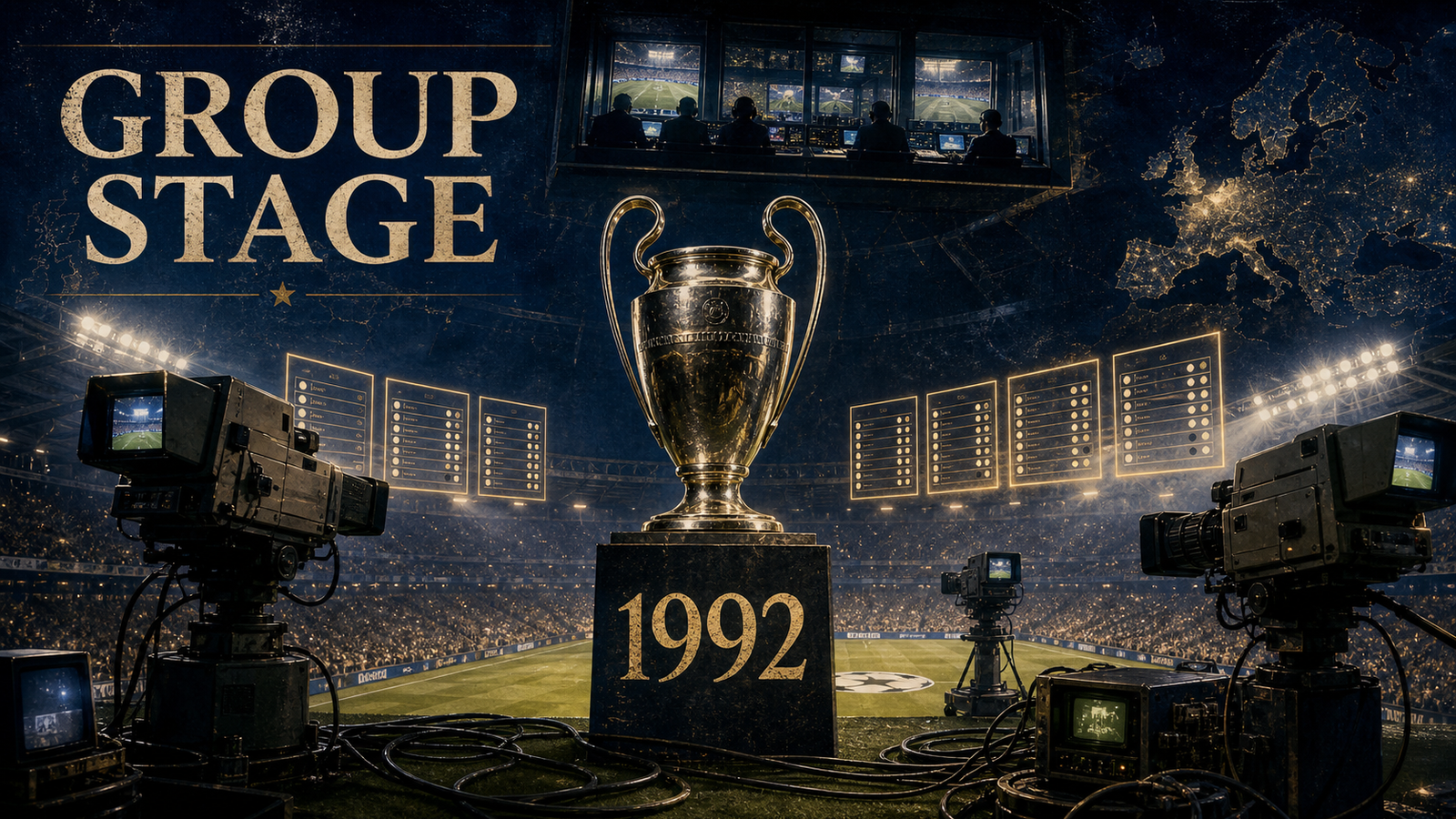
The old cup was beautiful and commercially awkward
The European Champion Clubs’ Cup began in the 1955-56 season as a competition for champions. Its logic was simple and brutal. Draw a giant early, lose over two legs, disappear. That made wonderful stories. It also made nervous television partners. A pure knockout tournament can lose its biggest clubs before the audience has settled into the season.
For supporters, that danger is part of the magic. For broadcasters and sponsors, danger is inventory risk. The move toward the Champions League era did not remove jeopardy, but it softened the commercial problem. Group stages gave elite clubs more guaranteed matches. More guaranteed matches meant more predictable programming, more premium nights, and more reliable exposure for the clubs whose presence sold the product.
The group stage changed the business model
A group stage sounds like a format detail. It was really a financial architecture. It created repeat fixtures, repeat audiences, and a longer runway before elimination. A club could sell the idea of a European campaign rather than a possible two-night cameo. UEFA could sell central rights around a product that looked less chaotic.
That is why the Champions League should not be understood as a logo change. It was a new container for money. The old European Cup asked who could survive. The new structure also asked who could reliably appear on television in October, November, and December.
Champions became a flexible word
The name kept the glamour of champions while the access model became broader. As multiple clubs from major leagues entered, the competition became less a tournament of domestic title winners and more a concentrated market of Europe’s most valuable clubs. That was not an accident. The largest television audiences, commercial partners, and global fanbases were not evenly distributed across national champions.
This is the uncomfortable truth behind the romance. The Champions League did not kill the European Cup in one night. It gradually converted a continental sporting question into a recurring premium-content product. The best teams still had to win matches, but the system around those matches increasingly protected the presence of the teams that made the product valuable.
The anthem hid the machine
The anthem matters because it made the machine feel sacred. Floodlights, midweek nights, the ball on the plinth, the music rising before kick-off — all of it framed the competition as football’s cathedral. But cathedrals are expensive. The emotional packaging helped make a revenue system feel like tradition.
That does not mean the Champions League is fake. Many of its best nights are genuinely magnificent. The point is sharper: the spectacle works because the business architecture works. The tournament became powerful by combining sporting jeopardy with enough predictability to sell the same dream every season.
The machine did not erase the magic
A cynical version of this story would say the Champions League is only money. That is not right either. The money works because the nights still feel important. The anthem does not create drama by itself; it cues a memory bank of finals, collapses, comebacks, and clubs measuring themselves against Europe. The business architecture gives those memories a recurring stage.
The important correction is that romance and machinery are not opposites here. They reinforce each other. The machine creates more nights that feel like destiny. The romance makes the machine easier to accept. That is why the Champions League was never just a rebrand. It was a new settlement between sporting danger and commercial certainty.
Predictability became the hidden premium
The great trick was making predictability feel like grandeur rather than caution. A group stage gave broadcasters weeks of recognizable inventory. It gave sponsors a recurring platform. It gave clubs a clearer commercial calendar. And it gave supporters a ritual: Tuesday and Wednesday nights, lights on, music up, Europe arriving in the living room.
That rhythm mattered as much as any logo. The old European Cup could produce pure shocks, but it could also remove glamour teams before a wider audience had settled in. The Champions League model reduced that risk without removing the knockout climax that made the competition feel dangerous.
The elite did not need a conspiracy to benefit
The format worked because incentives lined up. UEFA wanted a stronger central product. Broadcasters wanted dependable fixtures. Major clubs wanted more high-value European nights. Sponsors wanted repeated exposure. None of that required the football itself to be scripted. It required the structure around the football to make certain outcomes more commercially likely.
This is why the competition can be both meritocratic and unequal. The winner still has to beat excellent opponents. But the route into the room, the revenue earned by being there, and the protection offered by seeding and access rules have never been distributed evenly. The Champions League became the best club competition in the world partly because it understood that imbalance and sold it as excellence.
Why the old romance survived
If the product had become only a business plan, supporters would have rejected it. The reason the Champions League conquered the imagination is that the nights kept delivering. Comebacks, late goals, collapses, and finals turned the commercial structure into a memory machine. The brand did not replace romance. It harvested it, repeated it, and gave it a more profitable stage.
That is the tension still at the heart of the tournament. Every season asks fans to believe in destiny inside a system designed for premium repetition. The miracle is that the belief usually survives. The machine is visible, but the football keeps producing enough wonder to make people watch anyway.
The new format made scarcity valuable
The Champions League did not become powerful only because it had a better anthem or sharper branding. Its real trick was turning European nights into a repeated premium product. The old European Cup had brutal simplicity: champions, knockout rounds, danger everywhere. The new structure kept danger, but added more guaranteed meetings between the clubs broadcasters most wanted to show. Scarcity was not removed; it was managed.
Group stages gave television partners more inventory, clubs more predictable revenue, and audiences more chances to see famous shirts under floodlights. That changed how clubs planned. A deep European run was no longer just a sporting dream. It became a budget line, a recruitment argument, and a way to separate regular contenders from everyone trying to catch them. The competition’s glamour was built partly from football and partly from scheduling certainty.
Domestic leagues felt the aftershock
Once Champions League money became routine for some clubs and occasional for others, domestic competitions changed too. Qualifying was no longer only about prestige; it could alter wage bills, transfer plans, stadium projects, and the ability to keep players. A fourth-place finish in a rich league could carry more economic consequence than many trophies elsewhere. The rebrand therefore helped create a new kind of football anxiety: not just fear of losing a match, but fear of falling outside the money machine.
Sources
- UEFA Champions League history
- UEFA club competition and stakeholder materials
- UEFA access-list and revenue-distribution materials