
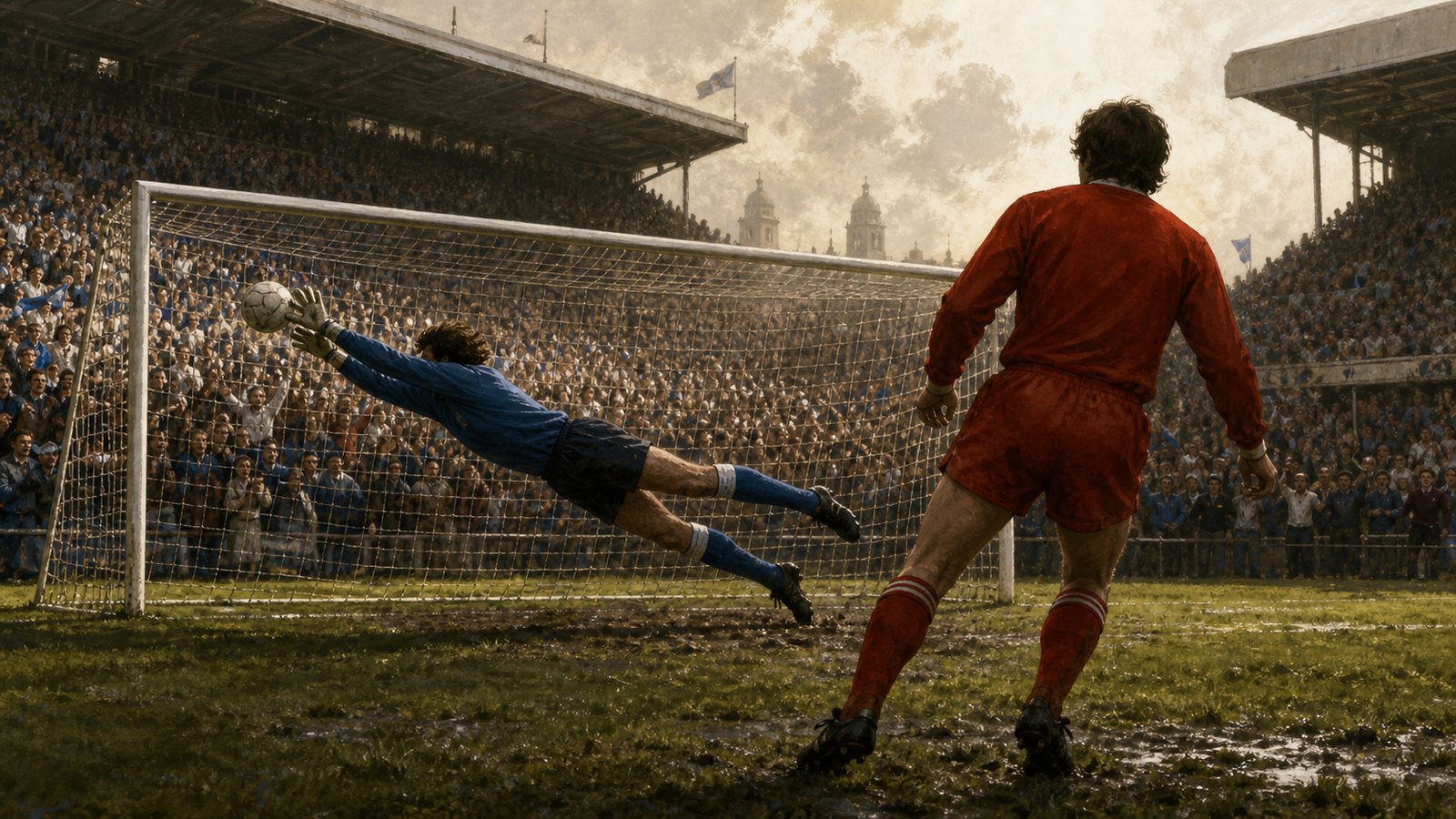
Wembley, 14 May 1988. The afternoon was bright, the crowd was 98,203, and Liverpool arrived as the newly crowned champions of England. Wimbledon arrived with a captain in goal, a reputation for abrasion, and only eleven years of Football League membership behind them. The mismatch looked obvious until the ball began to travel through the places where reputations could not help: a crowded penalty area, the arc of a free kick, the reach of a goalkeeper’s left hand.
The final is usually compressed into a slogan about the “Crazy Gang” beating the establishment. The match itself was more exacting than the slogan. Wimbledon needed one clean attacking connection, a disallowed Liverpool finish that exposed the danger of an early whistle, and a penalty save that had no precedent in an FA Cup final at Wembley. Their 1–0 win was built from separate moments under different kinds of pressure, not one uninterrupted act of defiance.
The champions walked into somebody else’s kind of contest
Liverpool had already secured the First Division title and were chasing a league-and-cup Double. Their route to Wembley included victories away to Everton and Manchester City before a semi-final win over Nottingham Forest. The team sheet carried the authority of the era: Bruce Grobbelaar behind Alan Hansen, Steve Nicol and Gary Ablett; Ray Houghton and Steve McMahon in midfield; John Barnes, Peter Beardsley and John Aldridge ahead of them. Kenny Dalglish had a side accustomed to deciding where matches would be played.
Wimbledon had entered the Football League in 1977, reached the First Division in 1986 and finished seventh in only their second top-flight season. Bobby Gould’s team did possess a clear physical map of the game. John Fashanu could occupy central defenders, Vinnie Jones and Dennis Wise could contest the second ball, and Terry Phelan could carry play from the left. Behind them stood Dave Beasant, goalkeeper and captain.
A free kick gave Lawrie Sanchez six decisive yards
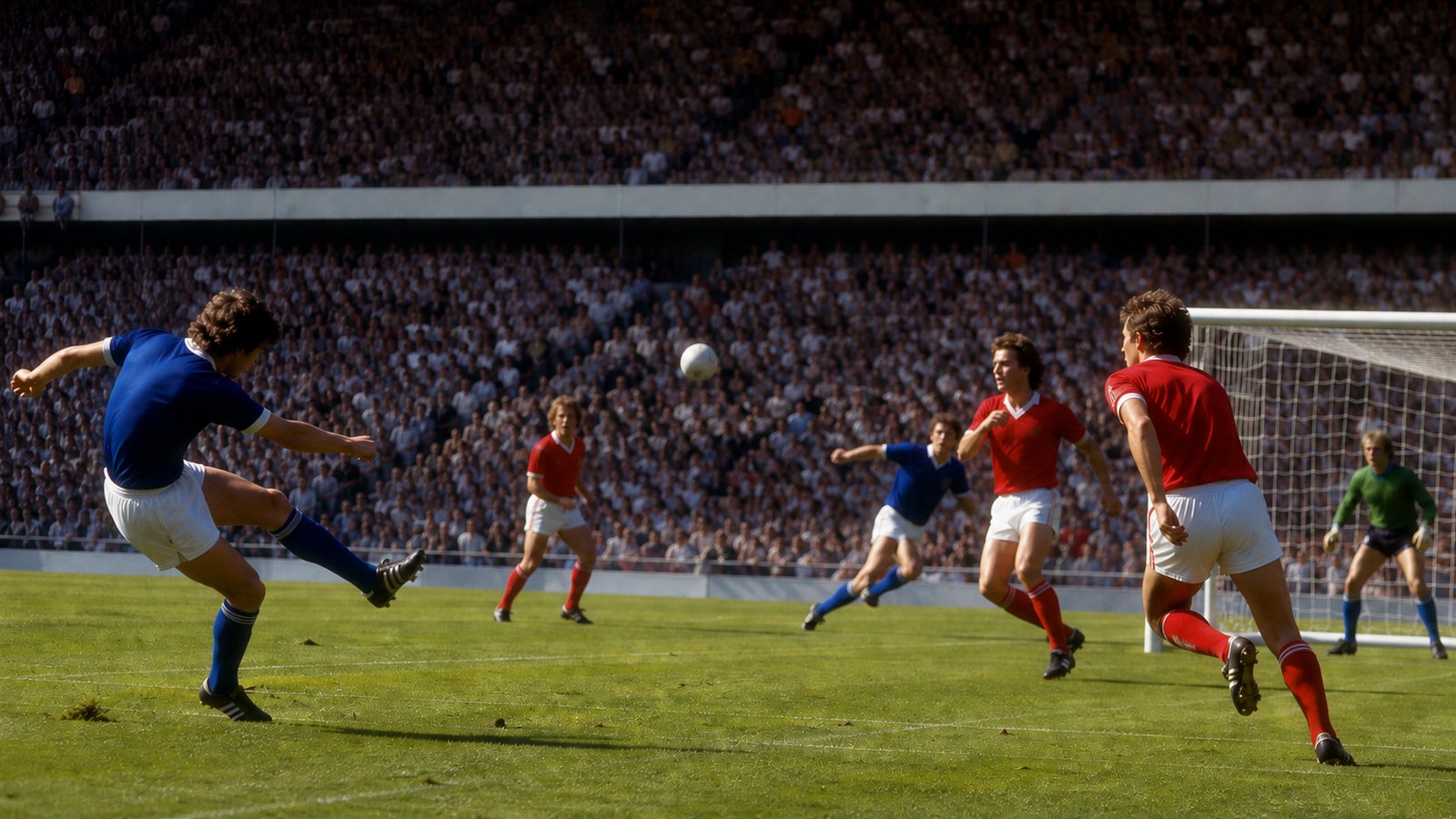
The breakthrough arrived in the 37th minute. Wimbledon won a free kick on the left, and Wise supplied the delivery. Lawrie Sanchez moved into the six-yard area and sent a looping header across Grobbelaar toward the far side. The finish was not a thunderous collision. Its difficulty came from its shape: high enough to escape the goalkeeper’s immediate reach, angled enough to continue away from him, and early enough that Liverpool’s defensive line could not reset.
Sanchez had scored in the semi-final against Luton Town as well. At Wembley, his timing converted Wimbledon’s broad plan into a lead they could defend. The goal also changed the emotional arithmetic. Liverpool no longer needed merely to display superiority; they needed to produce an answer against opponents who could now retreat from selected risks and attack every loose ball as if it shortened the afternoon.
Peter Beardsley scored after the referee had already stopped play
Liverpool produced the final’s strangest warning before the interval. Beardsley lifted the ball beyond Beasant and into the net, but referee Brian Hill had already blown for a Liverpool free kick instead of allowing the advantage. The finish could not count because the whistle had made the ball dead.
The episode matters because it resists a tidy underdog script. Wimbledon had not solved every Liverpool movement; one had opened them completely. They survived because the official’s decision interrupted the attack a fraction too soon. Liverpool received the free kick, but not the goal that the continuing move had produced. A final often remembered for one goalkeeper’s intervention also contained this earlier instant when procedure, timing and attack collided.
Wimbledon still had to live with what the chance revealed. Liverpool could pull a defender toward the ball and release a runner behind him. Gould’s side answered by protecting the central lane and making the box crowded. It was not graceful work. Clearances travelled toward touch, contact accumulated around Fashanu, and midfield possession became temporary. But the score remained fixed long enough for the match to reach its defining confrontation.
Dave Beasant chose a side before John Aldridge could change the final
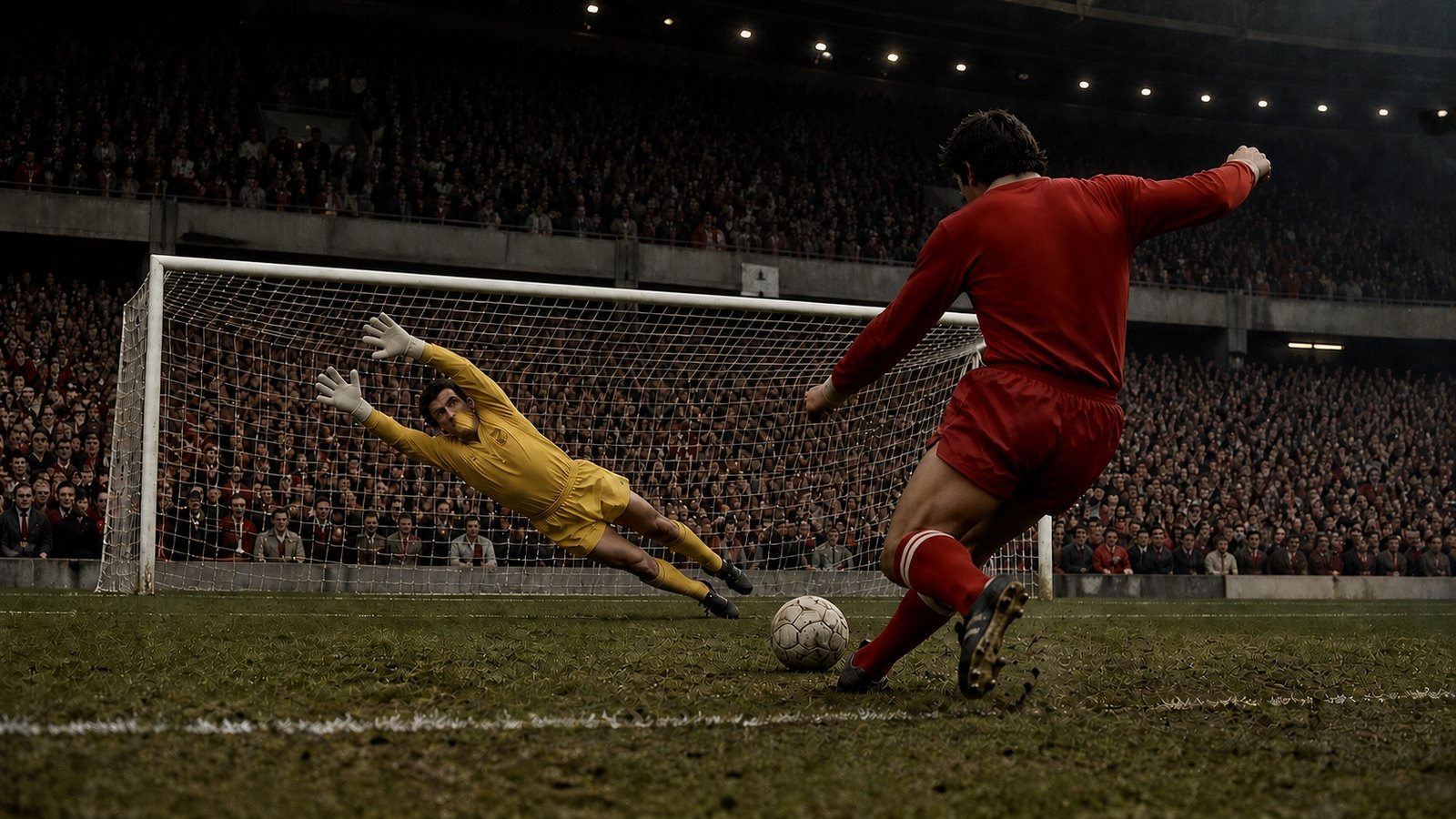
Around the hour, Clive Goodyear fouled Aldridge and Liverpool were awarded a penalty. Aldridge took responsibility himself. He approached with the chance to erase Sanchez’s header and restore the expectation that Liverpool’s pressure would eventually tell.
Beasant dived to his left and pushed the shot away with both hands. It was the first penalty saved in an FA Cup final at Wembley. The historical label can make the action seem ceremonial in retrospect, but the movement was brutally practical: set, commit, cover enough ground, put firm hands behind the ball. Had the rebound fallen centrally, the distinction might have lasted only a second. Beasant forced it away from immediate danger.
The save also joined captaincy to the most exposed task on the pitch. Beasant could not calm the game by keeping possession in midfield or drawing a tactical foul. His authority had to appear in catches, instructions and one dive against the league’s leading scorer. The white Wembley goal frame isolated both men. Aldridge had the cleaner team behind him; Beasant won the cleaner moment.
The final half-hour stretched one goal across the whole pitch
Liverpool continued to press. Dalglish introduced Craig Johnston for Beardsley and Jan Mølby for Nigel Spackman. Wimbledon had already sent on Laurie Cunningham for Alan Cork, then John Scales for Terry Gibson. The substitutions altered the bodies in the contest but not its essential shape. Liverpool sought the equaliser; Wimbledon defended the distance between Beasant and his line.
There was no single tactical spell that made the remaining minutes safe. Andy Thorn and Eric Young had to deal with deliveries, Goodyear and Phelan had to protect the sides of the area, and the midfield had to prevent every clearance from returning at once. Jones’s challenges and Wise’s appetite suited this phase, but discipline mattered as much as aggression. A reckless contact inside the box could have offered Liverpool a second penalty.
The survival was therefore cumulative. One duel bought a few seconds. A throw-in moved the next attack farther from goal. Beasant’s handling allowed teammates to step out. Wimbledon had to repeat those small acts while the clock made each Liverpool failure heavier. Readers who remember Sunderland’s Wembley upset in 1973 will recognise the pressure: a favoured side can dominate territory while the goalkeeper and the score keep refusing the story everyone expected.
When Hill ended the match, Sanchez’s header remained the only goal. Beasant lifted the cup, and Wimbledon had the first major trophy in the club’s history. Liverpool’s attempt to become the first English side to complete a second league-and-FA-Cup Double was over.
One result survived the nickname that tried to contain it
John Motson’s “Crazy Gang” and “Culture Club” line gave the upset a durable caption. It was memorable because it reduced two teams to contrasting identities in a few words. It was also smaller than the match. Liverpool had not lost to a joke, and Wimbledon had not won through noise alone. Wise’s delivery was accurate, Sanchez’s movement was controlled, and Beasant’s penalty technique survived the largest moment of his career.
What remains most vivid is the sequence. In the 37th minute, a header travelled across Grobbelaar. Later, a whistle had already sounded when Beardsley found the net. Around the hour, Beasant went left and Aldridge’s penalty stayed out. Three incidents, each governed by a different football mechanism—delivery, officiating, goalkeeping—held together for ninety minutes.
Wimbledon’s eleven-year path from election to the Football League to an FA Cup victory deserves attention, but Wembley did not reward the biography by itself. The cup was won in the present tense, through decisions made inside a few yards. That is the sharper memory of 1988: not merely that the outsider beat the champion, but that the final repeatedly narrowed until one header and one goalkeeper were enough.
Sources
The Guardian; LFC History; BBC Sport; Wikipedia’s 1988 FA Cup final record.