
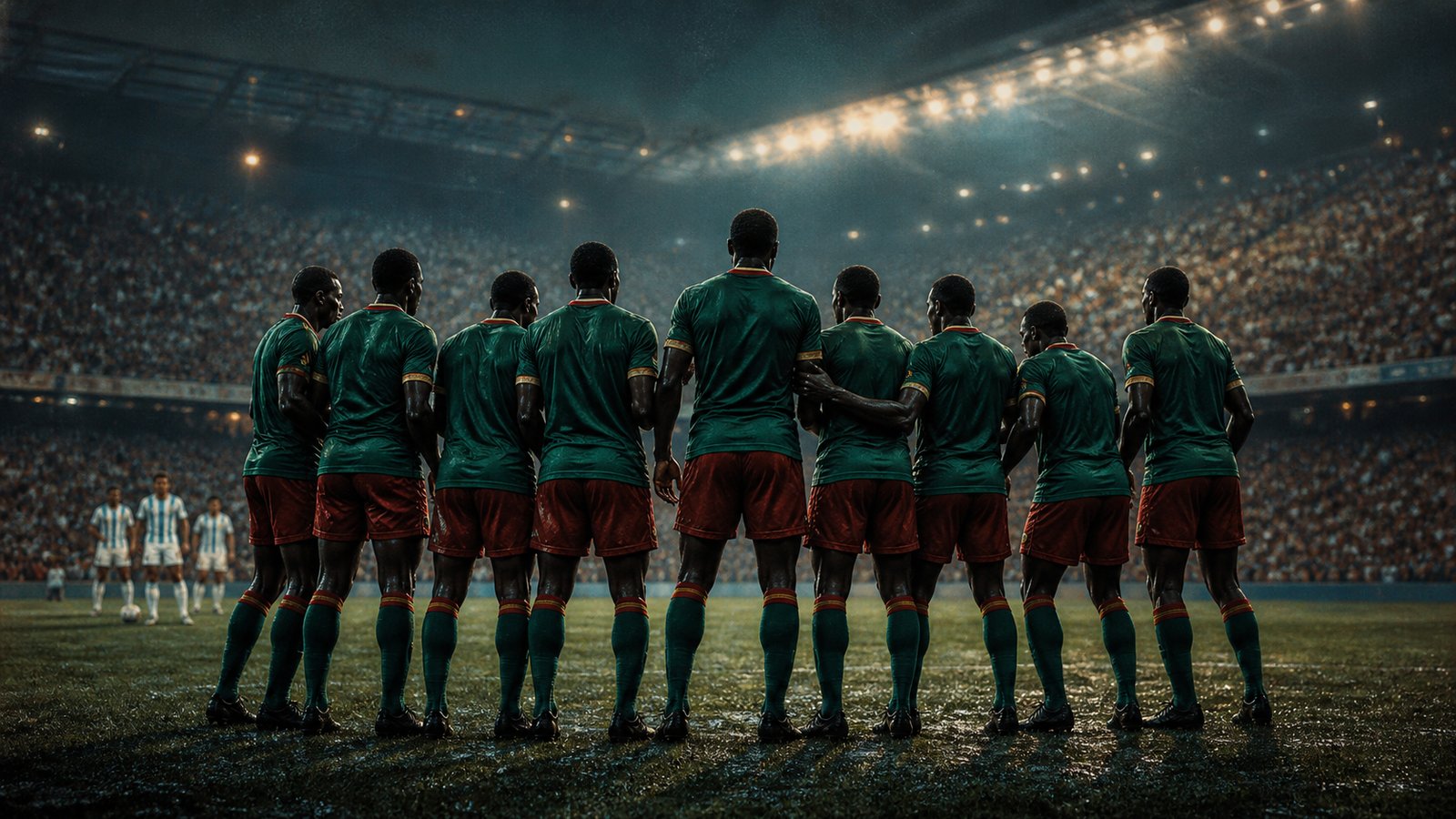
At 61 minutes, André Kana-Biyik left the San Siro pitch and Cameroon were down to ten men. The score against Argentina was still 0–0. Diego Maradona wore the captain’s armband for the reigning world champions, while the supposed outsiders had just lost a midfielder to a red card for bringing down Claudio Caniggia.
Six minutes later, Cameroon were ahead. They would finish the opening match of the 1990 World Cup with nine players, one goal and a victory that forced everyone watching to revise the scale of African football. The surprise did not arrive through one lucky touch in an otherwise hopeless night. It was built from an unsettling defensive shape, a goalkeeper chosen hours before kick-off, physical risks that repeatedly crossed the line, and a refusal to retreat when the numbers changed.
Milan Had Prepared for a Champion’s Entrance
The fixture on 8 June looked designed to introduce Argentina. Carlos Bilardo’s side had won the World Cup in Mexico four years earlier. Maradona had just inspired Napoli to another Serie A title, finishing two points above Milan, and now entered the stadium shared by the city’s two major clubs. Cameroon, quoted at 500–1 to win the tournament, appeared to offer a manageable first step through Group B.
Cameroon had gone out in the group stage of the 1990 African Cup of Nations despite arriving as defending champions. Their pre-tournament camps in Bordeaux and Yugoslavia contained defeats, arguments over bonuses and disagreement about the recall of 38-year-old Roger Milla. Coach Valeri Nepomniachi spoke neither French nor much English, so team talks passed through interpreters. Goalkeeper Joseph-Antoine Bell publicly said the squad had little chance and was dropped.
Bilardo had discussed the Soviet Union as the difficult opponent when the group was drawn. Cameroon were present in the schedule without occupying much space in Argentina’s imagination. The 73,780 people inside San Siro therefore watched two different pressures meet: one team was expected to begin a title defence, while the other had almost nothing to protect except its own idea of what it could be.
Thomas N’Kono Received Five Hours of Warning
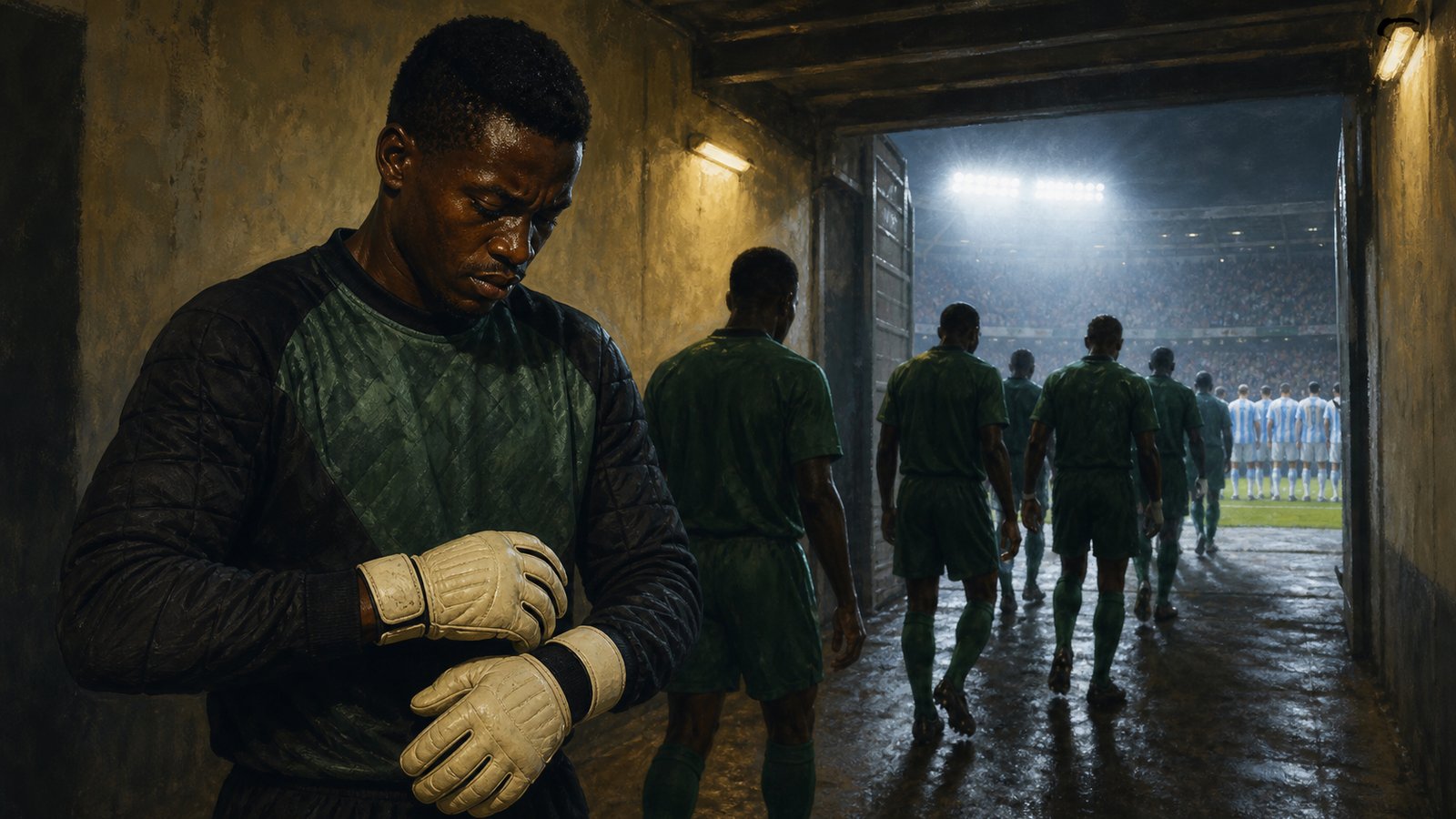
Thomas N’Kono did not wake up expecting to start. He later recalled that the decision came about five hours before the match, after a selection argument involving coaches, federation officials and the sports ministry. He resisted because he did not feel prepared. The alternative, he was told, might be another reserve or even an outfield player in goal. He eventually accepted.
The late choice mattered because Argentina’s attack was built to make uncertainty visible. Jorge Burruchaga started behind Abel Balbo, with Maradona moving into pockets and Sergio Batista controlling the centre. Caniggia waited on the bench. Cameroon answered with numbers behind the ball, Stephen Tataw directing the back line and Emmanuel Kundé guarding the central route. N’Kono gave that block a calm final point.
Argentina had possession without acquiring command. Maradona repeatedly met a second defender after escaping the first. Cameroon closed the centre, competed fiercely for every loose ball and broke forward through Cyrille Makanaky and François Omam-Biyik. Some challenges were reckless, but the team’s football was more deliberate than the later highlight reels of fouls suggest. David Lacey’s contemporary verdict in the Guardian was blunt: the better side won.
A Dismissal Opened the Route to Goal
Caniggia replaced Oscar Ruggeri at half-time as Bilardo searched for a sharper route through the pressure. In the 61st minute, Kana-Biyik fouled him and French referee Michel Vautrot produced the first red card. Cameroon had collected three earlier bookings. With nearly half an hour remaining, the expected response was retreat: protect the penalty area, sacrifice the forward run and wait for Argentina’s extra player to create an opening.
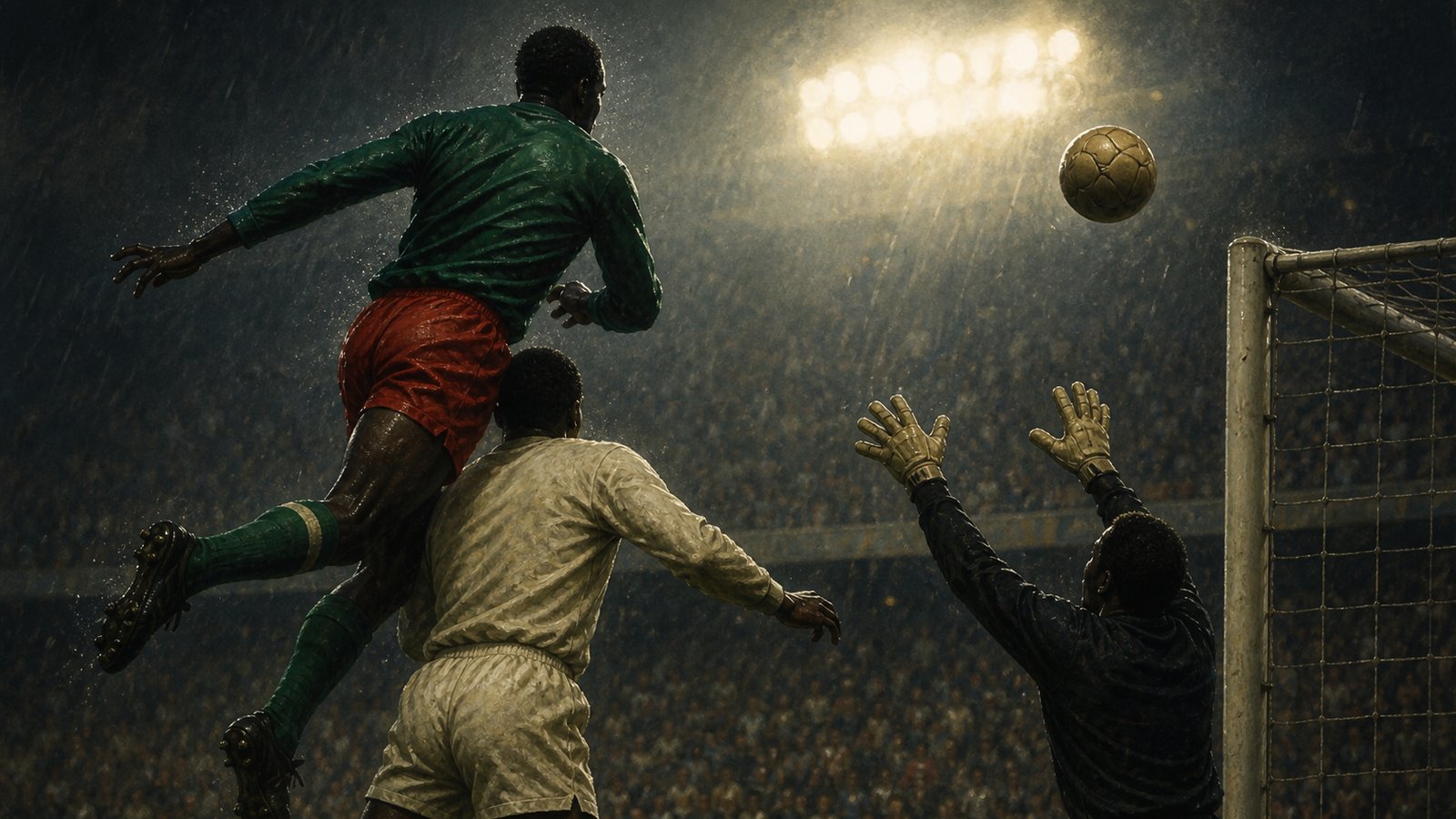
Cameroon instead won a free-kick in attacking territory. Makanaky met the delivery and flicked it onward. Omam-Biyik climbed above Roberto Sensini and drove a downward header towards Nery Pumpido. The contact did not send the ball into a corner with great speed. Pumpido reached it, but the ball escaped his hands and crossed the line in the 67th minute.
The sequence lasted seconds and contained the match’s reversal. Argentina had gained a player but lost its balance; Cameroon had lost a player and found a lead. Omam-Biyik later answered the patronising questions that had followed African teams into previous World Cups by insisting that Cameroon were real footballers. His goal gave that statement a scoreboard.
Maradona Found Bodies Instead of Passing Lanes
The final phase became an exercise in compressed space. Cameroon could no longer press every pass with the same reach, so the remaining players defended shorter distances. Tataw, Victor N’Dip and Bertin Ebwelle protected the box. Kundé screened Maradona’s preferred central route. When Argentina shifted wide, Cameroon’s midfield recovered towards the ball rather than chasing isolated duels across the entire pitch.
Maradona received rough treatment and spent long spells being knocked off his stride. Yet he did not use that as an excuse afterward. He said Cameroon had won because they were the best side. The admission separates the performance from a simple tale of intimidation. Argentina were unable to turn an extra player, then two, into a clean equalising chance. N’Kono handled what reached him, and the defenders treated each clearance as another piece of time removed from the match.
Milla entered in the 81st minute for Makanaky. He had only nine minutes to play in the game that announced Cameroon, well before his goals and corner-flag celebrations became the tournament’s defining images. His job was immediate and practical: offer a target, carry the ball away from the defensive third and make Argentina spend precious seconds facing its own goal.
Benjamin Massing Left One Boot on the Grass
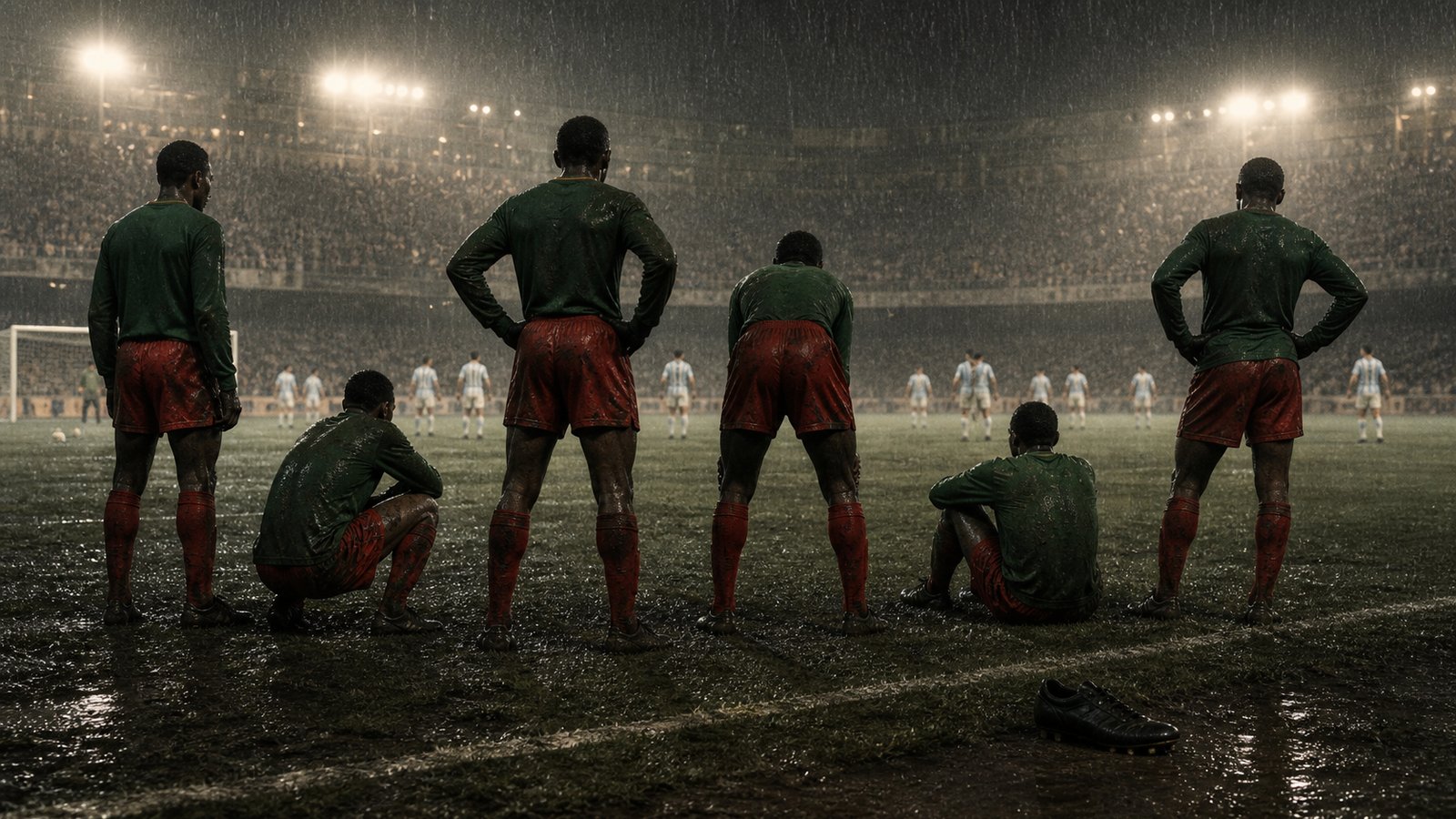
With two minutes remaining, Caniggia accelerated down the right and escaped two attempts to stop him. Benjamin Massing supplied the third. His challenge met Caniggia at waist height, sent the forward tumbling and knocked Massing’s right boot away across the grass. Vautrot showed Cameroon’s second red card. The image endured because it was spectacularly excessive, not because it represented a clever piece of defending.
Nine Cameroon players still had to complete the match. They narrowed the box, survived the final deliveries and heard the whistle with the score at 1–0. The celebration belonged to more than the last tackle or Pumpido’s handling error. Cameroon had led for 21 minutes while short-handed and had protected the advantage after losing another player.
The brutality should not be polished into romance. Massing’s challenge deserved dismissal, and the accumulation of fouls could have destroyed Cameroon’s work. What made the result durable was the tension between danger and discipline: the team repeatedly approached collapse, then reorganised quickly enough to keep Argentina outside the decisive spaces.
The Opening Result Kept Expanding
Argentina reacted by making five changes for its next match. Pumpido broke his leg early against the Soviet Union, and Sergio Goycochea replaced him. The defending champions recovered, advanced through two penalty shoot-outs and reached the final before losing to West Germany. Cameroon’s victory therefore did not come against a side already in terminal decline. It struck a finalist on the tournament’s first night.
Cameroon defeated Romania next, with Milla scoring twice, and won Group B despite losing to the Soviet Union. Milla scored two more against Colombia in the round of 16. England eventually stopped Cameroon 3–2 in the quarter-final after Gary Lineker converted two penalties. No African team had previously reached that stage.
The path from Milan to the quarter-final changed the meaning of the opener. It was not an isolated shock that vanished in the next group match. N’Kono’s saves, Tataw’s organisation, Omam-Biyik’s leap and the team’s ability to keep playing through reduced numbers introduced a campaign with its own shape. The match also changed the audience’s expectations. African participation could no longer be treated as colour around a European or South American contest.
Football history contains other opening upsets, including the United States beating England in 1950. Cameroon’s night carried a different visual argument. The champions had Maradona, possession and two numerical advantages. The outsiders had a lead that arrived after the first red card and survived the second. At the final whistle, the imbalance visible on the team sheet pointed in one direction; the scoreboard pointed in the other.
Sources
FIFA, Cameroon’s Nine-Man San Siro Stunner; The Guardian, Simon Burnton’s World Cup retrospective; The Guardian, Sachin Nakrani’s match remembrance; Planet World Cup match record.