
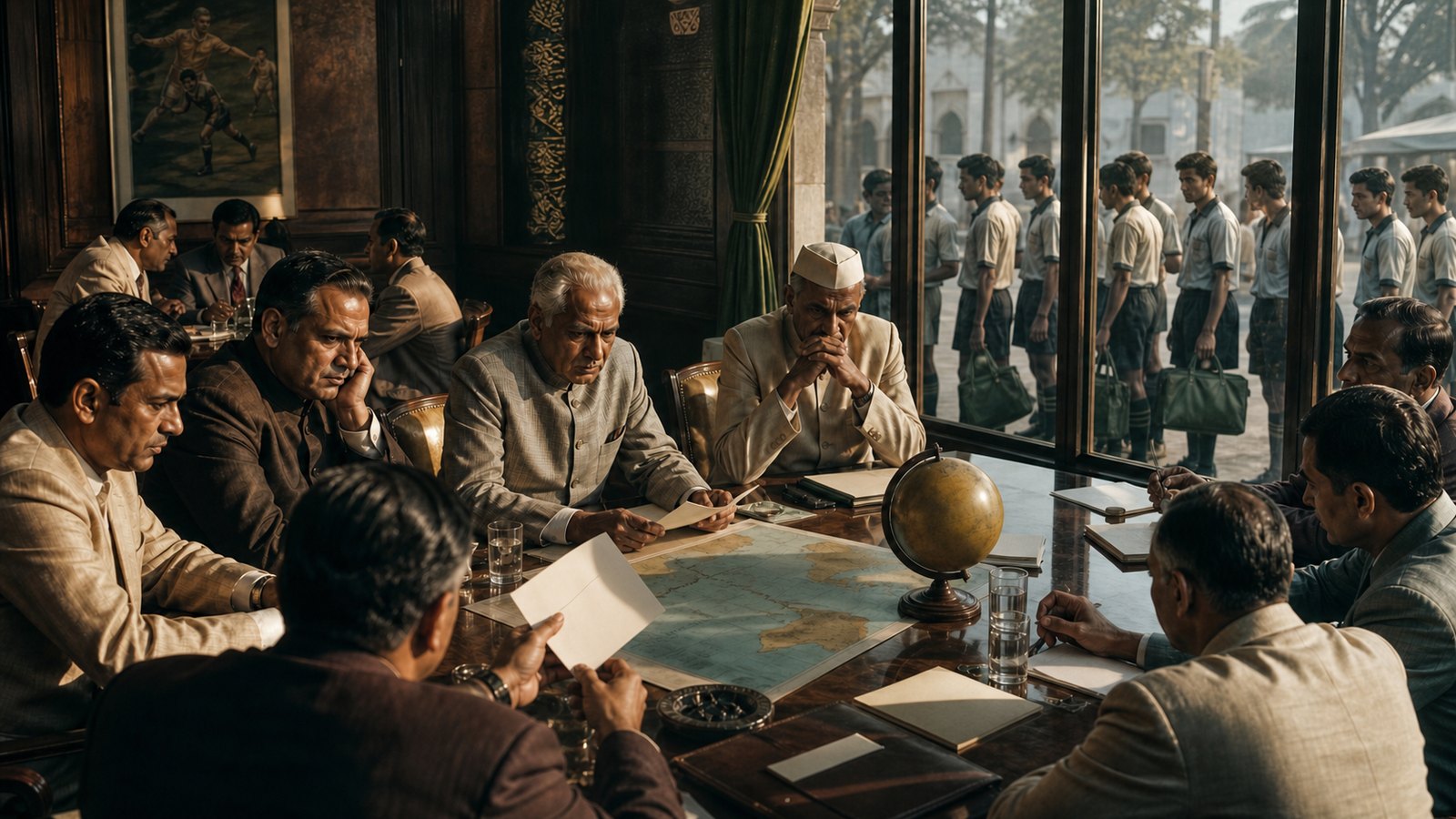
On 21 March 1950, the people deciding India’s World Cup future gathered in a New Delhi restaurant called Devicos. The national team already had a route into the tournament in Brazil: the Philippines and Burma had withdrawn from the Asian qualifying group. Yet the item before the All India Football Federation was still framed as a question. Should India go?
That scene is more revealing than the famous story about barefoot players. The decision emerged from sixteen months of cables, committees, cost estimates and postponed commitments. India qualified without playing, assembled possible funding and announced a squad. Then the federation withdrew with the opening match only weeks away.
The missed trip belongs to football’s administrative history. India had players who narrowly lost 2–1 to France at the 1948 Olympics, a place in Brazil, help with costs and a provisional travel date. It lacked an institution able to convert those pieces into a departure.
Qualification Arrived Without a Qualifying Match
The process began in January 1949, when the AIFF sent FIFA a cable entering India for the next World Cup. At the federation’s annual meeting in Calcutta on 27 March, members were told that the Philippines had withdrawn. India and Burma were left, with a home-and-away tie planned and the Calcutta match pencilled in for 17 September.
The meeting lasted five hours and exposed uncertainty that would never quite disappear. Officials discussed whether India should embrace professionalism and whether facing professional teams might threaten the standing earned at the London Olympics. AIFF president Moin-ul-Haq expressed reservations, while other members wanted the World Cup campaign to proceed. A preparatory tour of Ceylon was discussed, but the federation did not speak with one settled voice.
On 28 August 1949, Burma also withdrew. India therefore qualified for Brazil without playing a qualifier. It caused little public excitement. The World Cup had not yet become the sport’s unquestioned summit: the 1942 and 1946 tournaments had been cancelled, and only thirteen teams would reach Brazil in 1950.
At Devicos, the Debate Began With the Bill
Seven months after qualification, the AIFF returned to the matter at Devicos. Honorary general secretary Manindra Dutta Ray estimated that the journey could cost about Rs 1 lakh, beyond the federation’s immediate means. The meeting did not reject participation. It decided to seek the money, leaving the central choice open while the calendar kept moving.
A World Cup subcommittee followed on 27 March 1950. The working expense target was put at Rs 85,000. Brazil’s organisers offered significant assistance: if India could reach Cairo, the onward travel would be covered, and tournament organisers would pay the team’s bills from two days before its first match until two days after its last. AIFF officials worried that this window did not cover the longer acclimatisation period they wanted, so another request for help went to the Brazilian federation.
Funding was a genuine problem, but it was becoming solvable. Western India offered Rs 7,500, Mysore Rs 5,000, and Bengal’s Indian Football Association Rs 25,000. With Brazil’s help, a contemporary report reduced the AIFF’s own requirement to about Rs 40,000.
The Calendar Filled Faster Than the Plan
After the March discussions came another month of drift. Moin-ul-Haq called the World Cup subcommittee together in Calcutta on 30 April. The public signals were optimistic. There was talk of adding matches in the United States, Argentina and Europe after Brazil, and a short training camp took place in Calcutta. On 10 May, reports from Mumbai said India were set to travel.
The practical timetable was now tight. The squad was announced on 16 May. Clubs were asked to release their players. With India’s opening group match scheduled for 28 June, the team was expected to leave on 15 or 16 June. Every selection question, funding promise and cable had to become a firm booking in less than a month.
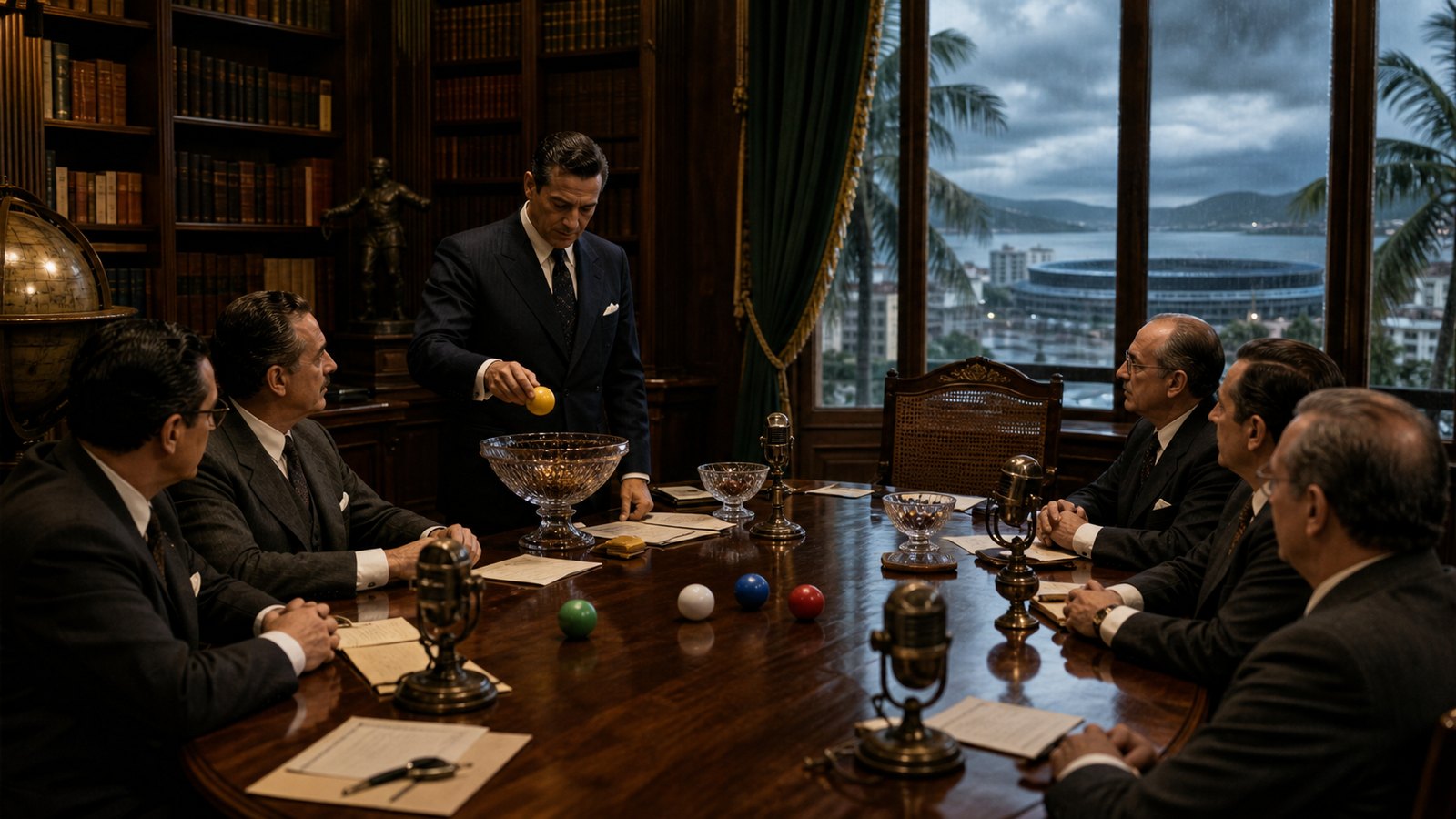
Brazil continued planning as if India would arrive. On 22 May, Brazilian foreign minister Raul Fernandes hosted the preliminary draw in a library room of the foreign ministry in Rio de Janeiro. India were placed with Italy, Sweden and Paraguay. The group was no abstraction: Sweden would go on to beat Italy, top the section and finish third in the tournament. India had been assigned a real place among the teams, not offered a ceremonial visit.
The Barefoot Story Hid a More Uncomfortable Failure
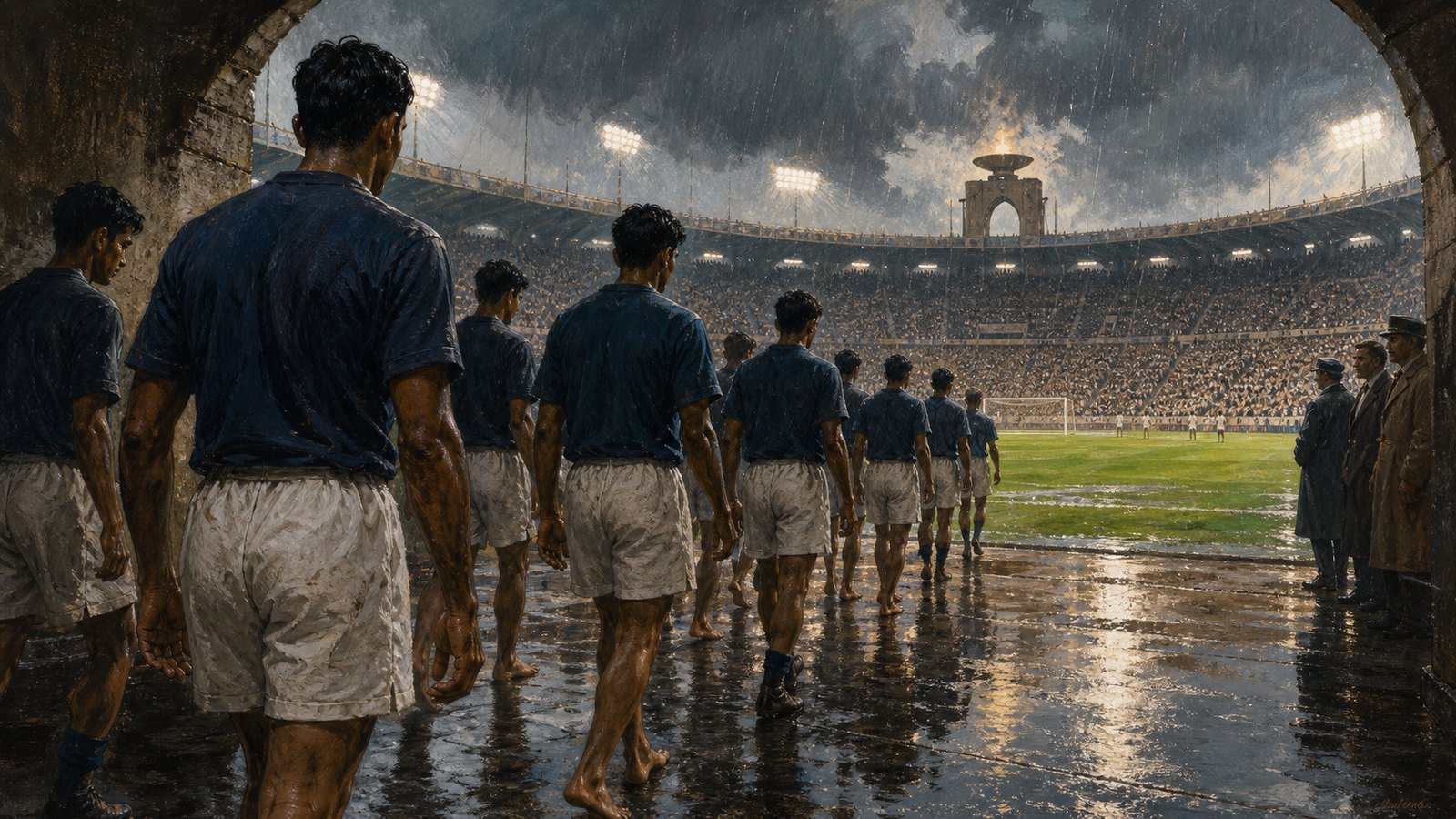
The cleanest later explanation said FIFA would not let India play barefoot. It connected two facts: Indian players had appeared without boots at the 1948 London Olympics, and the team did not appear in Brazil two years later. The sequence sounds tidy. The regulations do not support it.
Boots were not mandatory in FIFA’s equipment rules before 1953. Indian players also competed without boots at the 1952 Helsinki Olympics without an objection from the world governing body. The 1950 withdrawal therefore cannot be reduced to a last-minute footwear prohibition.
The AIFF’s public explanation pointed elsewhere. It cited disagreement over selection, late information and insufficient preparation time. The federation said that flying to Rio would disrupt selection and that the remaining period was too short to prepare properly. Those problems were real by late May, but they had been produced by the preceding delays. India had entered in January 1949 and qualified in August. The compressed schedule was the consequence of indecision rather than an unforeseeable emergency.
Jaydeep Basu’s reconstruction in Box to Box: 75 Years of the Indian Football Team also describes officials as worried about heavy defeats against elite opposition. That concern fits an era in which Olympic standing carried more prestige for Indian football than the young World Cup. It cannot be proved as the single hidden cause, but it helps explain why available solutions never created urgency.
Why the Olympics Still Felt Larger
Brazil had volunteered to host at FIFA’s 1946 congress when much of Europe was still recovering from war. Germany and Japan were absent. Scotland and Turkey withdrew, and only thirteen nations appeared at a tournament designed for sixteen.
India’s own football memory pointed toward the Olympics. In London in 1948, the newly independent country had lost 2–1 to France after a competitive performance. The match supplied status and confidence to administrators who were protective of that reputation.
Sahu Mewalal later recalled that players of his generation regarded the Olympics as the dream and the World Cup as a vague idea. He said the squad was hardly disappointed when the Brazil trip vanished. That testimony does not excuse the federation. It reveals why the loss could occur without the revolt that a modern withdrawal would provoke. The institution was making a historic decision before its culture understood the scale of the prize.
The Opportunity Died Between Decisions
There is no document in the surviving public account that identifies one dramatic moment when the trip became impossible. Instead, the record presents a chain of partial commitments. India entered. Its rivals withdrew. The federation debated. A committee formed. Associations pledged money. Brazil offered support. A camp opened. A squad was named. Clubs received release requests. The draw took place. None of those actions completed the next one.
That is the lasting significance of the 1950 withdrawal. The AIFF could point to finance, preparation and selection because each had become a genuine difficulty. But each difficulty had also been allowed to mature. Administrative hesitation converted manageable risks into a deadline crisis, then used the deadline crisis as the reason to stop.
The consequence was larger than one missing fixture. Italy, Sweden and Paraguay played a three-team group after India failed to appear. India did not return to the edge of a men’s World Cup finals place. The barefoot myth made the story easier to tell, but it also moved responsibility away from the meeting rooms where time had been spent.
Devicos later closed, leaving the restaurant to Delhi memory. Its place in football history remains precise. On a March day there, qualification was already secure and the trip was still possible. The people around the table treated the World Cup as an option to keep discussing. By the time discussion finally ended, Brazil had moved on without them.
Sources
Jaydeep Basu, Box to Box: 75 Years of the Indian Football Team; Scroll.in.