
A promoted champion sounds like a fairy tale because the phrase is too clean. It skips the uncomfortable part. Kaiserslautern did not rise from the 2. Bundesliga, blink at the lights, and somehow discover that Bayern Munich, Borussia Dortmund, and the rest of Germany had forgotten how to play. The shock of 1997-98 was built from timing, authority, and a home ground that made every early mistake by the giants feel larger than it was.
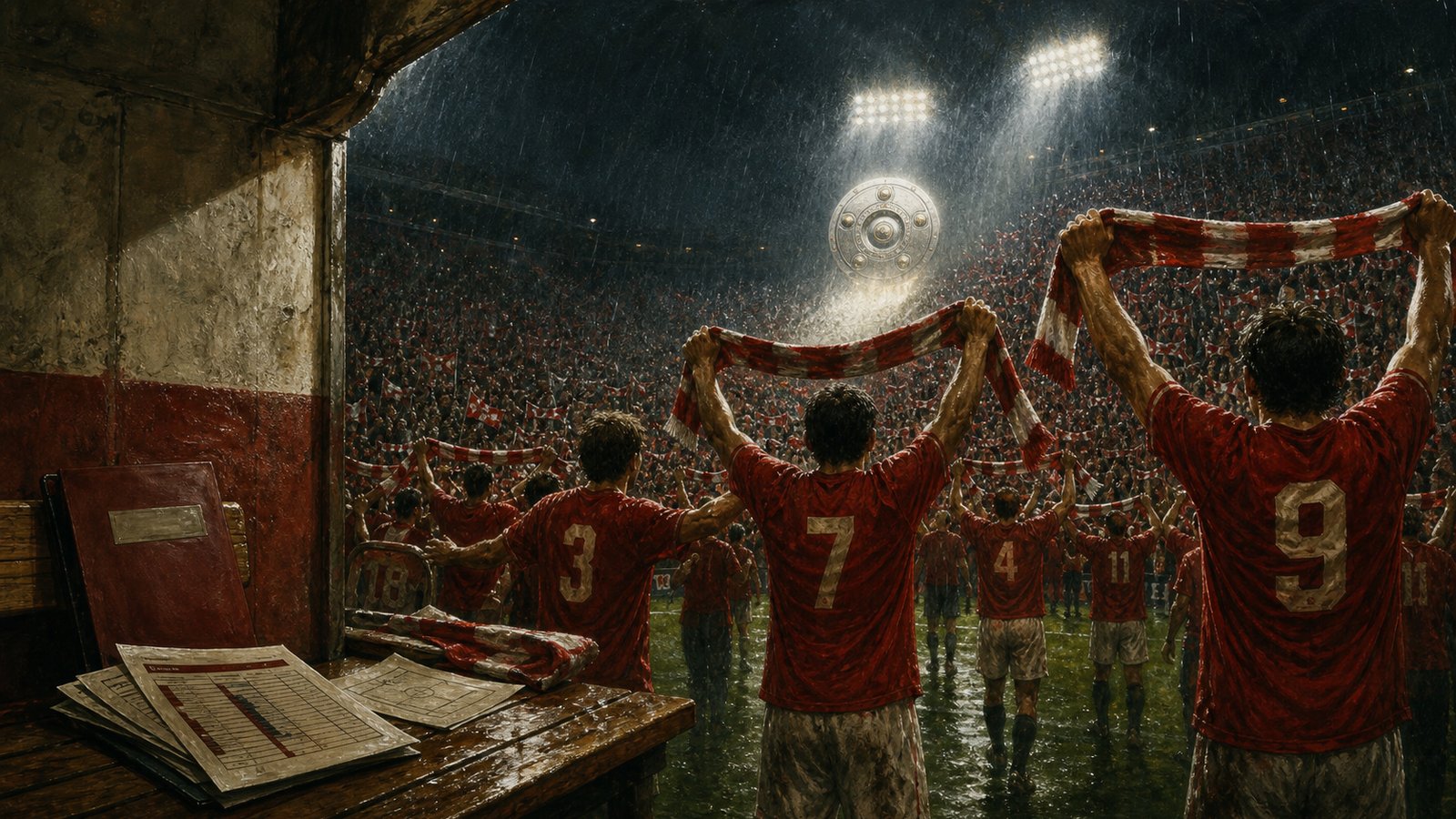
The club had just come back up after relegation in 1996, a fall that still hurt because Kaiserslautern were not a tiny visitor to the top flight. They had been German champions in 1991. They carried a proper football city behind them, with the Betzenberg looming over the place like a warning. What made 1997-98 different was the speed of the re-entry. Otto Rehhagel returned the team to the Bundesliga and then treated promotion as a platform, not as shelter. The opening weeks mattered because they changed the emotional math of the season. A promoted side that starts slowly spends months negotiating with doubt. Kaiserslautern started as if doubt had arrived too late.
The first weapon was the calendar
Every league season has a hidden architecture. The same fixture can be survivable in April and terrifying in August. Kaiserslautern used the early calendar to turn curiosity into pressure. Their opening-day win away at Bayern Munich was not just three points; it moved the burden across the table. Bayern were expected to correct the order. Dortmund had European status and a bigger modern profile. Kaiserslautern had the simpler advantage of already having made the favorite look vulnerable.
That mattered because the Bundesliga in the late 1990s was not a slow closed shop. German football was still balanced enough for a strong, disciplined group to keep a title race honest if the larger clubs lost rhythm. Kaiserslautern did not need to be more glamorous than Bayern. They needed to make Bayern chase from a position where every dropped point sounded like confirmation that something strange was happening. Once the promoted side sat near the top, neutral curiosity became part of the pressure. Opponents stopped seeing them as a survival story and started seeing them as an exam.
Rehhagel made promotion feel like command
The central figure was Rehhagel, whose authority gave the season its spine. His reputation was not based on abstract modern language. It came from making teams hard to disturb. Kaiserslautern were organized, direct when the game asked for it, and emotionally steady in a way promoted sides rarely are. That steadiness was not boring. It was aggressive in its own way, because it denied opponents the moment they expected: the moment when the newcomer accepts its place.
Rehhagel understood that a newly promoted team does not have to dominate every phase to control the story of a match. It can control restarts, second balls, defensive spacing, and the crowd’s temperature. Kaiserslautern’s football carried that logic. They were not trying to give Germany a manifesto about beauty. They were trying to win the next duel, make the next clearance meaningful, and force better-known teams to solve a game that had already become emotional.
The Betzenberg turned ordinary pressure into weather
Home advantage is often described as noise, but Kaiserslautern’s Fritz-Walter-Stadion was more specific than that. It sits on the Betzenberg, above the town, and visiting teams could feel the climb before the ball moved. In a season where belief was the central fuel, the ground gave the team a physical frame for that belief. The terraces made the pitch feel less like a neutral playing surface and more like a demand.
That was especially useful for a side defending a place at the top. Title challengers are not only tested by the best opponents. They are tested by the ordinary Saturday when the table says they should win and the body says the season is long. Kaiserslautern’s home ground reduced the chance that those days would drift. The crowd could pull a match back into urgency. The players could feel that survival language no longer applied. At home, they were not guests in the Bundesliga’s order. They were the club everyone else had to visit.
The squad was older than the miracle sounded
The title is sometimes remembered as if a group of unknowns wandered into history, but the squad’s experience was crucial. Andreas Brehme brought World Cup pedigree and a calm left foot that belonged to a different scale of pressure. Ciriaco Sforza, who returned from Bayern, gave the midfield a kind of revenge logic as well as quality. There were workers, leaders, and players who understood German football’s rhythms well enough not to be dazzled by the table.
That mix matters because promoted sides often fail when their good start becomes too exciting. Kaiserslautern had enough adult supervision on the pitch to keep the season from turning into a weekly celebration of itself. They could win tight matches without apologizing. They could absorb the weight of being chased. The team’s strength was not that it ignored pressure; it gave pressure familiar jobs. Mark the runner. Win the set piece. Slow the match. Make the stadium louder after the tackle, not after the trick.
The richer clubs could not reset the narrative
Bayern still had more power. Dortmund still had the glow of their European era. Other clubs still had resources and names Kaiserslautern could not match. But a league campaign is not a balance sheet printed in August. It is a sequence of corrections, and the big clubs needed time to correct what Kaiserslautern had disrupted. Each week that passed with Rehhagel’s team still in front made the normal hierarchy feel less automatic.
This is the hidden cruelty of a surprise leader. At first, opponents expect the story to fade. Then they begin playing against the story itself. A draw is not merely a draw; it is evidence that the outsider is still standing. Kaiserslautern benefited from that shift. Their opponents were no longer just trying to beat a promoted team. They were trying to stop a season that had begun to embarrass them. That emotional tax was part of the title race.
The lesson was not that anyone can do it
Kaiserslautern’s championship is inspiring, but it is not easily repeatable. The lesson is more precise and more useful. A promoted club can shock a league when it combines immediate results, experienced leadership, a home ground that multiplies belief, and a tactical identity that does not require permission from richer teams. Remove any one of those pieces and the story probably collapses into a respectable finish.
That is why the 1998 title still feels strange without feeling random. Kaiserslautern did not win because Germany was asleep. They won because they made the league wake up in the wrong order. By the time everyone understood that the promoted side was a genuine contender, the season had already been reorganized around them.
The statistical outline reinforces the emotional one. Kaiserslautern finished the 34-match season as champions with Bayern behind them, a fact that still looks absurd because it came immediately after promotion. The key was not a single heroic week. It was the accumulation of enough ordinary victories to make the shock durable. German football could explain away one result at Munich. It could not explain away a full season in which the newcomer kept arriving at the next Saturday with the same clarity.
Sources
Bundesliga historical archive; DFB season records; RSSSF Germany 1997-98 tables; kicker season reporting; UEFA club competition archive.