
The Maracanazo Was Not a Miracle. It Was a Stadium Learning Fear in Real Time
Brazil did not lose the 1950 World Cup final in an ordinary final, because there was no ordinary final. The decisive match was the last act of a final group, played inside a new Maracanã built to announce a football nation to itself. Brazil needed only a draw against Uruguay. The city expected a parade, newspapers prepared celebratory language, and the crowd arrived as if history had already accepted the script. What followed was not a random upset. It was a slow tightening of pressure, a tactical refusal to panic, and then a silence so complete that the result became a national reference point.
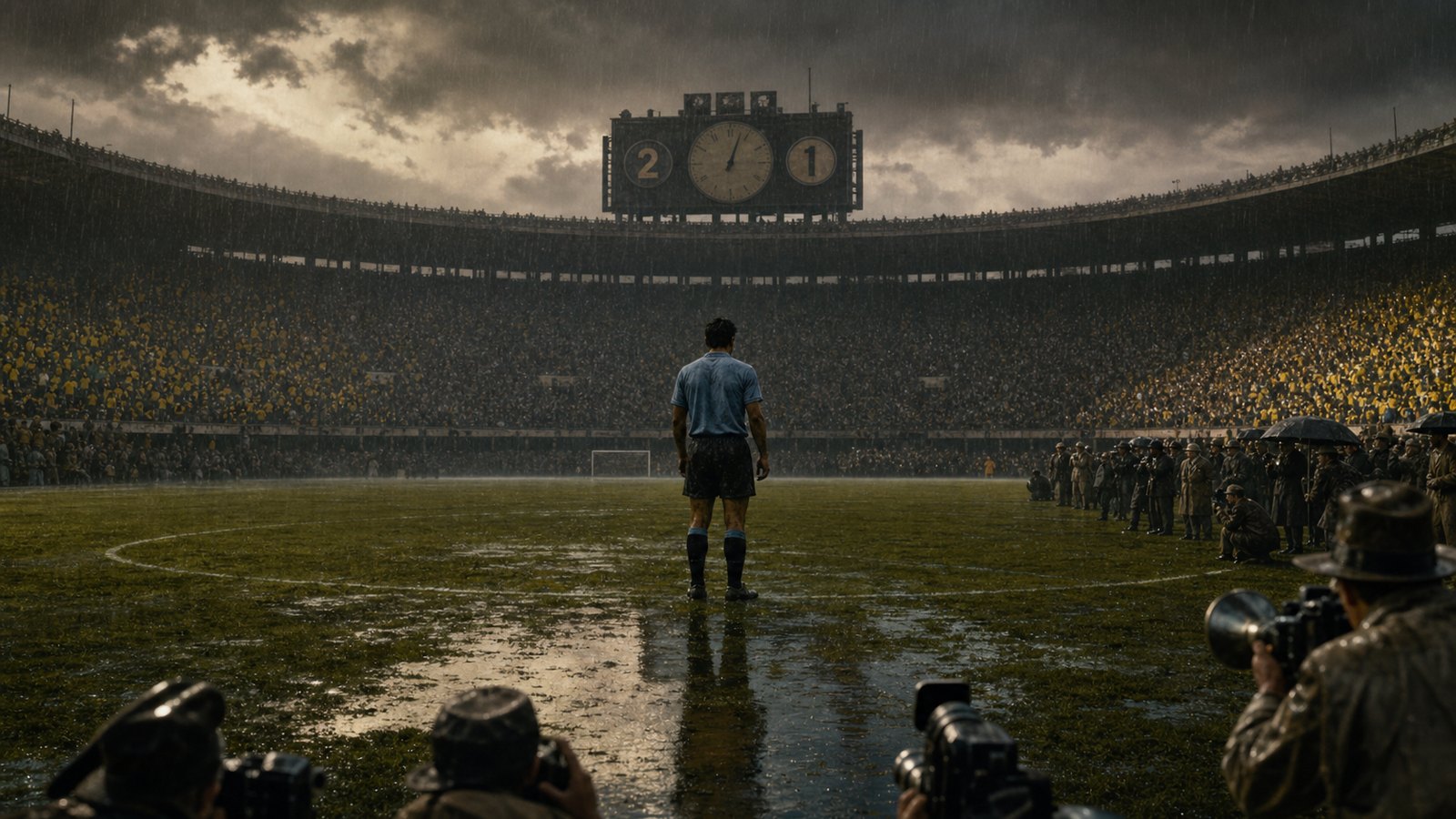
A Final Without the Usual Shape
The tournament structure matters because it changed the psychology of the day. Brazil had torn through the final group with heavy wins over Sweden and Spain, while Uruguay had drawn with Spain and beaten Sweden late. The table meant Brazil entered the last match with two useful outcomes and Uruguay with only one. That small mathematical fact turned the Maracanã into a trap. A team that only needs a draw can start protecting the future before it has actually arrived.
Brazil also carried the burden of spectacle. The stadium was not merely a venue; it was a statement made of concrete. Estimates of the attendance vary, but the official figure was enormous and the cultural memory is larger still: a packed bowl of white shirts, flags, radios, and expectation. Brazil were not just trying to win a match. They were asked to complete a national image in public.
Uruguay’s Refusal to Join the Ceremony
Uruguay’s great contribution was emotional discipline. They did not play as extras in Brazil’s pageant. Obdulio Varela, the captain, became the symbol of that refusal because he slowed moments down, argued, delayed restarts, and treated the crowd as a force to be managed rather than obeyed. That kind of leadership is easy to romanticize, but the practical effect was real: it interrupted the rhythm of a match that Brazil wanted to turn into a procession.
Brazil scored early in the second half through Friaça, and that should have opened the celebration. Instead it gave Uruguay a clearer problem to solve. Juan Alberto Schiaffino equalized after a move that exploited space rather than the mood of the stadium. Suddenly Brazil were still champions on the table, but the game no longer felt ceremonial. The crowd had to think again, and thinking was dangerous.
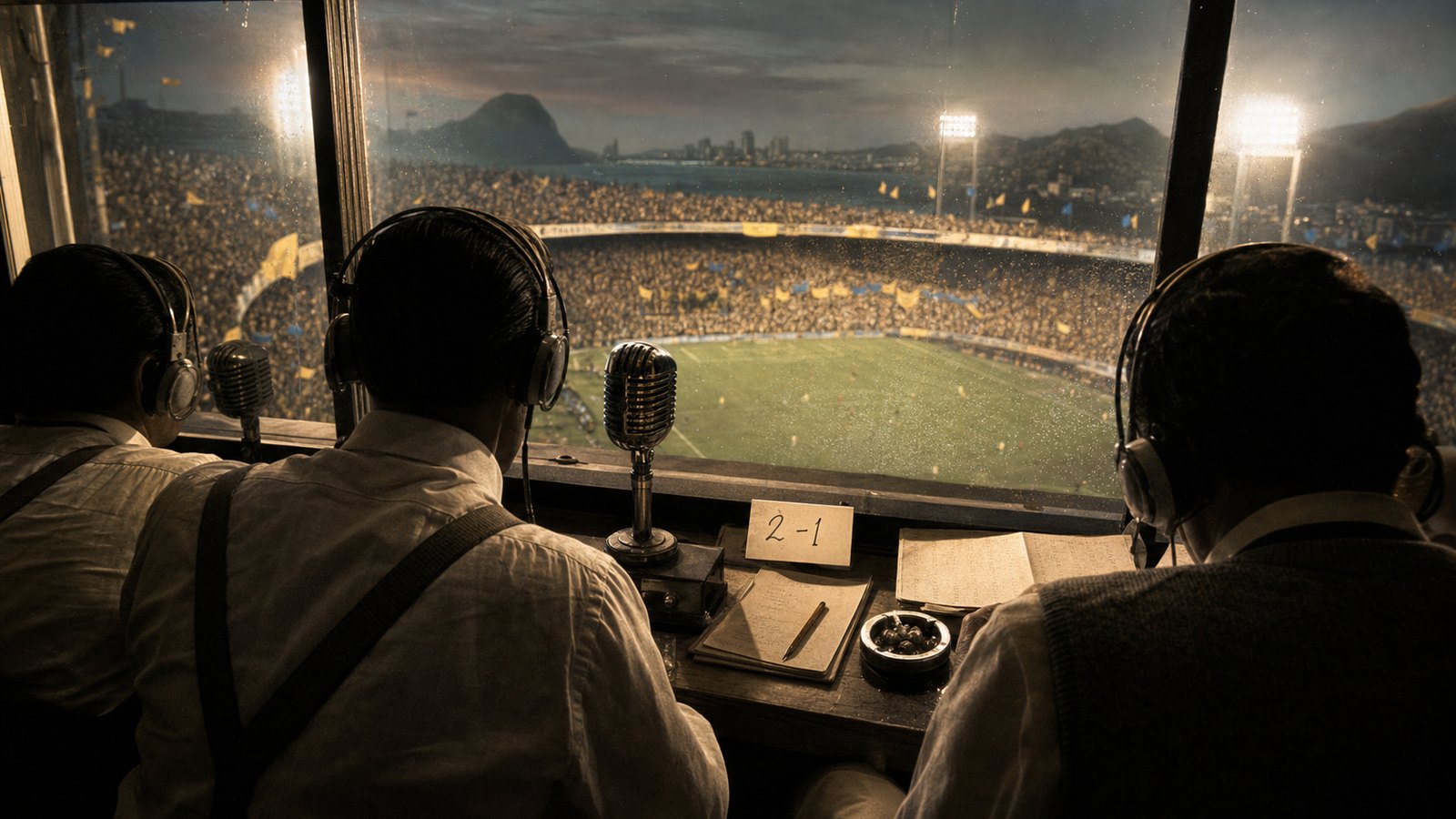
The Second Goal Changed the Air
Alcides Ghiggia’s winner is remembered because it looked almost too simple for the damage it caused. He drove down the right, threatened the cross, and beat goalkeeper Barbosa at the near side. One action collapsed a national assumption. Brazil still had time, but Uruguay had made the match feel smaller and more controllable. The silence after the goal became part of the event because it revealed how much emotional debt had been built before kickoff.
The goal also shows why football shocks often come from repeated choices rather than isolated magic. Uruguay had kept enough structure to still attack late. Brazil, pulled between chasing and fearing, left the one corridor that could change everything. The play did not need a miraculous dribble or a thirty-yard strike. It needed a defender half a step late, a goalkeeper leaning toward the expected cross, and a forward brave enough to choose the narrow answer.
Why the Defeat Outlived the Tournament
The aftermath attached itself to shirts, goalkeepers, and national style debates for decades. Barbosa carried a cruel burden in Brazilian memory, far beyond what any single player deserved. Brazil later changed from white shirts to yellow, a decision often linked in popular memory to the desire for a new visual identity after 1950. Whether treated as symbolism or reinvention, the important point is that the defeat became more than a result.
Uruguay’s win also complicates the lazy idea that underdogs survive only by luck. They were two-time Olympic champions before the World Cup era, winners in 1930, and a football culture with its own authority. The Maracanazo became myth because of Brazil’s stage, but Uruguay arrived with history, competitive nerve, and a captain who understood that a crowd can be made uncertain if the match refuses to confirm it.
The Mechanism Behind the Myth
The lasting lesson is that pressure is not evenly distributed. Brazil had the better table position, the bigger crowd, and the more glamorous momentum, but those advantages became obligations. Uruguay needed clarity: survive, score, and make the favorite hear the clock. Once the game reached its final phase at 1-1, the draw that had protected Brazil began to haunt them because every attack carried the fear of one countering mistake.
The Maracanazo still feels modern because it is a study in how a match can turn public certainty into private panic. The stadium did not lose the ball, and the newspapers did not miss a tackle, but they shaped the emotional weather. Uruguay won by playing football inside that weather without accepting its forecast.
The noise before kickoff is part of the evidence. A draw was enough for Brazil, which meant every safe pass could feel like a step toward a party already planned. Uruguay had to resist not only Brazil’s forwards but the emotional assumption that the day belonged to someone else. That is why the equalizer mattered so much: it did not win the match, but it made the crowd negotiate with doubt.
Ghiggia’s run then did something more damaging than a spectacular goal might have done. It made the decisive moment look practical. The near-post finish suggested that the catastrophe had entered through an ordinary football corridor, not through fate. For Brazil, that made the memory sharper. If the door had been so small, why had nobody closed it?
The story also explains why scapegoating Barbosa was so cruel. Goalkeepers become symbols because they are visible at the instant of damage, but Uruguay’s win was built from more than one save or one mistake. It came from table pressure, Varela’s control of tempo, Schiaffino’s equalizer, and a favorite trapped between protecting a draw and chasing relief.
The Maracanazo therefore survives because it is both huge and precise. It contains a giant stadium, a national shirt change in memory, and one right-sided attack. Football history often works that way: the larger the myth becomes, the more important the small mechanism is. Without the mechanism, the myth turns into weather.
The lasting lesson is not that Brazil were weak or Uruguay were lucky. It is that pressure can reverse advantages. A bigger crowd can become a witness box. A useful draw can become a source of hesitation. A coronation can become a match again, and once it becomes a match, the opponent still gets to play.
The closing point is practical rather than sentimental. This episode changed later football because coaches, directors, supporters, and players could reuse its lesson when a similar pressure appeared again. The names and shirts changed, but the mechanism remained visible enough to warn the next generation.
Sources
- FIFA World Cup archives
- Brian Glanville, The Story of the World Cup
- Jonathan Wilson, Inverting the Pyramid
- Uruguayan Football Association historical materials