
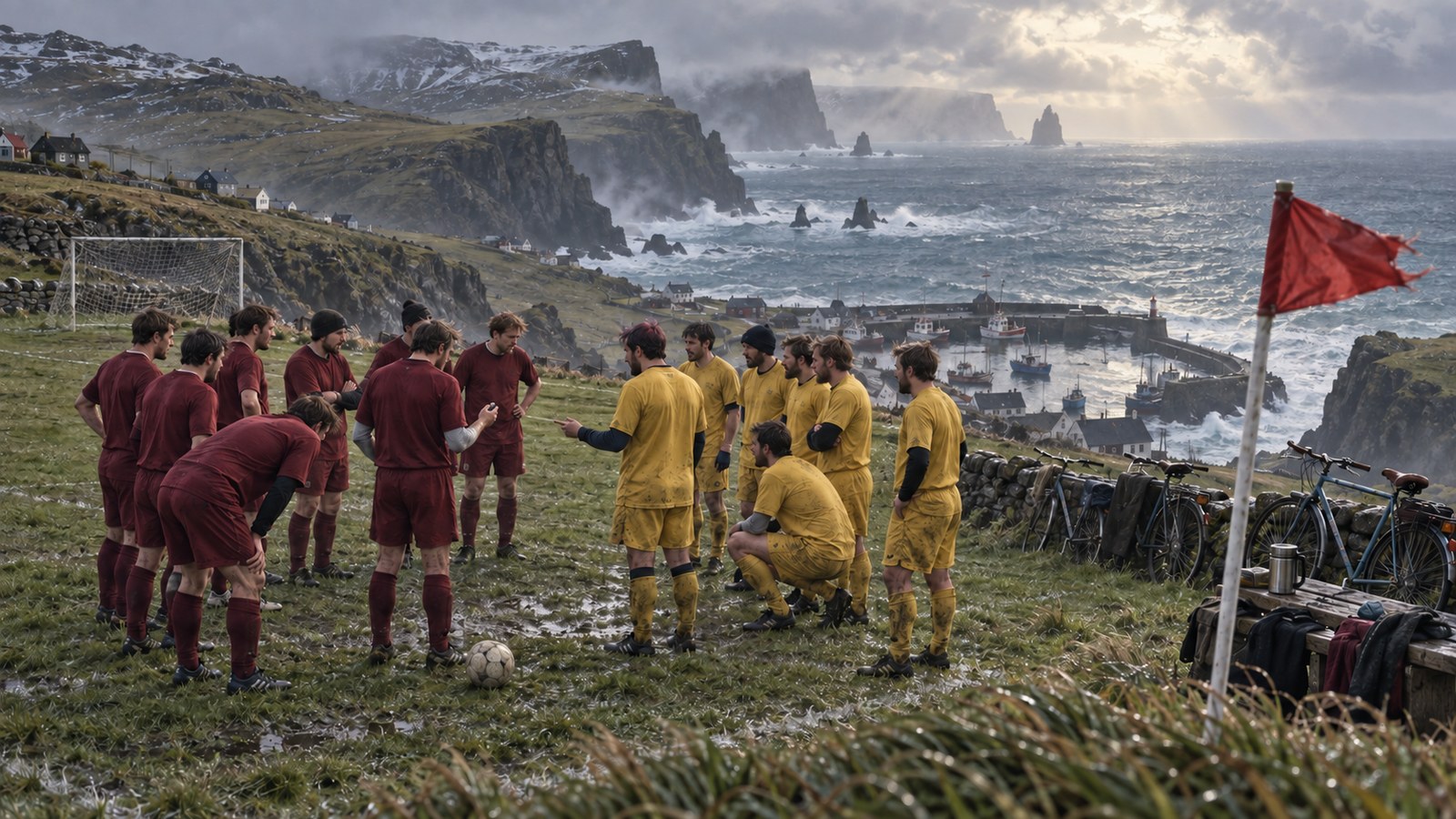
On a Sunday morning in November 2006, the nets were ready at Garrison Field but the teams were not. A south-westerly wind snapped at the corner flags while secretary and referee Howard Cole watched a handful of players become two line-ups. They arrived by bicycle, moped, on foot and by boat. Two boys who had come to watch were pulled into the game. A crowd of nine, including two sleeping nine-month-old twins, eventually saw twelve goals and a 6–6 draw.
This was not a cup tie assembled in an emergency. It was the opening of another season in the Isles of Scilly Football League, where Garrison Gunners and Woolpack Wanderers are the entire membership. The obvious question is how two teams can keep meeting without exhausting the contest. The more revealing answer begins before the first kick: each autumn, the islands divide the players again.
Two Captains Rebuild the Rivalry From One Pool
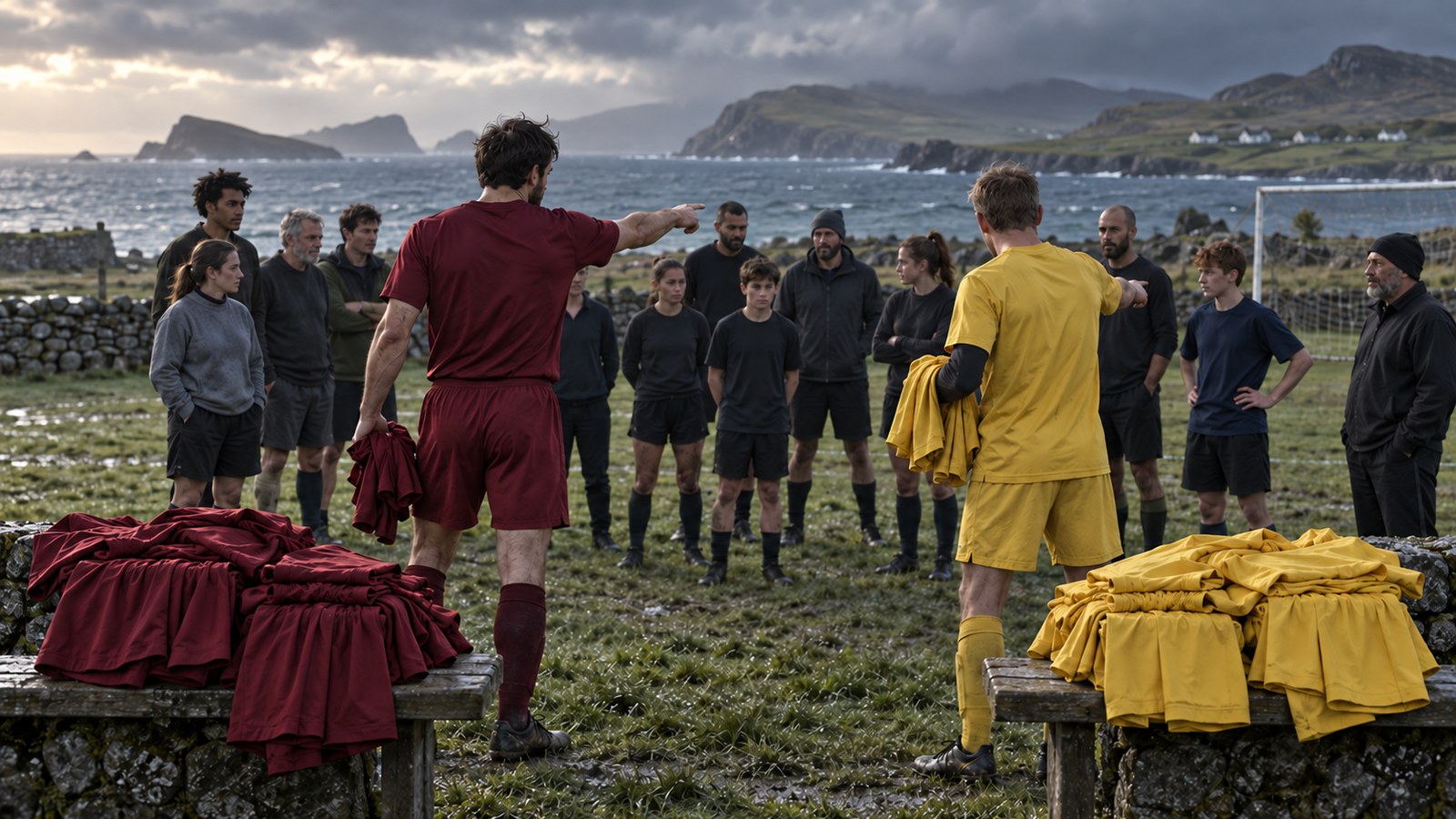
The Gunners and Wanderers have names and colours, but their squads are not permanent tribes. At the start of a season, two captains choose from the available players in alternating picks. The order is kept secret so nobody learns he was selected last. On islands with only about 2,100 residents, competitive balance and neighbourly tact are parts of the same job.
Most players therefore change allegiance over time. Andy Hicks could win a league-and-cup treble with Garrison, then later help Woolpack take a title. The shirts create a contest for the winter, but the draft prevents either one from owning a fixed social faction.
That annual redistribution is the league’s most important rule. Repetition becomes bearable because partnerships move, captains make fresh judgements and a familiar opponent may become next season’s teammate. Players still know one another’s preferred foot, favourite turn and weaknesses. The challenge is to use that knowledge within a new arrangement rather than pretend every Sunday begins with strangers.
Eighteen Meetings Create Intimacy, Not Indifference
Recent seasons have scheduled as many as 18 league games between the same opponents. Two cups add two-legged ties, and a Charity Shield-style fixture opens the calendar. Reports have also listed 13, 16 or 17 league meetings, but the rhythm is stable. From October until Easter, weather permitting, Sunday morning returns both teams to Garrison Field.
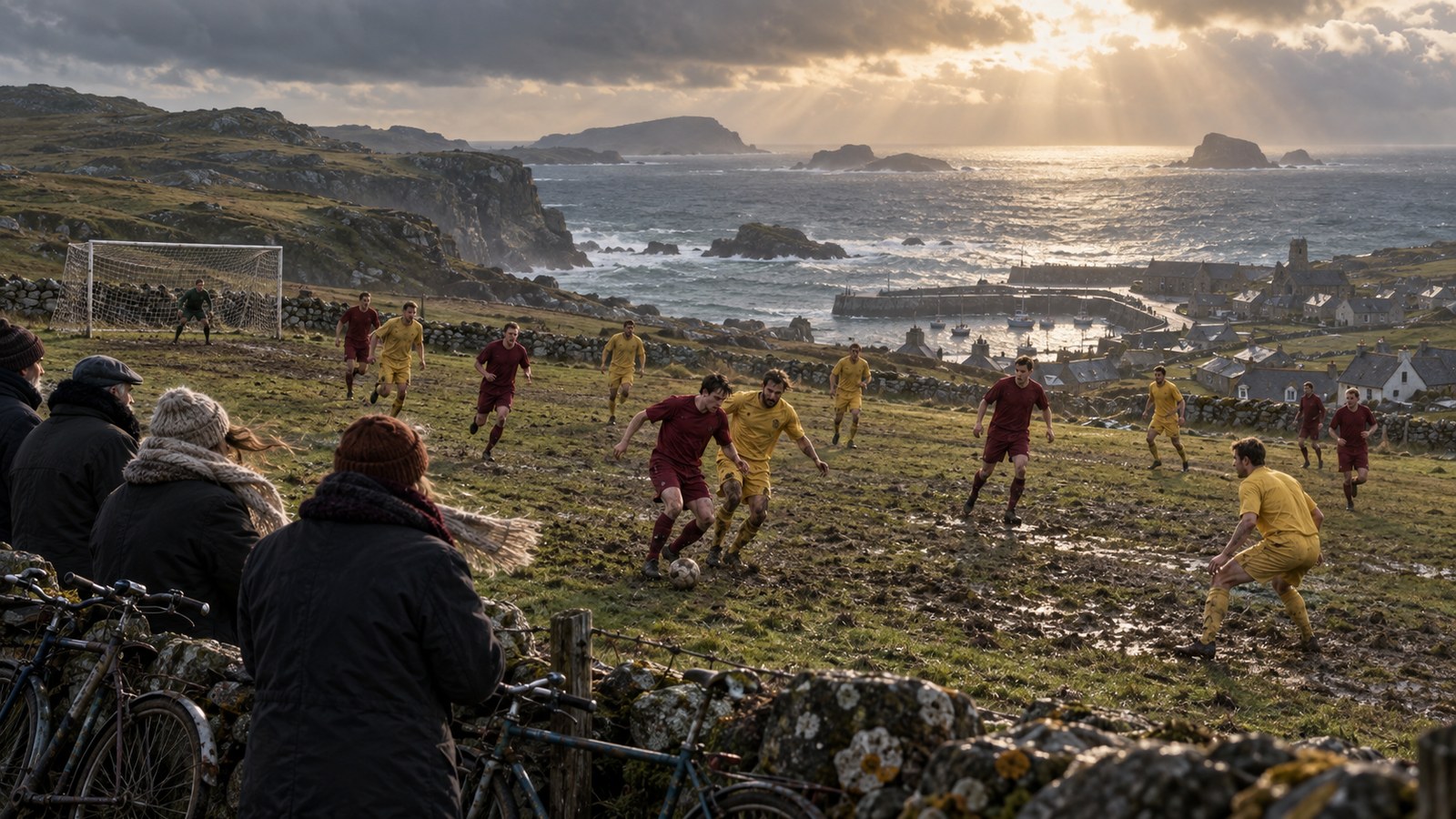
The familiarity changes how football is played. A winger cannot expect the same feint to remain a surprise. A goalkeeper has seen a striker’s preferred finish. The match becomes a long conversation conducted across a season, with adjustments visible because there is no new opponent to hide them. A run of two or three victories can reverse when work, injury or travel removes one influential player.
There is needle. Players have described hard tackles, yellow cards and occasional confrontation. Yet the island is too small for theatrical hatred to survive the afternoon. Opponents meet again as customers, colleagues and neighbours. After matches, they have traditionally walked down to the Scillonian Club for beer and chips, discussing what happened and what the next rematch might require.
This is supporter culture at its most compressed. Unlike Dortmund’s 24,454-place terrace, Scilly does not manufacture identity through scale. Its continuity rests on recognition. The spectators know why a player arrived late, which shift he has just finished and whether he may be called away before full-time.
A Phone Call Can Change the Scoreline
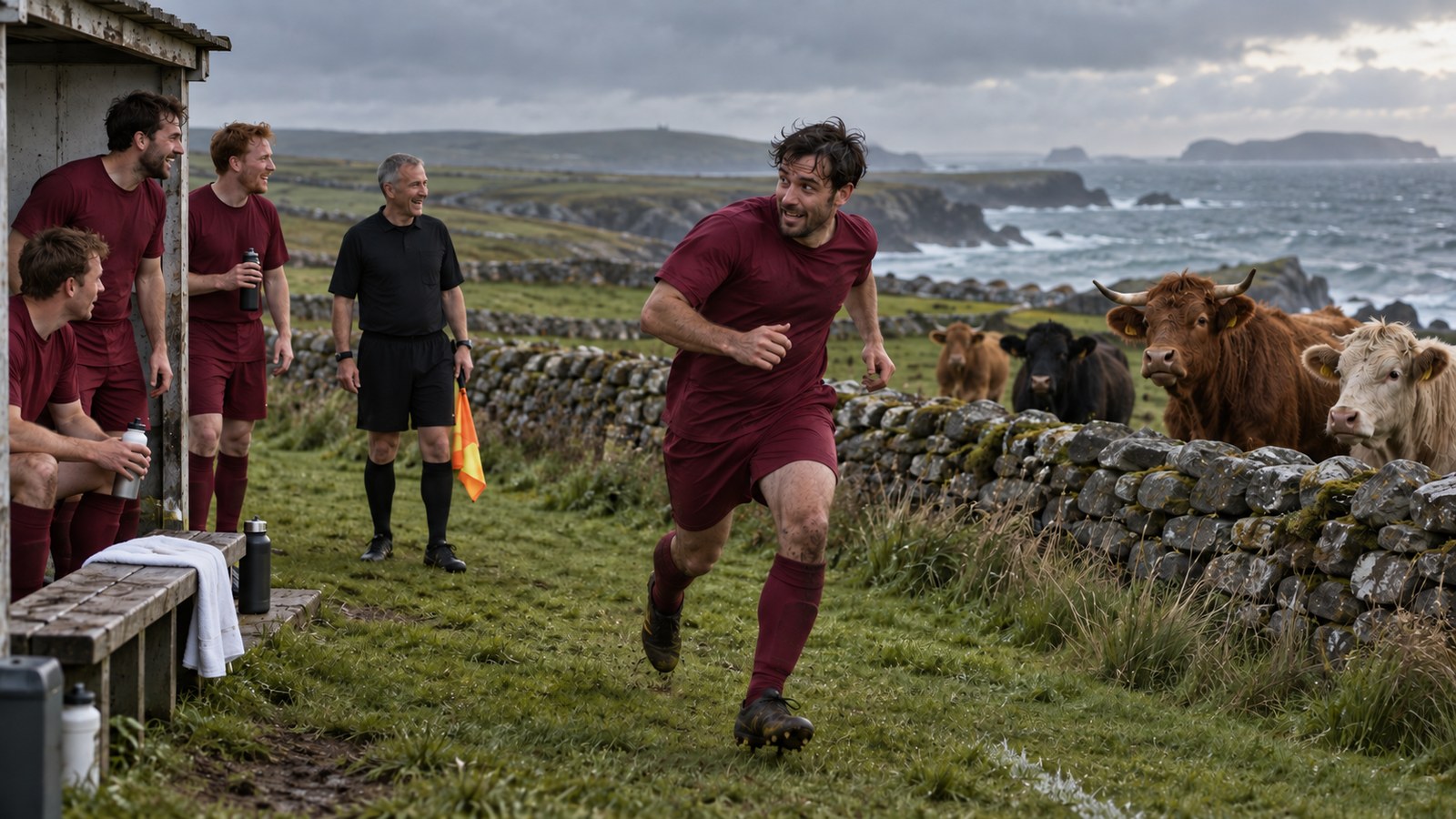
Dave “Chuffer” Mumford was playing one day when his phone began ringing at half-time. The farmer was told that his cows had escaped. His team led 2–0, but he left the ground to deal with the report. Reduced to ten players, they lost 3–2. The wandering animals, it emerged, were not even his.
The story is funny because the interruption is so local, but it exposes the competition’s operating conditions. Police officers and firefighters sometimes play while on call. A summons can remove a midfielder as decisively as a red card. One-game loans between Gunners and Wanderers help equalise numbers, and fixtures have occasionally been postponed when too few people were available.
Availability shapes tactics and results. Captains must estimate who will remain through winter, who works Sundays and who can cover several positions. One prominent pick expected to stay all season, then accepted a job in the Swiss Alps. A balanced draft immediately became uneven.
The league survives by valuing a playable match above strict separation. Lending an opponent a footballer would look absurd in a larger competition. In Scilly it protects the thing both sides need: another Sunday. The principle resembles the collective labour behind Union Berlin supporters rebuilding their stadium, though the scale is smaller and the work is repeated weekly.
The Missing Sixteen-Year-Olds Explain the Fragility
The league once had four teams. By the 1950s, only two remained. Geography is part of the explanation, but age and housing matter more. The islands have no further-education provision after 16, so young residents leave for the mainland just when they might enter senior football. Limited year-round work and expensive housing make an early return difficult.
Between 2011 and 2021, the population fell by 6.8%, while the median age rose from 46 to 50. Football feels those numbers directly. In lean periods the competition has dropped to eight-a-side games. Older players extend their careers; one former resident has appeared into his seventies. Anyone of playing age who settles on Scilly is likely to be asked whether he wants a game.
The annual draft cannot create people; it can only distribute those present fairly. The record depends on enough bodies reaching one field through a winter, not simply on two club names existing on paper.
Other fixtures widen the circle. Veterans play an under-30s side on Boxing Day. Touring teams cross from the mainland. A combined island team offers a different shirt and unfamiliar opposition. These matches add variety, but the weekly Gunners-Wanderers game remains the basic structure that local football can reliably support.
Global Attention Arrived on a Very Small Field
Guinness World Records formally recognised the Isles of Scilly competition as the smallest affiliated football league in 2016. That label had circulated much earlier, drawing reporters to Garrison Field and giving a modest winter routine an international audience. The contrast was irresistible: football’s global reach reduced to two teams, one pitch and a draft.
In 2008, Adidas built part of its Dream Big campaign around the islands. David Beckham, Steven Gerrard, Patrick Vieira, Michael Ballack and other international stars visited. Anthony Gibbons, one of the local players, even stood in for Beckham when the production needed a final distant shot after press attention helped cut the visit short.
The celebrity day briefly placed famous footballers inside a competition maintained by airport workers, farmers, boat builders and emergency responders. The visitors left; the Sunday cycle continued. Its useful legacy was visibility for the islands rather than a new level of football.
The Lyonesse Trophy, played for against mainland visitors, measures barely a centimetre. A replica entered the FIFA Museum in Zurich. Winners have reportedly tried to pour beer into it.
The Draft Keeps Sunday Possible
A conventional rivalry preserves difference. Scilly’s league periodically softens it. The two names remain, but the people beneath them are rearranged. Last season’s opponent becomes this season’s support. The contest is renewed without asking a tiny population to split permanently in half.
That does not make results meaningless. Players remember titles, cup wins and goals. The 6–6 opener in 2006 mattered to those chasing the ball through Atlantic wind, just as a 3–2 defeat mattered to the side that lost its farmer at half-time. Competition remains real because cooperation builds the conditions for it rather than replacing it.
The world-record label focuses on what the league lacks: no third team, no away ground and little mystery about the next opponent. Its deeper achievement is organisational. Captains draft quietly, players accept loans across the divide, veterans continue and Sunday’s opponents share the post-match table.
Gunners and Wanderers do not escape repetition. They design around it. Every season starts by asking the island who is available, then dividing that answer as fairly as possible. Two teams are enough only because the community keeps rebuilding both of them.
Sources
BBC Sport; The Guardian; Guinness World Records.