
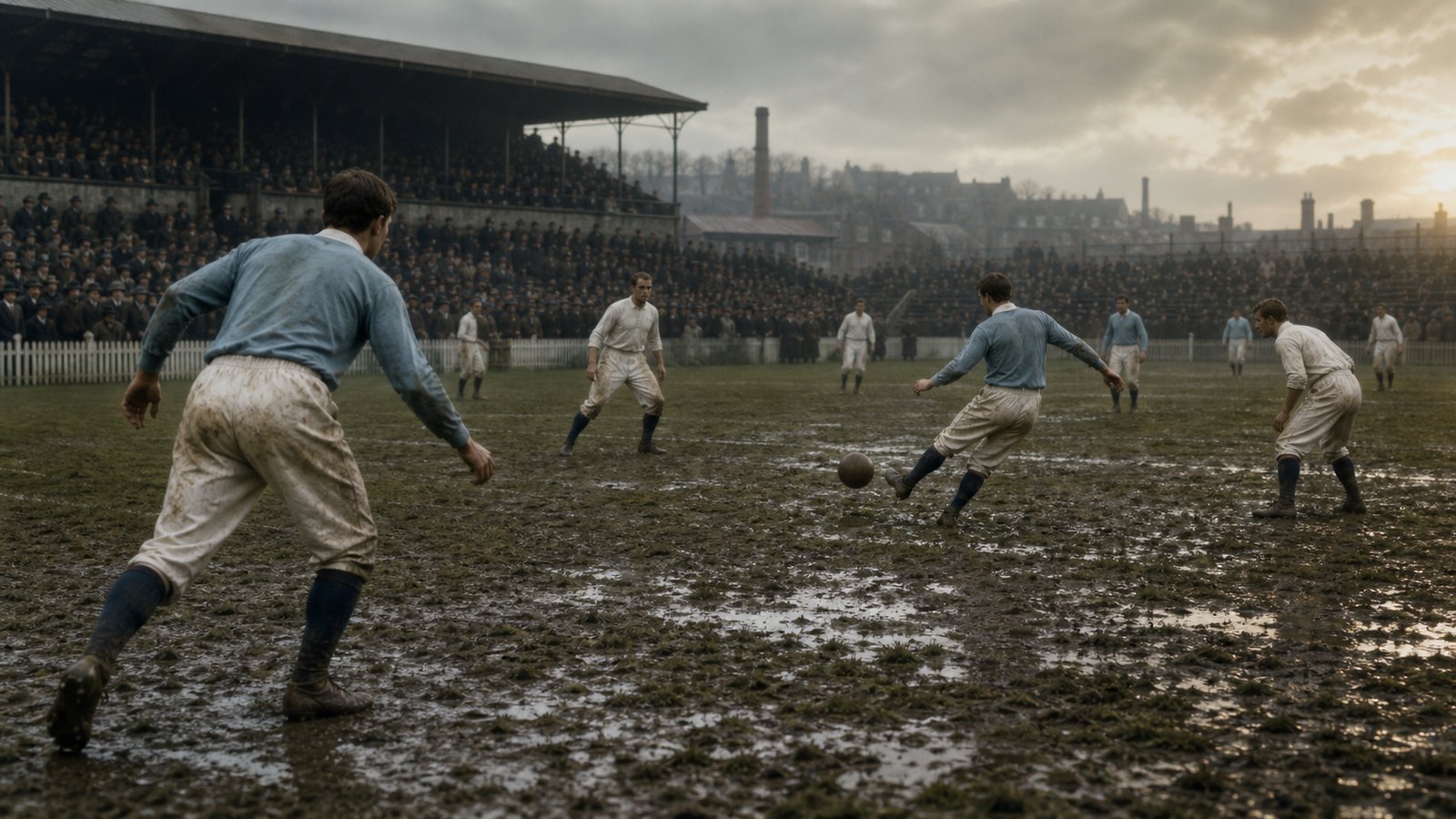
Blackburn Olympic’s route to the 1883 FA Cup final included an idea that sounded almost extravagant: leave town and prepare for the match. Jack Hunter took the players to Blackpool for several days of special training before they faced Old Etonians at Kennington Oval. The journey did not supply a magical trick. It gave a working team time to sharpen its stamina, passing and shared decisions. When the final moved into extra time, those preparations became visible in the spaces between players.
A Young Blackburn Club Chose Work Before Reputation
Olympic was only five years old. The club had been formed in February 1878 when two local sides, Black Star and James Street, merged in a town already crowded with football teams. Blackburn Rovers was the better-known neighbour, while Olympic’s early home became the Hole-i’-th’-Wall ground, named after the nearby public house. Its light blue shirts did not carry the history or social authority of the southern amateur clubs that had controlled the FA Cup.
The ascent was not immediate. Olympic entered the FA Cup in 1880 and lost its first tie 5–4 to Sheffield, then went out to Darwen in the opening round a season later. Local progress came first. At the end of 1881–82, Olympic beat Blackburn Rovers to win the East Lancashire Charity Cup. Those results gave Hunter a group that had already experienced both the speed of cup elimination and the confidence of beating its strongest neighbour.
The competition itself had been shaped by that southern world. Former public-school players and university men had established its early standards, and Old Etonians arrived in 1883 as holders. The Guardian’s history of the cup notes that teams from the south had dominated its first 12 years. Olympic represented a different football geography: the industrial north, where the game had spread through dense towns and workplaces rather than old-school networks.
There was investment behind the ascent. The club’s historical record names local iron-foundry owner Sydney Yates as a financial backer, while the final preparation was organized by Hunter, a former England player who combined playing and coaching duties. Modern job titles fit the period awkwardly; the important detail is practical. Hunter was responsible for training, and he treated the final as something that could be prepared for rather than merely entered.
The Blackpool Trip Created a Rare Block of Preparation
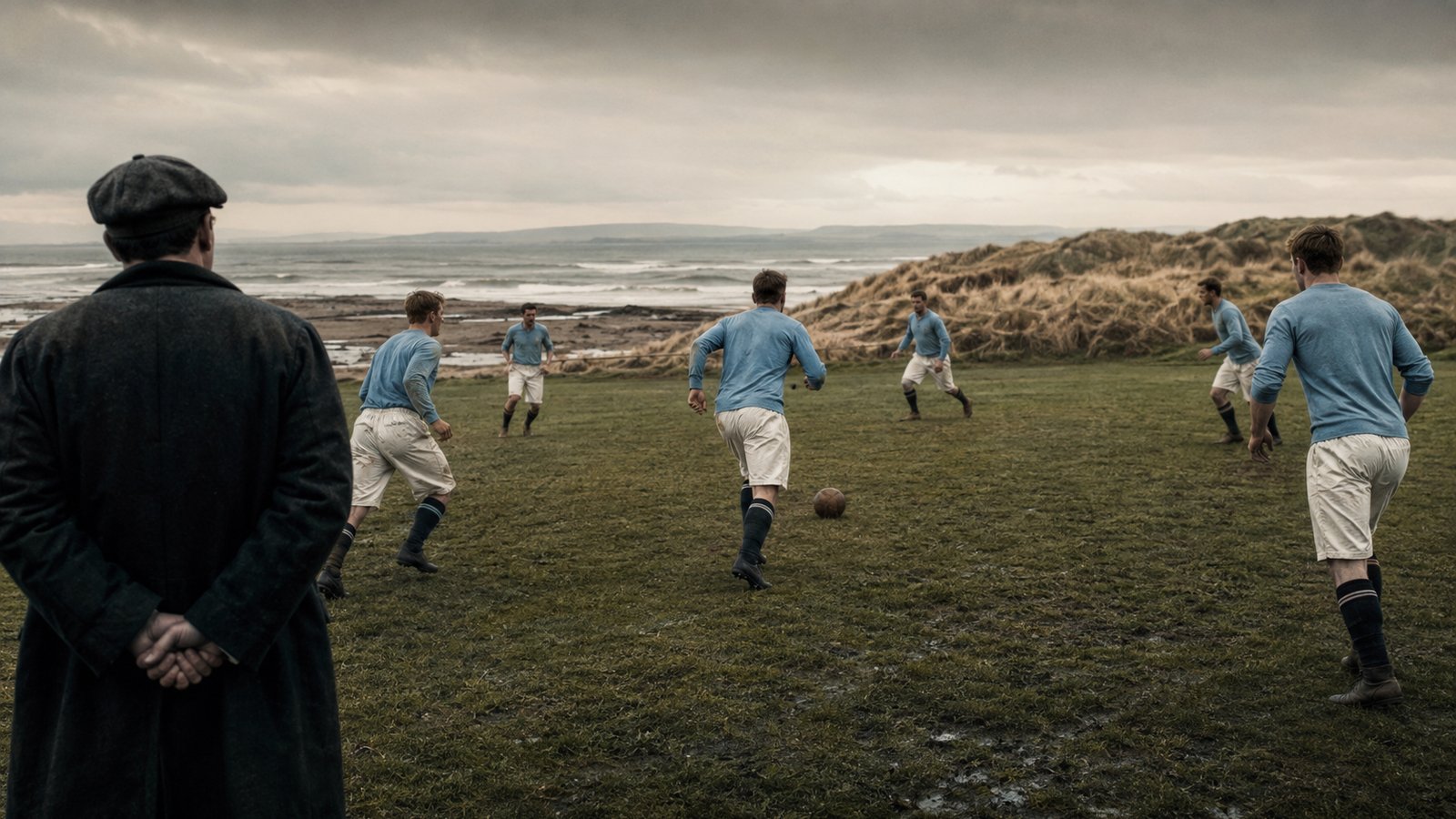
Hunter took Olympic to Blackpool for several days before the final. The club history describes the trip as an unprecedented and novel undertaking. The Guardian adds that a local businessman paid for the players to prepare there. At a time before modern training grounds, analysts and recovery departments, simply gathering a team away from its usual routines changed what preparation could mean.
The seaside location matters less than the uninterrupted time. Olympic could rehearse how one player’s movement created another player’s pass, how quickly the ball should leave a crowded area and how the side would respond after losing it. FourFourTwo’s account, drawing on histories of tactics, describes Lancashire football as an alternation of long passing and vigorous rushes. This was not a modern possession drill transported into the 1880s. It was an early collective method for moving opponents and attacking the next open channel.
FourFourTwo describes the side as an eleven of cotton weavers and plumbers. Occupation did not automatically produce a tactic, but Olympic’s football depended on coordination: the receiver, passer and supporting runner had to move as parts of one task.
Physical work belonged to the same plan. The final could last beyond 90 minutes, and substitutions were not available to rescue tired legs or replace an injured player. Training therefore connected technique to endurance. A pass across the pitch only helped if somebody could still run onto it. A defensive recovery only held if teammates remained close enough to act together.
Old Etonians Met a Different Way of Moving the Ball
The contrast at Kennington Oval was larger than a simple north-versus-south slogan. Old Etonians came from a tradition that valued individual dribbling and direct personal contests. Olympic’s players looked for teammates beyond the nearest challenge. FourFourTwo describes long, sweeping passes from wing to wing and presents the final as a moment when a predominantly passing approach overtook the older dribbling game.
That difference altered the labour of defending. Following one carrier was not enough when the ball could travel to a teammate in a less crowded area. The Etonians had to turn, spread and run again. Olympic could use distance without separating into isolated attackers because the next movement had been anticipated. Their football was collective not because every pass was short, but because each long action depended on somebody else recognizing where it would arrive.
The period language should not be mistaken for a fully formed modern tactical system. Formations, offside rules and pitch conditions were different. Yet the mechanism is familiar. Moving the ball can make an opponent spend energy more quickly than moving the body alone. Olympic had prepared to repeat that exchange deep into the afternoon.
That distinction also keeps the story away from a comforting myth in which one match invents passing. Scottish teams and other northern clubs had already developed collective combinations. Olympic’s achievement was narrower and more visible: it carried that approach into the most prestigious English final, against the holders, and attached the argument to a result nobody could ignore. The cup provided a public test for an idea already developing across the game.
The Final Needed More Than Ninety Minutes
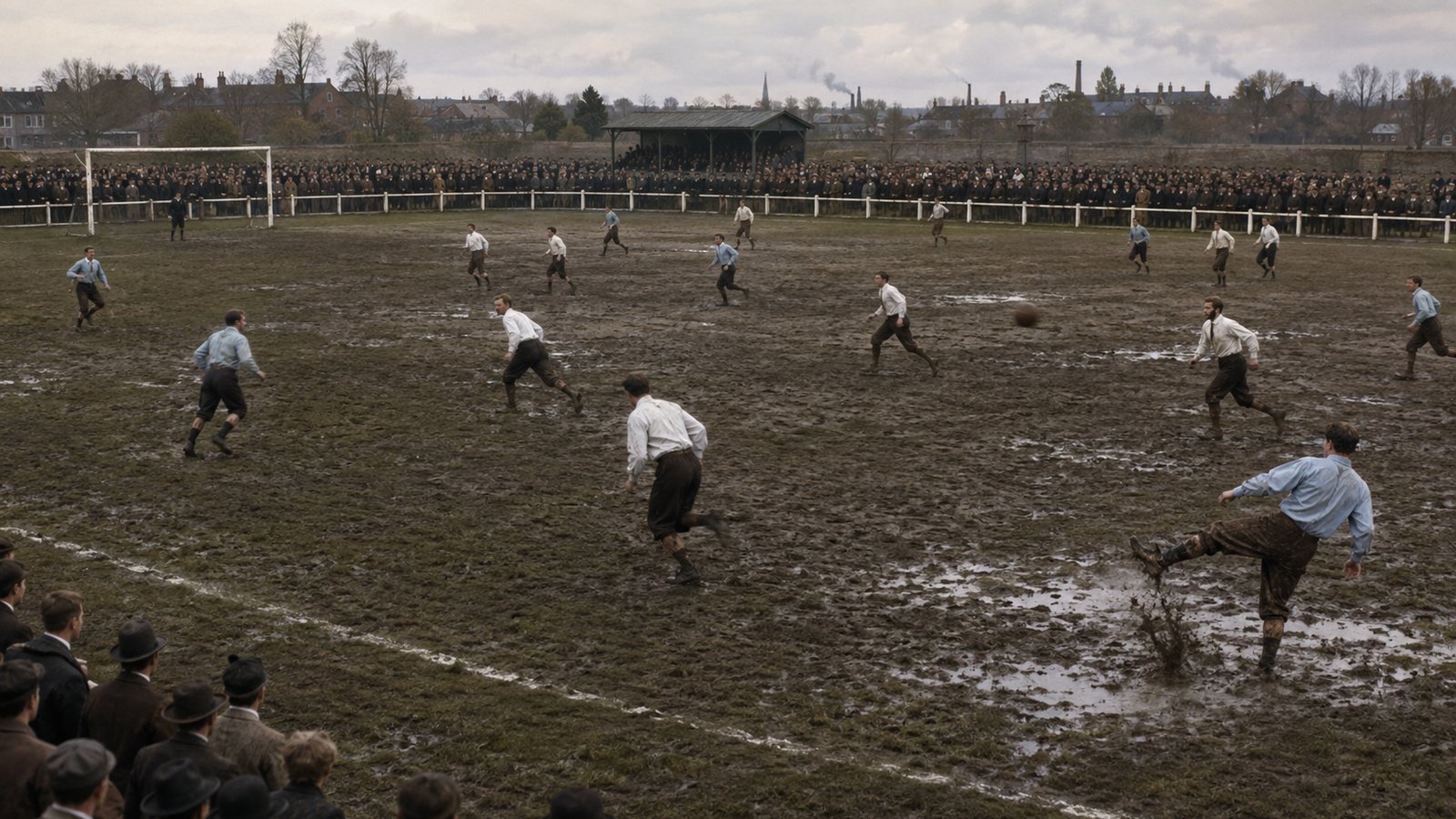
Old Etonians struck first through Harry Goodhart in the opening half. Alfred Matthews equalised for Olympic after the interval. The match then changed shape when Arthur Dunn was injured and had to leave, reducing the holders to ten men. With the score level after 90 minutes, the captains asked to continue and the referee allowed the extra period permitted by the cup regulations.
This is where the Blackpool work gains a datable scene. Olympic had not overwhelmed the holders in the opening exchanges. They had absorbed a deficit, found an equaliser and reached the part of the match where tiredness narrowed every choice. The Guardian records a 2–1 victory after extra time. The club account places the winner around 20 minutes into that period: John Yates supplied the pass, Jimmy Costley found room, and Costley beat goalkeeper John Rawlinson.
FourFourTwo describes the decisive movement as a ball from the right reaching Costley in space on the left. The goal therefore carried the tactical argument inside the result. Olympic did not merely survive until an individual chance appeared. The ball crossed the defensive picture, arrived where space had opened, and rewarded a runner who could still reach it late in the game.
The Cup Travelled North While Olympic Disappeared
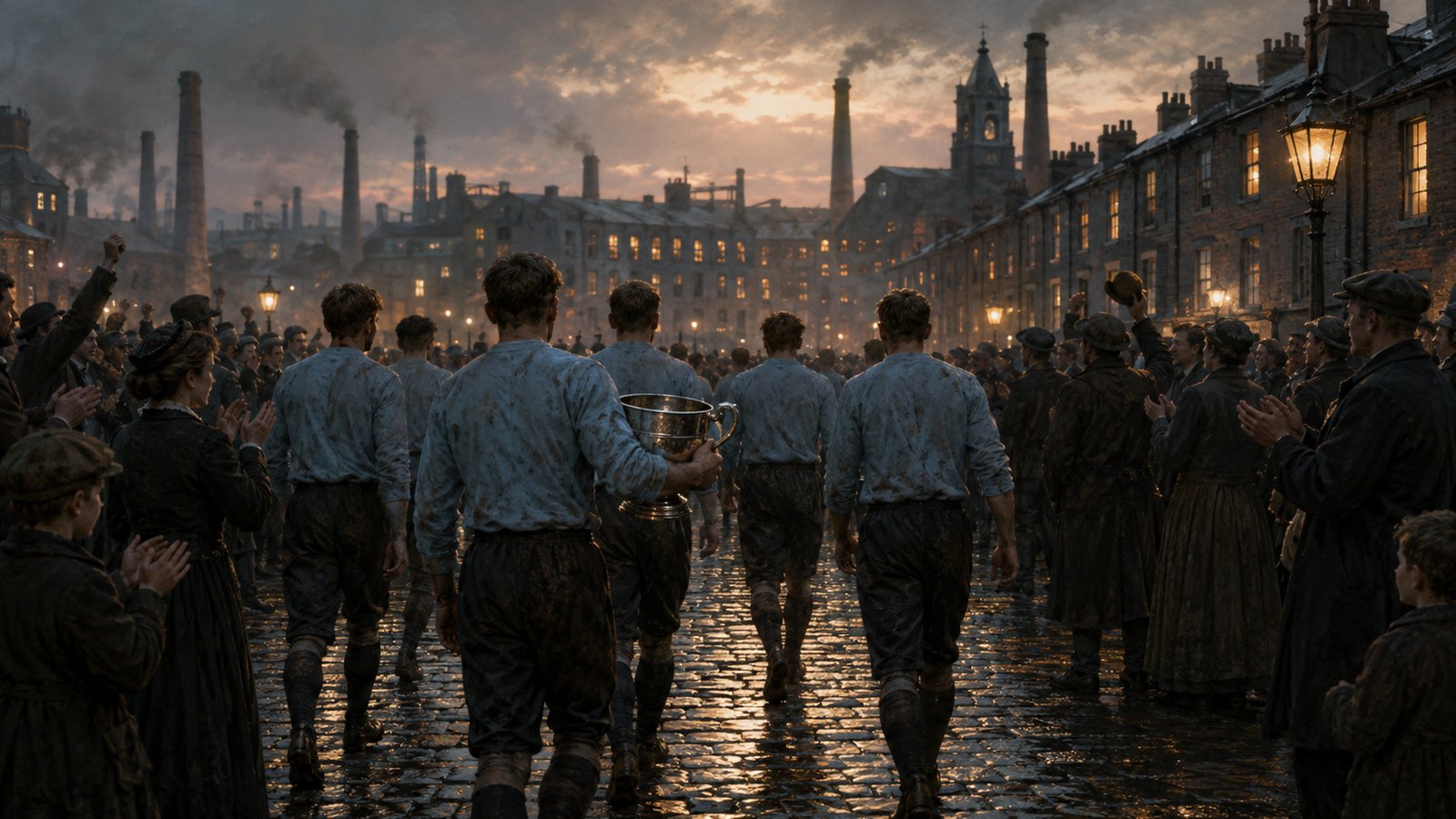
Olympic became the first northern club and the first working-class club to win the FA Cup. The team returned to street celebrations and a civic reception in Blackburn. Its captain, Albert Warburton, was reported as welcoming the trophy to Lancashire and predicting that it would not return to London. The boast proved remarkably accurate: Blackburn Rovers won the next three finals from 1884 through 1886.
Professionalism was formally legalized in England in 1885, two years after Olympic’s victory. The final did not create that change by itself, but it exposed the competitive strength of prepared, backed and collectively organized northern clubs. A competition once associated with elite amateur networks now had to account for teams whose players and patrons were willing to treat football as sustained work.
The irony is that Olympic did not dominate the future it helped reveal. The club could not match wealthier and better-supported rivals as the professional era accelerated, and it folded in 1889. Its institutional life lasted barely more than a decade. That brevity makes the Blackpool camp more striking, not less. Olympic’s enduring contribution was a sequence: prepare together, move the ball into space, keep running beyond 90 minutes, and carry the cup home.
Even the victorious eleven shows how quickly football memory can narrow. Thomas Hacking kept goal; James Ward and captain Albert Warburton played behind a line that included Hunter; Matthews, Costley and Yates supplied names from the scoring sequence. Olympic vanished while the larger transformation continued. The surviving match is therefore not a monument to an inevitable giant. It is evidence that a small club briefly aligned backing, coaching, fitness and a way of using the whole width of the field.
Sources
The Guardian’s history of the FA Cup; FourFourTwo’s account of Blackburn Olympic and the 1883 final; Wikipedia’s Blackburn Olympic club history and 1883 FA Cup final overview.