
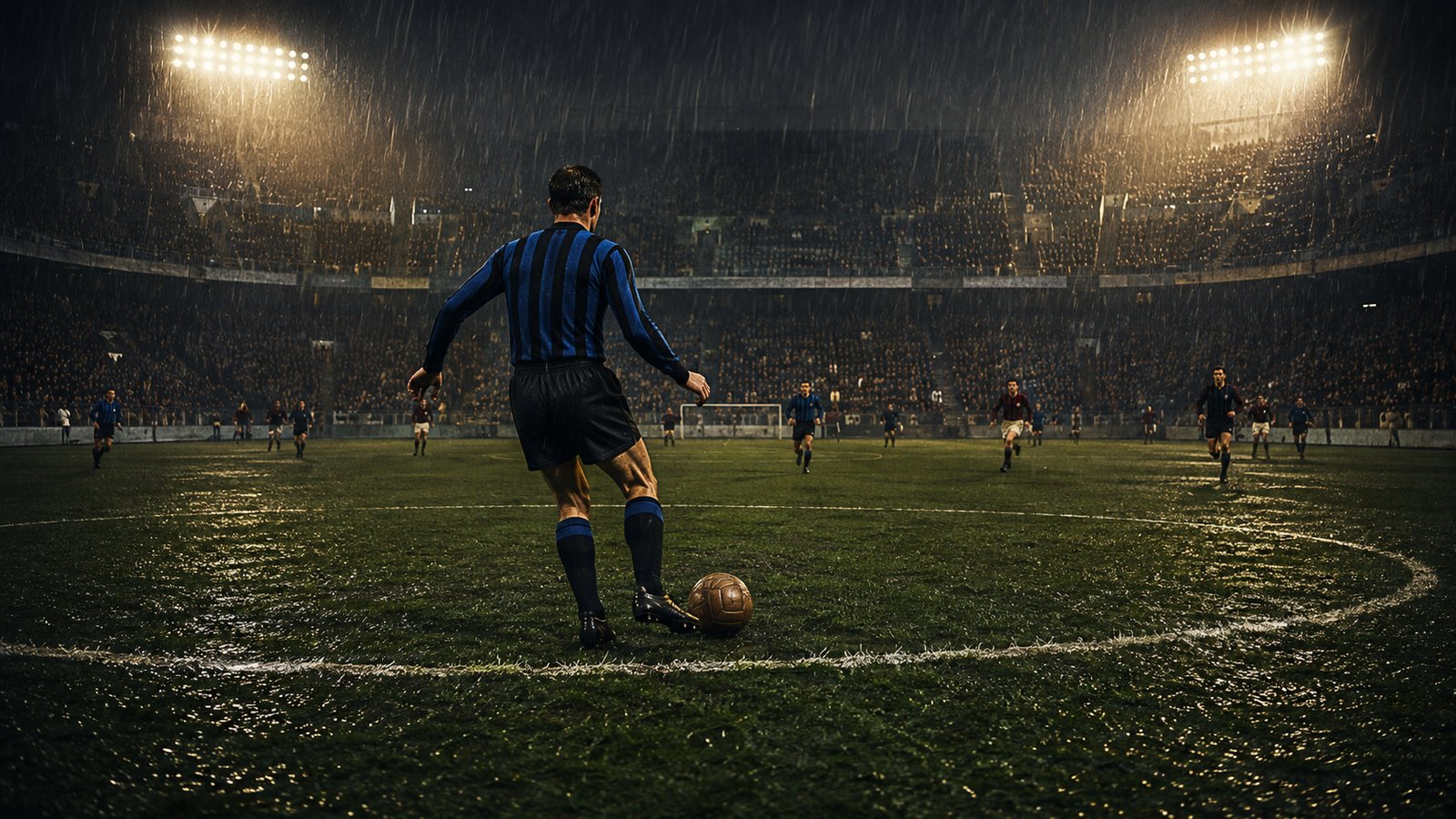
In the summer of 1961, Barcelona did something that looked impossible only months earlier: they sold the reigning Ballon d’Or winner. Luis Suárez Miramontes had been the elegant centre of their best football, a Galician creator whose first touch seemed to buy time for everyone around him. Yet the club needed money, Internazionale wanted a conductor, and Helenio Herrera knew exactly which player could carry his ideas from Spain to Italy. The fee made headlines. What Inter purchased was more consequential than celebrity: a way to begin attacks with accuracy before opponents could settle.
Barcelona Sold the Player Who Read the Match First
Suárez had arrived at Barcelona from Deportivo La Coruña in 1954, still a teenager from A Coruña who had once worked as an apprentice electrician. The Guardian’s obituary records that he had answered a newspaper advertisement seeking players before Deportivo brought him into senior football. Barcelona then saw the rare combination: an inside-forward who could glide past a challenge, strike from distance and, above all, recognize the next pass before the space was obvious.
FC Barcelona’s own record gives the scale of his seven years in Catalonia: 253 appearances, 141 goals, two league titles, two Spanish Cups and two Inter-Cities Fairs Cups. He won the Ballon d’Or in 1960. He was not a decorative luxury in a successful side; he was one of the people through whom its rhythm travelled. The nickname El Arquitecto suited him because his most valuable work was structural. He joined moments that otherwise remained separate.
The final season also left an unfinished image. Barcelona reached the 1961 European Cup final in Bern and lost 3–2 to Benfica. Suárez had already reached the summit of the individual game, but his club left Switzerland without the trophy that would define the next phase of his career. A few weeks later, the centre of Barcelona’s side was available.
His profile explains why a record buyer could imagine several uses for him. The Guardian describes an elusive body swerve, a powerful right foot and more than 100 career goals, yet stresses that he was more creator than marksman. Across a career of more than 400 Spanish and Italian league appearances, the repeated quality was availability: he could receive in traffic, move beyond it and still see the runner outside the frame. Inter was not trying to repair a one-dimensional player. It was choosing which of his dimensions should govern the side.
Two Clubs Remember the Price in Different Currencies
The numbers describe the same transfer from different sides. Barcelona states that its economic crisis forced the sale to Inter for 25 million pesetas. The Guardian gives the British equivalent used in contemporary football discussion: a world-record £152,000. Inter’s remembrance says the proceeds were important enough to help Barcelona complete Camp Nou. Each version points to the same pressure. This was not a marginal squad adjustment. One club converted its finest player into urgently needed capital; the other paid a record to make him the intellectual centre of a new project.
Herrera made the route easier to understand. He had coached Suárez at Barcelona before moving to Inter, and Suárez followed in 1961. Angelo Moratti’s club was not buying from a scouting report alone. Its coach already knew how the player received the ball, how quickly he assessed danger and how much tactical responsibility he could carry. The relationship reduced one of transfer football’s largest risks: Inter did not have to discover what its record signing was after he arrived.
That familiarity also separates the move from a simple auction story. The fee mattered because it measured the ambition and the financial strain. The football mattered because Herrera had a specific vacancy in mind. Inter wanted control without requiring endless possession near the opposing penalty area. Suárez could provide it from farther back.
Herrera Moved the Architect Toward the Start of the Attack
Descriptions of Suárez resist one fixed label. The Guardian calls him a complete inside-forward and notes that at Inter he operated largely from inside-left, forming a strong understanding with the left-footed Mario Corso. Inter’s own tribute reaches for both regista and trequartista: organizer and advanced creator. The apparent contradiction is the point. He could begin a move from depth, arrive to continue it and still finish with the authority of a forward.
Picture the practical problem facing an opponent. If Suárez was pressed near Inter’s defenders, he could release Corso or a runner before the pressure closed. If he was left alone, he could carry the ball and choose a longer diagonal. If the defensive block retreated, his right foot threatened the goal. The same player connected recovery, escape and acceleration. Inter did not need every attack to start with a dribble or a crowded exchange; one measured pass could move the contest from one flank to the other.
This made the record fee visible in quiet actions. A first touch away from pressure did not appear in a goals column. A pass delivered early enough to let a teammate run forward rather than stop and wait did not always become an assist. But those details changed the speed and direction of the entire possession. Suárez gave a defensively formidable side a creative reference point who was comfortable with both patience and sudden distance.
The Trophies Show What the Transfer Unlocked
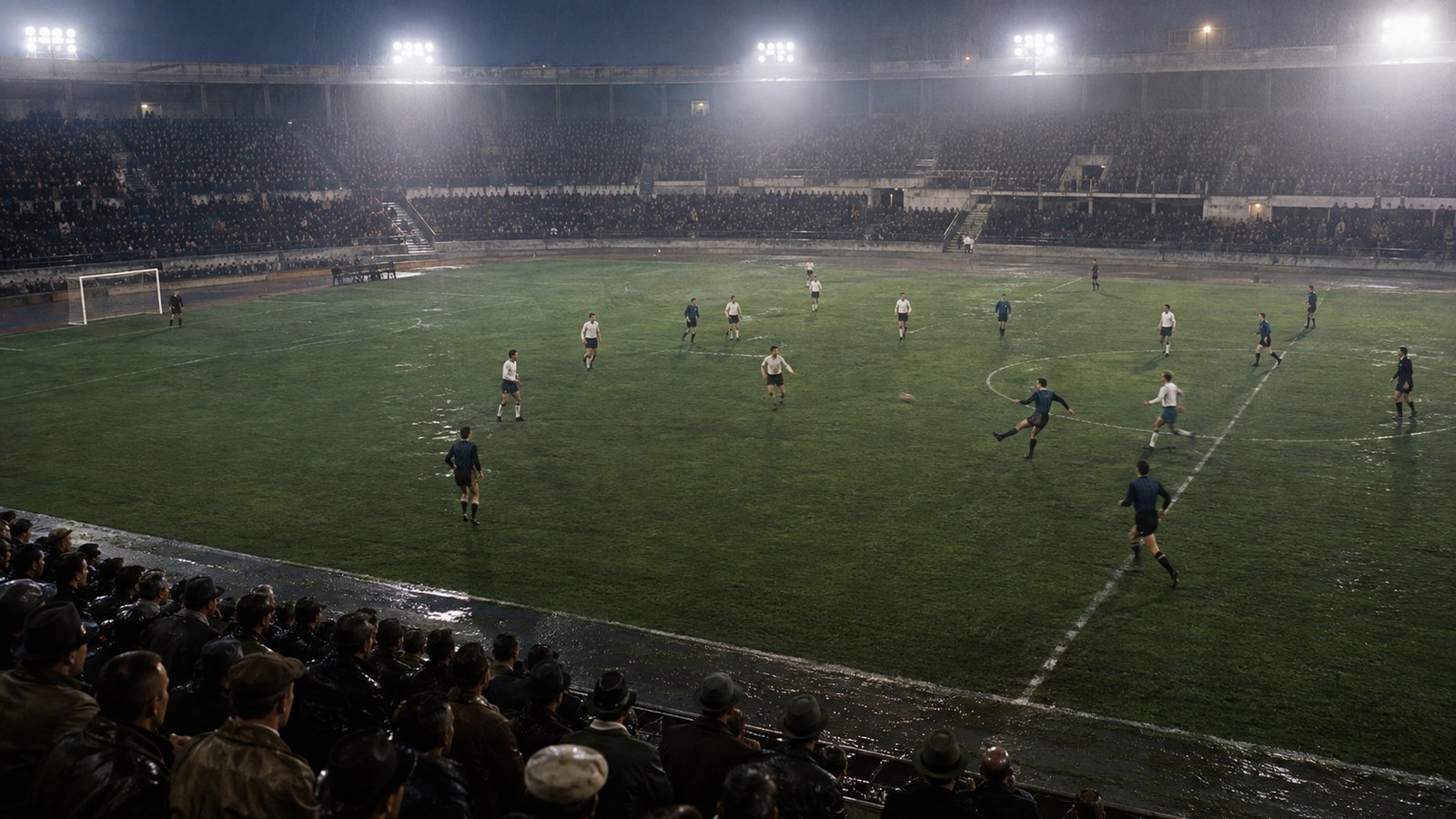
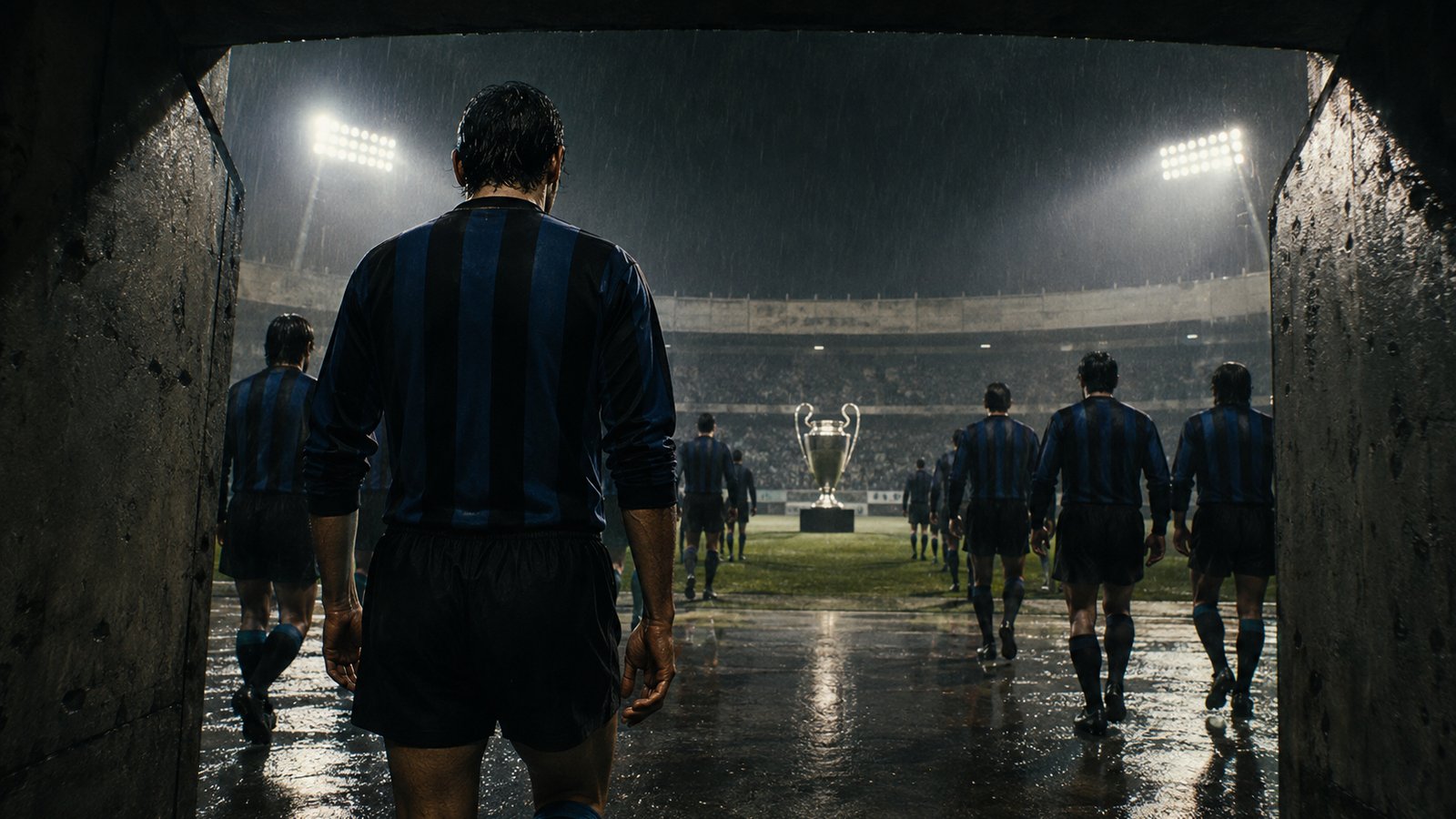
Inter’s rise in the following years gave the transaction its answer. Suárez became a key figure of the Grande Inter era, and the club won the European Cup in 1964 and 1965. The first of those finals, against Real Madrid in Vienna, placed Inter opposite a team identified with the previous European age. The second, against Benfica at San Siro, confirmed that the first victory had not been a single-night interruption.
Suárez’s contribution cannot be reduced to the stereotype that Herrera’s Inter merely defended and counterattacked. Their defensive organization was real, but organization with the ball mattered too. A deep block that wins possession still needs somebody to decide whether the next action should calm the match or open it. Suárez supplied that choice. His range allowed Inter to protect space without surrendering ambition.
The medals extended beyond club football. He had already helped Barcelona win twice in the Fairs Cup. With Spain, he was central to the side that won the 1964 European Championship, and Barcelona records 32 senior internationals between 1957 and 1972. Those achievements show continuity across different tactical environments. The skill being transferred was not one rehearsed club pattern. It was judgment: where to stand, when to hold the ball and when one pass could change the geometry.
There was steel as well as elegance. The Guardian’s account does not present him as a spotless artist and records a notorious incident in the 1964 European Cup semi-final against Borussia Dortmund. That matters because the polished nickname can soften the competitive figure. The player with slicked-back hair and exact distribution also operated in severe, physical matches where European ties could turn on intimidation and survival.
A Record Transfer Bought a New Starting Point
Transfer records usually invite an immediate question: was the player worth the money? Suárez’s move makes the better question tactical. Where would Inter place the thing they had bought? Barcelona had known him as a scoring creator close to the attack. Herrera could use those gifts while asking him to govern earlier phases. The purchase shifted not only a famous name between clubs, but the location from which a great player influenced a match.
The balance sheets remain part of the story. Barcelona says financial crisis forced the decision, and Inter remembers a fee connected to the completion of Camp Nou. The stadium and the footballer therefore sit on opposite sides of the same exchange: fixed concrete in Catalonia, mobile intelligence in Milan. One institution obtained relief and infrastructure; the other obtained the player around whom difficult matches could be organized.
That is why the most revealing image is not the cheque, the airport or the presentation. It is Suárez receiving possession with the pitch in front of him, Corso beginning to move on the left and defenders forced to choose between stepping out and protecting the space behind. The world-record price announced the transfer. His next pass explained it.
Sources
The Guardian obituary of Luis Suárez; FC Barcelona remembrance of Luis Suárez Miramontes; Inter’s remembrance of Luis Suárez; RSSSF international appearance record; Wikipedia’s Luis Suárez career overview.