
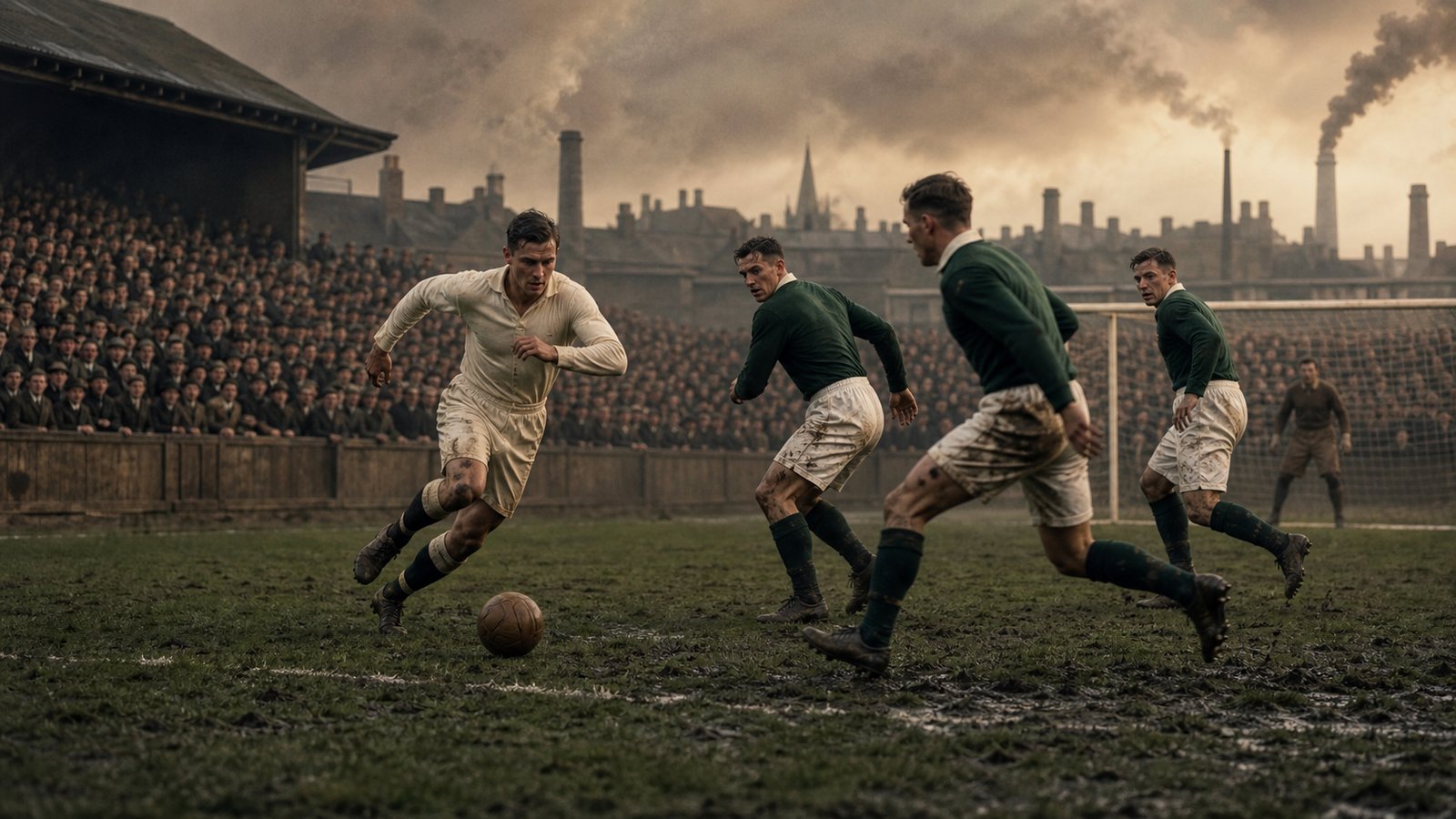
On a summer afternoon in 1925, football altered the value of a yard. The ball, the pitch and the goal remained the same. What changed was the number of opponents an attacker needed between himself and the goal line when a teammate played the ball. One defender disappeared from the calculation, and an entire landscape opened.
The amendment sounds like administrative housekeeping: three opponents became two. On the field it was an invitation to stand farther forward, pass earlier and attack the space behind a defence that could no longer step up with the same confidence. English league scoring surged in the season that followed. Coaches then faced the more interesting problem. If the law had stretched the game, how could a team regain control of the new distance?
The answer was not one universal formation appearing overnight. It was a chain of adjustments involving centre-halves, inside-forwards, marking duties and the timing of the forward pass. Herbert Chapman became the most famous interpreter, but the law changed the questions for everyone. The 1925 offside amendment is best understood not as the birth certificate of one tactical diagram, but as the moment football forced defenders and attackers to renegotiate where danger began.
A Trap Built for Three Defenders
Before 1925, an attacker receiving a forward pass had to have three opponents between himself and the goal line. In practice, the goalkeeper usually counted as one of those opponents. Two outfield defenders therefore had to remain goal-side. A coordinated defence could step forward and leave an advanced attacker offside with comparatively little retreat.
The older requirement shaped the rhythm of possession. Forward passing existed, but the law rewarded dribbling, combination play and careful support angles. A defender did not always need to chase a runner toward his own goal. He could move away from it, compress the field and ask the law to end the attack. The offside trap was therefore not merely an occasional trick. It was part of the geometry that held the two teams relatively close together.
By the early 1920s, complaints about low scoring and repeated offside interruptions had become difficult to ignore. The proposed remedy was precise: reduce the required number of opponents from three to two. The International Football Association Board approved the change in 1925. It did not abolish offside. It moved the decisive line from the second outfield defender to the last outfield defender when the goalkeeper was in the expected position.
That distinction mattered because a single full-back could no longer step up and expect a teammate behind him to complete the trap. If the last defender moved at the wrong moment, a forward could be legally released into a much larger channel. A rule written as a subtraction became an addition to attacking space.
The Season the Pitch Suddenly Looked Longer
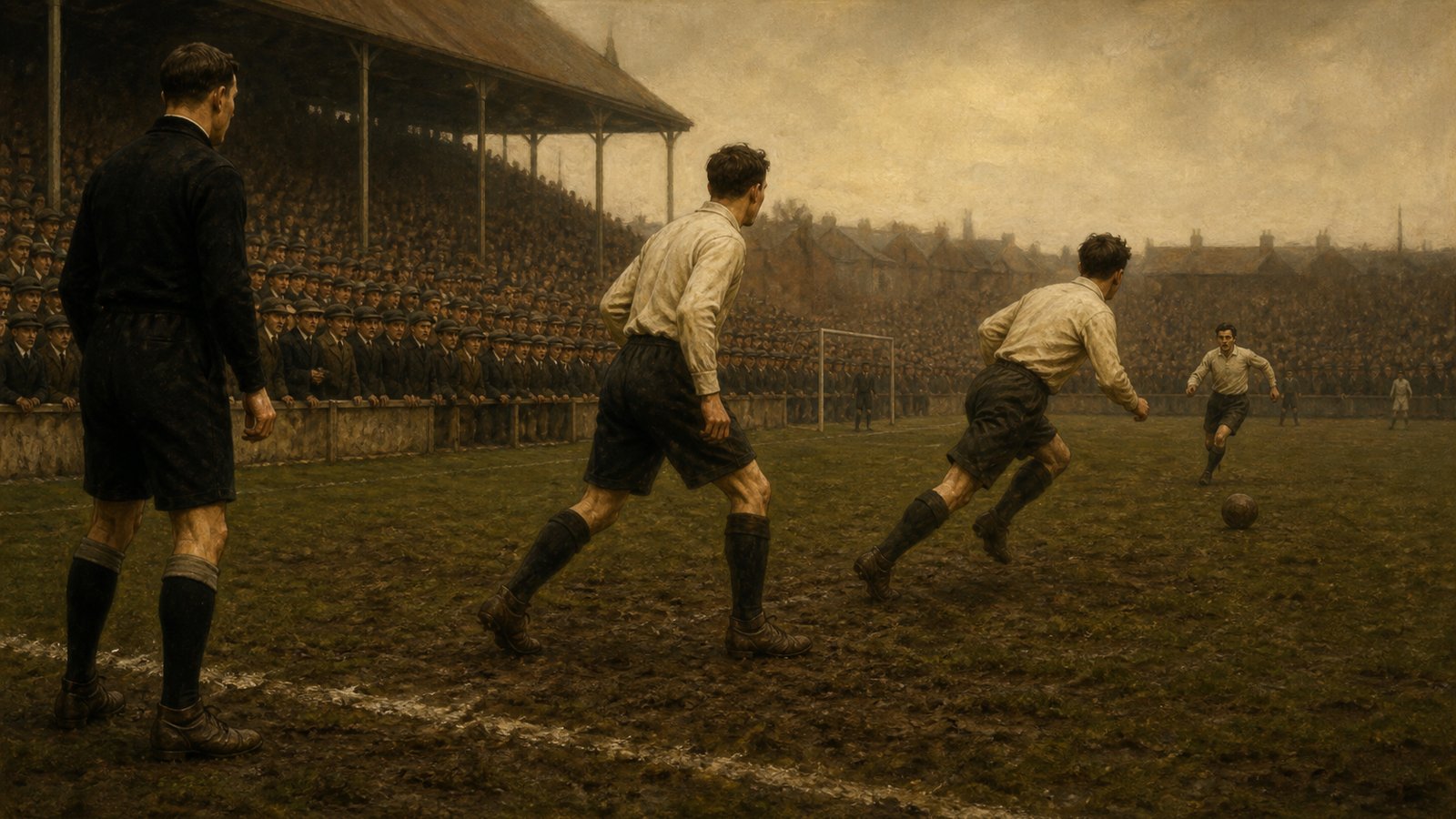
The first campaign under the revised law supplied an immediate numerical shock. Football League scoring rose from 4,700 goals in 1924–25 to 6,373 in 1925–26. The increase did not mean every match became chaotic or every club understood the new possibilities equally. It did show that the old defensive habits no longer protected the same territory.
Attackers could begin higher and threaten the space beyond a back line sooner. Passers had a wider window in which to release them. Defenders who had been trained to squeeze forward now had to judge whether pressure on the ball was strong enough to make that movement safe. If it was not, the backward race could start before they had turned their bodies.
Imagine an English ground in autumn 1925. The terraces are close, the leather ball is heavy and a full-back steps toward halfway. A teammate who once would have kept the centre-forward offside is now irrelevant. The inside-forward looks up, sends the ball through the newly legal gap and makes the defending pair discover the amendment at sprinting speed.
The physical details sharpened the tactical problem. Pitches could be muddy, boots were heavy and substitutions were not available to rescue a tiring defender. Turning and chasing repeatedly was expensive. The law encouraged attacks that made a defender face his own goal, the body position from which control is hardest. Space had not literally grown, but the playable portion of it had.
Chapman Moved the Centre-Half Back
Herbert Chapman is inseparable from the response because his Arsenal teams made the adjustment both successful and visible. The familiar account places the centre-half deeper, between the two full-backs, creating a line of three defenders. The two half-backs worked ahead of that line, while the inside-forwards operated in supporting positions behind three advanced attackers. Written as shirt numbers on a tactics board, the arrangement resembled the letters W and M.
The important move was functional rather than typographic. The centre-half had traditionally been involved higher up the pitch and could confront the opposing centre-forward away from goal. Dropping him created a dedicated central defender who could track the newly empowered forward. The full-backs could protect wider channels instead of both being dragged toward the centre. Defensive responsibility became more explicit.
Chapman did not simply pile bodies near his own penalty area. His deeper structure created a platform for direct, fast counterattacks. Once Arsenal recovered the ball, the inside-forwards could connect defence to the front line and the wide attackers could use the space left by opponents who had advanced. The response to a law that helped attackers was therefore not permanent retreat. It was to defend the dangerous depth more securely and then exploit depth at the other end.
This is where the offside story becomes richer than a before-and-after formation graphic. A rule changed eligibility for a pass. Coaches answered by changing who marked whom, where the spare defender stood and how quickly possession travelled after recovery. The new shape was a bundle of relationships, not five dots above five dots.
One Amendment, Several Tactical Answers
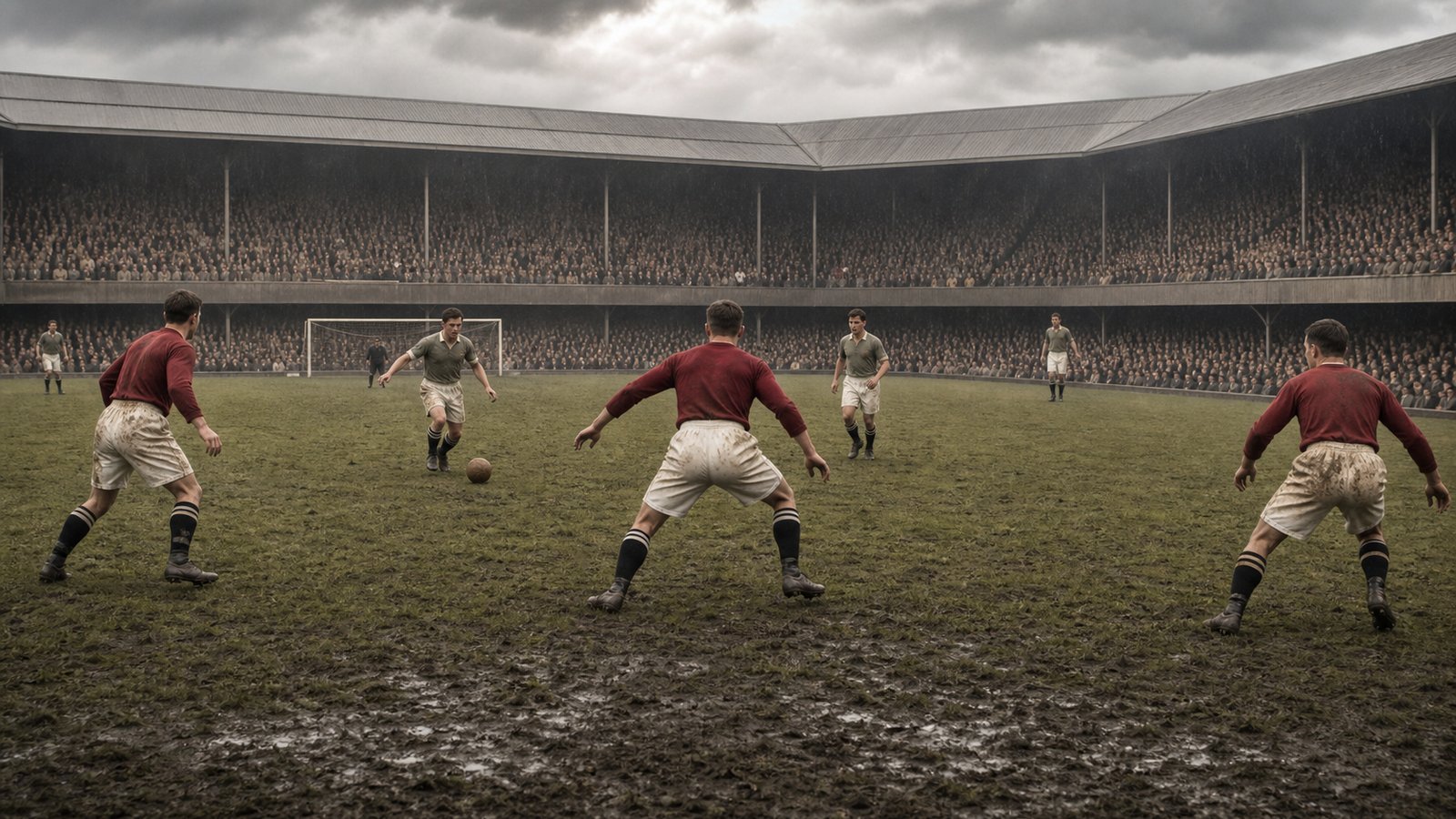
Chapman’s fame can make the rest of football look passive, as though every club waited for Arsenal to distribute a diagram. The adjustment was more uneven. Teams interpreted the law through their own players, managers and local habits. Some pulled a half-back deeper. Some used tighter man-marking. Some accepted risk and sought to outscore opponents. The same legal change produced different match behaviours because tactical ideas only work through available bodies.
The amendment also redistributed football intelligence. A forward needed to read the last defender rather than a pair of outfield defenders. A passer needed to notice the instant a run became legal. A defender had to scan both ball and runner, then decide whether to step, hold or drop. A goalkeeper faced more attacks in which a forward arrived with fewer bodies between him and goal.
These split-second decisions came from a law-book sentence. Laws do not dictate a style alone; they alter the rewards attached to movements, and players discover which movements now pay.
What the Goal Surge Revealed
The jump in scoring is often presented as the whole story because it is dramatic and measurable. Its deeper value is diagnostic. The goals revealed how much the old three-opponent rule had been supporting defensive compression. Remove one required opponent and the previous balance failed before teams could rebuild it.
The rebuilding then influenced decades of tactical thought. A distinct central defender, structured covering positions and rapid counterattacking all became central features of the English game associated with Chapman’s Arsenal. Later systems would reorganize those duties again, just as the overlapping movement in Brazil’s 1970 final move showed how roles could escape their original lines. The point is not that 1925 directly authored every later formation. It made the management of depth impossible to treat as a background detail.
There is also a useful caution in the sequence. An attacking reform can produce a defensive innovation. The Board changed offside to free forwards and encourage goals. Coaches responded by specializing the central defensive role and organizing cover more deliberately. Football did not return to its previous state. It found a new equilibrium, with different routes to both attack and control.
The most enduring image is therefore not a committee room or a chalkboard. It is a defender caught between two instincts. Step forward, as years of habit suggest, and the runner may remain onside. Drop early, and the opposition gains room in front. The 1925 amendment lived in that hesitation. From it came more goals, longer attacking space and a new urgency about who guarded the middle.

Sources
International Football Association Board, Law 11: Offside; Arsenal, “Herbert Chapman: The Great Innovator”; Wikipedia, “Offside (association football).”