
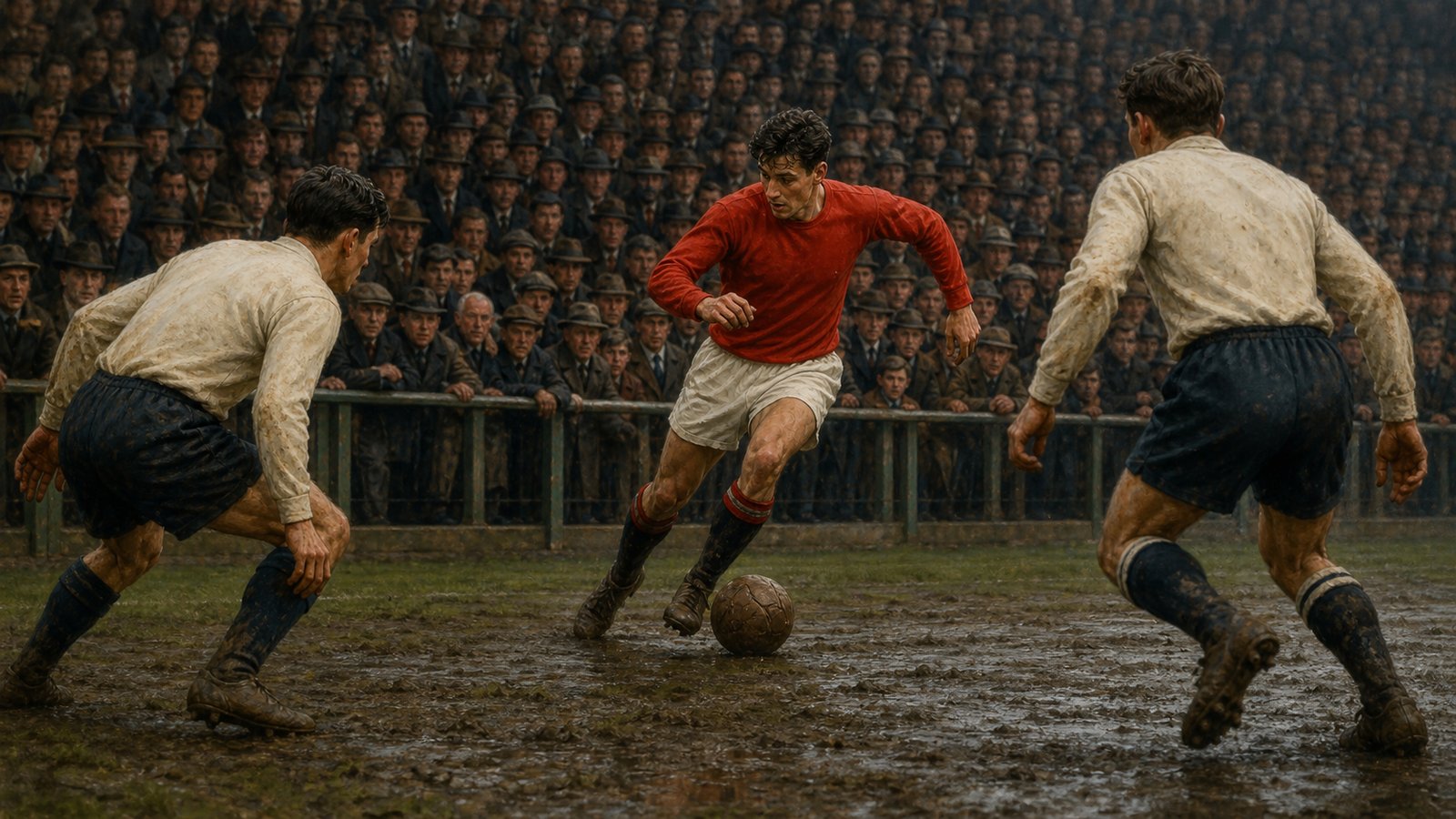
Open Len Shackleton’s autobiography to the chapter titled “The Average Director’s Knowledge of Football” and the joke occupies the whole page. There is a heading, then nothing beneath it. No argument, no examples, no names. The blank space is the verdict.
It became the most quoted page in Clown Prince of Soccer, partly because it compressed an old conflict into one visual gag. Shackleton belonged to the generation in which club directors controlled wages, contracts and transfers while players supplied the spectacle. He also happened to be unusually unwilling to behave like a manageable employee.
The empty chapter can be read as a punchline. It makes more sense as the final flourish of a career built on public improvisation: six goals on a Newcastle debut, a British-record transfer to Sunderland, five England caps, thousands of defenders embarrassed, and one gifted entertainer who never won a major club honour.
Six debut goals made patience impossible
Leonard Francis Shackleton was born in Bradford in 1922. Arsenal brought him south as a teenager, but the move did not produce a first-team future. He returned to Yorkshire, played wartime football and established himself with Bradford Park Avenue before Newcastle United paid £13,000 for him in October 1946.
His league debut for Newcastle came at St James’ Park against Newport County. Newcastle won 13–0. Shackleton scored six. Any new signing would struggle to follow that entrance; a player already drawn to tricks and risk had effectively received permission from a full stadium to keep entertaining.
Newcastle paired him with Jackie Milburn, another forward who would become a club legend. Shackleton could operate from inside-forward or the flank, carry the ball close to his feet and pause long enough to make a defender commit first. Accounts of his game repeatedly return to control rather than raw speed. He wanted the opponent’s balance before he wanted the space beyond him.
That preference could delight spectators and irritate colleagues. A direct pass might move an attack faster; an extra feint might make the same attack memorable. Shackleton treated that choice as part of football’s purpose. The crowd had paid to see possibility, not merely efficiency.
Sunderland paid a record fee for an argument as well as a forward
In February 1948, Sunderland signed Shackleton from Newcastle for a fee recorded as £20,050, a British transfer record. The move placed one of the country’s most individual players inside a club that would soon become known for expensive recruitment. Sunderland’s spending earned it the “Bank of England club” label, but gathering famous names did not automatically create a balanced team.
Shackleton supplied goals, chances and theatre across nearly a decade on Wearside. He became one of Sunderland’s defining post-war players, recording 320 First Division appearances and 97 league goals. Those totals explain his durability. They do not fully explain the attachment.
Supporters watched him stretch moments that other footballers hurried. He might stop with the ball, invite a challenge and escape only when the defender believed the trap had closed. The risk belonged to him, but the anticipation belonged to the whole ground. Roker Park could feel the decision arriving before he made it.
The same temperament made conventional authority a poor fit. Directors wanted expensive footballers to justify investment through results and discipline. Shackleton judged football through the exchange between player and crowd. When those standards collided, he did not hide the collision.
Five England caps measured selection, not imagination
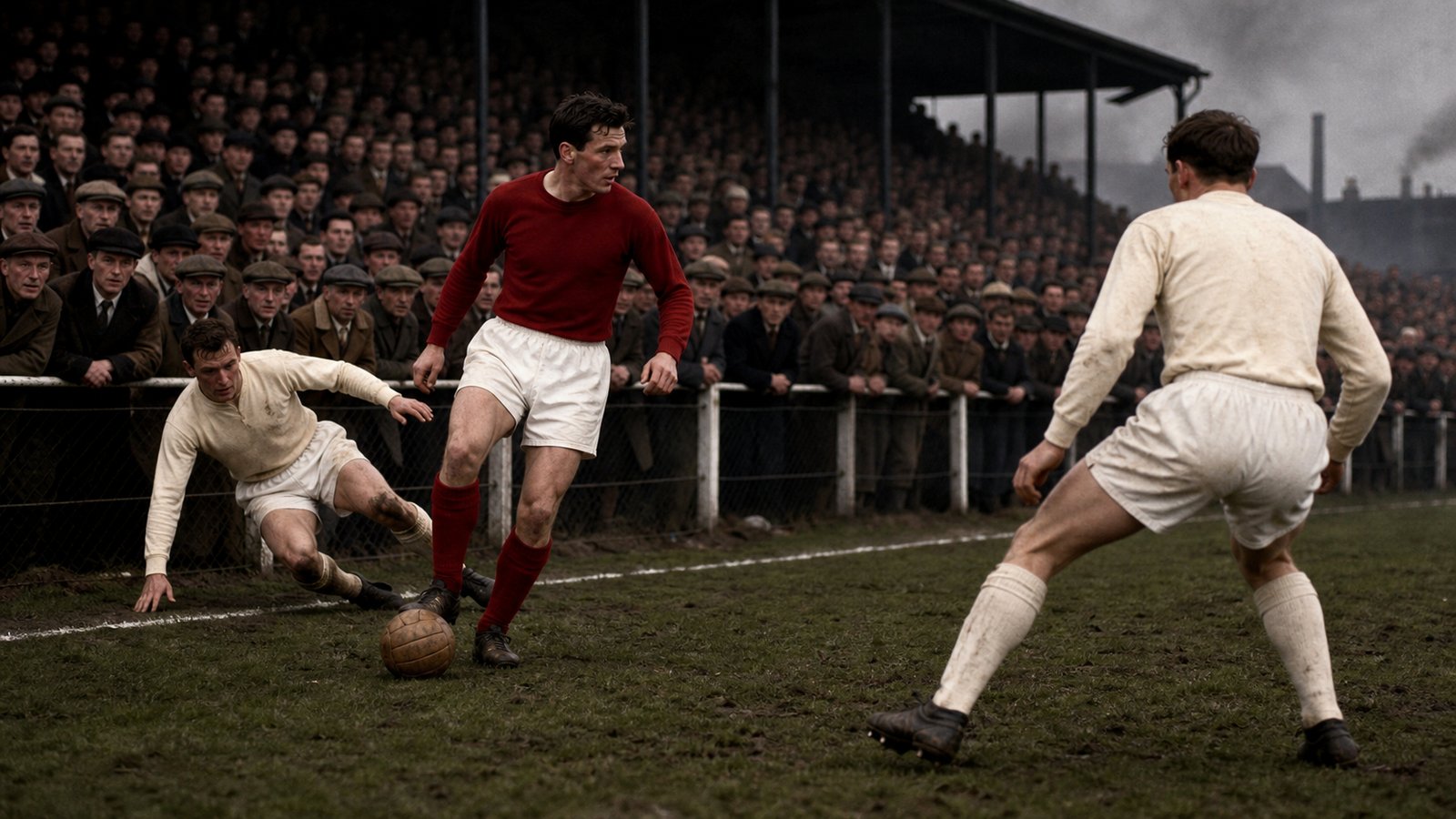
Shackleton played five times for England between 1948 and 1954. The small total has become part of his story because his domestic reputation was so large. International selection rewarded quality, but it also rewarded fit, obedience and the selectors’ preferred combinations. An improviser could be brilliant without becoming easy to place.
His first cap came against Denmark in Copenhagen in 1948. Later appearances were scattered rather than sustained. England possessed other elite forwards, and Shackleton’s instinct to hold the ball or seek an audacious solution could look like indulgence when selectors wanted a repeatable pattern.
The contrast should not be exaggerated into a simple tale of genius rejected by fools. Five caps meant he reached the national side; more than 300 Sunderland appearances meant coaches trusted him week after week. His career lived between those facts. He was reliable enough to build an attack around and unpredictable enough to make administrators uneasy.
That tension distinguished him from players remembered mainly through international tournaments. There is no Shackleton World Cup run to replay. His archive is distributed across league afternoons, witness memories and stories about what he tried. The scarcity of moving film leaves the anecdotes carrying more weight, including some that grew sharper through repetition.
The blank page worked because directors held real power
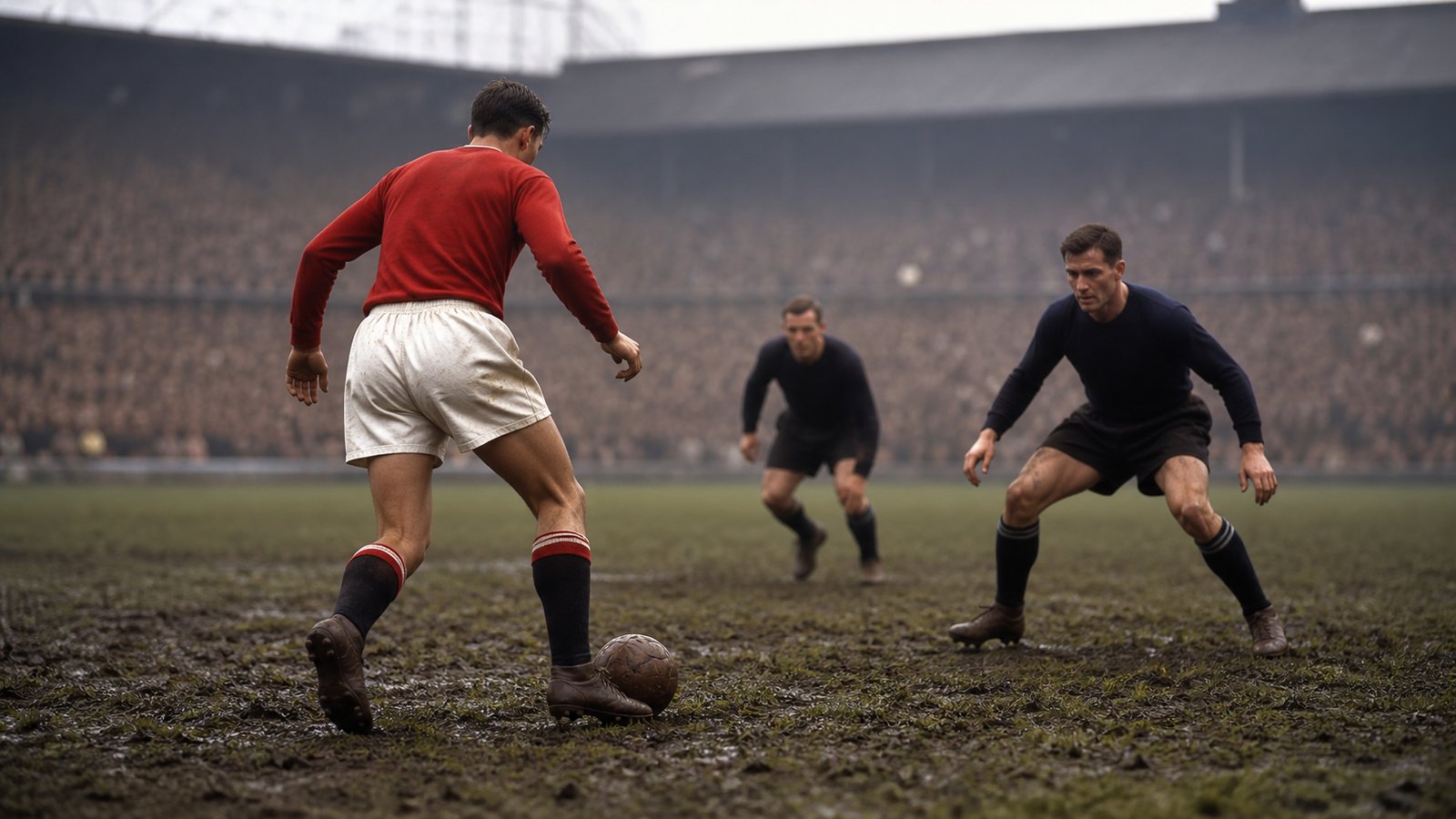
Clown Prince of Soccer appeared while Shackleton was still playing. The famous chapter was not an abstract complaint about distant executives. Footballers in the 1950s lived under a maximum wage and the retain-and-transfer framework. A club could retain a player’s registration even when contract terms had expired, sharply limiting his ability to move.
Those arrangements would later face open resistance. The maximum wage fell in 1961 after pressure led by Jimmy Hill and the players’ union. George Eastham’s legal challenge helped break the retain-and-transfer system. Shackleton’s blank page came earlier. It converted resentment into something supporters could understand without reading a policy argument.
The joke also protected itself. Filling a chapter with accusations would have invited disputes over every example. Leaving it empty made the reader provide the evidence. Anyone who had watched a board buy mismatched stars, dismiss a manager or constrain a favourite player could write an invisible version of the chapter from experience.
Its cruelty depended on simplicity. Shackleton was not claiming that directors knew literally nothing about accounts, grounds or running clubs. He chose “football” as the contested word. The people making binding decisions about players did not necessarily understand what happened between the touchlines as those players did.

A brilliant squad finished without the trophy its spending promised
Sunderland’s post-war ambition gives the criticism a local edge. The club invested heavily and assembled celebrated footballers, yet the First Division title and FA Cup did not arrive during Shackleton’s years at Roker Park. The closest cup run ended in the 1956 semi-final, when Birmingham City beat Sunderland 3–0.
A season later, an ankle injury ended Shackleton’s playing career. He retired in 1957 at 35. His Sunderland record remained substantial, but there was no medal that allowed a board to present the expensive project as vindicated.
It would be too neat to make the missing trophies proof that Shackleton was right about every director. Great players can fail together for tactical, physical and competitive reasons. Sunderland’s record fee bought an extraordinary individual, not a guarantee. That gap between acquisition and construction was precisely where the “Bank of England” reputation became vulnerable.
Shackleton then moved into journalism, extending the role he had already claimed in his autobiography: footballer as observer, critic and narrator. Retirement did not make him dependent on directors for selection. The wit that had complicated his employment became a professional asset.
The page survives because the reader completes it
Many football autobiographies contain stronger allegations and more detailed dressing-room scenes. Few created an object as durable as Shackleton’s blank chapter. It can be photographed, described in one sentence and understood across generations. Even readers who never saw him play can recognise the workplace joke.
The device also matches his football. A dribble needs an opponent to commit; the blank page needs a reader to supply the missing indictment. In each case Shackleton created space, waited, and allowed somebody else’s movement to complete the effect.
That does not reduce his career to a literary trick. Six goals on debut, a £20,500 transfer, five England caps and hundreds of Sunderland appearances form a serious playing record. The joke remained attached to him because it expressed the same independence that crowds had watched on the pitch.
Directors signed him, selected managers above him and controlled the terms of his movement. Shackleton could not erase that authority. He could leave their football knowledge unwritten, then trust generations of supporters to understand exactly what the empty space meant.
Sources
Sunderland AFC; The Guardian; Len Shackleton, Clown Prince of Soccer; English Football League records.