
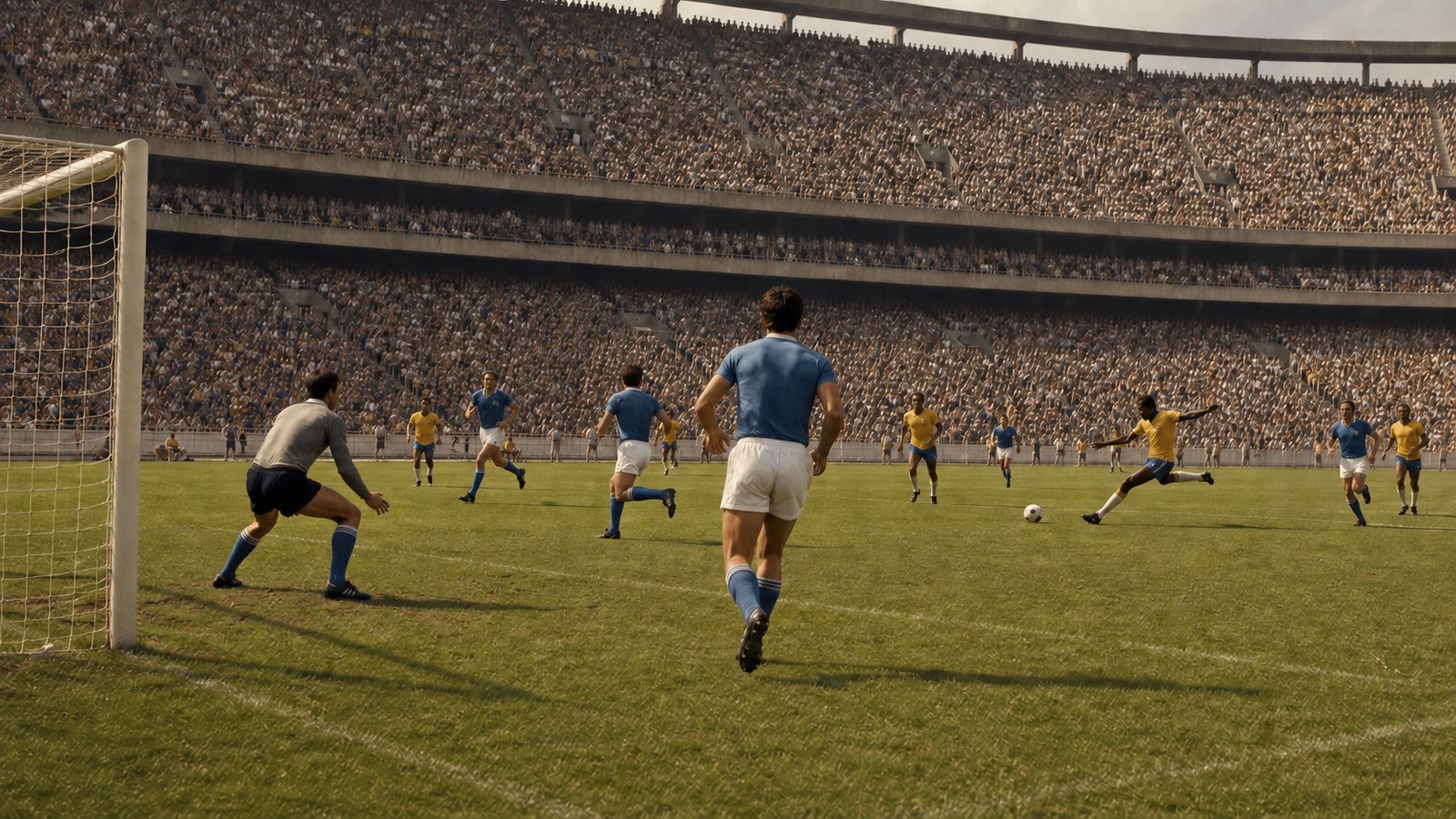
Pelé received the ball outside Italy’s penalty area and appeared to pause. To his right there was open grass, not a teammate. Then Carlos Alberto arrived at full speed and the empty corridor became the final action of the 1970 World Cup.
The Brazilian captain struck without shortening his stride. His shot travelled low across Enrico Albertosi and into the far corner. It was the fourth goal in a 4–1 final, scored in the 86th minute after Italy had already been stretched beyond recovery. Yet the move remains vivid because the finish was only its last decision.
Nine Brazilian players had touched the ball. The possession began near Brazil’s own penalty area, survived pressure through Clodoaldo, moved sharply to the left and ended with the right-back attacking space on the opposite side. What looked effortless on television contained a prepared idea: pull Italy toward Jairzinho, empty the right flank, and trust Pelé to delay the pass until Carlos Alberto could reach it.
The most replayed goal of Brazil’s 1970 triumph was not spontaneous decoration after the contest was won. It was a rehearsed route appearing inside a long, patient possession.
The Final Had Already Changed Shape Three Times
Brazil and Italy met at Mexico City’s Estadio Azteca on 21 June with the same prize available. Each country had won the World Cup twice. A third victory would give the winner permanent possession of the Jules Rimet Trophy under the rules then in force.
Pelé opened the scoring with a header after 18 minutes. Roberto Boninsegna equalised before half-time after pressure on Brazil’s defence produced a loose ball. The final was level at the interval, and the familiar picture of Brazil simply overwhelming Italy from the first whistle does not fit the score.
The separation came after the break. Gérson drove Brazil ahead from outside the area. He then delivered the long diagonal that Pelé headed down for Jairzinho to score Brazil’s third. Jairzinho’s finish also made him the only Brazilian to score in every match of that six-game tournament.
By the time the fourth move began, Italy had spent the afternoon following attackers, retreating in the heat and trying to close central combinations. Brazil led 3–1. To explain why the path opened so cleanly, the possession has to be followed from the other end of the pitch.
Tostão Started the Move Where a Left-Back Should Have Been
The first surprise is the identity of the player recovering the ball. Tostão was Brazil’s centre-forward, but he was working in the left-back area when the move began. He challenged an Italian, helped secure possession and then became part of a calm exchange across the defensive line.
The ball travelled through short passes rather than one immediate counterattack. Piazza and Brito were involved as Brazil changed the angle. The tempo invited Italy forward just enough to create pressure around Clodoaldo. It also gave Brazil’s shape time to expand.
This beginning matters because the famous ending depended on collective coverage. Tostão could appear deep because teammates understood the moment rather than guarding fixed labels. Carlos Alberto could later sprint beyond the attack because the possession had become stable. Freedom at one end was supported by work at the other.
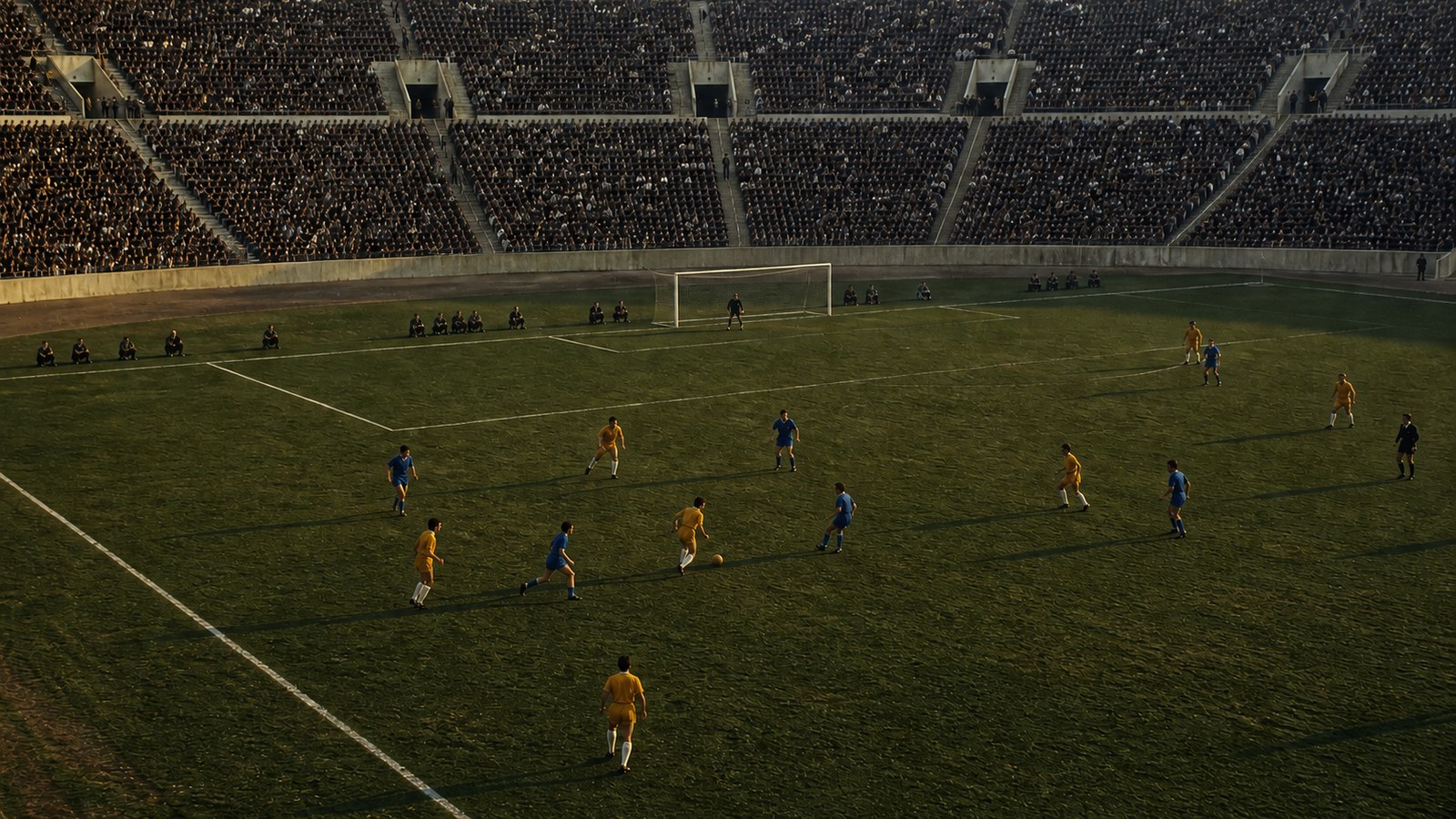
The move did not advance in a straight line. It first absorbed Italian attention. The passes close to Brazil’s box made the next acceleration possible, but the visual memory often skips them because Clodoaldo’s escape is where patience suddenly became danger.
Clodoaldo Carried the Ball Through the Pressure
Clodoaldo received in Brazil’s half with Italian shirts closing around him. He did not release the ball at the first safe opportunity. He changed direction repeatedly and moved past four challenges, keeping the possession alive while opponents were drawn toward a small area.
The dribble was not a separate trick inserted into a team move. It altered the geometry of everything that followed. Italy lost players behind the ball. Brazil no longer needed to circulate away from pressure; it could attack the space that pressure had abandoned.
Clodoaldo then found Rivellino on the left. Rivellino sent the ball ahead to Jairzinho, also positioned on that side. The winger who normally threatened from the right had crossed the pitch, carrying Italy’s left-back Giacinto Facchetti and additional defenders with him.
That movement had been discussed before the match. Carlos Alberto later explained that coach Mário Zagallo expected Italy to mark tightly through the centre. Jairzinho was told to move left when possible, taking Facchetti away and leaving a lane for the Brazilian right-back. Brazil had not scripted every touch. It had prepared the imbalance those touches could expose.
Jairzinho’s Leftward Run Opened the Opposite Touchline
Jairzinho received near the left edge of Italy’s penalty area. His position compressed the defence toward the ball. Facchetti had followed him away from the zone a left-back would normally protect, while other Italians faced the immediate threat of a powerful forward cutting inside.
Jairzinho passed infield to Pelé, who waited just outside the penalty area. That simple transfer completed the overload. Italy’s gaze and bodies had moved left and central. Carlos Alberto, who had begun his run from around halfway, was accelerating into the unoccupied channel on Brazil’s right.
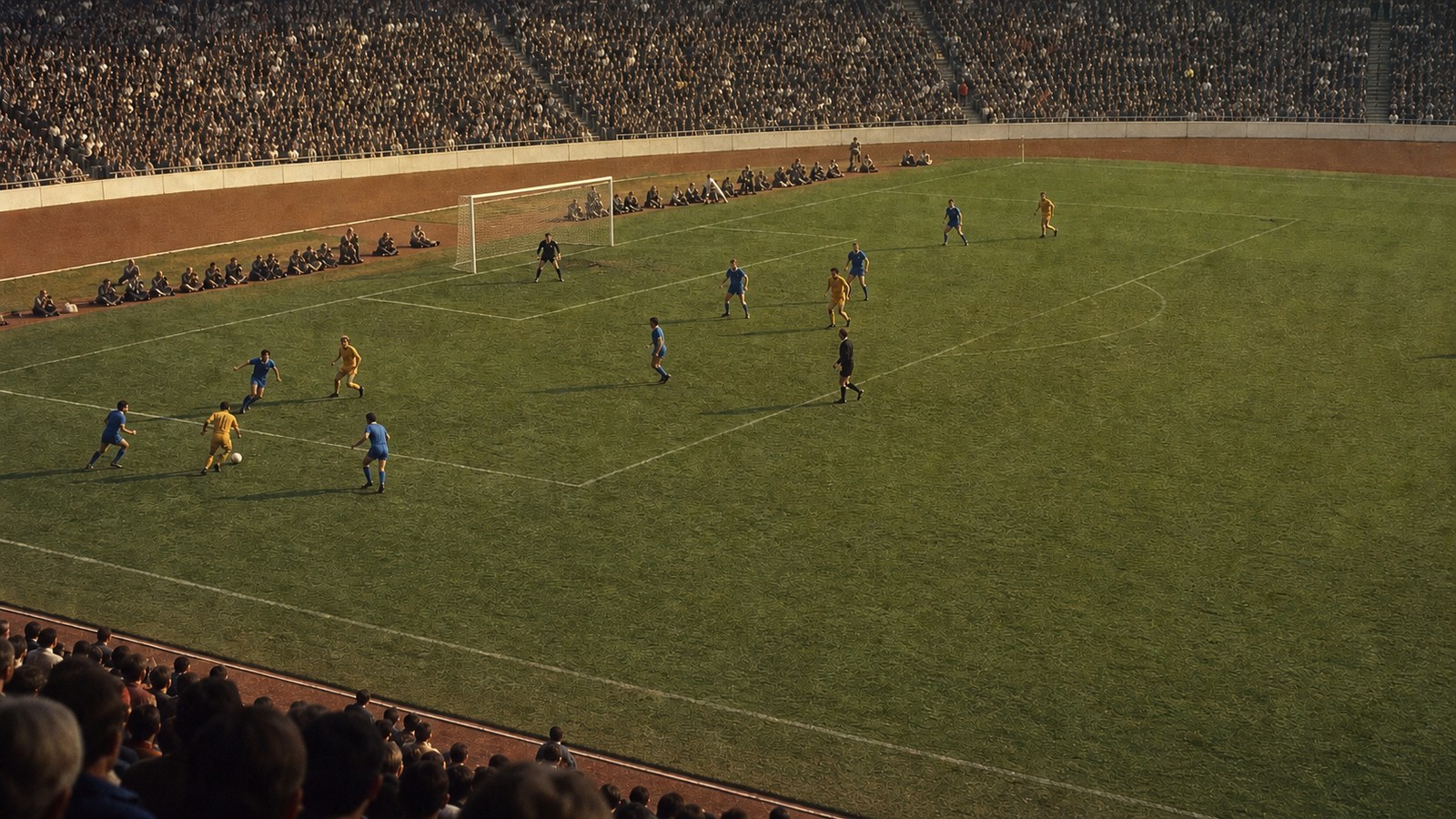
Carlos Alberto said Brazil had worked on this route in training. Zagallo’s staff had studied Italy, with assistant Carlos Alberto Parreira returning from opposition matches with telephoto photographs for projector sessions. The staff believed Italy’s defenders would track the forwards and drop deeper as the heat and minutes accumulated.
The preparation did not make the execution automatic. Carlos Alberto had attempted forward runs earlier without receiving the same opening. In the 86th minute, however, Jairzinho’s location, Pelé’s awareness and Italy’s fatigue aligned. The captain saw the lane and committed before the pass existed.
Pelé Passed to a Runner the Camera Had Barely Found
Pelé’s contribution is a pause measured in less than a second. An earlier pass would have forced Carlos Alberto to slow down or chase the ball toward the touchline. A later one would have allowed an Italian defender to recover. Pelé held the ball long enough for the run to arrive, then rolled it into the captain’s stride.
The two players shared more than a national team. They had been teammates at Santos, and Carlos Alberto said he did not need to shout. Pelé knew the run was coming because they had discussed the situation and played together often enough to recognise its timing.
Television strengthens the effect. The ball moves toward apparent emptiness. Carlos Alberto then enters at speed from the right and meets it with his body fully committed to the strike. Both feet leave the turf as he drives through the shot, but the contact remains controlled. The ball stays low and crosses Albertosi before the goalkeeper can reset.
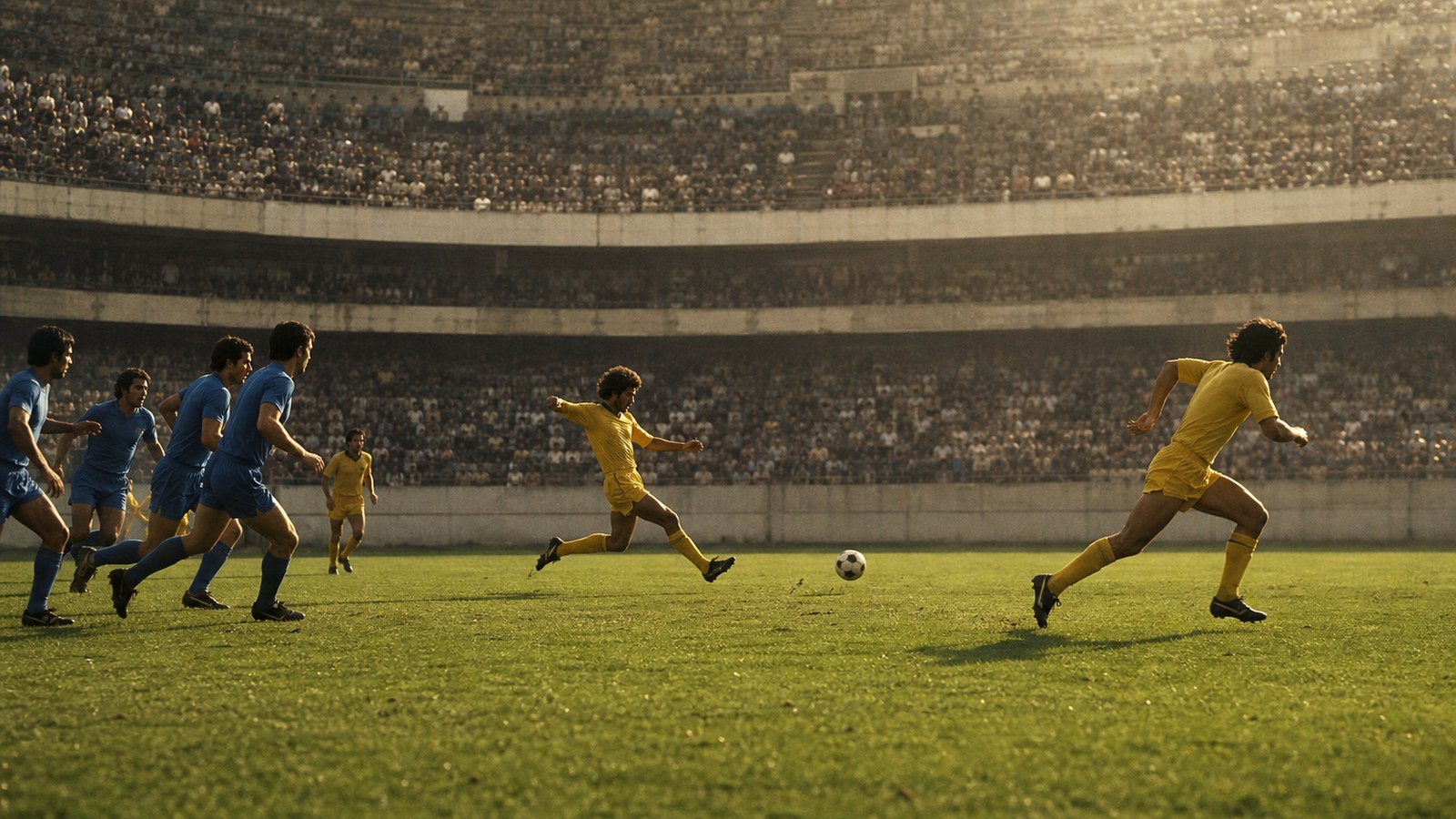
The finish made the tactic legible. Without it, the sequence might survive only as another late Brazilian possession. The goal connected Tostão’s recovery, Clodoaldo’s dribble, Jairzinho’s relocation and Pelé’s delay in one visible result.
Nine Touching Players Made One Right-Back Look Inevitable
Carlos Alberto later stressed that the beauty belonged to the creation rather than only the strike. He remembered nine different players touching the ball before the goal. The BBC described all but two of Brazil’s outfield players becoming involved. A centre-forward worked beside the defenders; a central midfielder escaped four opponents; a right winger drew the defence left; a number ten waited; a right-back finished.
That sequence is a useful companion to Brazil’s earlier tactical development. The 1958 side used a flexible 4-2-4 whose labels never captured all its movement. Twelve years later, the shirt numbers and starting positions still described less than the players’ relationships. Brazil’s fourth goal in 1970 was produced by occupation and timing, not by everyone remaining in an assigned lane.
The final also closed a six-match campaign in which Brazil won every game and scored 19 goals. Those numbers help explain the team’s reputation, but the last goal supplies a more precise reason for its endurance. The players combined individual daring with shared information. Clodoaldo could risk the dribble because support remained available. Jairzinho could leave his usual wing because the movement had a purpose. Carlos Alberto could attack from deep because Pelé would recognise the run.
Brazil did not need the fourth goal to win the final. It needed the same preparation, spacing and trust that produced it to become the team capable of winning the tournament. The 86th minute concentrated those habits into one passage: nine players, one field tilted to the left, and a captain arriving through the space they had deliberately left on the right.
Sources
FIFA; BBC Sport; The Guardian.