
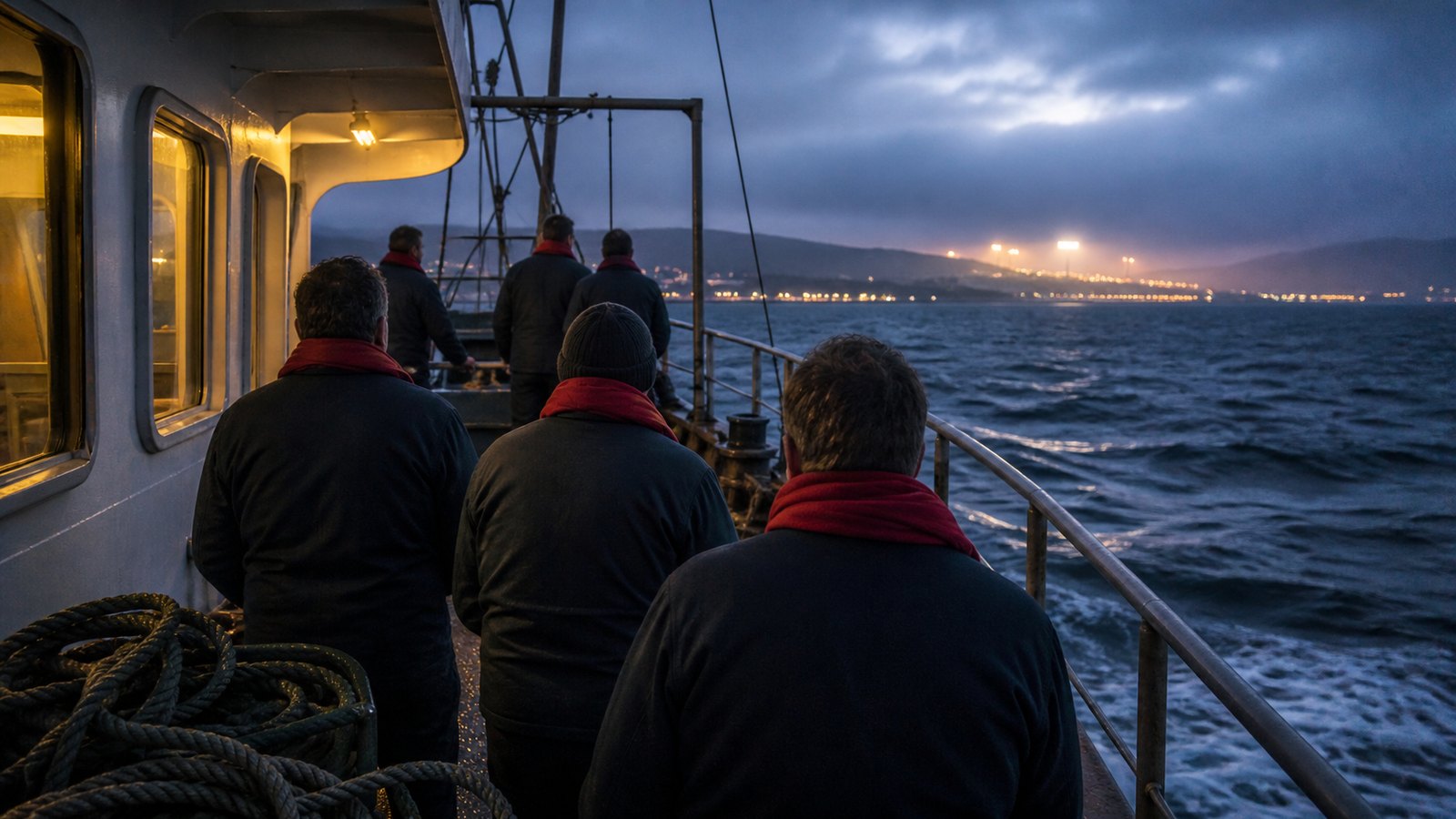
The Aberdeen supporters who sailed to Gothenburg on fishing boats did not return to a victory parade. They went back to sea, caught cod and haddock, and reached Peterhead after the celebration had moved on.
Drew Mair had listened to Aberdeen’s quarter-final against Bayern Munich from a wheelhouse. When the team survived that tie, an idea passed through the crew: if Aberdeen reached the European Cup Winners’ Cup final, the boats should go. The Don Fishing Company helped make it possible, and working vessels joined ferries and charter flights carrying an estimated 12,000 supporters toward Sweden.
The match on 11 May 1983 is remembered in goals: Eric Black after seven minutes, Juanito from the penalty spot, then John Hewitt’s diving header in the 112th. Yet the scale of Aberdeen’s victory becomes clearer when the journey is placed beside the score. A provincial Scottish club faced Real Madrid in rain at Nya Ullevi, while a moving piece of north-east Scotland gathered in the stands.
The trophy came home by the official route. Many of the people who had made the night feel like Aberdeen at sea had to find their own way back.
The boats went back to work before the city finished celebrating
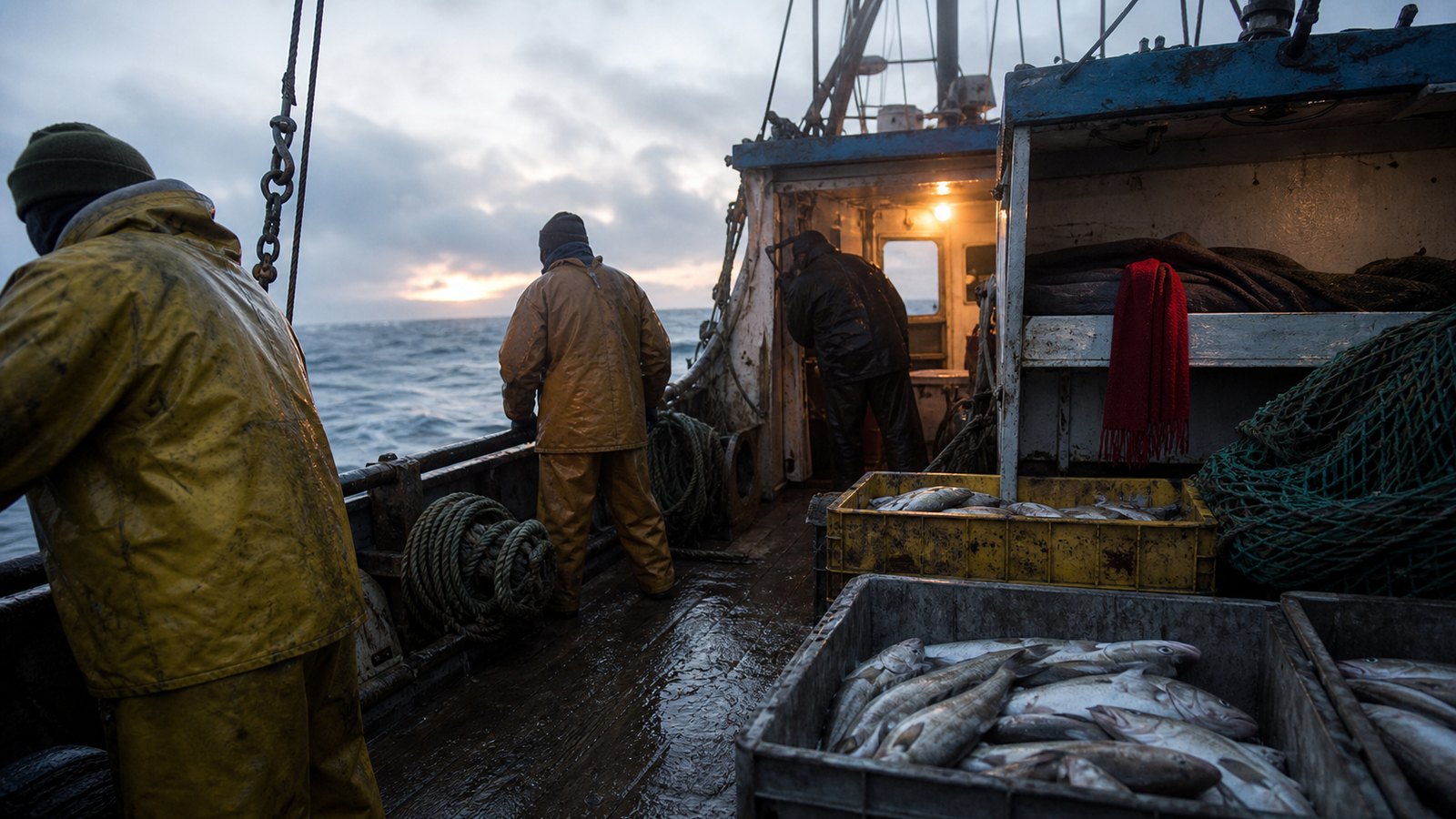
Mair’s crew had travelled as fishermen rather than tourists. They had landed one catch before the voyage to Gothenburg, attended the final, and returned to the galley after Aberdeen’s 2–1 extra-time win. There were beers and stories, but the rhythm of the boat soon reasserted itself. In the morning the crew put on their sea clothes and began another week of fishing.
By the time they landed their cod and haddock in Peterhead, the public welcome at Pittodrie had already happened. Mair recalled that nobody was talking about Aberdeen’s victory. The men had attended the largest night in their club’s history, then disappeared into the ordinary work that had carried them there.
That contrast gives the journey its shape. The supporters were not a decorative crowd waiting at the end of a successful campaign. Their jobs, boats and family arrangements became part of the operation. One fan missed an offshore helicopter and took a flight to Sweden instead. Another travelled from Orkney because her husband had to work. A teenager boarded the St Clair ferry with her father after he had promised the final as compensation for leaving her behind when Aberdeen played Bayern in Munich.
A European run kept demanding another journey
Aberdeen had entered the competition in a preliminary round, so Gothenburg was the end of a long route rather than a sudden glamorous appointment. They beat Sion 11–1 on aggregate, edged Dinamo Tirana 1–0, and defeated Lech Poznań 3–0 over two legs. The quarter-final then put Alex Ferguson’s side against Bayern Munich.
The first leg in Munich finished 0–0. At Pittodrie, Bayern led twice before Aberdeen answered. Alex McLeish made it 2–2 in the 77th minute and Hewitt scored one minute later. The 3–2 win turned a European hope into a journey supporters could begin to imagine.
Waterschei stood between Aberdeen and the final. A 5–1 first-leg victory at Pittodrie gave the tie a decisive shape even though the Belgian club won the return 1–0. Real Madrid, already carrying the authority of six European Cups, waited in Gothenburg. Aberdeen were entering their first European final.
For supporters following from the fishing grounds, islands and offshore industry, every round altered the practical question. A European campaign begins as a fixture list. As it narrows, people need tickets, leave from work, childcare, transport and enough faith to commit money before the result is known. By May, those private calculations had produced a travelling support comparable to a substantial share of Aberdeen’s home attendance.
Twelve thousand people found separate routes to Sweden
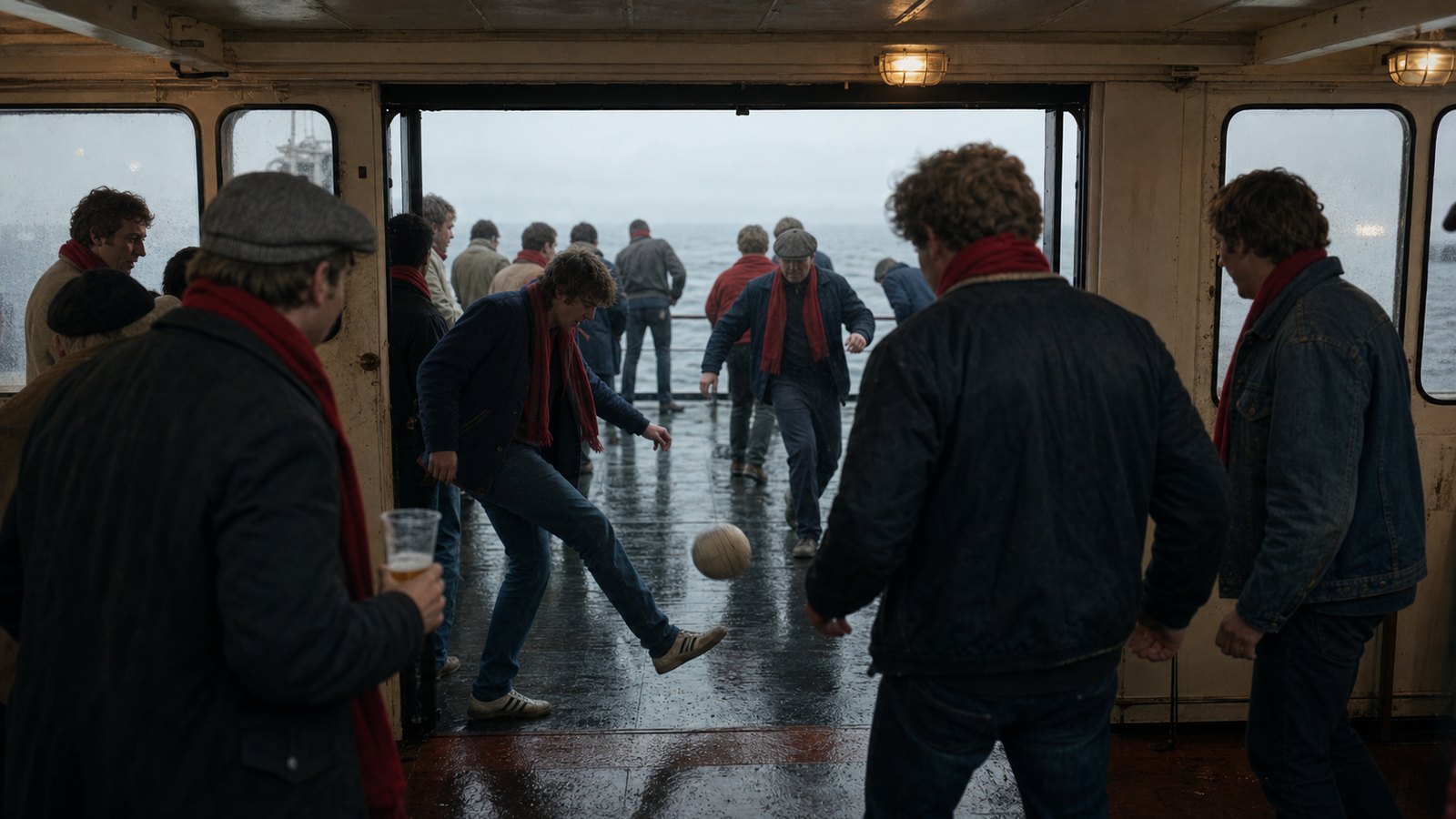
The estimate was around 12,000. The number matters, but the routes make it tangible. The St Clair carried roughly 500 people. Ferguson came aboard before departure to wish them well. Supporters attempted keepy-uppies while the vessel moved beneath them, held a talent competition and listened to the resident band.
Others took charter flights, some for the first time. In Gothenburg, a busker inside a shopping centre repeatedly found his Swedish tunes drowned out by chants of “Aberdeen”. He was compensated with coins even if he could barely complete a song. Supporters saw the Cup Winners’ Cup displayed in a jeweller’s window and treated it less like an exhibit than a promise.
The rain removed any chance of a polished postcard scene. Clothes were soaked before the final ended. Afterward, people danced through a newly built fountain. At the airport, four exhausted travelers slept inside a Saab displayed on a revolving plinth because seats were scarce. The details are untidy, physical and specific: wet fabric, crowded terminals, hoarse voices and an early-hours flight home.
On the St Clair, one father placed the result, date and the words “we were there” into a bottle and threw it overboard. Three months later, a German couple who had found it on a Danish beach sent him a postcard. It is difficult to devise a cleaner image for the night’s reach: a message from an Aberdeen victory drifting back across the same water the supporters had crossed.
Rain made the final a test of touch and nerve
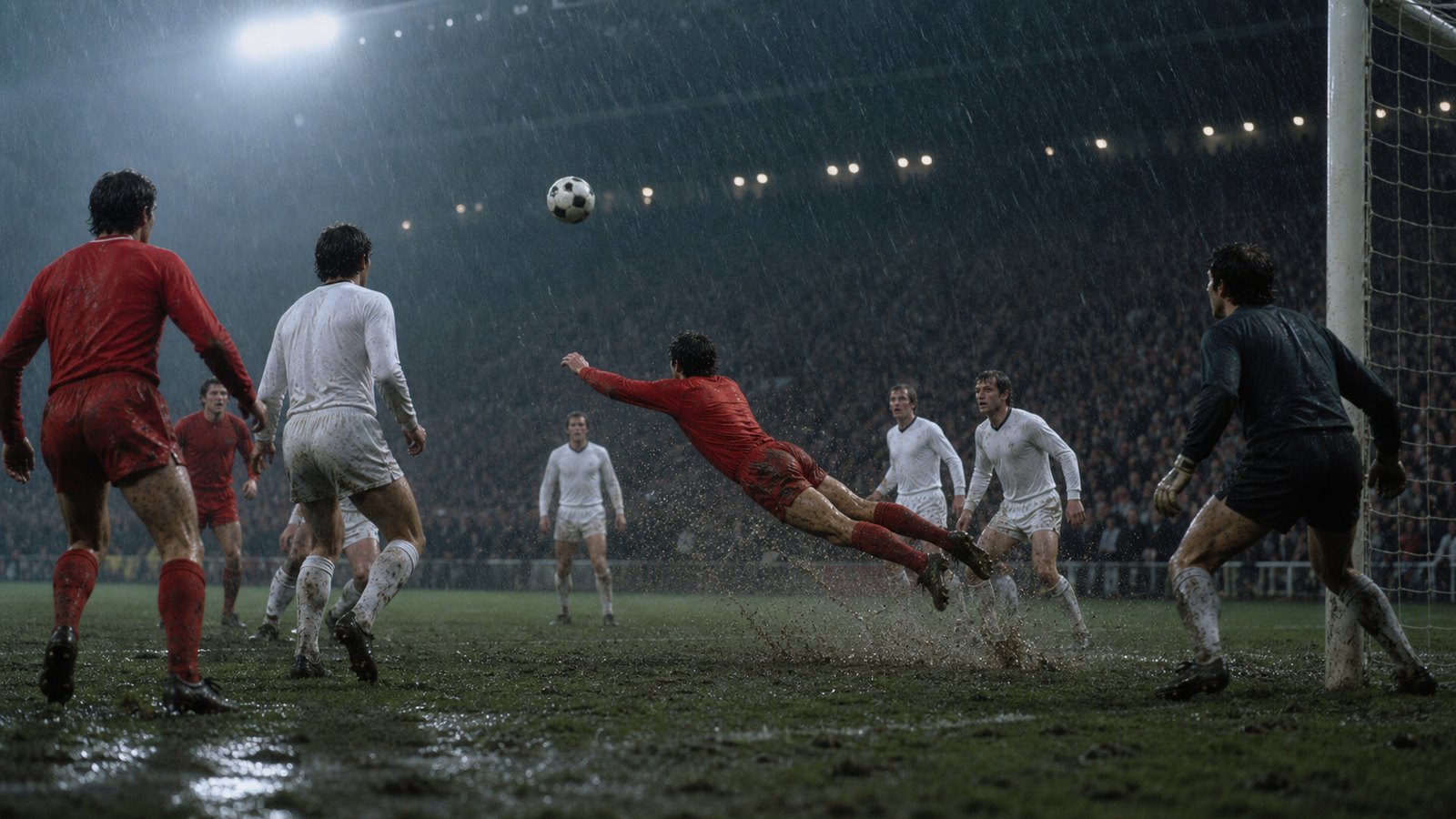
The pitch at Nya Ullevi had been covered with tarpaulin before kick-off, but the rain still shaped the match. Aberdeen attacked immediately. Gordon Strachan’s corner reached McLeish, and Black finished the loose ball after seven minutes.
Real Madrid’s equalizer emerged from the surface itself. McLeish played back toward Jim Leighton, the ball slowed in the mud, and the goalkeeper brought down Santillana as he came to claim it. Juanito converted the penalty in the 15th minute. The final settled into a 1–1 struggle that lasted through normal time.
Aberdeen’s winner was direct without being crude. Peter Weir found Mark McGhee on the left. McGhee crossed, and substitute Hewitt threw himself forward to head the ball past Agustín in the 112th minute. Among the fishing-boat crew, Mair remembered everyone heading it with him.
The goal belonged to a pattern already visible in the campaign. Hewitt had scored the only goal of the first-round tie against Dinamo Tirana and the quarter-final winner against Bayern. In Gothenburg he again arrived at the point where a long European run could be settled in one movement.
Aberdeen’s 2–1 victory did not need Real Madrid to be diminished. Madrid’s history made the result larger. Much as the replay in the 1974 European Cup final revealed how strange elite competition could become under pressure, Gothenburg showed a final being decided by adaptation: to mud, to fatigue and to extra time.
The memory belongs to the travelers as well as the trophy
Football usually records a final through line-ups, scorers, attendance and silverware. Those are the necessary bones. Aberdeen beat Real Madrid 2–1 after extra time before 17,804 spectators. Black and Hewitt scored for Aberdeen; Juanito scored Madrid’s penalty. Gianfranco Menegali was the referee.
The supporters’ accounts supply a different record. A firefighter’s wife took the ticket when work kept him home. An offshore worker chose a 10:30 flight over a 10:00 helicopter. A fishing crew photographed Jock Stein near the stairwell, watched Hewitt score, and then returned to sea. None changes the result. Together they explain what the result occupied in the life of a city and its surrounding coast.
Ferguson’s team would add the European Super Cup later in 1983, but Gothenburg remained the emotional center. It joined football achievement to a mass journey that could not be repeated on command. The Cup Winners’ Cup no longer exists. Travel, work and the economics of the game have changed. The fishing boats belong to a particular coast and moment.
The most revealing image is not the trophy held under stadium lights. It is a boat leaving celebration behind, crew members asleep before another shift, with the final already becoming history on shore. Aberdeen’s supporters crossed the North Sea to witness a football impossibility. Some had to catch another week’s fish before they could fully understand what they had seen.
Sources
- BBC Sport
- Aberdeen FC Family/DNA archive
- Aberdeen Football Club
- 1983 European Cup Winners’ Cup final match record